- When / context
- Before a wedding, often in late autumn or winter; most fully documented in seventeenth- to early twentieth-century rural life
- Tradition area
- Life cycle
- Themes
- Pirslybos, atklausai, pirslys, pazintuves, pirsles, prazvalgos, ukvaizdziai, dowry share, engagement, uzgeros
Traditional pirslybos were not a single romantic proposal but a sequence of meetings between families: a preliminary inquiry, introductions, negotiations, inspection of the groom's farm, and a public engagement.
What Were Traditional Lithuanian Pirslybos?
Pirslybos were the preparatory stage of a wedding, not merely a private promise between a couple. Detailed written information on Lithuanian matchmaking reaches back to the seventeenth century, although wedding customs appear in earlier sources. The best-known model comes from nineteenth- and early twentieth-century rural society: the groom's side approached the young woman's family through an intermediary, used several visits to discuss suitability, property, and the wedding, and concluded the agreement with an engagement.
That model is not a transcript of every Lithuanian marriage. Land-poor people and hired servants had neither the same farm nor negotiations over property as substantial farmers; towns, noble society, and different confessional communities followed other legal and social forms. Even within one region, pirslybos might be shortened, stages reversed, or reduced to one practical meeting. The sequence of terms is a map, not a mandatory script.
Atklausai: A Cautious Question Before the Formal Visit
Pirslybos could begin with atklausai. A matchmaker sent an older woman or an adolescent, such as a shepherd boy, to learn whether the young woman's parents would permit the prospective groom to visit. This preliminary message protected both sides from public rejection: refusal was easier before a ceremonial visit, feast, and exchange of gifts. Atklausai also reveal that historical ritual often addressed the decision to the family and parents first.
That does not mean the young woman never had an opinion. Young people met at dances, geguzines, work, in the neighborhood, and through church life, and families might already know of mutual affection. Yet ritual language often hid their voices behind adult representatives. A modern account should not treat that silence as proof of consent. What a historical description leaves unsaid is not equivalent to a person's free decision.
The Pirslys as Investigator, Orator, and Negotiator
A pirslys was usually an older married relative or acquaintance chosen by the groom—resourceful, witty, eloquent, and knowledgeable about custom. He gathered information, connected the families, spoke for the groom's side, and later remained a central wedding figure. Indirect language was more than entertainment: it let him test the hosts' disposition before declaring his purpose too openly.
In Uznemune and Dzukija he might pose as a merchant; elsewhere he could play a hunter or lost traveler. Orations about a desired “commodity” or a diligent housewife reveal the period's language of evaluation. The metaphors now sound like turning a person into property, and they do reflect an economic and patriarchal marriage order. The pirslys's wit can be studied as verbal art without restaging humiliating “bride purchase” jokes as innocent fun.
Pazintuves and Pirsles: From the First Table to Negotiation
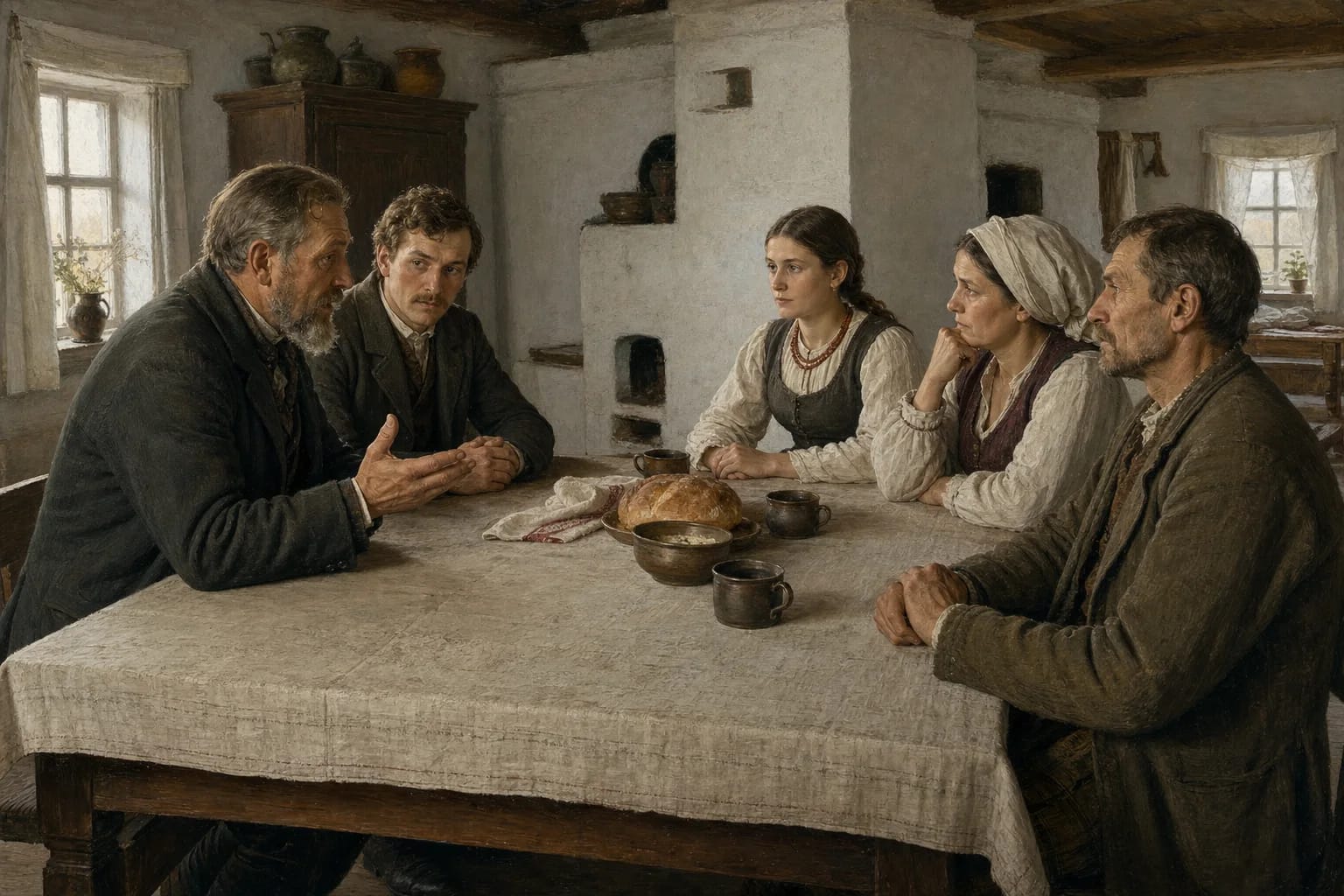
The first visit by the pirslys and groom was called pazintuves. Families observed one another, shared hospitality, and talked. The encyclopedia records that in Aukstaitija the matchmaker offered spirits to the young woman's parents, while in Zemaitija he asked about the share they would provide. Elsewhere he delivered an oration praising the diligence expected of a bride. These are regional examples, not parts of one universal first-visit scenario.
A second meeting might be called pirsles and concentrate on the bride's share and other practical terms. This contribution helped establish the new life and depended on period, wealth, and local law. Negotiation was not only greed: where the household was a unit of production and survival, marriage altered labor, inheritance, and support for aging parents. Yet economic calculation could override young people's wishes and reinforce inequality.
Prazvalgos and Ukvaizdziai: What Did Her Family Inspect?
Sources from the late nineteenth and early twentieth centuries document prazvalgos, also called perziuros, ukvaizdziai, or zvalgytuves. Before engagement, the young woman's parents—sometimes only her father—along with the woman herself, relatives, and matchmaker visited the groom's family farm. They inspected buildings, crops, livestock, and grain stores. The visit tested whether the material future described in negotiation matched reality.
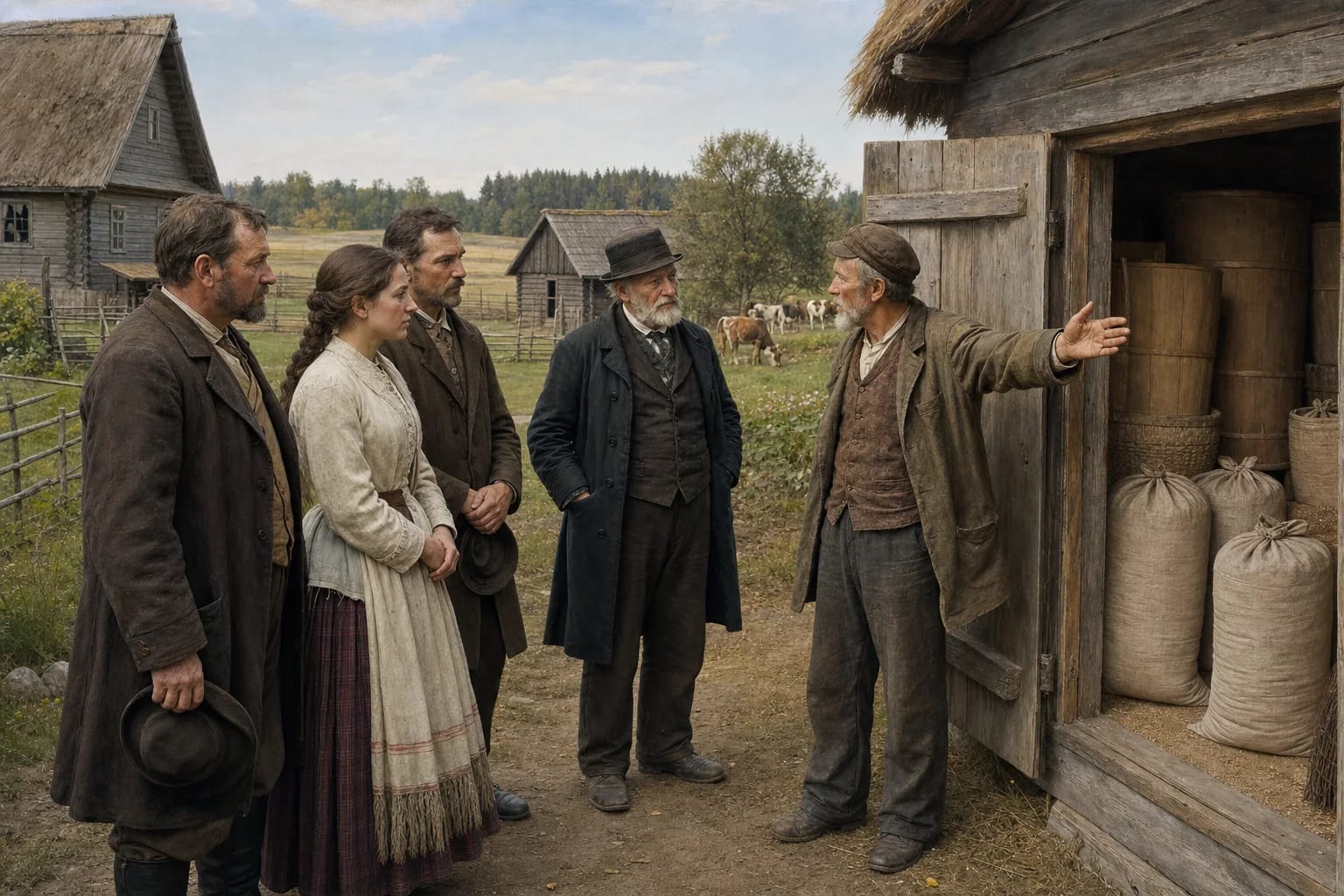
Farm inspection shows that marriage meant entering a specific system of work and authority. A bride often moved into her husband's family household, so its resources, living space, and her relationship with her parents-in-law mattered profoundly. Prazvalgos gave her side information but did not guarantee her free decision. A useful modern analogy is a transparent conversation about home, work, and money—not one family exercising a right to “inspect merchandise.”
Engagement: When Did the Agreement Become Public?
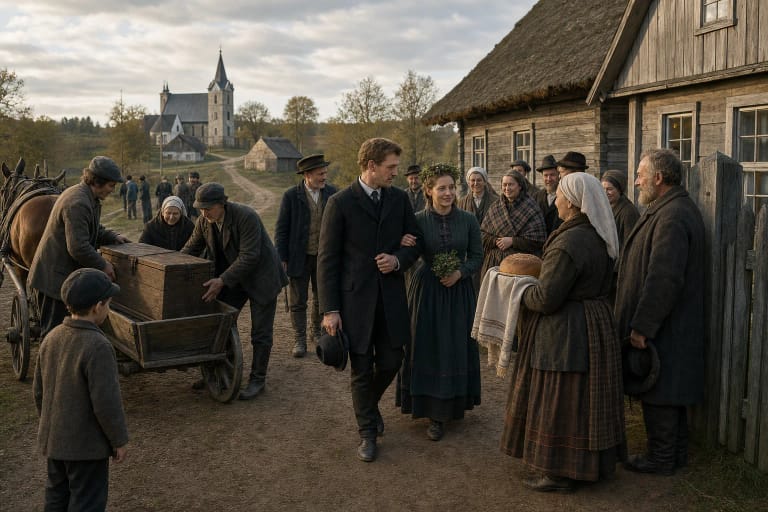
Engagement was known by several Lithuanian names, including suzadetuves, suziedotuves, sutartuves, ziedynos, and ziedotuves. In the nineteenth century it took place at the young woman's home at the end of pirslybos, with parents, household members, and invited guests. The matchmaker seated the couple together. The encyclopedia records gifts including patterned gloves from the woman, a silk scarf from the man, rue wreaths, and later rings and wreaths. From then on, they were publicly called groom and bride.
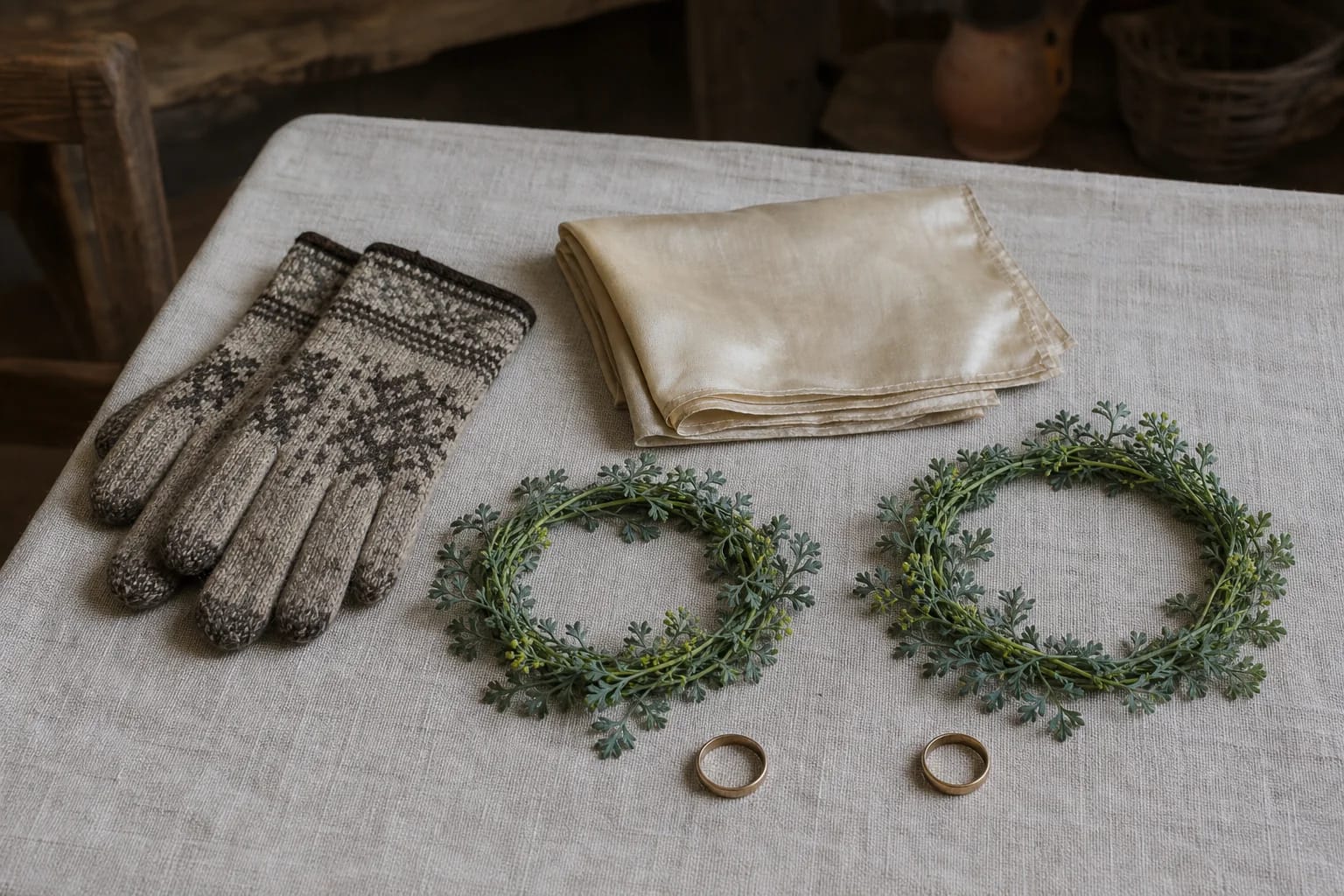
This was not the same as today's surprise proposal for two. It made a previously negotiated family agreement public and began concrete wedding preparation. In Catholic settings, church banns were another stage; Lutheran and other communities operated within their own ecclesiastical and civil systems. Confession matters not as decorative ritual variation but as an institution defining valid marriage, impediments, and public announcement.
Gifts, Uzgeros, and the Public Confirmation of Terms
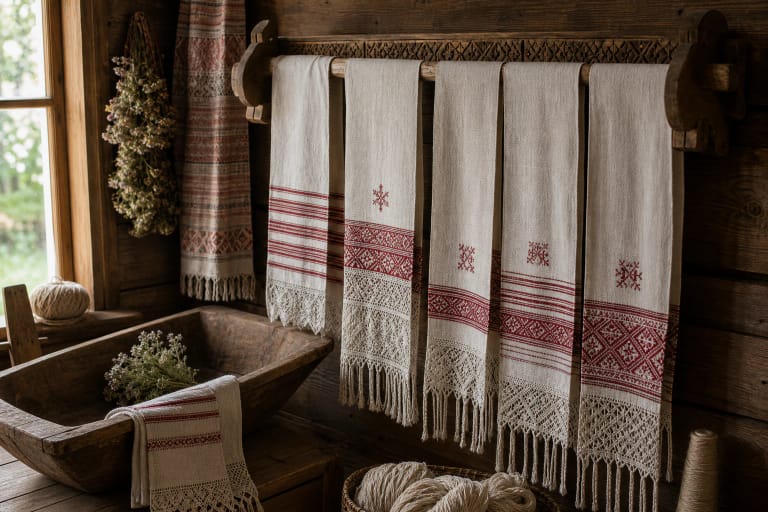
At the close of pirslybos, the bride might give the matchmaker towels, sashes, or a length of linen. Such textiles displayed household resources and skilled labor while acknowledging the mediator. Gift content was not uniform, and a museum towel cannot explain by itself at which stage it was presented. Provenance, date, and the recorded story establish meaning.
Uzgeros, sharing a drink brought by the pirslys, also confirmed the agreement. Accepting the cup was more than ordinary hospitality because a witnessed act signaled consent to terms. Alcohol need not be treated as the tradition's indispensable core or reproduced today. What mattered was an agreement visible to witnesses; spoken promises, a symbolic nonalcoholic toast, or a family gathering can carry that function now.
Could the Bride and Groom Choose Freely?
Sources reveal young people's agency unevenly. Some ritual accounts show parents and matchmakers speaking for them while the couple voiced little in public. Research on youth life, however, documents friendship, love, divination about marriage, and acquaintances formed at social gatherings. Parental negotiation could follow the couple's own relationship, but it could also attempt to create an economically desirable marriage.
It is therefore wrong both to claim that every traditional marriage was forced and to romanticize family control. A young woman's capacity to resist depended on age, inheritance, economic dependence, fear for reputation, and family pressure; a prospective groom could also face farm interests, although he usually held more social power. Clear and freely given consent by both people is the essential modern boundary. Historical “silence” cannot substitute for it.
Region, Period, Confession, and Class Changed the Sequence
Examples of hospitality in Aukstaitija, questions about the bride's share in Zemaitija, and figurative visitor roles in Uznemune and Dzukija demonstrate variation, not regional personalities. Numbers of visits, terms, gifts, and participants differed. Evidence from sixteenth- and seventeenth-century Lithuania Minor belongs to a different political, legal, and confessional setting from a nineteenth-century Catholic Dzukian village. Chronological distance matters as much as geography.
After the abolition of serfdom, private farm property made wealth more prominent in some marriage strategies, but a substantial farmer, smallholder, and servant still held different bargaining power in one parish. Ritual stages shortened in the early twentieth century, and pirslybos increasingly became practical negotiations; the traditional sequence disappeared in the second half of the century. Urbanization, education, wage labor, civil registration, and marriage based on personal affection changed the need for an intermediary.
Broken Agreements and the Place of Pirslybos Today
Even after uzgeros, an agreement was not absolutely irreversible. The encyclopedia's account of Lithuanian wedding customs says that the bride's parents could undo it by returning gifts and covering the feast's expenses. This shows the agreement's social and economic weight but does not mean withdrawal was easy: publicity, cost, and reputation could pressure people to continue. The possibility of refusal belongs beside an account of those barriers.
Today a matchmaker's humor, a meeting of families, or symbolic gifts can form an optional wedding prelude when the couple wants them. Museums and educational programs can present the historical sequence with a precise place and date. “Tradition,” however, cannot justify pressure to marry, property control, humiliation, or assumed consent. The strongest legacy is responsible preparation for shared life: an open conversation about expectations, housing, work, relatives, and the free decision of both partners.