
Winter
Agotines: St Agatha's Bread Day
February 5
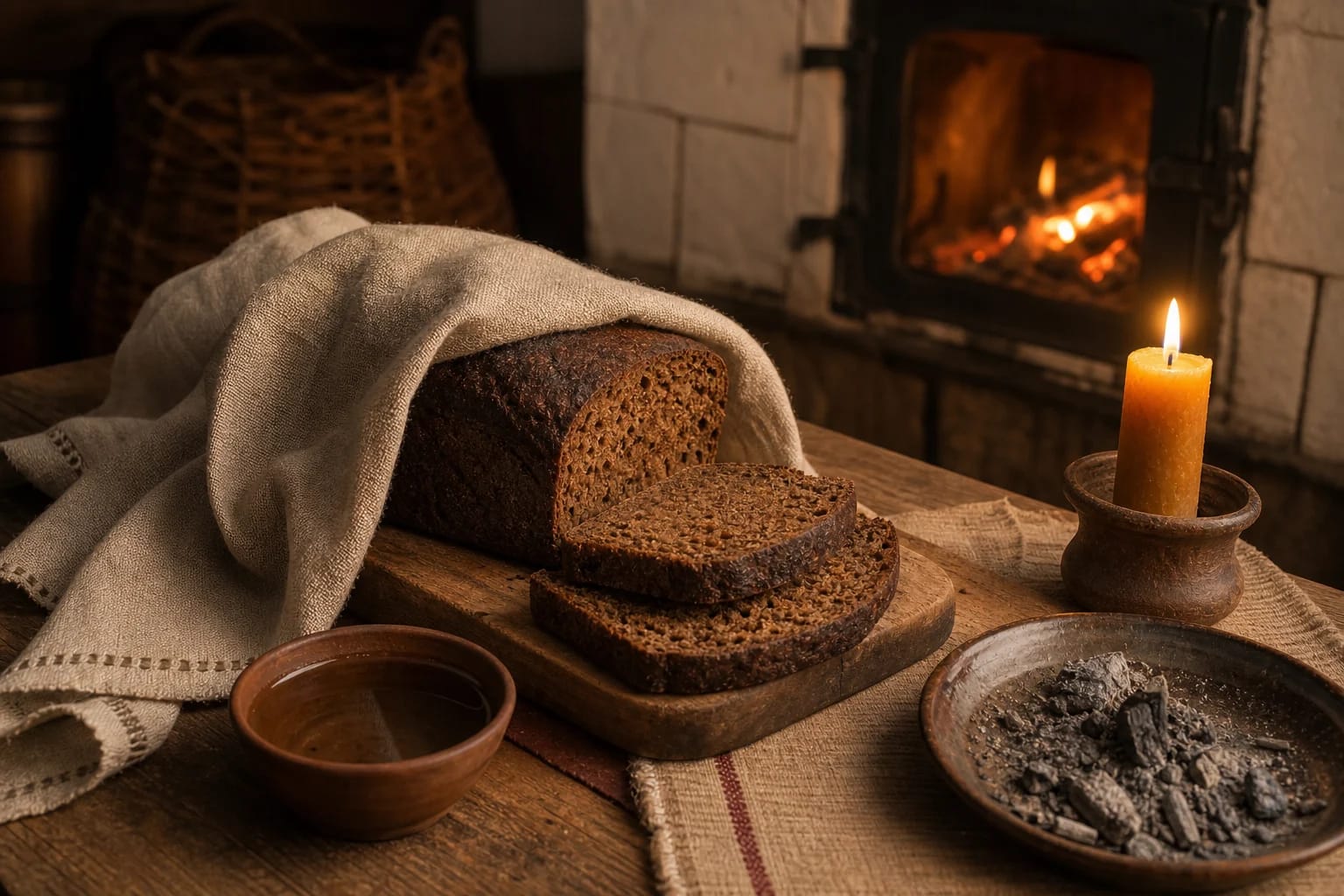
Agotines is a small feast of bread and fire. Rye bread blessed on February 5 was kept at home as protection from fire, lightning, and misfortune, while beneath St Agatha's name Lithuanian tradition long preserved the presence of Gabija, guardian of the household fire.
Tradition context
- When
- February 5
- Season
- Winter
- Themes
- St Agatha, Gabija, bread, household fire, protection from fire, Darsūniškis Agotėlė, blessed bread
Agotines on February 5 is the Lithuanian day of St Agatha, Gabija, and bread. Black rye bread is blessed in church and kept at home against fire, lightning, the evil eye, illness, and snakebite, while around Darsūniškis the local devotion to Agotėlė took on an especially vivid form.
What Are Agotines and When Are They Observed?
Agotines are observed on February 5, St Agatha's Day. VLE presents St Agatha as an early Christian martyr associated in iconography with fire, bread, and protection from fires. In Lithuania this meaning became very concrete: people blessed bread and kept it at home. According to VLE, St Agatha is thought to have lived in the 3rd century in Catania (Sicily) and was martyred under Emperor Decius (249-251); her attributes are pincers, a plate, and bread, she is regarded as protector from fire, and her relics are kept in Catania Cathedral.
The day is closely tied to Gabija. EKGT stresses that on February 5 Lithuanians honored household fire and daily bread, and after Christianity took root Gabija's functions were transferred to St Agatha. Agotines therefore is not only a saint's name day; it is a day for protecting hearth and bread.
Why Bless Rye Bread?
In the Lithuanian village, rye bread was the basis of everyday life, so blessed Agatha bread protected not an abstract idea but the survival of the household. It meant food, hearth, family continuity, and help when fire turned from nourishing to destructive.
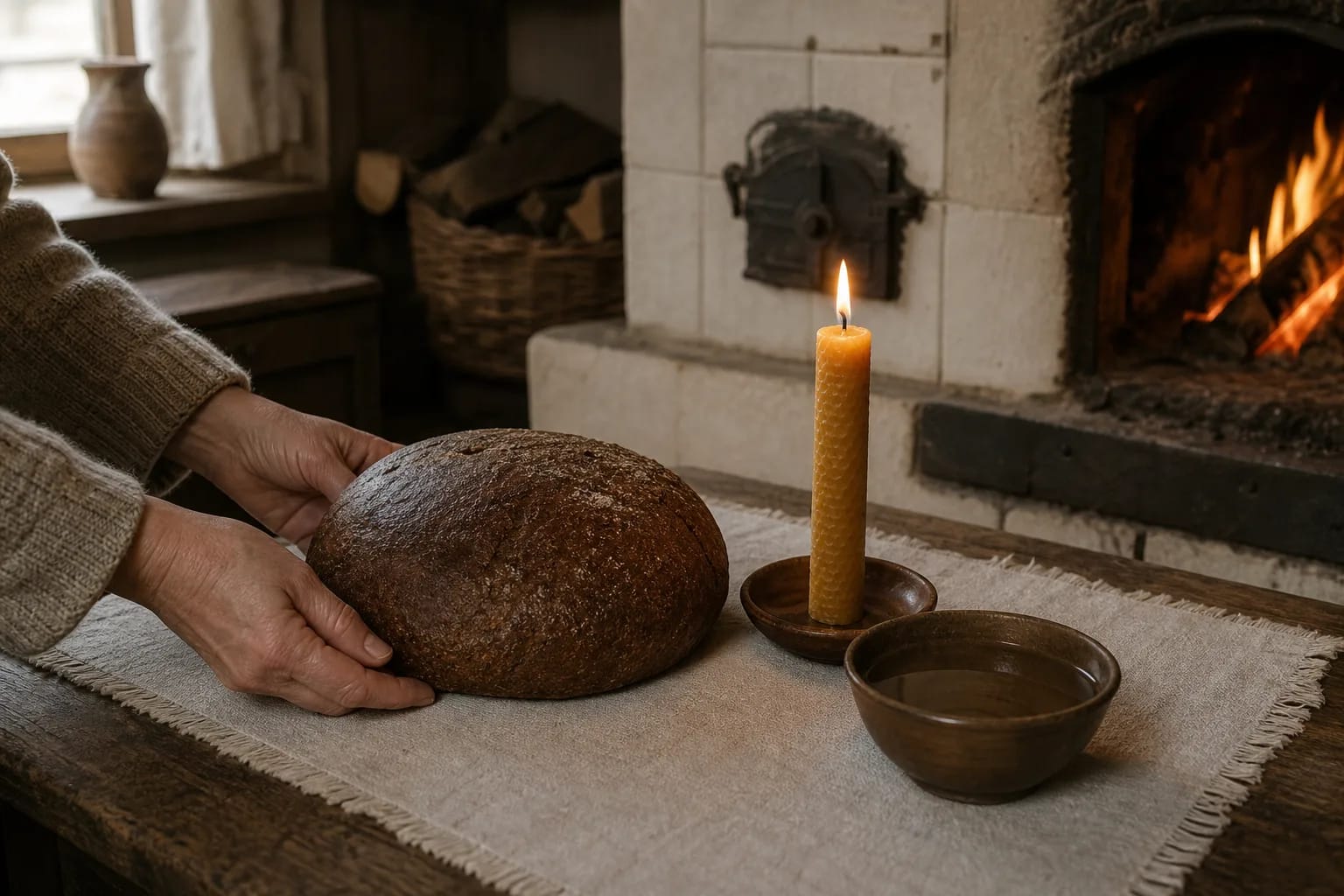
EKGT materials mention slices of black rye bread or an entire loaf. Blessed bread was considered effective against fire, the evil eye, wartime injury, and other harm. In the twentieth century it was still widely kept at home and used in the farmstead and folk medicine.
Agatha Bread Against Fire and Lightning
The main power of Agotines bread was protection from fire. VLE briefly notes the old Lithuanian belief in Agatha bread as a guard against lightning and fire. Marcinkevičienė's accounts on Alkas.lt develop this theme through specific memories.
Informants from around Darsūniškis told how blessed bread was carried around burning buildings, placed outdoors, or carried away from houses so the fire would turn aside. These are local beliefs and stories, not one practice applied uniformly across all Lithuania.
Other Uses of Agatha Bread
Agatha bread was used more widely than only at fires. A 2012 Alkas.lt text says that people going mushrooming or berrying took a piece against snakebite. Marcinkevičienė's material also places it near eye ailments, wounds, fever, and pain.
The accounts also mention farm uses: bread could be used for flax fertility, bees, swarms, or cows that gave no milk. Today these acts are read as folk beliefs, but they show how universal a protective medium blessed bread was considered to be.
Darsūniškis Agotėlė
A special local center of Agotines is Darsūniškis in the Kaišiadorys district. Marcinkevičienė describes the town's gate-chapels with sculptures of St Agatha, St George, and St Casimir. Agatha's gate on the road to Kruonis, also called the Vilnius road, was central to local memory.
In Darsūniškis Agatha became Agotėlė, the community's own guardian. People came to her for consolation and intercession, decorated the sculpture, and offered cloth, jewelry, and flowers. Before the Second World War, solemn Agotines processions went to the gate; after Soviet destruction the gate was rebuilt in 1990.
Marking Agotines Today
Agotines can be marked very simply: bake or buy rye bread, place it on the table deliberately, and remember household fire and the people who cared for the hearth, oven, food, and safety every day.
If bread is blessed in church, the important thing is to keep it respectfully, not as a souvenir. The meaning of Agotines is not fearful magic but attention to what feeds a home and can also destroy it: fire, bread, human caution, and community memory.
Main Agotines customs and meanings
Agotines customs revolve around bread as a protected object, not only food. A blessed slice could be kept in a chest, carried into the forest, used in danger from fire or illness, and in some places, especially around Darsūniškis, St Agatha became almost a local community guardian.
Blessing bread. On February 5 black rye bread is blessed in church, sometimes as slices and sometimes as a whole loaf.
Agatha and Gabija. In folk Christianity, St Agatha as protector from fire took over part of Gabija's older role as guardian of the household flame.
Protection from fire. Blessed Agatha bread was kept at home in the belief that it guarded against lightning, fire, and disasters caused by flame.
Bread on journeys. People going mushrooming or berrying carried a piece of blessed bread to protect against snakebite.
Folk medicine. Accounts mention Agatha bread used for wounds, eye ailments, fever, pain, and other troubles, often together with water.
Farm protection. The bread could be used to protect or strengthen cows, bees, flax, and swarms, so its meaning reached beyond fear of house fires.
Keeping it all year. In the twentieth century Agatha bread was still kept in many homes, wrapped in clean cloth and stored in a chest, drawer, or other safe place.
Darsūniškis Agotėlė. In Darsūniškis, in the Kaišiadorys region, St Agatha's gate, processions, offerings, and local stories created a strong local form of Agotines.
Where to experience it
Where to experience Agotines in Lithuania?
Agotines are experienced in church, where bread is blessed; at home, where it is kept; and in Darsūniškis, where Agotėlė's gate and local stories show a distinctive local layer.
Churches on February 5
Bread and water are blessed on Agotines. Bread brought home from church is kept in the household throughout the year.
Darsūniškis
The Agotėlė gate and local stories show a special Kaišiadorys-region layer of Agotines connected with fire memory and community protection.
Bread-Baking Workshops
Bread-baking education in museums and workshops helps explain why rye bread was not only food but a sign of household protection.
Agotines: songs, sutartines, and related pages
Agotines belongs beside the protective candle of Grabnycios, the image of Gabija's fire, bread-baking craft, and Lithuanian rye-bread tradition.

Grabnycios
A close early-February protection feast centered on the blessed candle.
Black Rye Bread
Everyday Lithuanian bread, which in Agotines becomes a blessed sign of protection.
Bread Baking
The traditional craft of preparing and baking bread, linked with the home oven and family table.

Gabija
The guardian of household fire, whose functions met St Agatha in folk tradition.
Agotines sources and useful pages
Agotines: frequently asked questions
When are Agotines observed?
Agotines are observed on February 5, St Agatha's Day. In Lithuanian customs the date is linked with blessed bread, Gabija, and protection of the home from fire.
What is Agatha bread?
Agatha bread is bread blessed on St Agatha's Day, most often rye bread. It was kept at home as protection from fire, lightning, illness, the evil eye, and other misfortunes.
How are Agotines connected with Gabija?
Gabija is the guardian of household fire in Lithuanian tradition. As Christianity took root, part of her role merged in folk consciousness with St Agatha, protectress from fire.
Was Agatha bread used only against fire?
No. Accounts mention protection from snakebite, illness, eye or body wounds, and farm beliefs connected with cows, bees, swarms, and flax.
Where was the blessed bread kept?
It was often wrapped in clean cloth and kept in a drawer, chest, or other safe household place as a precious and respectfully guarded object.
Why is Darsūniškis important for Agotines?
In Darsūniškis, St Agatha's or Agotėlė's gate and local stories created an especially vivid tradition. Agatha was seen there as the town's own guardian against fires and misfortune.
Are Agotines and Grabnycios the same feast?
No. Grabnycios are observed on February 2 and center on the blessed candle. Agotines are observed on February 5 and center on blessed bread and Gabija's fire theme.
What kind of bread is blessed on Agotines?
The accounts most often mention black rye bread: slices or a whole loaf. The important point is not the form but the meaning of bread as protection for home and fire.
How can Agotines be marked today?
You can bake or buy rye bread, set it on the table, light a candle near a stove or hearth, and remember the meaning of household fire and protected bread.