
Spring
Sestines: Ascension Day in Lithuania
The fortieth day after Easter; traditionally Thursday of the sixth week
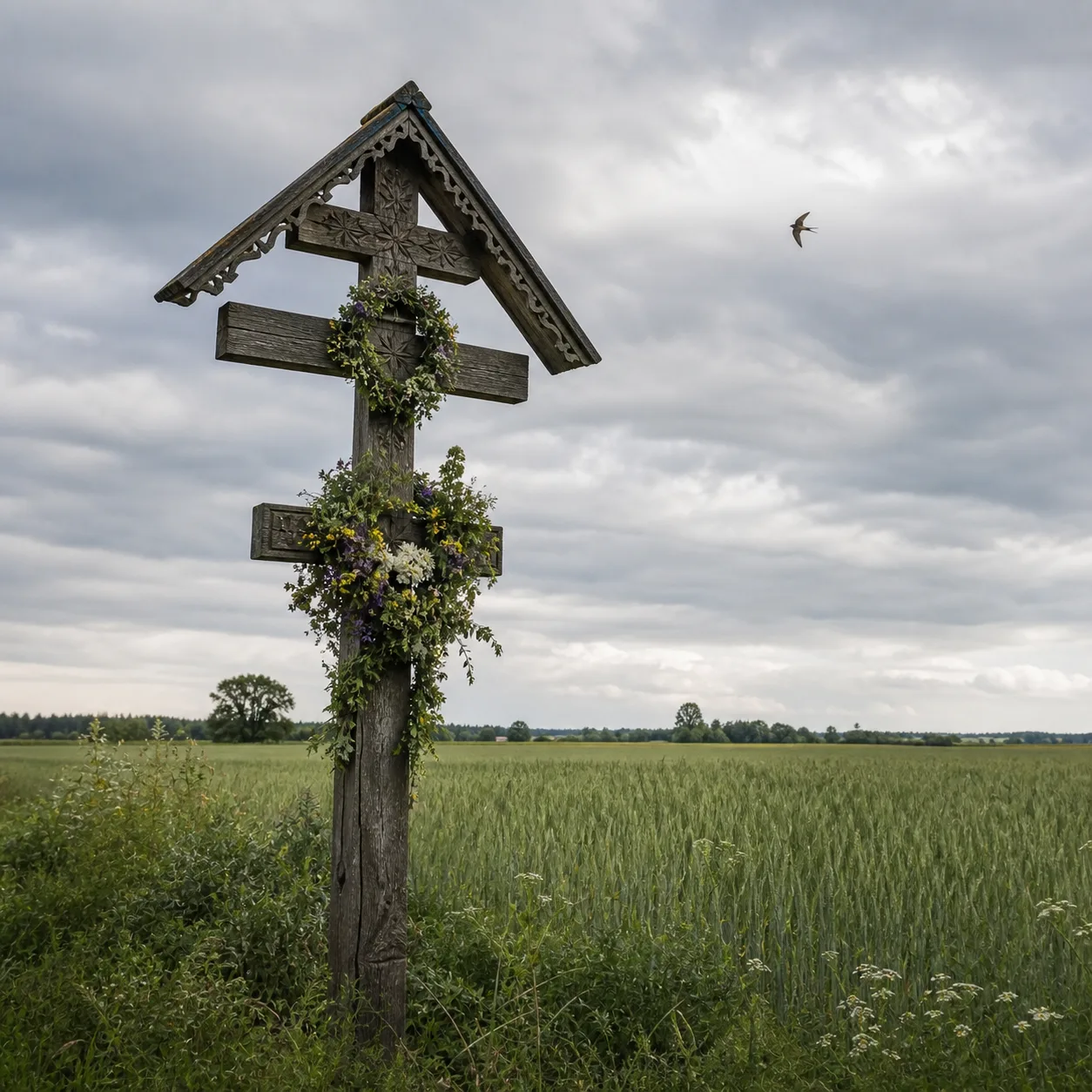
Sestines is a quiet but beautiful late-spring feast. The church meaning of Christ's Ascension meets the village's concern for fields: to visit crosses, sing, see the rye, and ask protection for the harvest.
Tradition context
- When
- The fortieth day after Easter; traditionally Thursday of the sixth week
- Season
- Spring
- Themes
- Ascension of Christ, Kryziavos days, village crosses, walking fields, end of spring sowing, rye, swallows, sestinaiciai
Sestines is a movable spring feast on the fortieth day after Easter. In Lithuania it is connected with Christ's Ascension, the Kryziavos or Cross Days, visiting village crosses, walking around fields, the end of spring sowing, children and shepherds, the number six in food, and the name Swallow Day.
When Are Sestines Celebrated?
Sestines is a movable feast. VLE says it is celebrated on the fortieth day after Easter, the Thursday of the sixth Easter week. The date changes every year; VLE places it between April 30 and June 3, and notes that this feast of Christ's Ascension has been celebrated since the very first centuries of Christianity.
In Lithuania today Catholic liturgy often moves Sestines to the seventh Sunday of Easter time so people can participate more easily. Both the traditional Thursday rule and the modern transfer matter.
What Are Kryziavos Days?
The three days before Sestines - Monday, Tuesday, and Wednesday - were called Kryziavos or Cross Days. Imbrasiene writes that during these days some work was avoided, meat not eaten, and people went to crosses, around fields, and to cemeteries.
Klimka emphasizes that village communities used these days for common prayers for peace, health, and harvest. It was not only individual devotion but a whole village walking through its landscape.
Why Were Village Crosses Visited?
During Kryziavos, old and young went to crosses. Girls wove wreaths and decorated them. In the evenings people walked around village and roadside crosses, sang, prayed, and in some places continued to the cemetery.
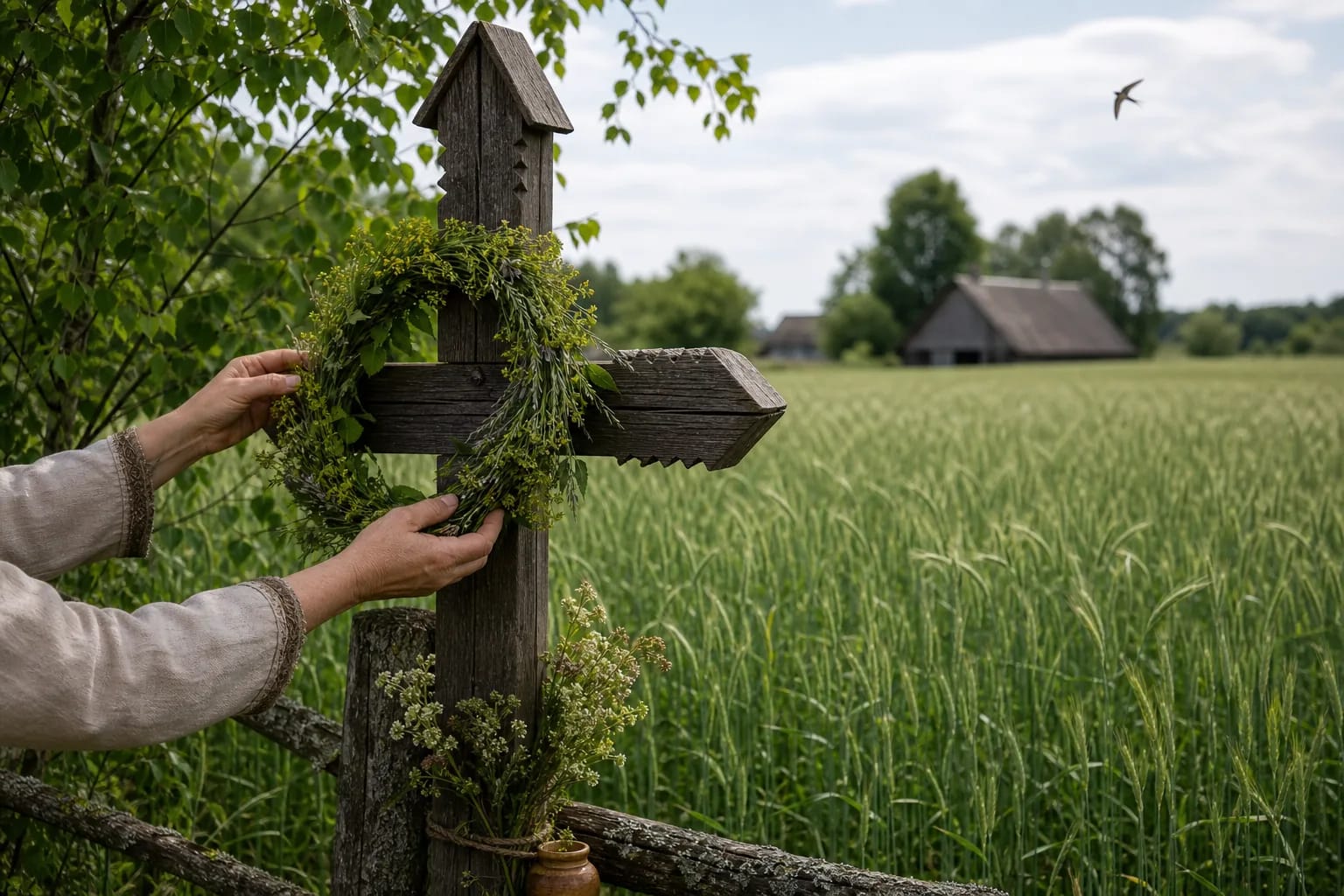
Jonas Balys interpreted this field-and-cross walking as a very old circular protection custom: the place walked around is enclosed in a protective boundary. In Christian practice it became prayer at the cross, while the circle through fields preserved the protective logic.
Fields, Rye, and the End of Sowing
Sestines comes when spring sowing in the village was supposed to be ending. During Kryziavos people avoided sowing grain, saying it might “cross,” while Klimka mentions exceptions such as cucumbers and peas in some places.
On Sestines itself, after returning from church, the farming family visited the rye field. They walked around it and sang or chanted by the rye, asking for the success of future bread. The green field is not background here but the central place of the feast.
Children, Shepherds, and the Number Six
Imbrasiene also calls Sestines a feast of little ones. A singing procession went through the village toward the cemetery, and children joined from farmyards wearing new scarves, caps, or shirts.
The number six appears in festive food. Around Liskiava, six small pies, eggs, or six pig's feet are mentioned. Around Birzai, people said one should eat six times and include meat with peas so pigs would prosper and flour not run short.
Why Sestines Was Called Swallow Day
Klimka recalls that in village speech Sestines was called Swallow Day. This relates to the late return of swallows and a tale about the color of the swallow's throat, linking the bird, Christ's Passion, and the rue plant.
Crosses are therefore not decorated randomly. Rue, wreath, swallow, and green rye form a delicate Sestines image: spring is ending, summer work is beginning, and people ask that the work be protected.
Main Sestines customs and meanings
Sestines customs focus on the three days before the feast and on Sestines itself. Important signs include Kryziavos days, village crosses, cemeteries, crop visiting, children and shepherds, the number six, and swallows.
Movable date. Sestines are celebrated on the fortieth day after Easter, traditionally Thursday of the sixth week.
Liturgical transfer. In Lithuania Catholic practice often moves Sestines to the seventh Sunday of Easter time so people can attend Mass.
Kryziavos days. The Monday, Tuesday, and Wednesday before Sestines were called Kryziavos or Cross Days.
Visiting crosses. The community went from one village or roadside cross to another, sang litanies, and decorated crosses with wreaths.
Walking the fields. Processions went around fields, to crosses, and to cemeteries, asking protection for crops.
Sowing taboos. During Kryziavos people avoided sowing grain so it would not “cross,” though peas and cucumbers were sometimes favorable exceptions.
Foods of six. After Sestines housewives prepared six small pies, eggs, pig's feet, or dumplings called sestinaiciai.
Swallow Day. In village speech Sestines was also Swallow Day, because swallows return late and their image is tied to decorating crosses with rue.
Where to experience it
Where to experience Sestines in Lithuania?
Sestines are traditionally experienced not only in church. The feast path leads to village crosses, cemeteries, and green rye fields where the community sees the future bread.
Church
The religious beginning is Mass and procession marking the Ascension of Christ.
Village and Roadside Crosses
During Kryziavos people went from cross to cross, decorated them with wreaths, sang litanies, and prayed for harvest.
Cemeteries
In some places the procession went to the cemetery, where people sat near relatives' graves and finished singing the litany.
Rye Fields
After church the family visited green rye, walked around the field, and asked for future bread to prosper.
Sestines: songs, sutartines, and related pages
Sestines is a bridge between Easter time and Sekmines. It connects with cross-crafting, rye symbolism, and swallow imagery in songs.

Sekmines
The green, shepherd, and early-summer feast on the seventh Sunday after Easter.
Cross-Crafting
The Lithuanian tradition of crosses, roofed poles, and roadside sacred signs central to Kryziavos.

Grain, Rye, and Seeds
Rye and future bread symbolism visible in Sestines field visits.
Oh You Little Swallow
A folk song with swallow imagery close to Sestines Swallow Day motifs.
Sestines sources and useful pages
Sestines: frequently asked questions
When are Sestines celebrated?
Sestines are celebrated on the fortieth day after Easter, traditionally Thursday of the sixth week. In Lithuania they are often moved to the seventh Sunday of Easter time.
Why is the feast called Sestines?
The name is linked with the sixth Easter week and the sixth-week Thursday when the Ascension of Christ is traditionally commemorated.
What are Kryziavos days?
They are the three days before Sestines when communities went to crosses, around fields, and to cemeteries, praying for harvest, health, and protection.
Why was grain not sown during Kryziavos?
It was believed that grain sown then could “cross” or grow poorly. The ban belongs to crop-protection customs.
What was done at the rye field?
After church, families visited the green rye field, walked around it, sang parugines, and asked for the success of future bread.
Why was Sestines called Swallow Day?
The name is tied to late-returning swallows and a tale connecting the swallow, rue, and cross decoration.
What are sestinaiciai?
In Klimka's text, sestinaiciai are Sestines dumplings. More broadly, the feast shows six-symbolism in six pies, eggs, or other foods.
Are Sestines and Sekmines the same?
No. Sestines are on the fortieth day after Easter; Sekmines are on the seventh Sunday after Easter. Both belong to Easter time but have different meanings and customs.
Where are Sestines customs best understood?
By village crosses, in cemeteries, and near green rye fields. These are the main spaces named in accounts of Sestines and Kryziavos customs.