
Autumn
Andriejines: St Andrew's Eve Divinations
November 30; the eve of St Andrew's Day
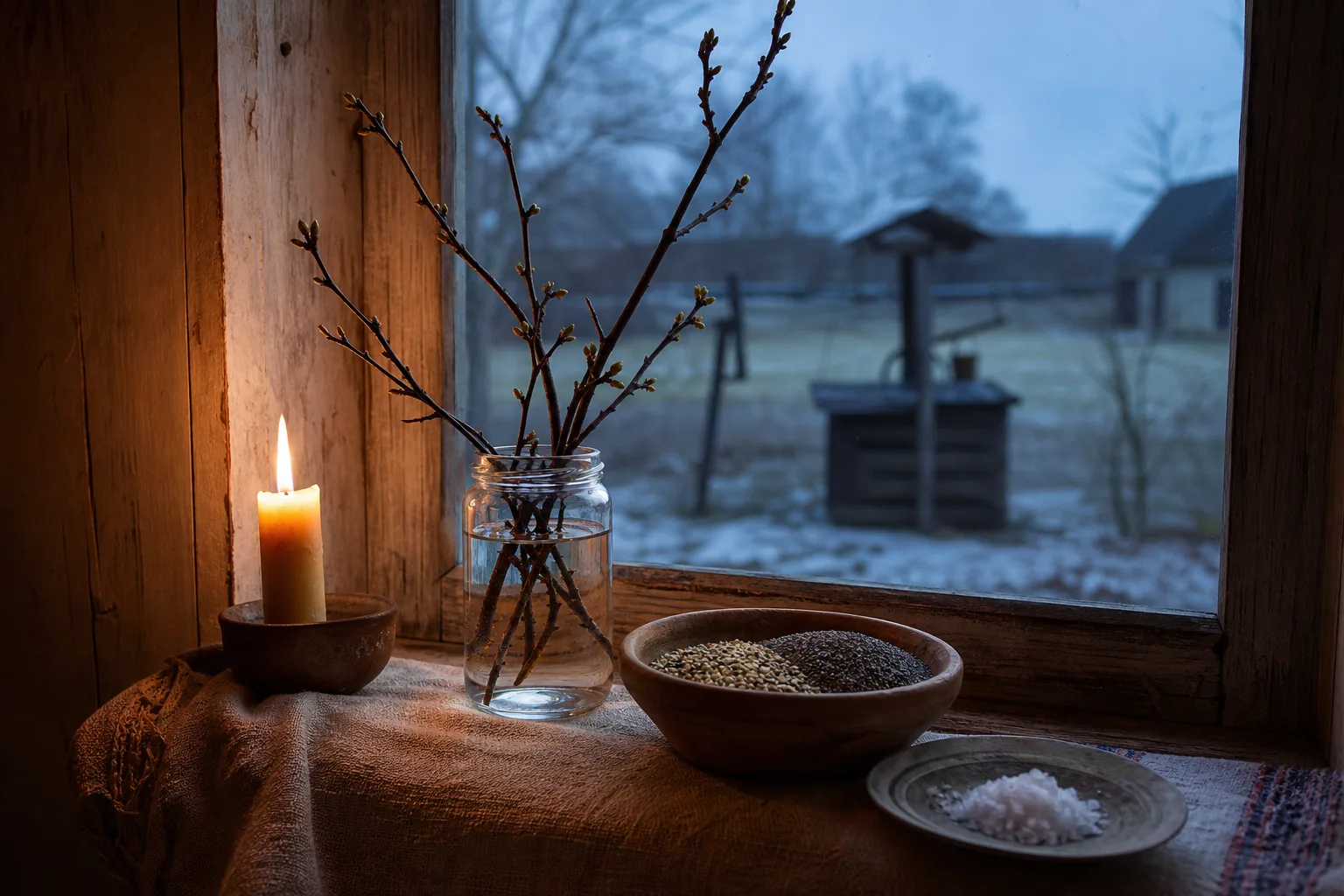
Andriejines is a very quiet boundary of the year. It does not create a large public feast, but opens the way into Advent: a twig is set in water at home, dream and marriage divinations are remembered, and darkening November turns toward Christmas waiting.
Tradition context
- When
- November 30; the eve of St Andrew's Day
- Season
- Autumn
- Themes
- St Andrew, beginning of Advent, cherry twig, plum twig, marriage divinations, well, hemp, poppy seeds, salty food, dreams
Andriejines at the threshold of November 30 mark the waiting before Advent and a quiet time of household divination. The best-known custom was to set a cherry or plum twig in water on the eve and watch whether it blossomed by Kucios, while marriage divinations with a well, hemp, poppy seeds, salt, and dreams let young people ask about their future fate.
When Are Andriejines Observed?
Andriejines are connected with November 30, St Andrew's Day. Ethnographic material also stresses the evening before, because divinations are performed after dusk, in the spaces of home and yard.
The liturgical beginning of Advent today depends on the Sunday before Christmas, but St Andrew's Day remains a clear folk-calendar threshold. EKGT calls it a day marking the beginning of Advent, so Andriejines are best understood as an entrance into Christmas waiting.
The Cherry or Plum Twig on the Windowsill
The most widely known Andriejines custom is simple: on the eve of St Andrew's Day a cherry or plum twig is broken, put in water, and kept on the windowsill. Until Kucios morning people watch whether it forms buds and blooms.
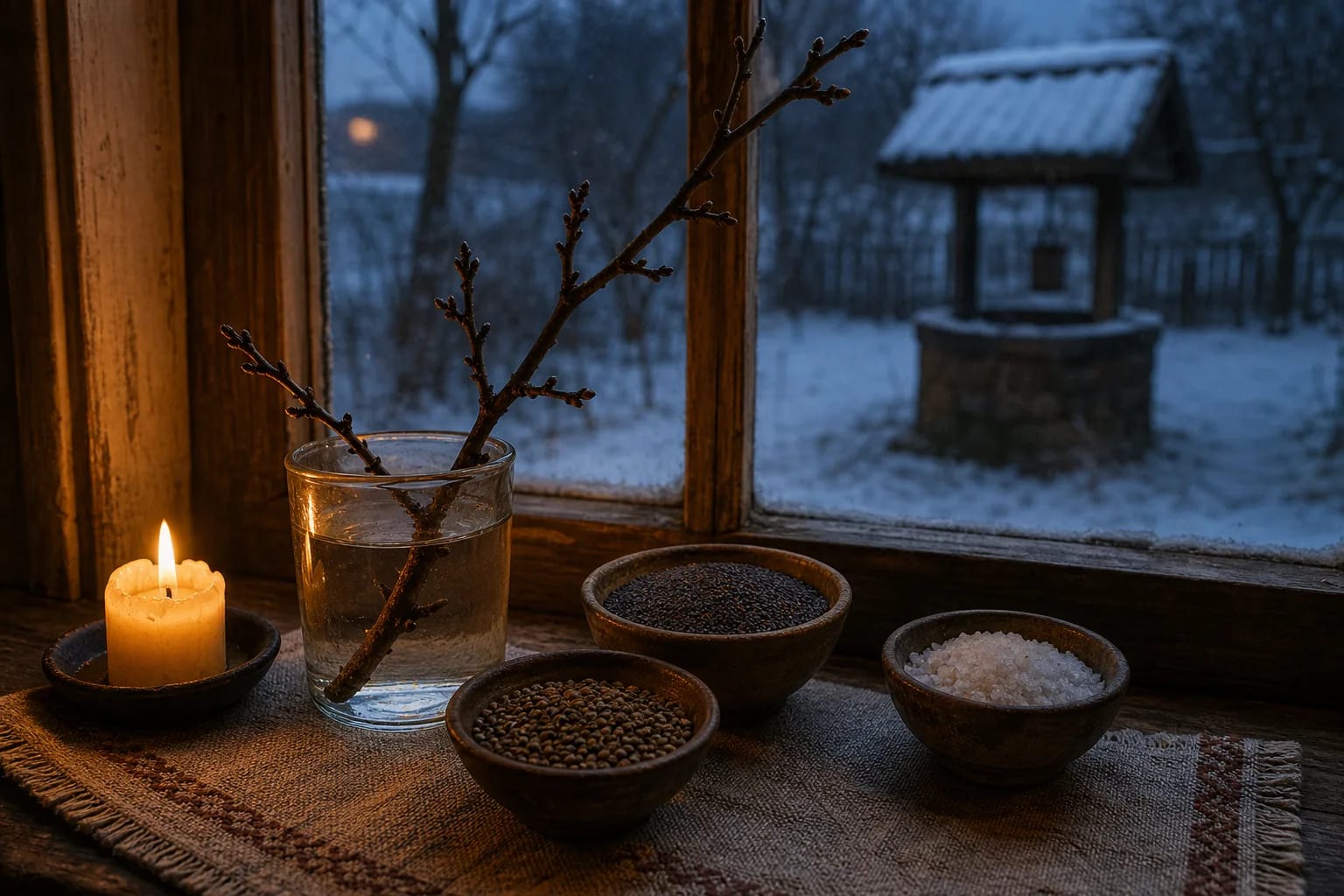
The meaning is not explained in one way only. EKGT speaks of a dream or wish coming true, while VLE's Advent entry connects a blooming cherry twig set by girls with hopes for quick matchmakers. The act is the same, but the meaning may be broader or clearly marital.
Why Andriejines Stand Close to Kucios Divinations
EKGT stresses that St Andrew's Day predictions and divinations resemble Kucios fortune-telling. Both dates belong to the same dark-season waiting: Andriejines begin the Advent road, and Kucios closes the waiting at the threshold of Christmas.
The focus is therefore not a noisy rite but a small attempt to ask the future. Twig, water, seeds, salt, and dream are household things, but on that evening they become questions about a person's life path.
The Well, Hemp, Poppy Seeds, and Dream
One marriage divination described by EKGT has a precise sequence. At dusk the girl walks three times backward around a well against the sun's direction while scattering hemp or poppy seeds behind her. Later the seeds are symbolically planted near the bed, salty food is eaten, and a dream is awaited.
In the dream the destined man was to appear, riding to the well to water his horse. This custom should be read as youth marriage divination, not as a universal family ritual. Its strength lies in the images: well, backward steps, seeds, salty thirst, and the rider in the dream.
Andriejines Today
Today Andriejines can be remembered with restraint: set a fruit-tree twig in water, watch its life until Kucios, light a candle, and begin a calmer Advent. There is no need to stage antiquity or invent new rituals.
The most important thing is to keep the custom's scale. Andriejines belongs to the windowsill, the yard well, the dream, and personal waiting. It is most beautiful when it remains quiet and specific.
Main Andriejines customs and meanings
Andriejines customs turn around a personal question and a period of waiting. The records first mention girls' marriage divinations, but a twig blooming by Kucios could also be read more broadly as a sign of a wish, hope, or future success.
St Andrew's Day. November 30 stands in the folk calendar at the threshold of Advent and Christmas waiting.
Eve divinations. Some customs were performed on the evening before St Andrew's Day, when the dusk mattered more than ordinary daytime life.
Cherry or plum twig. Across Lithuania people knew the custom of breaking a twig, setting it in water on the windowsill, and watching whether it bloomed by Kucios.
A sign of desire. EKGT notes that a blooming twig meant the fulfillment of a dream or wish.
Waiting for matchmakers. VLE's Advent description connects a girl's cherry twig blooming by Kucios with the hope of soon receiving matchmakers.
The well divination. EKGT describes a marriage divination in which a girl walks three times backward around a well against the sun's direction at dusk.
Hemp, poppy seeds, and salty food. The same divination chain includes scattering seeds, planting them symbolically near the bed, eating something salty, and waiting for a prophetic dream.
Dream of the groom. At the end of the divination the destined man was expected to appear in a dream, riding to the well to water his horse.
Andriejines: songs, sutartines, and related pages
Andriejines connects the beginning of Advent with Kucios divinations, water and well symbolism, and images of hemp and poppy seeds. Its signs belong to the home, the windowsill, and the dream rather than to large events.
Advent
The Christmas waiting season at whose threshold the Andriejines twig and divinations stand.
Kucios
The main Christmas waiting evening, also rich in predictions about fate and the future.

Christmas
The feast toward which Advent leads and by which the Andriejines twig is checked at Kucios.

Water, Spring, River
Water and well imagery help explain the space of Andriejines divination.
I Sowed Hemp
A hemp work song that recalls the plant and sowing image present in Andriejines divination.
Andriejines sources and useful pages
Andriejines: frequently asked questions
When are Andriejines observed?
Andriejines are connected with November 30, St Andrew's Day. In custom the evening before is especially important, because that is when divinations are performed.
Why are Andriejines linked with the beginning of Advent?
St Andrew's Day stands at the threshold of Advent. EKGT calls it a day marking Advent's beginning, although the current liturgical start depends on the Sunday before Christmas.
What twig is used for Andriejines?
The records mention a cherry or plum twig. It is broken on St Andrew's Eve, set in water on the windowsill, and watched until Kucios.
What does a blooming Andriejines twig mean?
EKGT links it with a dream or wish coming true, while VLE mentions girls' belief that a cherry twig blooming by Kucios would call quick matchmakers.
Was the twig custom known throughout Lithuania?
EKGT describes it as a custom known across Lithuania. Other marriage divinations may be narrower and should not be treated as a single all-Lithuanian practice.
What is the Andriejines well divination?
EKGT describes a marriage divination: at dusk a girl walks three times backward around a well against the sun's direction, scatters hemp or poppy seeds, plants them symbolically near the bed, eats something salty, and waits for a dream of the future groom.
Why do hemp and poppy seeds appear in the divination?
In the account they function as seeds, scattered and symbolically sown in a marriage divination. The concrete sequence matters more than a broad symbolic explanation.
Are Andriejines a public holiday?
Not in the traditional sense. They belong more to the home, windowsill, yard, and dream than to a large community event.
How can Andriejines be remembered today?
Set a cherry or plum twig in water, watch its buds until Kucios, and begin Advent more quietly. The point is to understand an old sign of waiting, not to invent new fortune-telling.