- When / context
- In summer, on a day set by the parish or cemetery community; in Kisiniai, the last Sunday in June
- Tradition area
- Community life
- Themes
- Cemetery festival, Lithuanian Lutherans, Lithuanian Reformed Church, summer cemetery worship, hymns, psalms, grave care, family reunion, Kisiniai, Lithuania Minor
Lithuanian cemetery festivals are summer services found principally in Protestant communities in western and northern Lithuania. Grave care, scripture, psalms and hymns, the names of those who died during the year, returning relatives, and local history all meet in one observance.
What Is a Lithuanian Cemetery Festival?
A cemetery festival is communal worship in a cemetery and a day of remembering the dead. In this context, the Lithuanian word šventė marks a sacred occasion set apart from ordinary time, not an entertainment festival. People gather to hear scripture, pray, sing, remember those who died, and meet relatives. Because worship takes place among the graves, the names and history of the community are not an abstract subject; they surround the congregation.
The Universal Lithuanian Encyclopedia associates cemetery festivals with Protestant cemeteries in western Lithuania. Ethnographic fieldwork around Biržai documents comparable summer remembrance in Reformed communities. These two centers show why the tradition cannot be reduced to either “Samogitian custom” or Lithuania Minor alone. Its most accurate map is the historical network of Protestant parishes and families.
Where Does the Tradition Live in Lithuania?
Its clearest historical area is Lithuania Minor and the Klaipėda Region, where Lutheran cemeteries formed an integral part of village and parish life. Cemetery festivals are also held by Lutheran parishes in parts of Samogitia. The Mažeikiai Lutheran congregation describes summer as a special season of cemetery festivals, when worshippers gather at different burial grounds to remember, pray, and sing. This parish testimony confirms a living practice, while exact dates still need to be checked locally each year.
Northern Lithuania adds the Reformed tradition of the Biržai area. Rimutė Garnevičiūtė's field material records summer cemetery festivals as a distinct Protestant form of remembering the dead alongside Catholic month and anniversary observances. Denominational neighbours may share social actions—tending a grave, meeting relatives, singing—without sharing the same theology or order of worship.
How Does a Cemetery Festival Differ from All Souls?
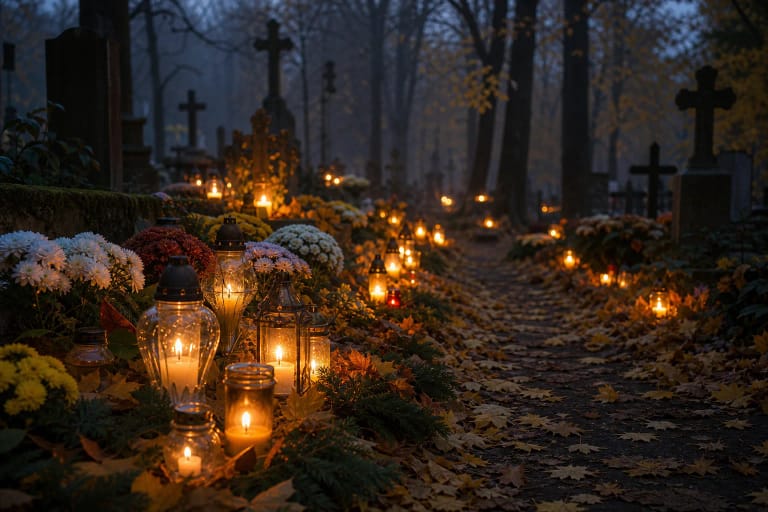
All Souls is observed on November 2 in the Catholic calendar and, in Lithuanian public life, closely overlaps with grave visiting on November 1. Cemetery festivals have no national date: each burial ground has its own summer Sunday. November remembrance is strongly associated with families visiting graves, candles, and an autumn evening landscape. At a Protestant cemetery festival, a shared daytime service, scripture, and congregational hymns are central.
The scale of memory also differs. At All Souls, a family may travel between several cemeteries around the country. A cemetery festival draws together the people of one burial ground, parish, or former village and often becomes their annual reunion. Some families take part in both traditions, so the two need not be set against each other. The distinction instead prevents a summer service from being visually recast as Catholic All Souls and avoids policing every flower or candle in a Protestant cemetery as somehow “wrong.”
Preparing the Grave and the Cemetery
Before the appointed Sunday, relatives tend the family grave. They remove invasive growth, renew restrained planting, clean an inscription, and check whether a marker is stable. A community work party may care for paths, fences, gates, or plots that are now seldom visited. The work is more than decoration. A legible name and an accessible grave allow the place to continue telling the history of a family and settlement.
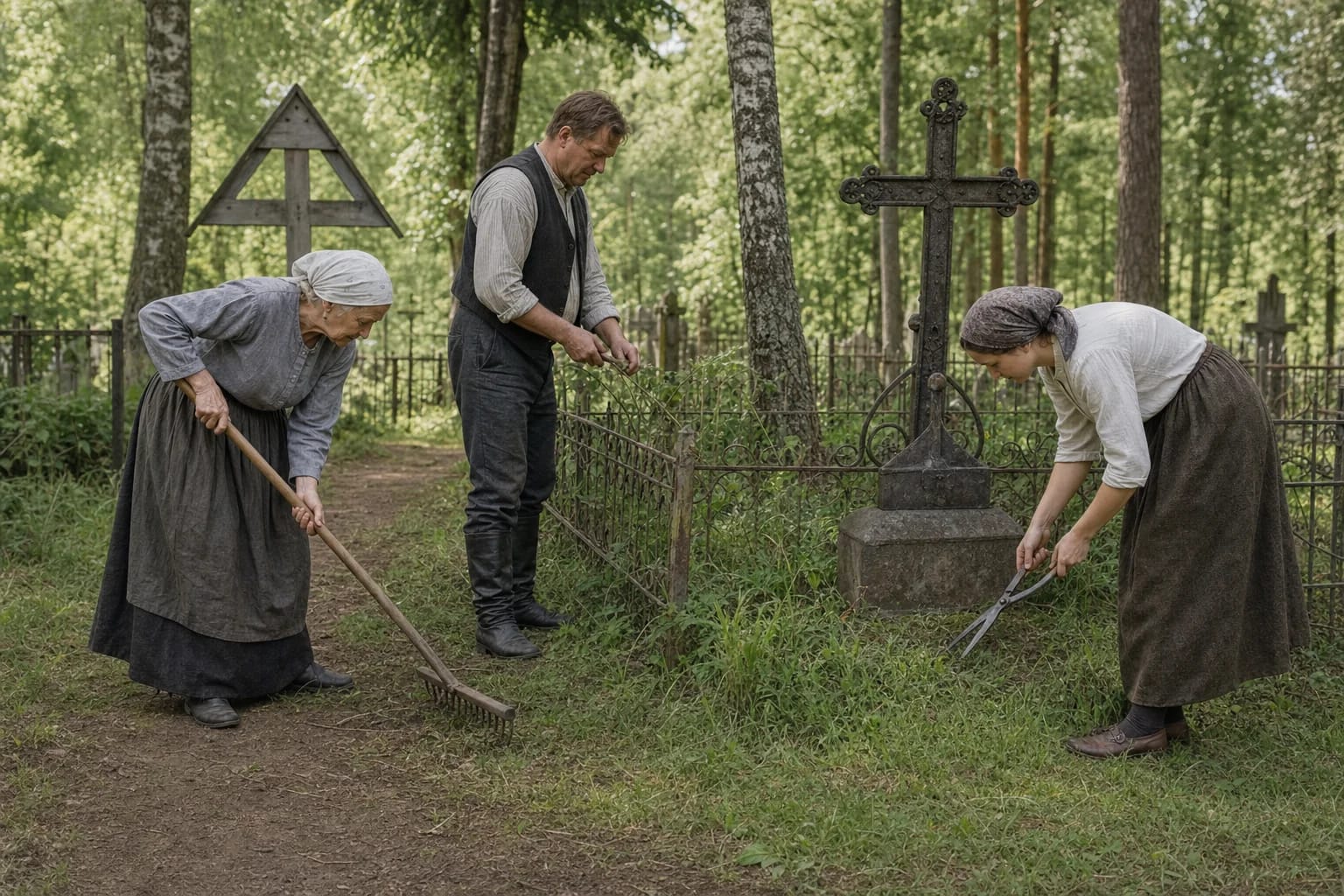
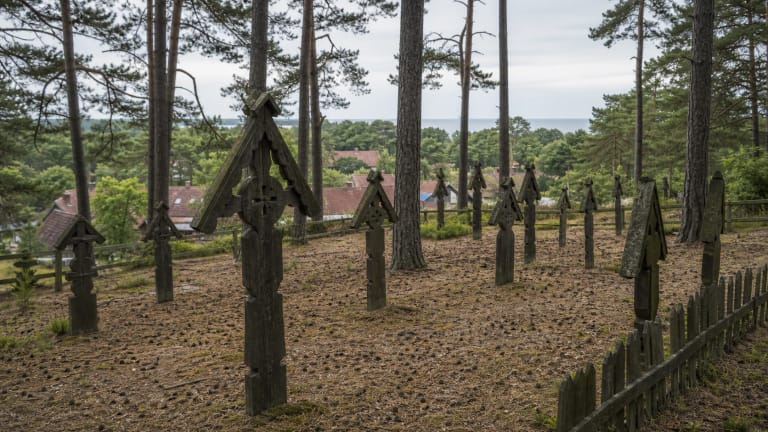
Restraint is essential in old cemeteries of Lithuania Minor. A wooden krikštas, a rusting hand-forged cross, a lichen-covered stone, or a mature tree belongs to the historic landscape. Unplanned painting, straightening, or replacement can destroy original material. Larger work should be discussed with the cemetery authority and, where relevant, heritage specialists. Care does not require stripping away all old vegetation and replacing it with disposable plastic ornaments.
The Service: Psalms, Readings, Sermon and Hymns
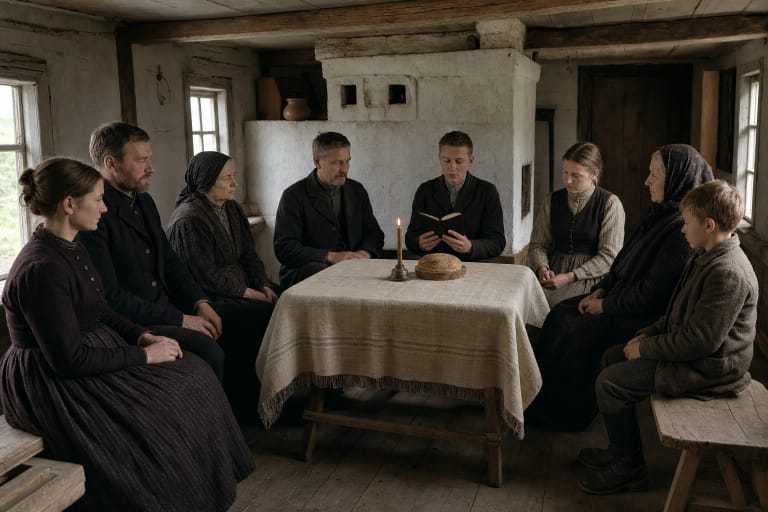
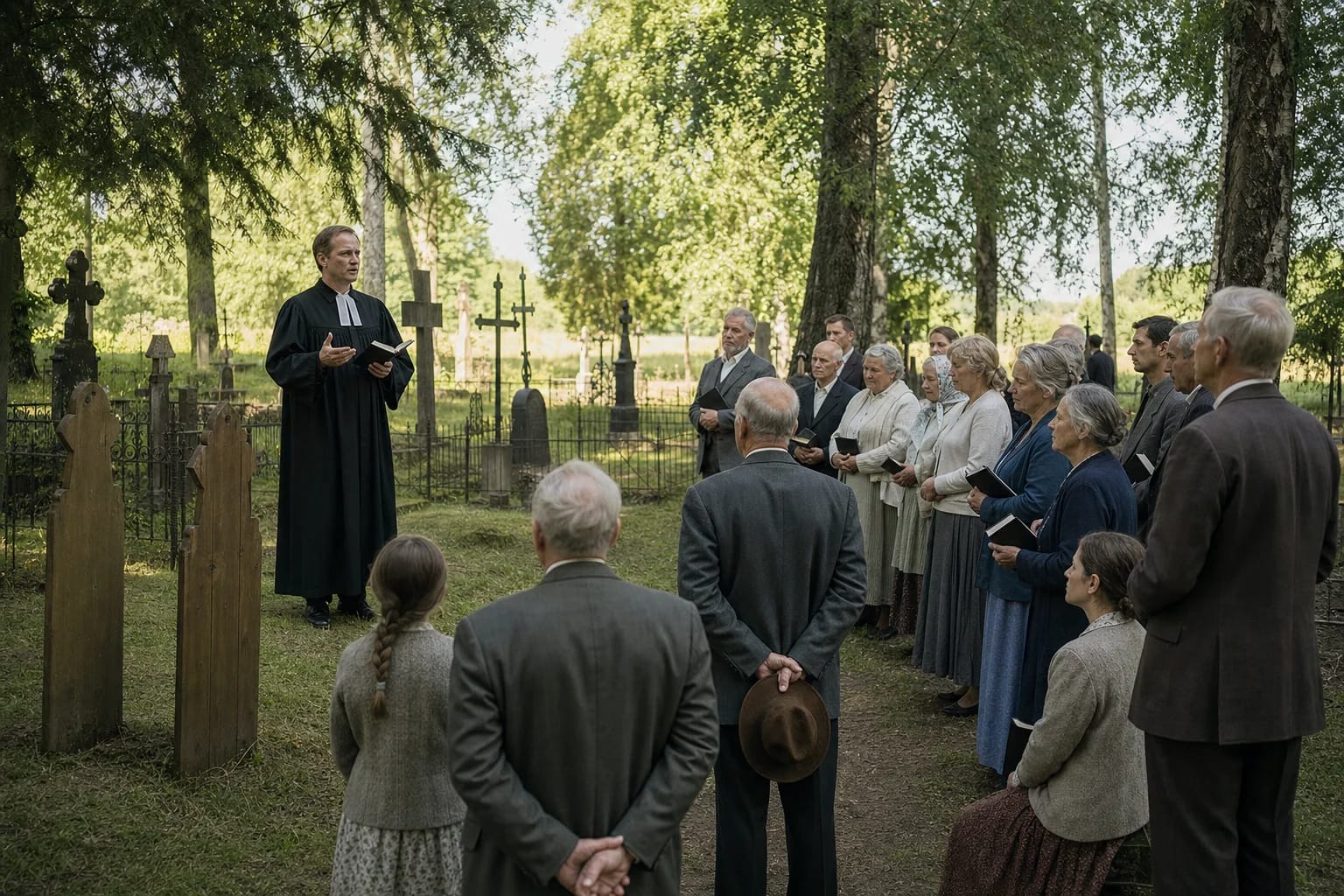
The order depends on denomination and place. A Lutheran gathering normally includes psalms and other readings from the Bible, a sermon, prayer, and congregational singing. Cemetery festival sermons published by the Lutheran Church in Lithuania approach death through the promise of Christ's resurrection and the responsibilities of the living. Remembrance is therefore not an attempt to summon the dead through ritual, but an act of faith, gratitude, and hope.
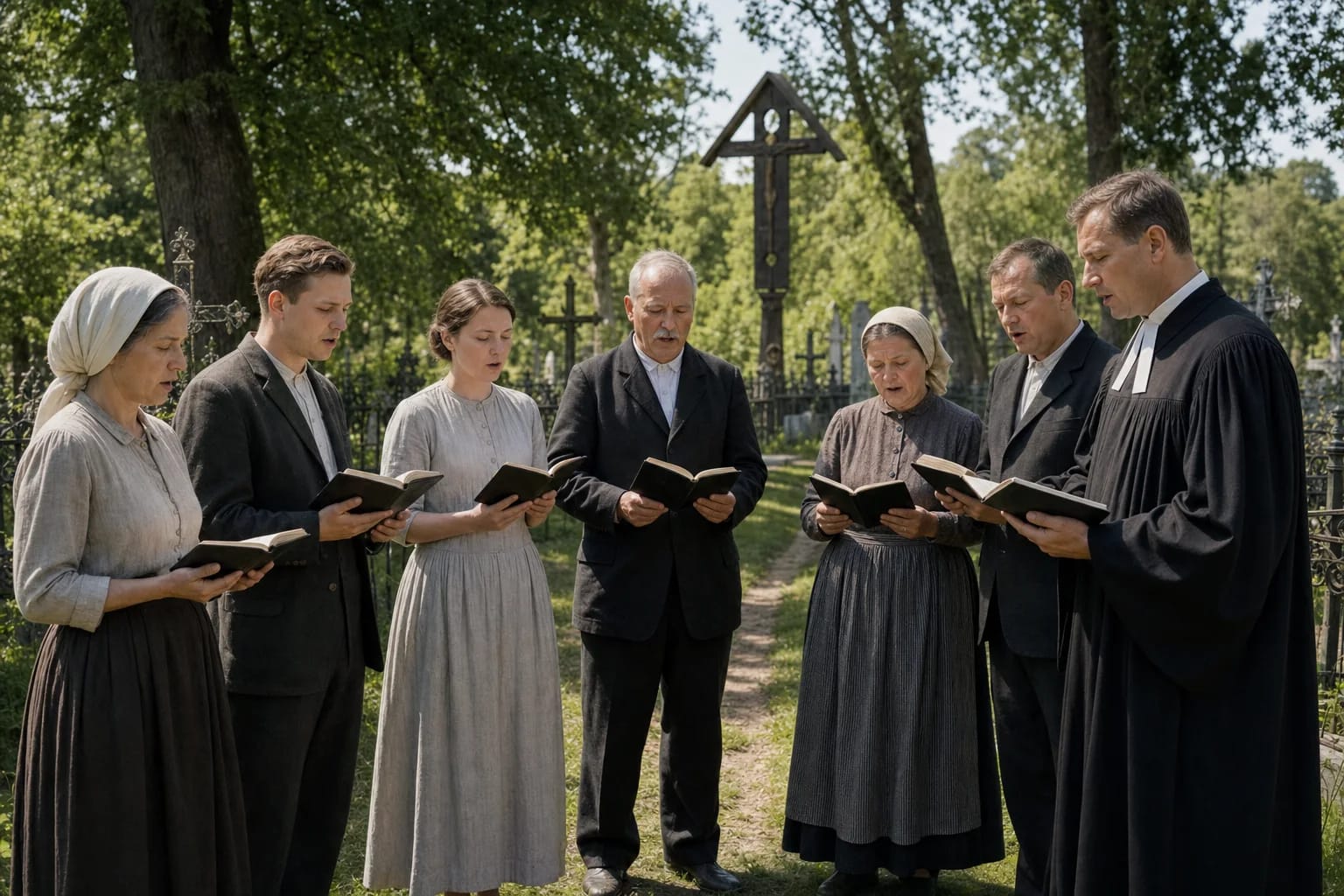
The hymnal gives the assembly a shared voice. The Universal Lithuanian Encyclopedia's history of hymns shows how Reformation chorales, Lithuanian hymnals, and local melodies shaped Protestant singing. A Lutheran and a Reformed repertoire may differ, while an ecumenical event selects texts a wider group can follow. It is misleading to invent one list of “ancient cemetery festival hymns” without first establishing the practice of the parish concerned.
Some communities read the names of parishioners who died during the year or remember ministers, teachers, singers, and other people important to the place. Naming joins personal grief with public local memory. It also shows that an overgrown or illegible grave need not mean a forgotten person if a community continues to carry the story.
Returning Relatives and Community Reunion
The festival is often a day when people living in cities or abroad return to their place of origin. They visit not only parents and grandparents but a wider network of family graves, meet childhood neighbours, and read names they have not seen for years. The cemetery becomes a community archive in the open air, while the annual journey transmits knowledge to people who no longer live nearby.
Conversation or a shared meal may follow worship, but sociability should not eclipse the purpose of the place. The Kisiniai heritage description emphasizes an inclusive common table. Elsewhere people simply remain to talk or go to a relative's home. No one food, seating order, or obligation to host belongs to every festival.
A reunion also raises difficult questions. Who tends a plot when descendants have left? How should the history of a vanished village be recorded? How is a German or Lithuanian family name pronounced? May an old marker be replaced? Good answers come through relatives, the parish, the cemetery administrator, and conservation specialists rather than through contemporary aesthetic preference alone.
The Kisiniai Cemetery Festival: A Documented Example
The cemetery festival in the village of Kisiniai, Klaipėda District, is listed in Lithuania's Inventory of Intangible Cultural Heritage. It takes place on the last Sunday in June. According to the inventory, the gathering remembers people who died during the year and those who served the community. It includes psalms and other scripture, a sermon, the creed, hymns, poetry, and personal reflections.
A Lutheran minister leads the service, while Baptists and Catholics also participate. Afterwards, those present are invited to remain together. The inventory highlights the role of the Lotužiai family and other local custodians in passing on the tradition. This openness is an important feature of Kisiniai, but it should not be projected onto every Lutheran or Reformed cemetery festival.
The heritage account cautiously connects the tradition's beginnings with 19th-century commemorations of local people. The cautious language matters. There is a community's transmitted origin story and a well-documented practice today, but not necessarily an uninterrupted archive of annual programs from the first gathering onward. Such precision does not diminish the tradition; it distinguishes inherited memory from later additions.
Soviet Restrictions, Continuity and Revival
Soviet authorities restricted religious communities. After the Second World War, many inhabitants of Lithuania Minor had fled, been expelled, deported, or otherwise dispersed, and numerous village cemeteries lost their former custodians. In the Mažeikiai Lutheran community's account, cemetery festivals helped sustain faith and human connection under repression. This is valuable church memory and should be presented with that attribution.
After 1990, parishes and local associations could more openly renew worship, tend cemeteries, and invite displaced families and regional descendants. Kristina Blockytė's research into Lithuania Minor cautions that continuity is not simply an old form frozen in place. Traditions may be remembered, altered, revived, or reformulated when the community changes. A microphone, printed program, or ecumenical participant may be new while the underlying work of remembrance continues.
The Cemetery as a Denominational and Regional Landscape
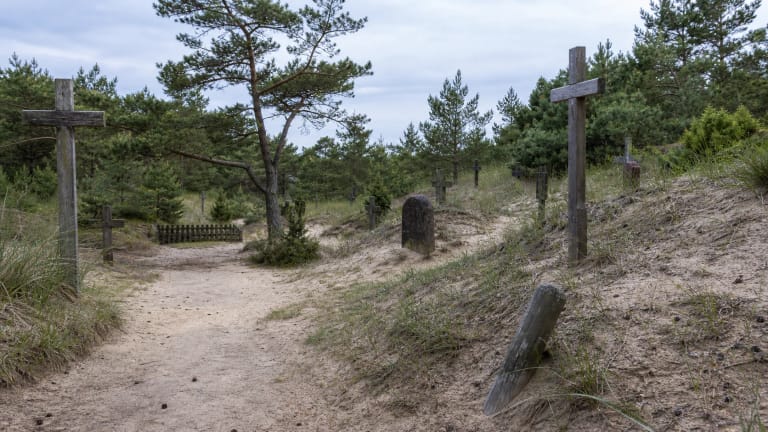
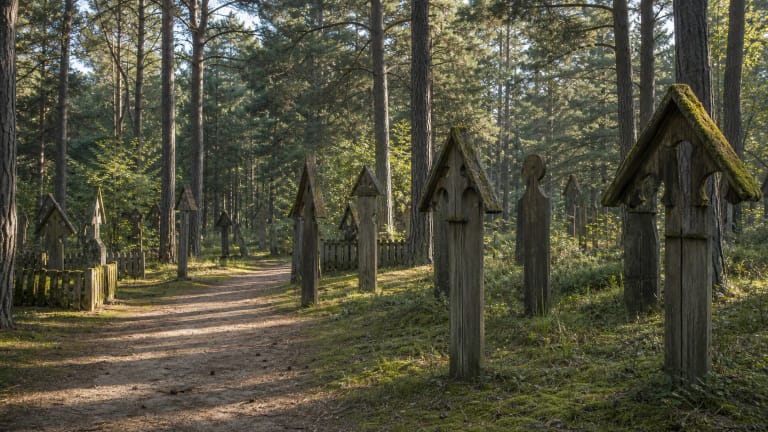
A cemetery in Lithuania Minor may contain krikštai wooden markers, wooden and forged-iron crosses, German and Lithuanian inscriptions, groups of family plots, and vegetation adapted to a sandy pine landscape. This setting emerged from Lutheran culture, local woodworking and metal craft, Lietuvininkai and Kuršininkai communities, and later population change. An ornament alone cannot establish the ethnicity or personal faith of the person buried beneath it.
Reformed cemeteries around Biržai have a different historical setting, even if the principle of a summer gathering appears related. “Western Lithuanian custom” is therefore a useful starting point but not a complete explanation. Which parish cared for the ground? In which language were hymns sung? Who remained after the war, and who accepts stewardship today?
Denominational respect matters especially when the original local community is now small. The Lithuanian Jewish Community stresses that Jewish cemeteries are not “former” cemeteries: they remain sacred places governed by their own ethics. A Protestant cemetery festival cannot be transplanted into the burial ground of another faith as a generic cultural event without that community's invitation and rules.
How to Attend Respectfully Today
First confirm the date and visitor arrangements in parish announcements. An old calendar or a neighbour's memory may not match the current schedule. Dress quietly, arrive on time, silence your phone, and stand where no grave will be crossed or blocked. A visitor can accept a hymnal and listen even without belonging to the denomination. The particular church determines participation in Communion and other sacramental acts.
Even at a public service, close portraits of mourners, children's images, or clearly legible private grave details require care and consent. Do not touch krikštai, lean on monuments, walk across plots, or take objects as souvenirs. Anyone wishing to help should ask the community about an organized work party, donation, or specific conservation need.
The value of a cemetery festival does not lie in visual exoticism. It shows how a dispersed community gathers once a year in the presence of its names, faith, and place. A guest honors the tradition by arriving to listen rather than to direct it.