
Spring
Sekmines: Pentecost in Lithuania
The seventh Sunday after Easter, in late May or early June
Sekmines is a late-spring greenery feast celebrated on the seventh Sunday after Easter. In Christianity it marks the coming of the Holy Spirit, while Lithuanian culture preserved older customs of greenery, shepherds, and harvest hopes.
Tradition context
- When
- The seventh Sunday after Easter, in late May or early June
- Season
- Spring
- Themes
- Holy Spirit, birches, greenery, shepherds, crowning cows, visiting rye, harvest
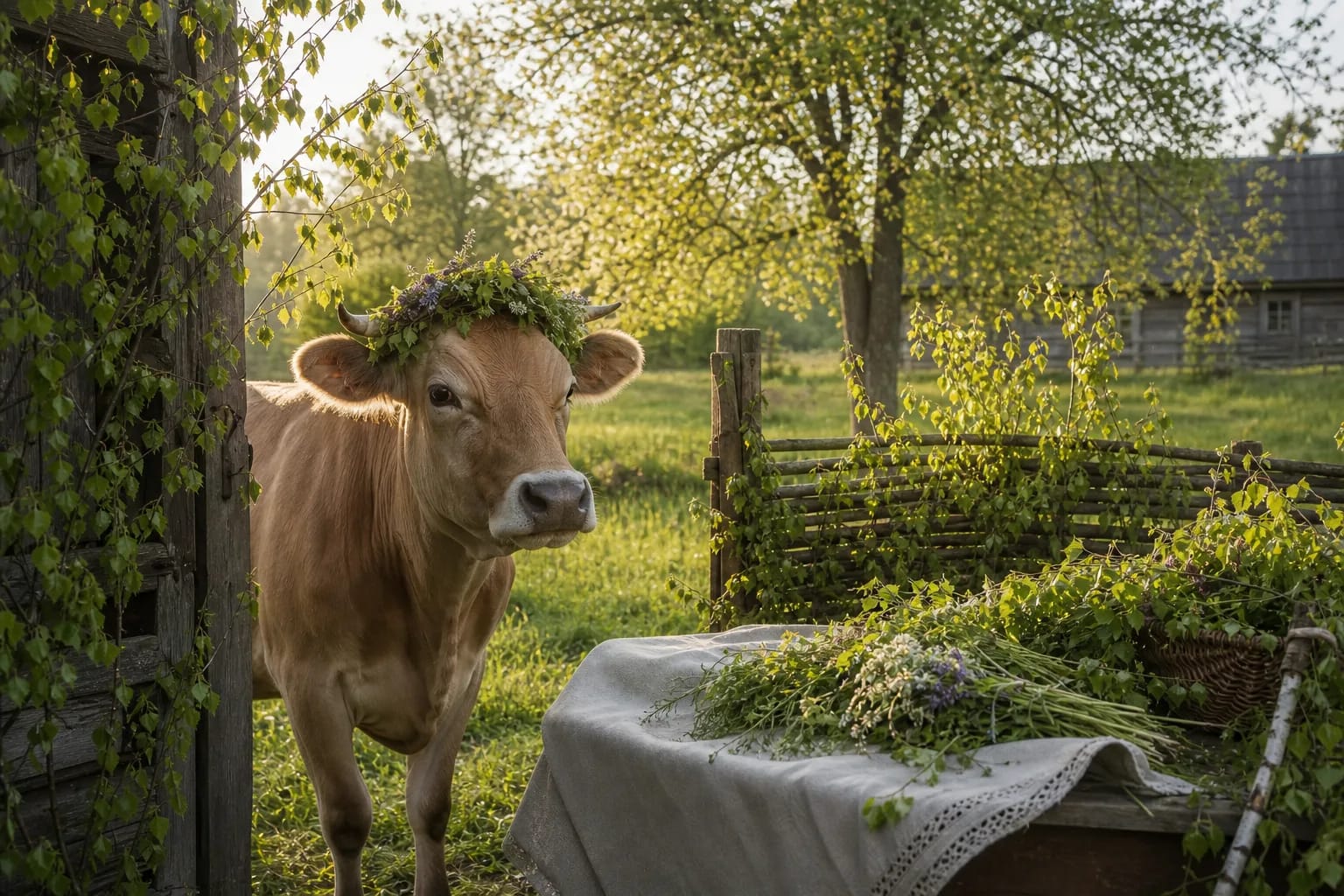
Sekmines is a late-spring feast of greenery and shepherds, celebrated on the seventh Sunday after Easter. Homes are decorated with birches, cows are crowned, shepherds are treated, and girls visit green rye asking for a good harvest.
What Are Sekmines and When Are They Celebrated?
Sekmines is a late-spring feast celebrated on the seventh Sunday after Easter, usually in late May or early June. Because it is counted from movable Easter, the date changes each year.
In Christianity, Pentecost marks the sending of the Holy Spirit to the apostles and is considered the birthday of the Church. Lithuanian folk culture also kept older nature, greenery, and farming customs. VLE notes that Sekmines ends the fifty-day Easter season; as a Christian feast it was first mentioned in 130, has been universally celebrated since the 4th century, and its octave was abolished in 1969.
Why Are Homes Decorated with Birches?
Birch is the main sign of Sekmines. Birch branches decorated homes, yards, gates, and byres. Fresh greenery represented awakening nature, life, and fertility, so Sekmines was often treated as a green feast.
Greenery was also thought to protect. Birches guarded homes and animals from illness, the evil eye, and misfortune, which is why greenery was brought not only to the yard but into the home and byre.
Why Are Sekmines a Shepherds' Feast?
Sekmines has a strong shepherd layer and is often called a shepherds' feast. On that day shepherds were especially honored: hosts treated them with cheese, eggs, porridge, or cake, thanking them for grazing and guarding animals.
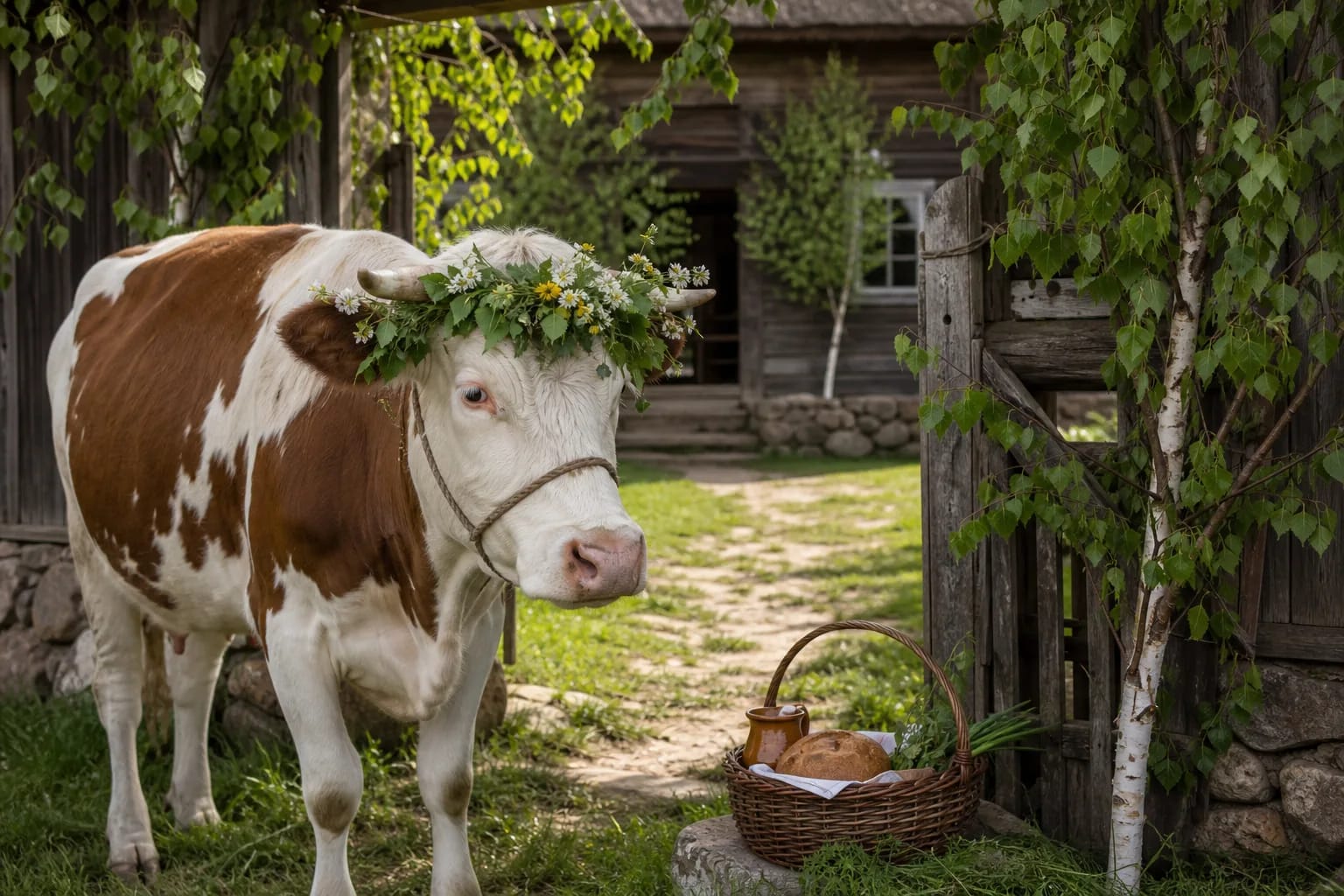
Other customs also involve shepherds: crowning animals, riding, and driving the herd through the village with wreaths. All expressed respect for animals and their caretakers and asked health for the herd all season.
Rye Visiting and Paruges
Rye visiting is one of the most beautiful Sekmines customs. By then rye had grown high enough, so girls went into fields, walked around the green rye, wove wreaths, and sang.
The custom, also called paruges, shows respect for the future harvest. Walking around the rye asked that it grow and ripen well, joining the joy of greenery with concern for summer grain.
Christian and Older Layers Together
Sekmines is a good example of two layers meeting in Lithuanian culture. The Christian meaning is the sending of the Holy Spirit, while the older meaning concerns greenery, livestock, and harvest.
The layers do not necessarily conflict. Church marks the religious content, while home and village preserve birch decoration, shepherd treats, and rye visiting. Together they create the full late-spring image.
Marking Sekmines Today
Today Sekmines can be marked simply by bringing home birch branches, decorating with greenery, and going outdoors to notice the nearness of summer.
For a deeper experience, look for museum or community events that revive shepherd customs, animal wreathing, rye visiting, and Sekmines songs. They reveal how closely nature and village life were joined.
Main Sekmines customs and meanings
Sekmines customs revolve around greenery, livestock, and future harvest. They show how the Lithuanian village honored approaching summer, shepherds' work, and the fertility of the earth.
Decorating homes with birches. Birch branches decorated homes, yards, gates, and byres, signifying life, fertility, and protection from evil and illness.
Crowning cows. Animals, especially cows, received wreaths of birch, herbs, and wildflowers for health, fertility, and protection.
Honoring shepherds. Sekmines was a shepherds' feast; hosts treated shepherds with cheese, eggs, porridge, or cake in thanks for guarding livestock.
Visiting rye and paruges. Girls went to green rye fields, wove wreaths, and sang, asking for good harvest and earth's fertility.
Riding and driving animals. On Sekmines morning, shepherds with wreaths rode or drove animals through the village so they would be strong and healthy.
Bringing greenery indoors. Fresh birches, juniper, and meadow herbs were carried inside as both decoration and symbolic protection.
Church services. Christians attended church to mark the Holy Spirit and ask protection for family, harvest, and livestock.
Community food and songs. Sekmines included gatherings, songs, games, and outdoor feasts that marked the nearness of summer.
Where to experience it
Where to experience Sekmines in Lithuania?
Sekmines is best experienced where greenery and shepherd customs are cultivated: museums, village communities, and ethnocultural events with birches and shepherd feasts.
Lithuanian Ethnography Museum in Rumsiskes
A place to see green Sekmines decoration, shepherd customs, and the village setting of the feast.
Ethnoculture Centers
Centers organize Sekmines education, greenery workshops, and spring-song evenings.
Village Communities
Communities revive shepherd feasts, animal wreathing, and rye-visiting customs.
Nature and Fields
Sekmines can also be experienced simply by going to green fields, bringing home birch branches, and noticing summer approaching.
Sekmines: songs, sutartines, and related pages
Sekmines closes the spring tradition cycle and leads toward summer. It connects with Jurgines shepherd customs, the Rasos summer feast, and folk songs.

Sekmines sources and useful pages
Sekmines: frequently asked questions
When are Sekmines celebrated?
Sekmines are celebrated on the seventh Sunday after Easter, usually in late May or early June. The date changes every year.
What do Sekmines celebrate?
In Christianity, they mark the coming of the Holy Spirit. In Lithuanian culture they are also a feast of greenery, shepherds, and future harvest.
Why are homes decorated with birches?
Birch is the main Sekmines sign. Greenery represents awakening nature and fertility, and birches were believed to protect from illness and misfortune.
Why are Sekmines called a shepherds' feast?
Shepherds were especially honored with cheese, eggs, porridge, or cake in thanks for guarding and grazing livestock.
What is cow crowning?
It is a custom of weaving wreaths of birch, herbs, and flowers for animals, symbolizing health, fertility, and protection.
What is rye visiting?
Rye visiting, or paruges, is when girls walked around green rye fields, wove wreaths, and sang, asking for a good harvest.
How are Sekmines linked with Jurgines?
Both feasts concern shepherds and animals. Jurgines opens grazing in April, while Sekmines honors shepherds and greenery later in spring.
How can Sekmines be marked today?
Bring home birch branches, decorate with greenery, and go into nature. Museums and community events offer deeper experiences of the customs.