
Spring
Palm Sunday in Lithuania
The Sunday before Easter
Palm Sunday opens the final week before Easter. In Lithuanian customs a green or budding branch becomes not only a church-blessed sign but protection for the home, health, livestock, and spring life.

Tradition context
- When
- The Sunday before Easter
- Season
- Spring
- Themes
- Verbos, juniper, willow, blessed branches, tapping, health, protection for home and livestock, Vilnius verbos
Palm Sunday is the last Sunday before Easter. In Lithuania it centers on blessed verbos: juniper, willow, pussy willow, or decorative Vilnius verbos; morning tapping for health; keeping branches at home; fumigation during storms; and livestock protection at Jurgines.
What Is Palm Sunday?
Palm Sunday is the Sunday before Easter. VLE recalls that it begins Holy Week and liturgically commemorates Christ's entry into Jerusalem, where people greeted him with branches. VLE adds that the Palm Sunday procession tradition has been known since the fourth century, when processions went from the Mount of Olives to Jerusalem, and in the fifth and sixth centuries it spread to other Eastern Christian countries.
In Lithuania the feast gained its own plant and household-protection form. Imbrasiene presents Palm Sunday as an archaic spring branch feast where church blessing meets images of tree and greenery life.
Which Plants Are Used for Verbos?
The verba was not the same across Lithuania. In Samogitia, Užnemunė, and parts of central Lithuania, juniper was often used. Its greenness before winter had fully withdrawn symbolized life, strength, and protection.
In eastern Lithuania, willow or pussy willow was important, especially branches with catkins. The redness and fast vegetation of willow connected with spring force. Oak, birch, and other branches later also entered the bunch.
Why Tap with a Verba?
The oldest and best-known custom is tapping with the verba. On Palm Sunday morning people tried to rise early and touch those still sleeping. It was not punishment but a wish to grow, be healthy, strong, and fortunate.
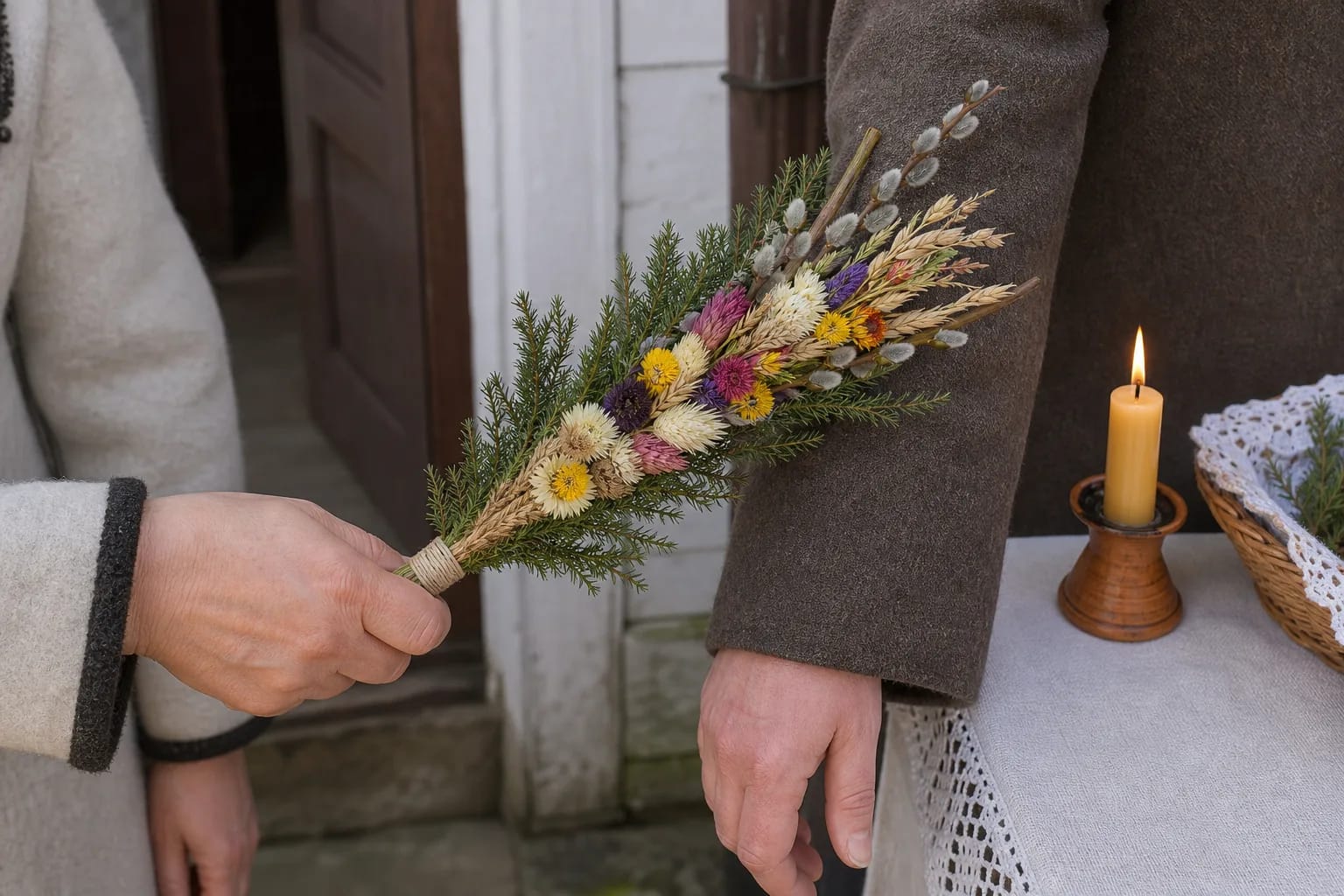
Short sayings usually stress that it is not the person who strikes but the verba. In some places the touched person was asked for a velykaitis, an Easter egg, linking Palm Sunday with the coming Easter.
What Was Done with the Blessed Verba?
A verba brought home from church was not thrown away. It was kept behind a beam, near pictures, in the loft, or in a corner all year. In western Samogitia and elsewhere it was set behind a house beam to protect from fire and thunderstorms.
During storms, the verba was burned for fumigation. EKGT also mentions fumigating a sick room, outbuildings, and protection from evil spirits. The blessed branch became a household protective object for the whole year.
Verbos, Livestock, and Bees
The customs did not end that Sunday. Imbrasiene mentions that juniper needles were put into a small bag and at Jurgines added to embers and carried three times around cattle to guard them from wolves and disease.
A verba could also be nailed near a beehive so bees would swarm well. These actions show the Palm Sunday branch connecting springtime person, home, animals, and coming farm work.
Vilnius Verbos Today
Decorative verbos of dried grain heads and flowers appeared later but became a very visible Vilnius-region craft. They should be understood as an ethnographic and folk-art form, not the only or oldest type of verba.
Today a person may carry a simple juniper or willow branch, or a bound Vilnius verba. The key is to keep the meaning: bless it, bring it home, avoid treating it only as decoration, and remember what plant and regional tradition are in your hands.
Main Palm Sunday customs and meanings
Verba customs vary by region. In some places the main branch is juniper, elsewhere willow or pussy willow, while the Vilnius region developed decorative dried-plant verbos. The shared core remains: bless it, bring it home, touch a person, and keep it in the house.
Blessing verbos. On the Sunday before Easter, verbos are brought to church and blessed.
Juniper. In Samogitia, Užnemunė, and part of central Lithuania, juniper was often used and symbolized unbroken life.
Willow and pussy willow. In eastern Lithuania, budding willow or pussy willow was important, tied to spring vegetation and protection.
Morning tapping. On Palm Sunday morning people tried to wake early and touch sleepers with the verba, wishing health and asking for a future Easter egg.
Driving out illness. After church, people touched or lightly struck those at home with the blessed verba, saying that illness should go out and health come in.
Keeping it at home. Blessed verbos were kept behind a beam, near holy pictures, in the loft, or in a corner throughout the year.
Fumigation and protection. Verbos were burned to fumigate the house during storms, a sick room, or buildings; at Jurgines their needles protected livestock.
Vilnius verbos. Decorative verbos made of dried flowers and grain heads are a later but very important ethnographic craft of the Vilnius region.
Where to experience it
Where to experience Palm Sunday in Lithuania?
Palm Sunday is experienced in church, at home, and in verba-binding workshops. The key is not only a beautiful bundle but understanding its plants and why it was kept all year.
Churches on Palm Sunday
The main place is church, where verbos are blessed and Holy Week begins.
Homes
The blessed verba is brought home, used to touch relatives, and kept behind a beam, near pictures, or in the loft.
Vilnius Verba Workshops
Vilnius-region verba-binding education explains the decorative later side of the tradition.
Palm Sunday: songs, sutartines, and related pages
Palm Sunday leads directly to Easter, while also connecting with Vilnius verbos craft, verba binding, and Jurgines livestock protection.
Easter
The feast toward which Palm Sunday and Holy Week lead directly.

Vilnius Verbos
The decorative Vilnius-region craft using dried herbs and grain heads.
Verba Binding
The practical tradition of preparing and binding verbos.
Jurgines
The spring livestock feast where blessed Palm Sunday juniper needles could be used.
Palm Sunday sources and useful pages
Palm Sunday: frequently asked questions
When is Palm Sunday celebrated?
Palm Sunday is celebrated on the Sunday before Easter. It begins Holy Week and has no fixed calendar date.
What is a traditional Lithuanian verba?
It depends on region: juniper in Samogitia, Užnemunė, and central Lithuania; willow or pussy willow in eastern Lithuania; decorative dried-plant verbos in the Vilnius region.
Why are people tapped with a verba?
A green or budding branch was believed to pass on health, growth force, and protection from illness. The tapping was a blessing, not punishment.
What does “Verba strikes, not I” mean?
It stresses that the power belongs to the blessed, life-symbolizing branch, not to the person's anger. The saying often ends by asking for an Easter egg.
Where is a blessed verba kept?
It is kept at home all year: behind a beam, near holy pictures, in the loft, or another safe place. It was not treated as an ordinary branch to throw away.
How was the verba used after Palm Sunday?
It could fumigate the house during storms, a sick room, or buildings. At Jurgines, juniper needles could be used to protect livestock.
Are Vilnius verbos the oldest form?
No. Decorative dried-flower and grain-head verbos developed later but became an important Vilnius-region ethnographic craft.
How does Palm Sunday differ from Easter?
Palm Sunday is one week before Easter and opens Holy Week. Easter celebrates the Resurrection, while Palm Sunday centers on the blessed branch and its customs.
How can Palm Sunday be marked today?
Prepare juniper, willow, or a bound verba, have it blessed, bring it home, and keep it respectfully while remembering the plant and regional tradition it carries.