
Winter
Advent in Lithuania
Four weeks before Christmas; from the Sunday nearest St Andrew's Day
Advent is not only the start of Christmas decorating. In Lithuanian tradition it slows the dark season down: less noise, more waiting, evening gatherings, songs, fasting, and a careful awareness of what lies beyond the light of the home.
Tradition context
- When
- Four weeks before Christmas; from the Sunday nearest St Andrew's Day
- Season
- Winter
- Themes
- Waiting for Christmas, recollection, fasting, Rorate Masses, Andriejinės, evening work gatherings, Advent songs, leliumoj refrains, Aukštaitija markets, Lithuania Minor wreaths, wolf days
Advent in Lithuania is a season of waiting for Christmas that joins church recollection with older customs of the dark part of the year. It includes fasting, avoiding weddings and loud entertainment, Andriejinės divinations, Advent-Christmas songs that survived longest in Dzūkija and eastern Aukštaitija, weekly Advent markets, wreaths in Lithuania Minor, and beliefs about wolf days.
When Does Advent Begin?
Advent is the four-week period before Christmas. VLE defines it as the Catholic liturgical season of waiting for Christ's birth, and the first Sunday of Advent opens the church year. The word comes from Latin adventus, “coming”; preparation for Christmas is traced to the fourth century: in 380 the Synod of Zaragoza urged people to attend church and do penance from December 17 to Epiphany, while Advent Masses appear in the eighth and ninth centuries.
EKGT connects the folk-calendar beginning of Advent with St Andrew's Day, especially the Sunday nearest November 30. In ethnographic memory Andriejinės and Advent stand very close together, even though the exact calendar start moves each year.
Fasting, Quiet, and Avoiding Weddings
Advent was a time of restraint. VLE mentions that meat was not eaten on Wednesdays, Fridays, and Saturdays, and that noisy entertainment, weddings, and large celebrations were avoided. EKGT emphasizes Friday fasting, including abstaining from meat and dairy foods.
This should not be turned into a single rule for all Lithuania. EKGT separately notes Lithuania Minor, where the Protestant setting did not require the same fasting and withdrawal from merriment; sixteenth- and seventeenth-century references there still mention matchmaking and weddings during Advent.
Andriejinės at the Threshold
On the eve of St Andrew's Day, a custom known across Lithuania was to set a cherry or plum twig in water and wait to see whether it blossomed by Kūčios. In some places blooming meant that a wish would come true; elsewhere it more clearly promised quick matchmakers.
Other Andriejinės divinations bring Advent close to Kūčios fortune-telling: walking backward around a well, scattering hemp or poppy seeds, eating something salty, and waiting for a dream of the future groom. This was not a universal Advent rite for every family, but a youth and especially girls' marriage-divination layer.
Evening Gatherings, Songs, and Games
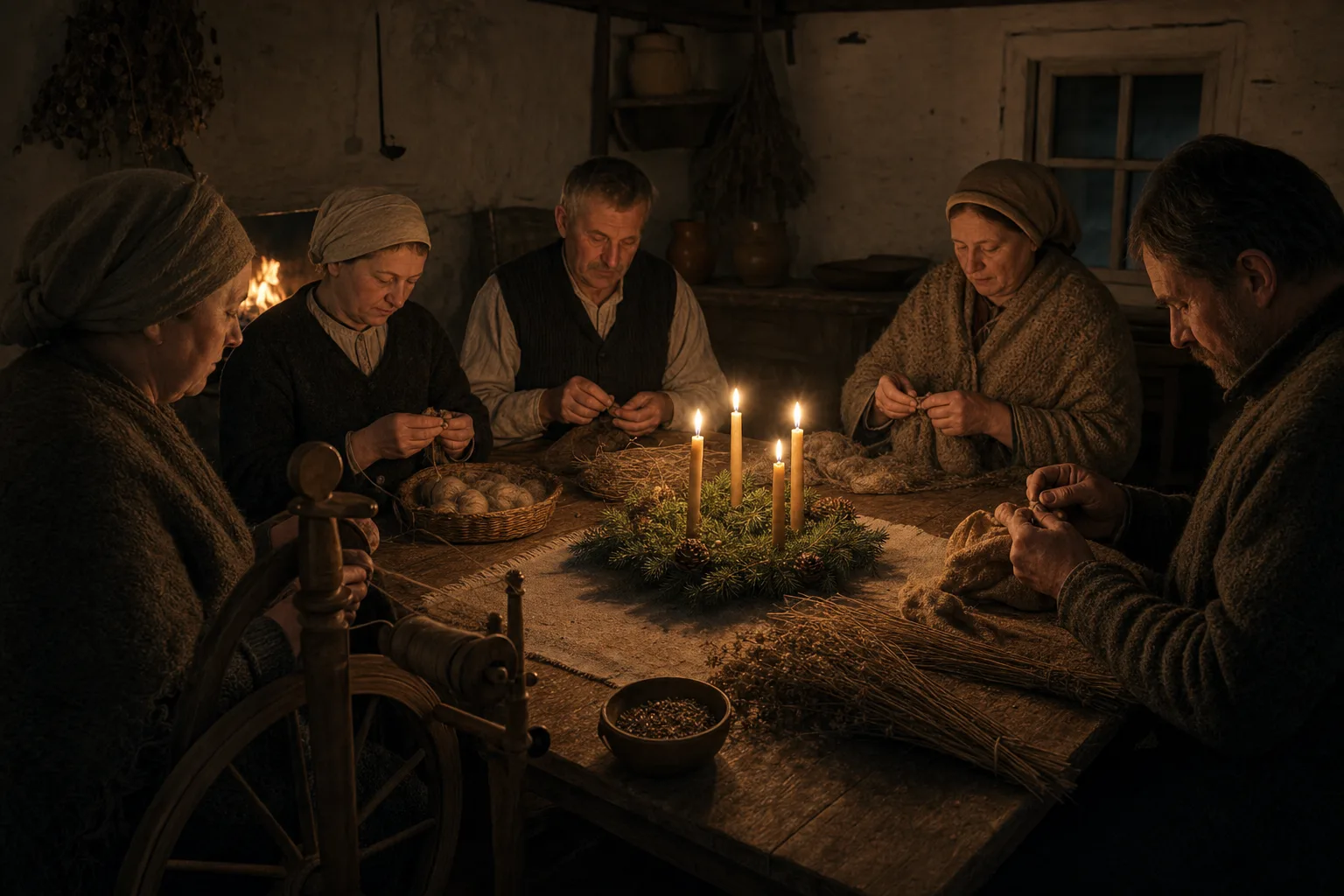
Advent was not only silence. People gathered in the evenings to do quiet work such as feather stripping, harness repair, rope twisting, net knitting, and spinning. While working they told stories, chanted, and sang.
EKGT distinguishes the regions clearly. Old Advent songs with refrains such as leliumoj, leliumai, aleliuma loda, and kalėda were sung in Dzūkija, less in Aukštaitija, and most rarely in Sūduva. The customs lasted longest in Dzūkija and eastern Aukštaitija, while Samogitian examples are sparse.
Advent Markets in Aukštaitija
In Aukštaitija, especially around Kėdainiai, Panevėžys, Rokiškis, Zarasai, and Ukmergė, EKGT records weekly Advent markets. The first was called Šeškaturgis, the second Skaistaturgis, and the last Saldaturgis.
Šeškaturgis sold warm clothing, fur coats, mittens, and other winter goods. Skaistaturgis was more of a gift market, while Saldaturgis gathered what the festive table would need: honey, cranberries, poppy seeds, dried mushrooms, and other winter-holiday foods.
The Advent Wreath in Lithuania Minor
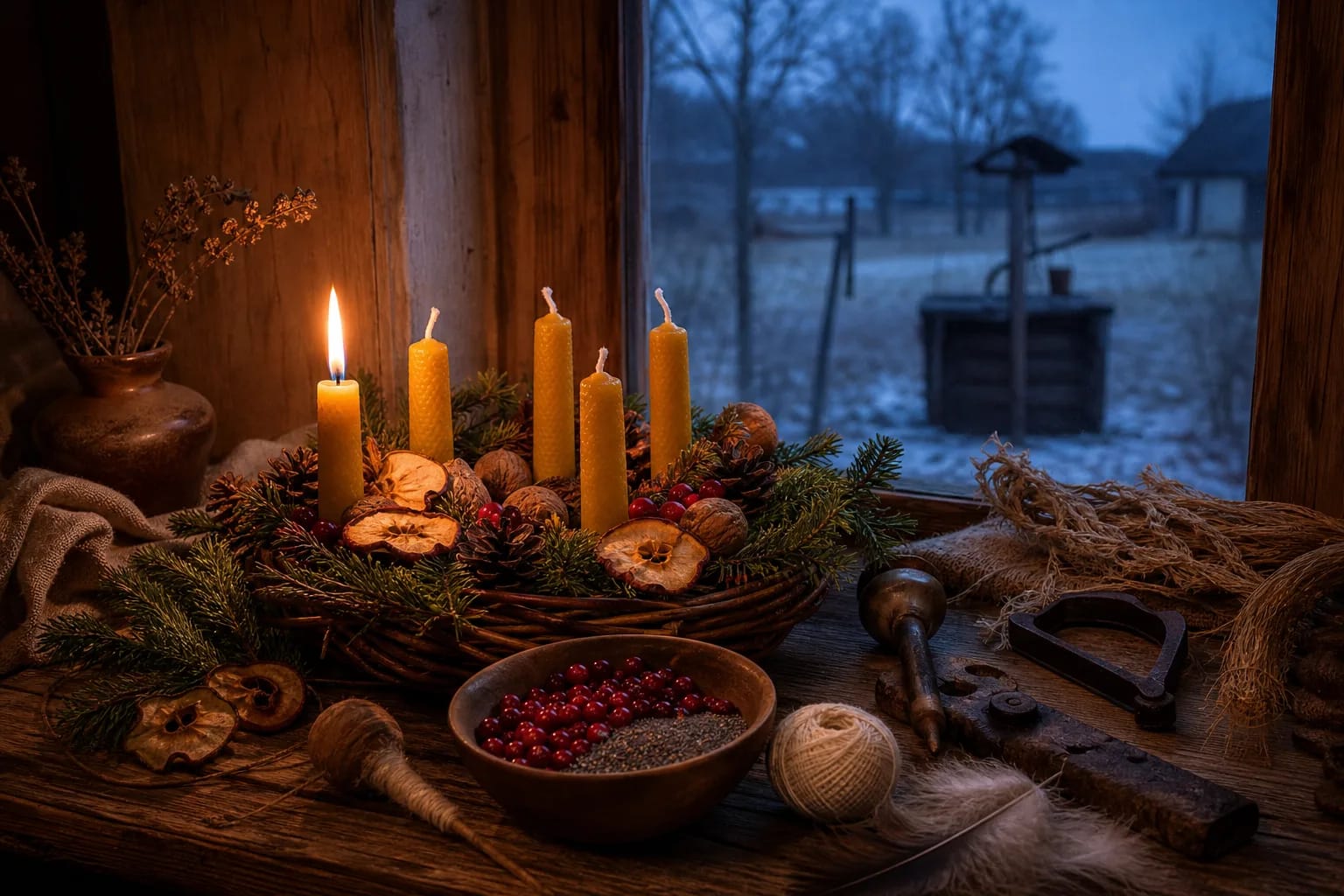
The Advent wreath is not only a modern city decoration. EKGT notes that in Lithuania Minor it became popular in the late nineteenth and early twentieth century. Lietuvininkai wreaths were woven from twigs, covered with fir branches, and decorated with cones, nuts, dried fruit, and berries.
Four candles were set in the wreath. One was lit in the first week, two in the second, three in the third, and four in the fourth. In some homes the Christmas tree was lit from the final candle, turning the wreath into a sign of gathered light.
Wolf Days and Images of the Dark Season
Nijolė Marcinkevičienė's Alkas.lt essay connects the opening of Advent with wolf days and the wolves' rut. Sayings from Utena, Merkinė, Molėtai, and Endriejavas show the wolf as a forest animal moving closer to homesteads at the start of winter.
This layer should not be presented as a single holiday ritual. It matters as a field of stories, fears, and images: in Šeduva, beliefs mention wolf tracks and avoiding the wolf's name, while Dzūkija and eastern Lithuania connect the wolf with dreams, groom imagery, journeys to Rorate Mass, and night danger.
Remembering Advent Today
A living Advent begins not with a noisy Christmas season but with a changed rhythm. You can set an Andriejinės twig in water, give one evening to songs or handwork, ask where your family's Advent customs came from, and choose gathered light over sheer decoration.
At events, look for more than a concert: evening gatherings, Advent-Christmas songs, storytelling, straw crafts, candles, or presentations of regional customs. Then Advent remains a time of waiting rather than only an introduction to commercial December.
Main Advent customs and meanings
Advent customs were not the same everywhere in Lithuania. Songs, games, and evening gatherings lasted longer in Dzūkija and eastern Aukštaitija, Aukštaitija remembered weekly markets, Lithuania Minor popularized Advent wreaths, and wolf stories speak most clearly from wooded regions.
The beginning of Advent. In present practice it starts on the Sunday near St Andrew's Day and ends before Christmas.
Recollection and fasting. VLE mentions avoiding meat on Wednesdays, Fridays, and Saturdays, while EKGT stresses Friday abstinence and the avoidance of dances and weddings.
Rorate Masses. Early Advent Masses at dawn belong to the liturgical time of waiting.
Andriejinės divinations. On St Andrew's Eve people set a cherry or plum twig in water, and marriage divinations stand close to Kūčios fortune-telling.
Evening work gatherings. During Advent people gathered for quiet work: stripping feathers, repairing harness, twisting ropes, knitting nets, and spinning.
Advent songs. Old Advent songs with refrains such as leliumoj, aleliuma loda, and kalėda were sung in Dzūkija, less often in Aukštaitija, and most rarely in Sūduva.
Regional survival. EKGT notes that the richest Advent-Christmas songs, games, divinations, and beliefs were recorded in Dzūkija and eastern Aukštaitija, while Samogitia has only scattered examples.
Aukštaitija markets. Around Kėdainiai, Panevėžys, Rokiškis, Zarasai, and Ukmergė people remembered Šeškaturgis, Skaistaturgis, and Saldaturgis.
Lithuania Minor wreaths. From the late nineteenth and early twentieth century, Lietuvininkai communities popularized Advent wreaths with four candles.
Wolf days. Nijolė Marcinkevičienė's Alkas.lt text shows how winter-opening stories made the wolf part of Advent darkness, the nearness of the forest, and marriage imagery.
Where to experience it
Where to experience Advent in Lithuania?
Advent is best experienced where its quiet meaning is kept alive: in singing, handwork, storytelling, community evenings, and regional customs. It is not one large event, so these places are best understood as centers of tradition.
Dzūkija and Eastern Aukštaitija
According to EKGT, these regions preserved the richest layers of old Advent-Christmas songs, games, divinations, and beliefs.
Advent Markets of Aukštaitija
The areas around Kėdainiai, Panevėžys, Rokiškis, Zarasai, and Ukmergė are connected with Šeškaturgis, Skaistaturgis, and Saldaturgis.
Lithuania Minor
A useful region for understanding Advent wreaths and Protestant differences: the boundaries around fasting and merriment were not the same here.
Pagėgiai Goose Market
A contemporary continuation of the Lithuania Minor goose-market tradition, connected by EKGT with national heritage certification.
Advent: songs, sutartines, and related pages
Advent leads toward Andriejinės, Kūčios, and Christmas. Its closest signs are Christmas-season songs with refrains, straw gardens, candles, poppy seeds, cranberries, and other marks of the waiting season.
Andriejinės
The Advent threshold with the cherry twig, well, and dream divinations.
Kūčios
The evening that closes Advent waiting, continuing divination, fasting, and the quiet table.
Christmas
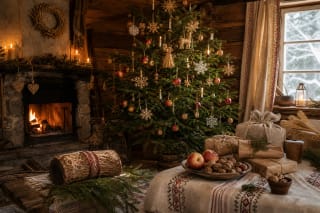
The feast toward which Advent waiting, songs, wreath candles, and household light lead.
On Christmas Morning a Rose Bloomed
A song that helps feel the mythic imagery of Advent and Christmas songs.
Oh, Little Candles Shone in the Field
A Christmas-season song about candles, wax, a lake, and a world of light.
Straw Gardens
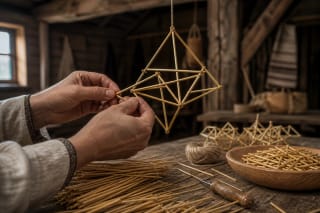
A straw-and-home decoration tradition close to the waiting time of Kūčios and Christmas.
Advent sources and useful pages
Advent: frequently asked questions
When does Advent begin in Lithuania?
Advent begins on the first of the four Sundays before Christmas. In ethnographic memory its opening is linked with the threshold of St Andrew's Day, November 30.
How long does Advent last?
VLE defines Advent as a four-week period before Christmas. EKGT stresses that in practice its length shifts because the start depends on the Sunday near St Andrew's Day.
Did Lithuanians fast during Advent?
Yes, but practice varied. VLE mentions avoiding meat on Wednesdays, Fridays, and Saturdays; EKGT emphasizes Fridays; in Lithuania Minor, Protestant surroundings made these rules weaker.
Why were weddings avoided during Advent?
In Catholic tradition Advent was a season of recollection and repentance, so noisy merriment and weddings did not fit its mood. EKGT still notes older references to matchmaking and weddings in Lithuania Minor.
Where did Advent songs survive longest?
EKGT points to Dzūkija and eastern Aukštaitija as the areas where the most Advent-Christmas songs, games, divinations, and beliefs were recorded.
Which refrains are typical of Advent songs?
Sources mention refrains such as leliumoj, leliumai, aleliuma loda, aleliuma rūta, and kalėda. They are especially heard in Advent-Christmas songs.
What were Šeškaturgis, Skaistaturgis, and Saldaturgis?
They were Advent markets in Aukštaitija. The first was linked with warm winter goods, the second with gifts, and the last with foods for the festive table.
Is the Advent wreath a Lithuanian custom?
EKGT notes that Advent wreaths became popular in Lithuania Minor in the late nineteenth and early twentieth century. It is a regional custom rooted among Lietuvininkai that later became widely recognizable.
Why is Advent connected with wolves?
Marcinkevičienė shows that the beginning of winter was in some places called wolf days or the wolves' rut: wolves approached homesteads, were feared, and entered dream and marriage imagery.