- When / context
- From the wedding eve through the bride's departure and reception as a daughter-in-law; timing and location varied
- Tradition area
- Life cycle
- Themes
- Bridal evening, pintuves, rue wreath, wedding songs, farewell, dowry, gaubtuves, nuometas, young wife
The bride's farewell was a long transition of status: a bridal evening and songs prepared her to leave, farewell and dowry accompanied her from home, and gaubtuves and gifts publicly made her a young wife.
The Bride's Farewell Was a Social Passage, Not One Sad Scene
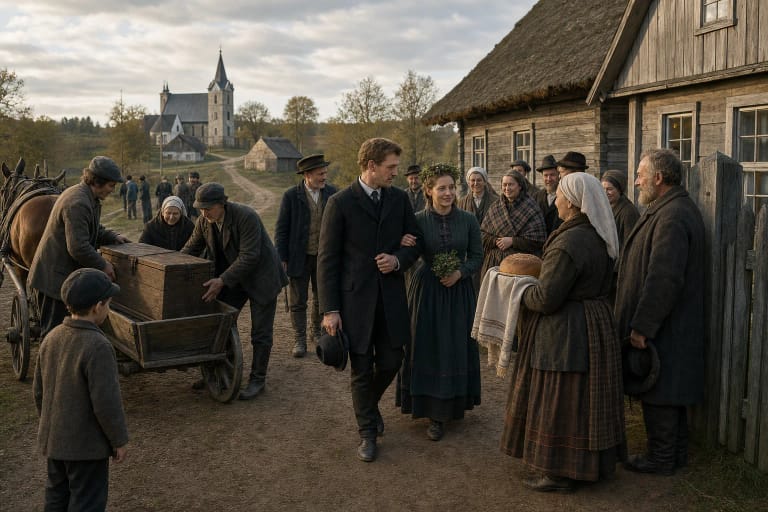
In ethnological accounts, a wedding did more than formalize a couple's bond. The bride left her unmarried age group, usually moved into the groom's parents' farm, and acquired a new place in his kin and village community. Farewell actions therefore recurred at several moments: on the wedding eve, on the morning of church marriage, when leaving the parents' home, during reception, and at gaubtuves. Some communities combined these moments; elsewhere they were separated by travel and several days of feasting.
This was not an unchanged pre-Christian ceremony. Early sixteenth- and seventeenth-century descriptions usually concern particular regions, especially Lithuania Minor, while the largest comparable record was collected in the nineteenth and twentieth centuries. Church marriage, customary law, farm inheritance, local fashion, and neighboring cultures all reshaped household ritual. A responsible account compares functions without stitching details from different places into one “ancient Lithuanian” program.
Pintuves and the Bridal Evening Prepared the Bride to Leave
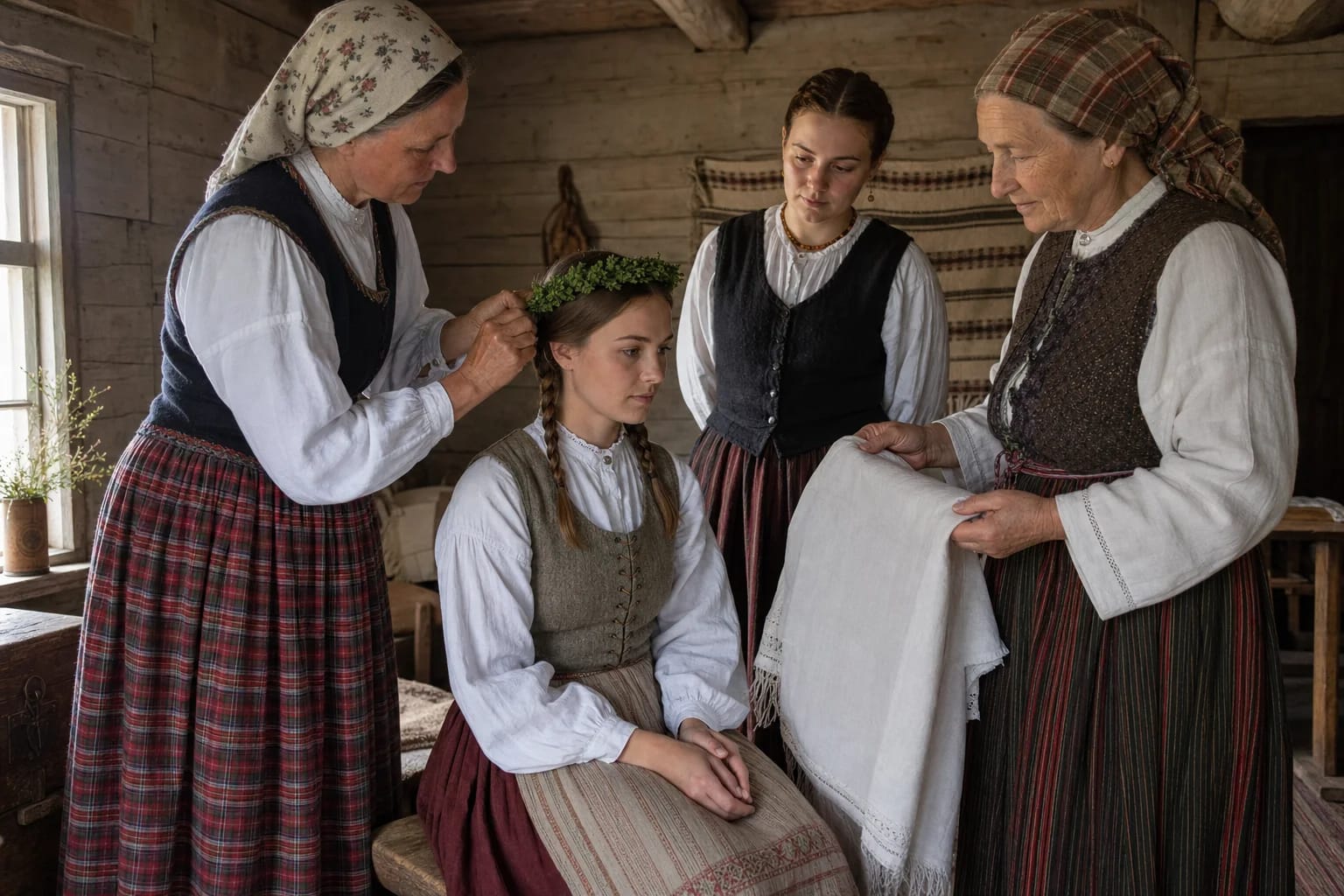
The eve of the wedding was known by such names as pintuves, mergvakaris, or panu vakaras. Bridesmaids, women relatives, village girls, and some other participants gathered at the bride's home. They decorated the room, prepared clothes, sang, danced, and performed actions involving the bride's hair and wreath. Some records describe the svocia combing a bride seated on a bread tub while the principal bridesmaid made the rue wreath. These are documented variants, not duties fixed across all Lithuania.
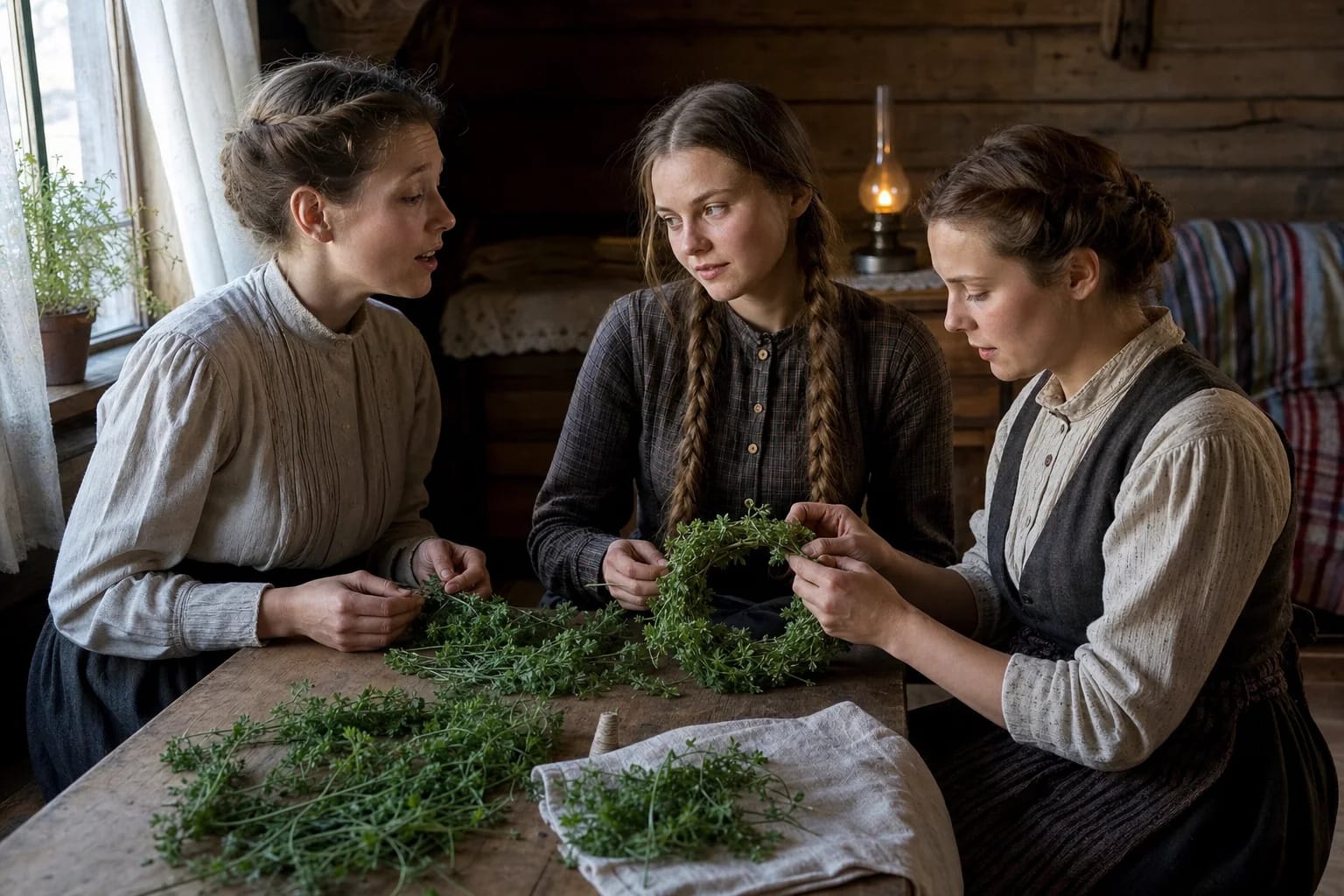
The bridal evening was also the bride's final ritualized gathering among her unmarried peers. Girls might sing about short-lived youth, impending separation, and the strangeness of the groom's side, while older women gave cloth or shared experience. A present-day hen party can continue the idea of female company, but its commercial program, entertainment, and emphasis on individual choice belong to a different social era.
The Rue Wreath Marked Social Status, Not a Biological “Purity Test”
In late nineteenth- and early twentieth-century evidence, a rue wreath and ribbons visibly marked an unmarried girl and a bride. In some places the groom's party brought a wreath; the principal groomsman formally passed it to the bride's side; and bridesmaids attached or guarded it. The wreath operated within a reputation system that judged women's sexual conduct more harshly than men's.
Ethnological research places rue's establishment in Lithuania around the sixteenth century. A rue wreath should therefore not be described as an unchanged pre-Christian Baltic survival: the broader form of the wedding wreath may draw on older head-ornament traditions, but this plant and the system of meanings attached to it developed later.
That inequality must be named. In folklore, a damaged wreath, withered rue, or denial of an ornament could signify shame. A woman who already had a child outside marriage was sometimes humiliated with a straw cap during gaubtuves. These acts document social control and stigma; they are not “authentic” entertainment to revive. Today a wreath can be chosen as a sign of a plant, family memory, or regional costume without turning it into a public judgment of a woman.
Wedding Songs Spoke in the Voices of the Bride and Community
Wedding songs form the largest genre of Lithuanian sung folklore and are divided into more than thirty ritual groups. Songs for the bridal evening, emotional preparation, presentation of the wreath, farewell, departure, removal of the dowry, and gaubtuves accompanied particular actions. They were not lyrical background music. Singing women could praise the bride, mock the other party, warn about a daughter-in-law's position, or ritualize what the bride herself could not say during public family negotiations.
Volumes of the Lithuanian Folk Songbook published by the Institute of Lithuanian Literature and Folklore demonstrate the repertoire's scale. The volume covering the search for the bride through departure for church alone publishes 505 songs; separate volumes cover the bridal evening, dowry removal, and the journey to the groom. No single familiar song can therefore represent the entire farewell. A careful revival identifies where a song was recorded, its performer or edition, and the wedding stage to which it belonged.
Emotional Preparation, Ritual Lament, and Farewell at the Table
Songs intended to move the bride contrasted life in her parents' and husband's households and named mother, father, siblings, the rue garden, and the road ahead. Texts for an orphan might open onto the world of deceased relatives. Ritual lament did not always mean spontaneous despair: it was a socially recognized language of farewell. Yet its formal character does not erase real anxiety, loss, or a bride's possible unwillingness to marry.
In one well-documented regional form, the bride was led three times around the table, bowed, and lamented the home and family she was leaving. This practice survived longest in eastern and southeastern Lithuania. Because the table was a center of family togetherness, circling it and naming each relationship publicly ended the daughter's everyday place in that household. Elsewhere the main farewell occurred at the door, by the carriage, or before the journey to church.
Parental Blessing and Departure Had Religious and Family Dimensions
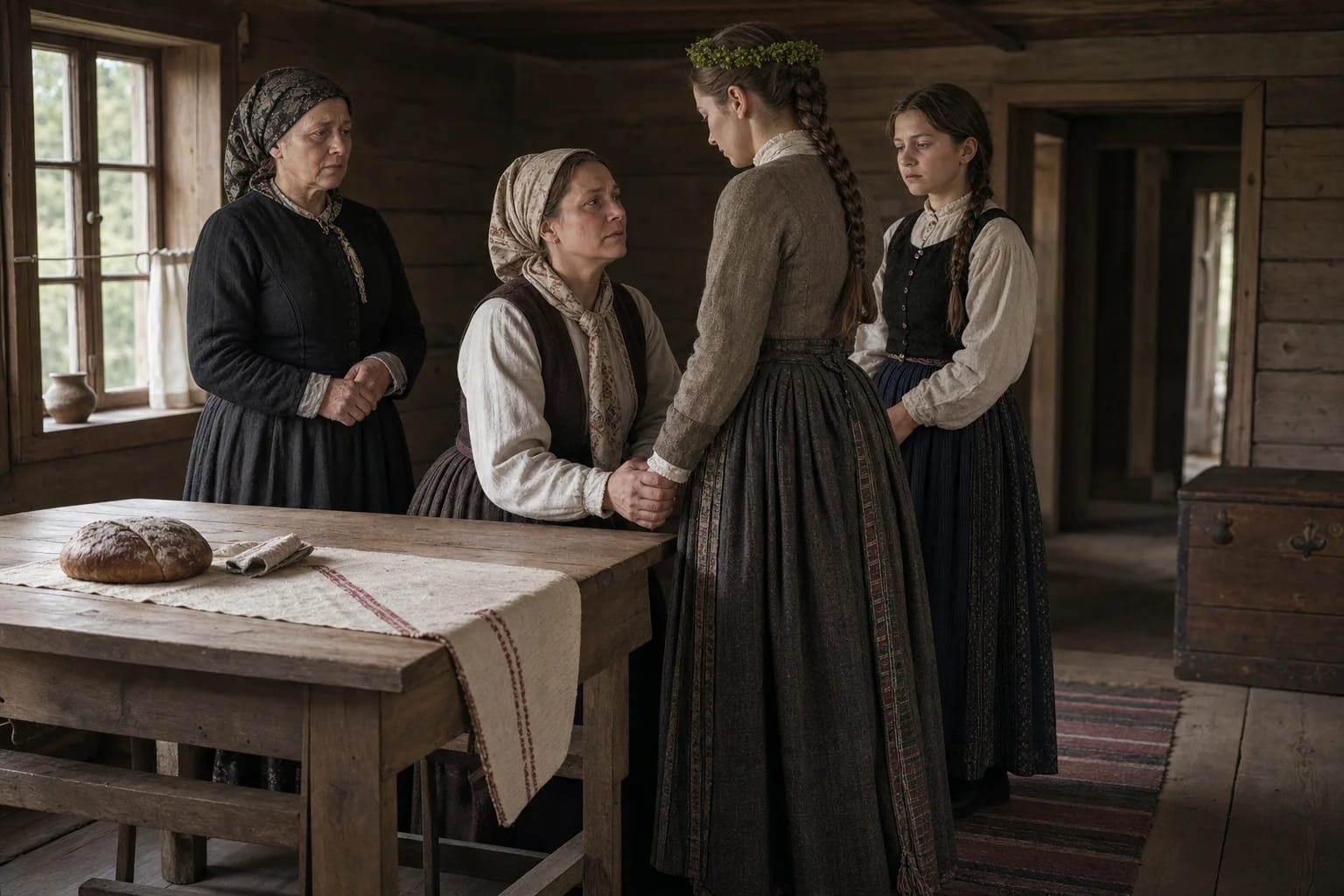
In nineteenth- and twentieth-century Catholic settings, parental blessing before church marriage might involve the sign of the cross, a holy image, prayer, or kneeling. Family devotion and wedding order differed in Lutheran Lithuania Minor, while the Catholic model cannot represent the other confessional and ethnic communities living in Lithuania. Even within one parish, the scale of the blessing depended on family piety and clerical influence.
At departure, the bride might kiss her parents' hands, say farewell to siblings, be escorted by her father to the groom's carriage, or throw rue behind her as a wish that her friends would marry. Some actions were deeply emotional and others playful. They occurred in a system where family approval and economic agreement often carried more weight than the couple's individual choice. A blessing should not be romanticized as automatic proof of free consent.
The Dowry Traveled with the Bride but Was Not the Same as Pasoga
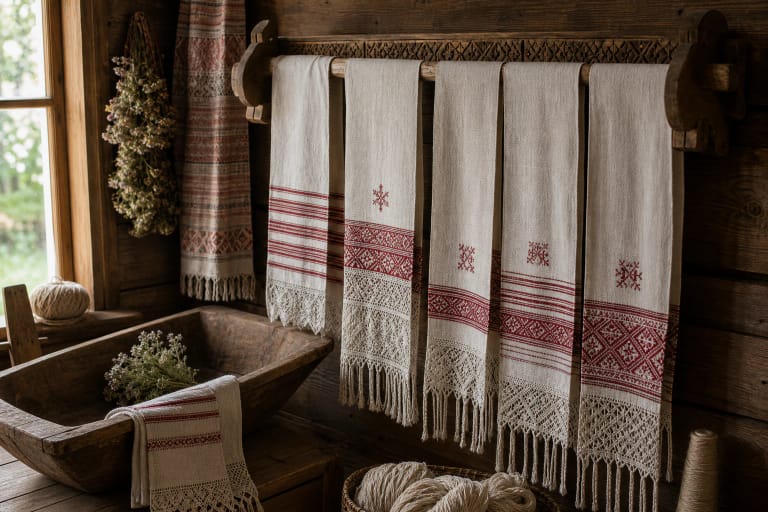
The textile dowry consisted of cloth, clothing, bedding, and personal goods accumulated by the bride and her mother. In the late nineteenth and first half of the twentieth century, it was usually stored in a chest; earlier records also mention dowry tubs and bed-shaped containers. The bride managed these textiles, used some for wedding gifts, and later drew on them to clothe the family. This kraitis was not identical to the full property share or pasoga, which might also include money, animals, land, or other support.
Men from the groom's side carried the dowry, while representatives of the bride might escort it and supervise its transfer. Publicly moving the chests displayed years of women's work and had a practical legal dimension: under customary law, parents could reclaim the unused dowry of a daughter who died without children. A large dowry also displayed status, however, and a hired worker or poor household could not reproduce the scale of a wealthy farm.
Gaubtuves Changed Public Status, Not Merely an Ornament
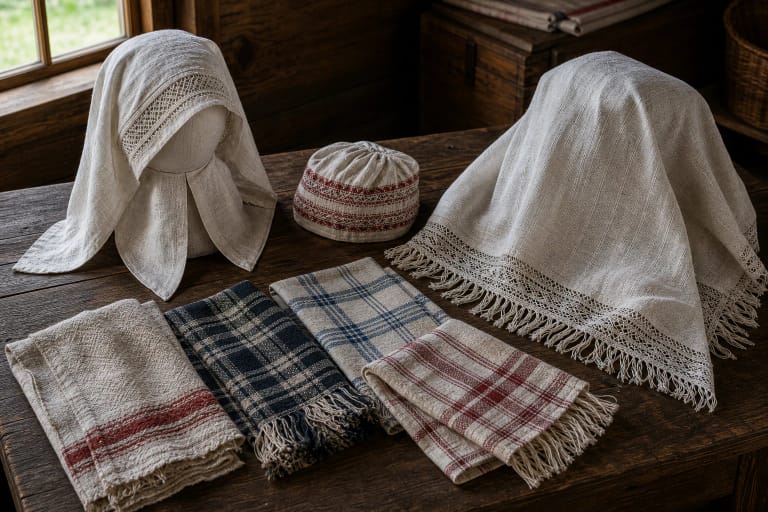
During gaubtuves, also called martuotuves, a maiden's rue wreath, ribbons, rangai, or galionas were replaced with a married woman's cap, nuometas, muturas, or kerchief. Her braids were undone and, in some localities and periods, her hair was trimmed. The bride might be seated on a bread tub, chair, or at a separate table while girls sang and held candles. Her brother, the groom's brother, the groom, the svocia, or other women could remove the wreath and place the new covering.
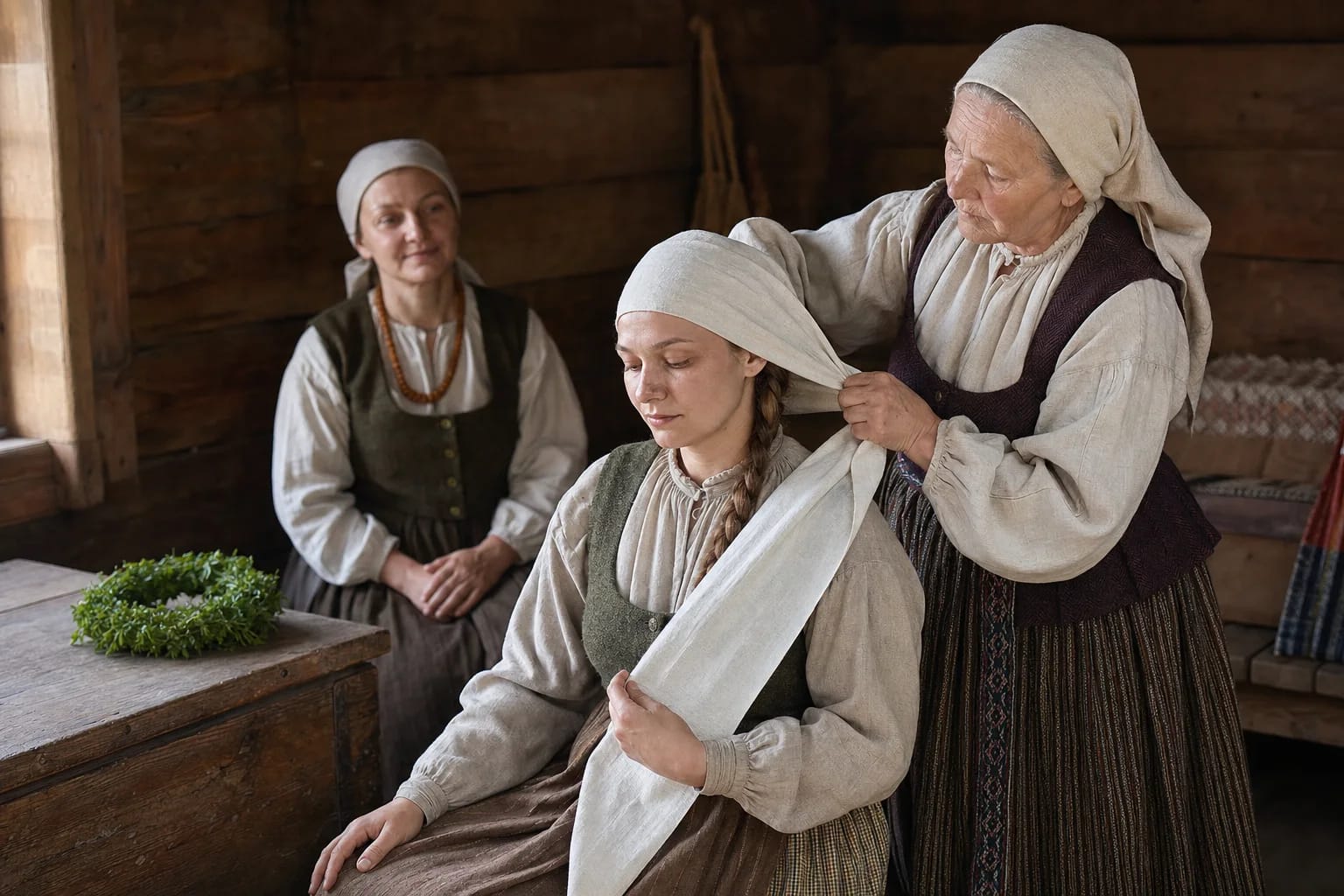
Timing and location changed. Sixteenth- and seventeenth-century descriptions place gaubtuves in the groom's granary before or after the couple's ritual bedding; later it occurred in a granary, chamber, or main room. In the Silute, Pagegiai, and Klaipeda districts at the turn of the twentieth century, it could take place at midnight in the bride's home. Hair trimming survived around Kupiskis into the mid-nineteenth century. These precise examples disprove any single national rule about the hour, performer, or head covering.
Feigned Resistance and Hair Cutting Reveal Relations of Power
Some accounts say that the young wife threw off the new cap three times while the groom's side placed it on her with feigned force. Ethnologists read this as ritual defense of the previous status and display of an unavoidable passage. Theatrical form does not conceal the patriarchal order, however: gaubtuves publicly announced movement into the husband's household authority, while the woman's body and appearance became objects of community regulation.
Hair cutting, simulated force, and public humiliation require particular caution. They were local and historically bounded rather than necessary parts of every Lithuanian wedding. In any modern interpretation, a covering is changed only with the participant's clear consent; both partners can choose a sign of changed status. Explaining a difficult history preserves heritage, but repeating an unequal relation is not a condition of authenticity.
Gifts and Reception Made a Place for the Young Wife
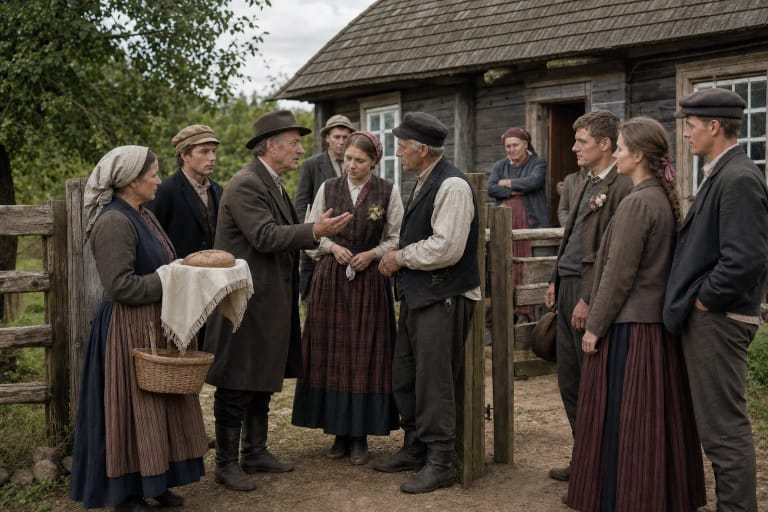
On reaching the groom's household, the young wife might hang a patterned towel in the place of honor, give a sash to her father-in-law, and present lengths of cloth to her mother-in-law, brothers- and sisters-in-law, matchmaker, attendants, musicians, and dowry carriers. During the marcpietis, textiles were taken from the chest, while the groom's kin reciprocated with money or objects. This exchange was not simple generosity: cloth displayed skill, resources, and the bride's family's contribution, while gifts publicly created mutual obligations.
Sources sometimes interpret gifts placed by the stove, well, barn, or grain bin as efforts to win over household spaces or guardian powers. Recorded action should be separated from scholarly interpretation. A nineteenth-century participant might have understood it as custom, a wish for good fortune, a sign of household responsibility, or a Christian-compatible blessing. Reception also did not make the daughter-in-law an equal head of the household; her position depended on her husband, parents-in-law, and inheritance arrangements.
From Household Necessity to Performance and Personal Choice
During the twentieth century, farewell customs lost much of their material base as large private farms declined, weddings shortened, and urban life expanded. The textile chest was no longer the bride's principal property, couples increasingly established separate homes, and civil registration and a restaurant reception compressed the celebration into one day. White bridal fashion began spreading from urban and wealthier settings around the turn of the twentieth century and became a mass norm later, especially in the Soviet period; passing a wreath or veil to a bridesmaid is a more recent interpretation of gaubtuves.
Folklore ensembles, local-history publications, and performances such as Kupiskenai Weddings have preserved songs and ritual names, but a staged selection is not the whole lived reality of a historical wedding. Today a couple can choose a song documented in their region, pass on a family towel, say farewell to relatives, or voluntarily change a head ornament. The soundest approach identifies what is documented, inherited within a family, or newly created, and balances the bride's departure with both partners' continuing ties to both families.