
Summer
Zoline: Assumption and Herb Blessing
August 15
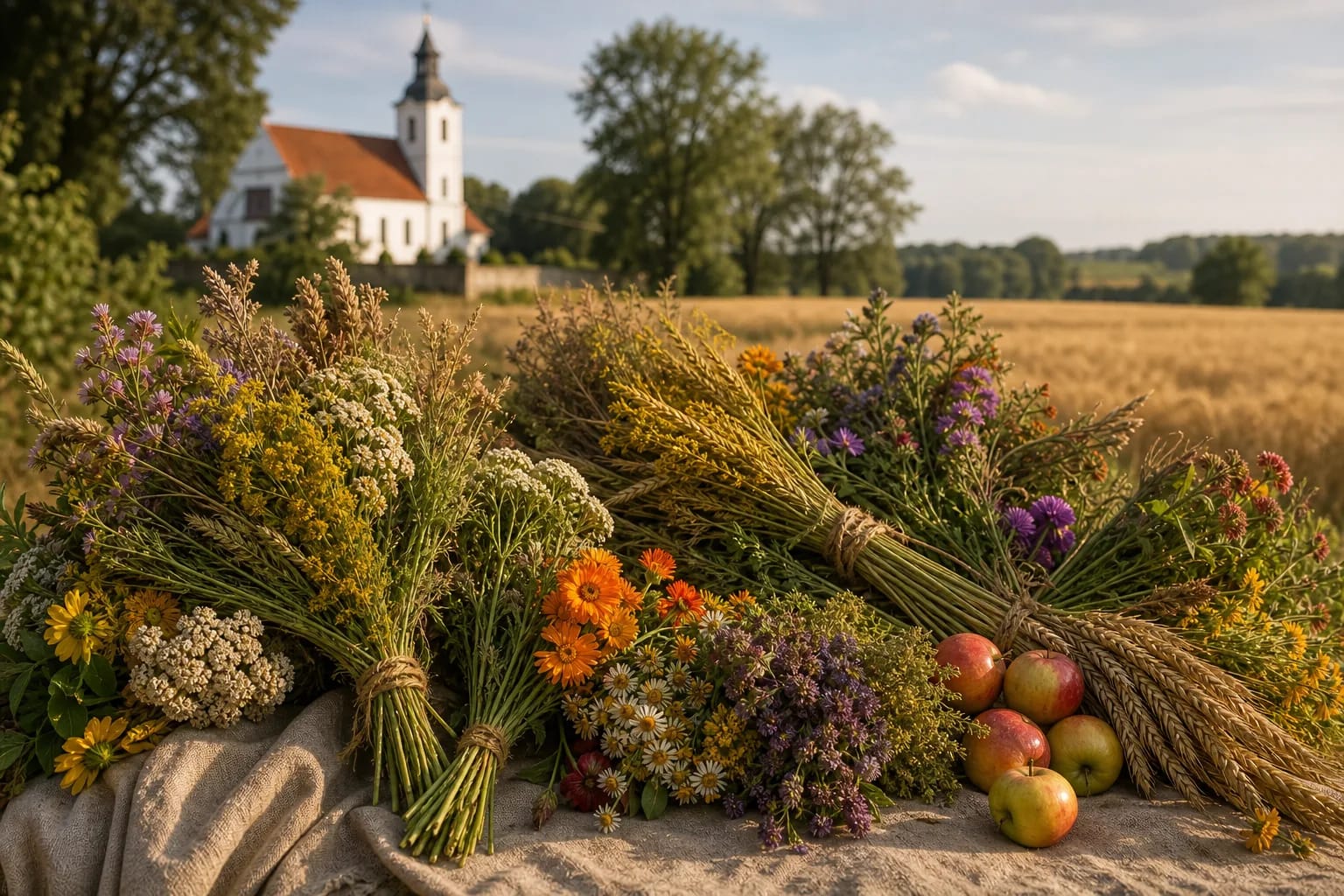
Zoline is one of Lithuania's important late-summer feasts, celebrated on August 15. It joins the Assumption of the Blessed Virgin Mary with older harvest and herb thanksgiving customs, when colorful herb bouquets are blessed in church.
Tradition context
- When
- August 15
- Season
- Summer
- Themes
- Assumption of the Blessed Virgin Mary, blessing herbs, harvest, medicinal plants, thanksgiving
Zoline on August 15 is a feast of harvest and herbs. It is the Assumption of the Blessed Virgin Mary, when churches bless bouquets of herbs, grain, flowers, and medicinal plants, and people give thanks for summer's harvest.
What Is Zoline and When Is It Celebrated?
Zoline is celebrated on August 15. It is the Assumption of the Blessed Virgin Mary, one of the most important late-summer feasts, and in Lithuania it is a public holiday. VLE notes that the belief that the Blessed Virgin Mary was taken up to heaven body and soul at the end of her earthly life was proclaimed a dogma by Pope Pius XII in 1950 in the apostolic constitution Munificentissimus Deus; during the feast's liturgy the church blesses the fruits of the new harvest and herbs.
In folk culture, Zoline is a harvest and herb thanksgiving feast. It marks the end of summer fullness and the nearness of autumn, when part of the harvest is already gathered and nature has reached abundance.
What Does Herb Blessing Mean?
The main Zoline custom is blessing herbs. Bouquets are made from wild and garden plants, grain ears, flowers, vegetables, and medicinal herbs and blessed during Mass.
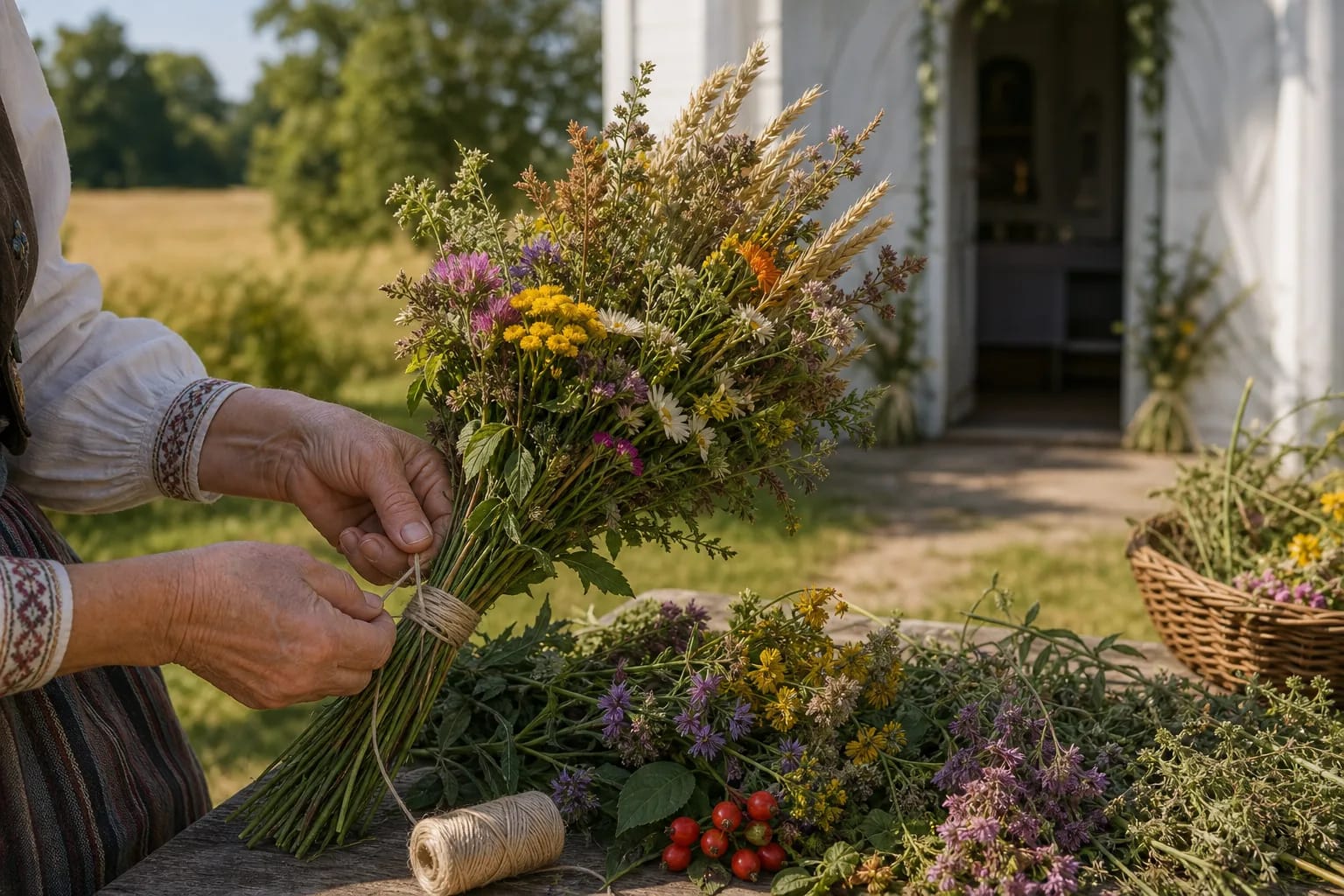
Blessed herbs were believed to protect. They guarded home and people from illness, fire, storms, and evil. Some were dried and kept until the next year for fumigation or animal healing.
How Zoline Relates to Harvest
Zoline is a feast of thanks for harvest. By mid-August, part of the grain and orchard produce has been gathered, so the first portion is brought to church as thanks and offering. In some places it was given to those in need.
This gratitude connects Zoline with the older agricultural year. The feast reminds people that harvest is not automatic but a gift of earth, work, and nature for which thanks are owed.
Medicinal Herbs and Beliefs
Zoline is closely tied to medicinal plants. People believed herbs gathered that day were especially effective, so women collected St John's wort, thyme, mint, oregano, and other plants for healing and protection.
Other beliefs also attach to the feast: herbs brought into the home should be blessed, and field work should be avoided. Such customs show Zoline as a time of special natural goodness and rest.
Why Zoline Is Linked with Women and Mary
Zoline is the day of the Assumption of the Blessed Virgin Mary, so it is especially tied to women and motherly protection. Mary is seen as the heavenly Mother, giving the feast a gentle and protective meaning.
This layer fits the symbolism of herbs and harvest. Earth's fertility, the abundance of plants, and motherly care join into one image, explaining why Zoline is one of the warmest late-summer feasts.
Marking Zoline Today
Zoline can be marked by making a bouquet from wildflowers, grain, and medicinal herbs, visiting church, or simply paying attention to summer abundance. It is a good time to notice harvest and gifts of nature.
For deeper experience, visit church feasts, processions, fairs, and harvest celebrations held on August 15. They show how Zoline joins church solemnity, harvest thanks, and community festivity.
Main Zoline customs and meanings
Zoline customs revolve around harvest, herbs, and gratitude. They show how Lithuanians marked the end of summer fullness, thanked for the earth's gifts, and asked for protection.
Making herb bouquets. Wild and garden plants, flowers, grain ears, vegetables, and medicinal herbs are gathered into colorful bouquets on the eve or morning of the feast.
Blessing herbs in church. During Mass, herb bouquets are blessed. People believed blessed herbs had special power and protected from illness, fire, and storms.
Harvest thanksgiving. First fruits of grain, orchard, and garden are brought to church in thanks for summer harvest and for blessing.
Gathering medicinal herbs. Herbs gathered at Zoline were believed especially effective; women collected St John's wort, thyme, mint, oregano, and others.
Keeping blessed herbs. Some herbs were dried and kept until the next year, used to fumigate homes, placed near holy pictures, or added to feed for sick animals.
Honoring women and motherhood. Zoline is strongly connected with women and motherly protection because Mary is honored as the heavenly Mother.
Rest from field work. Traditionally people avoided field work on Zoline, treating the day as thanks and rest after intense summer labor.
Processions, fairs, and community feasts. Many places hold processions, church feasts, fairs, and concerts, with people often wearing national dress.
Where to experience it
Where to experience Zoline in Lithuania?
Zoline is celebrated in churches and communities across Lithuania. The strongest celebrations are at sanctuaries, towns, and museums with processions, fairs, and harvest events.
Shrines and Church Feast Sites
Well-known sanctuaries and feast sites celebrate Zoline solemnly with processions and herb blessing.
Lithuanian Ethnography Museum in Rumsiskes
Harvest and herb events show bouquet making, harvest customs, and late-summer village tradition.
Town Churches and Communities
Almost every parish blesses herbs on August 15, and towns often hold fairs and harvest celebrations.
Gardens, Fields, and Meadows
Zoline can be experienced simply by making a bouquet from garden and wild plants and enjoying summer abundance.
Zoline: songs, sutartines, and related pages
Zoline closes the summer herb tradition and leads toward autumn. It connects with Rasos herbs, autumn Velines, and folk songs.

Zoline sources and useful pages
Zoline: frequently asked questions
When is Zoline celebrated?
Zoline is celebrated on August 15. It is the Assumption of the Blessed Virgin Mary and a public holiday in Lithuania.
What does herb blessing mean at Zoline?
Bouquets of herbs, grain, flowers, and medicinal plants are blessed in church. People believed they protected from illness, fire, and storms.
Which plants go into a Zoline bouquet?
Bouquets include wild and garden flowers, grain ears, vegetables, and medicinal herbs such as St John's wort, thyme, mint, and oregano.
Why is Zoline linked with harvest?
The first portion of grain and orchard produce was brought to church in thanks for summer harvest. The feast marks the end of summer fullness.
Why are medicinal herbs gathered at Zoline?
People believed herbs gathered on Zoline were especially effective. They were collected for healing and protection and dried for the coming year.
Why is Zoline connected with women?
Zoline is the Assumption of the Blessed Virgin Mary, and Mary is honored as heavenly Mother. The feast is therefore linked with women and motherly protection.
Could people work on Zoline?
Traditionally field work was avoided. The day was understood as a time of thanksgiving and rest after intense summer labor, and today it is a public holiday.
How can Zoline be marked today?
Make a bouquet from wildflowers and herbs, visit church, or simply notice summer abundance. Many places also hold church feasts, processions, and fairs.