- When / context
- Usually during the dark season after fieldwork; local custom and the church calendar changed the timing
- Tradition area
- Life cycle
- Themes
- Vakarojimas, vakarone, spinning, feather stripping, riddles, tales, songs, youth gatherings, naktigone
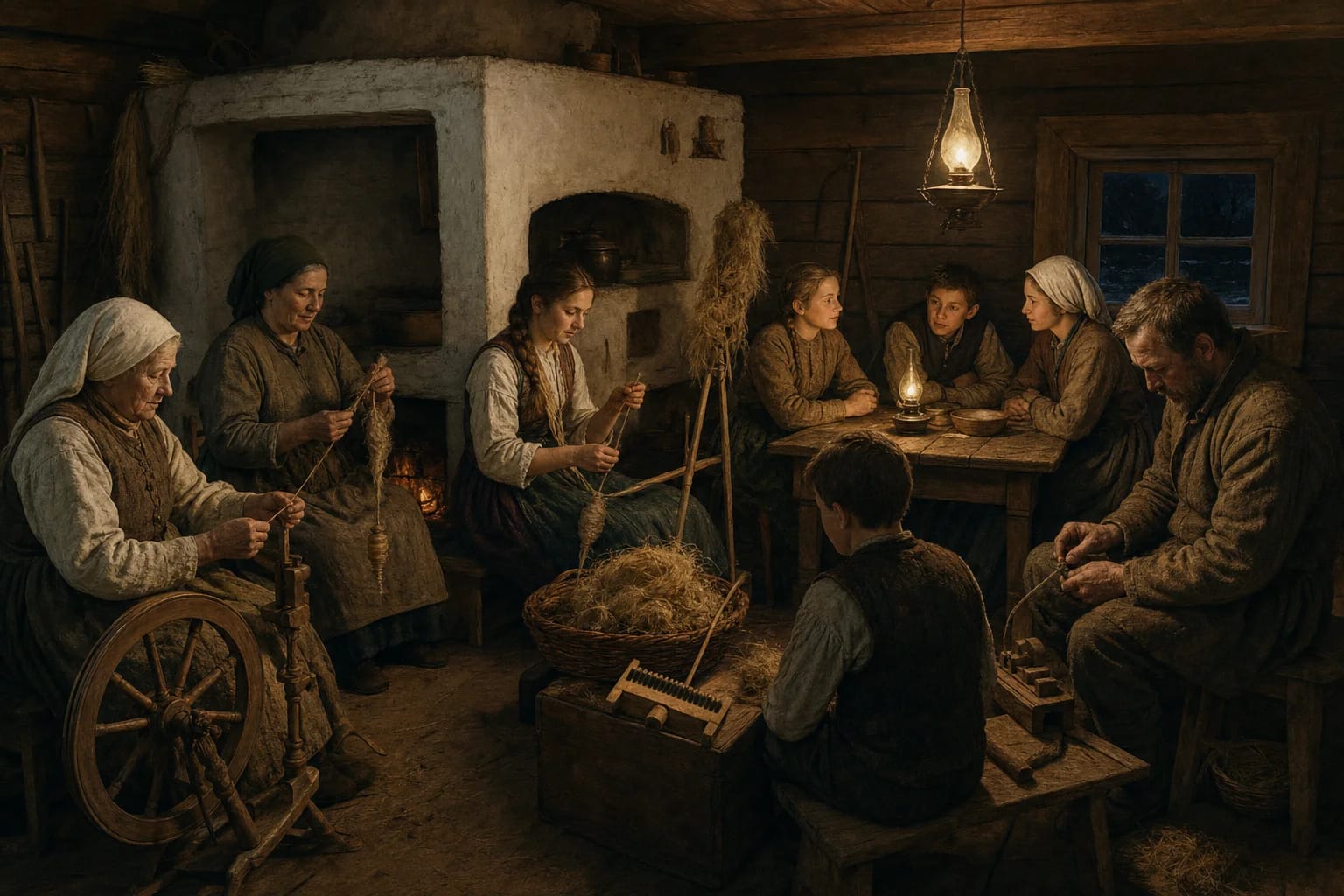
Vakarojimai were not simply parties. They were shared work and storytelling evenings when villagers spun fiber, stripped feathers, sang, exchanged riddles, watched young people's conduct, and built relationships.
What Were Vakarojimai, and Was a Vakarone Different?
Vakarojimas means spending an evening together, but ethnographic evidence places several practices under that name. It might be a small gathering of neighboring women with spinning tools, a larger feather-stripping work party, or a youth evening where songs, games, and dancing followed the work. Today vakarone often means a staged folk event; in historical accounts it can also mean a bridal eve or an ordinary youth gathering. The useful questions are therefore not only what an event was called, but who attended, what they did, and who regulated it.
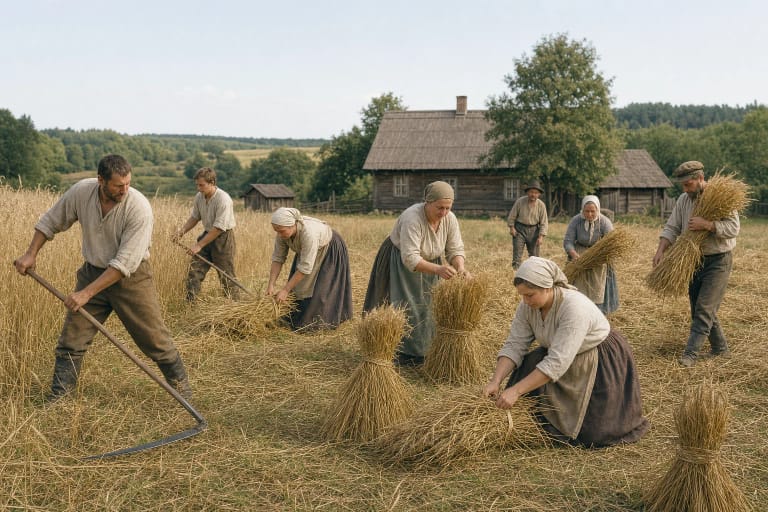
Household economy stood at the center of an evening gathering. Fieldwork receded in autumn and winter, but flax, wool, textiles, clothing, and bedding still required preparation indoors. Working in one heated and lit room saved resources, made repetitive work pass faster, and moved knowledge and stories between households. Entertainment was not guaranteed. Some gatherings remained working evenings; in others the social part began only when participants had completed the agreed task.
When and Where Did Rural People Gather?
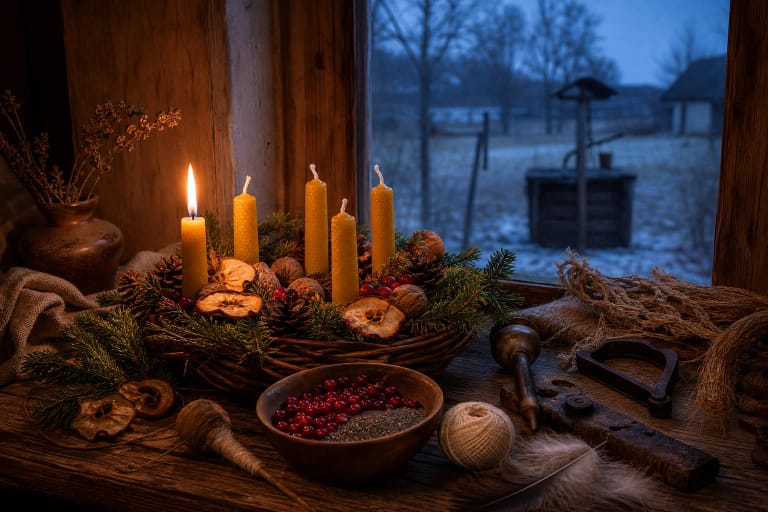
Most vakarojimai took place during the dark season after the main fieldwork. In her study of riddle-telling settings, Angele Kensminiene cites local memories of gatherings from All Saints to Christmas alongside other time spans. This does not establish one Lithuanian calendar. Harvest, livestock care, daylight, and parish life shifted the beginning. In Catholic settings, Advent or Lent could make loud dancing unacceptable while quieter work, hymn singing, tales, or riddles continued.
The setting varied too. A small working circle fitted into the main room; a larger youth gathering needed a spacious grycia or parlor, and some dances used a barn. Meeting in a private home made the hosts responsible for order. A gathering could rotate among households, but homes differed in size and means. The opportunities of a substantial farmer's child, a land-poor laborer, a hired servant, a town youth, and someone living on an isolated farmstead were not equal.
Spinning, Feather Stripping, and Other Evening Work
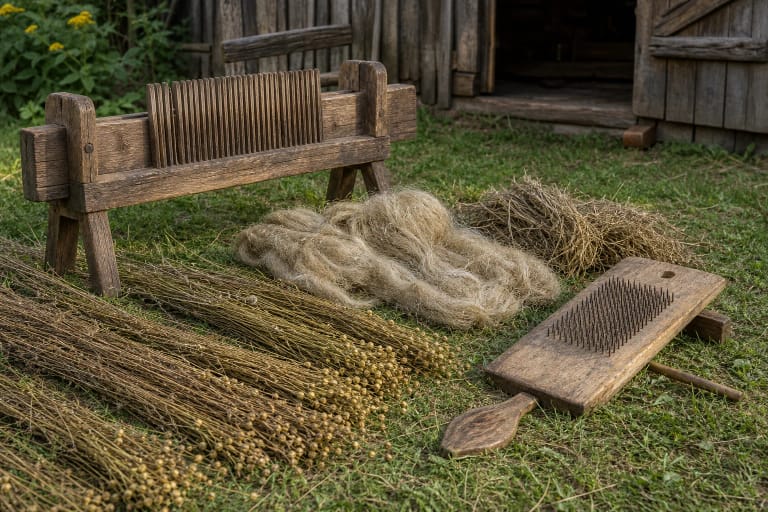
Sources often mention women's and girls' textile work: spinning flax or wool, arranging thread, knitting, sewing, and mending cloth or clothes. Feather stripping suited a communal evening particularly well because many neighbors could finish a large quantity of slow, light work together. Men might repair small tools, twist rope, or do other indoor tasks at the same time, but neither gender composition nor the division of work was identical across Lithuania.
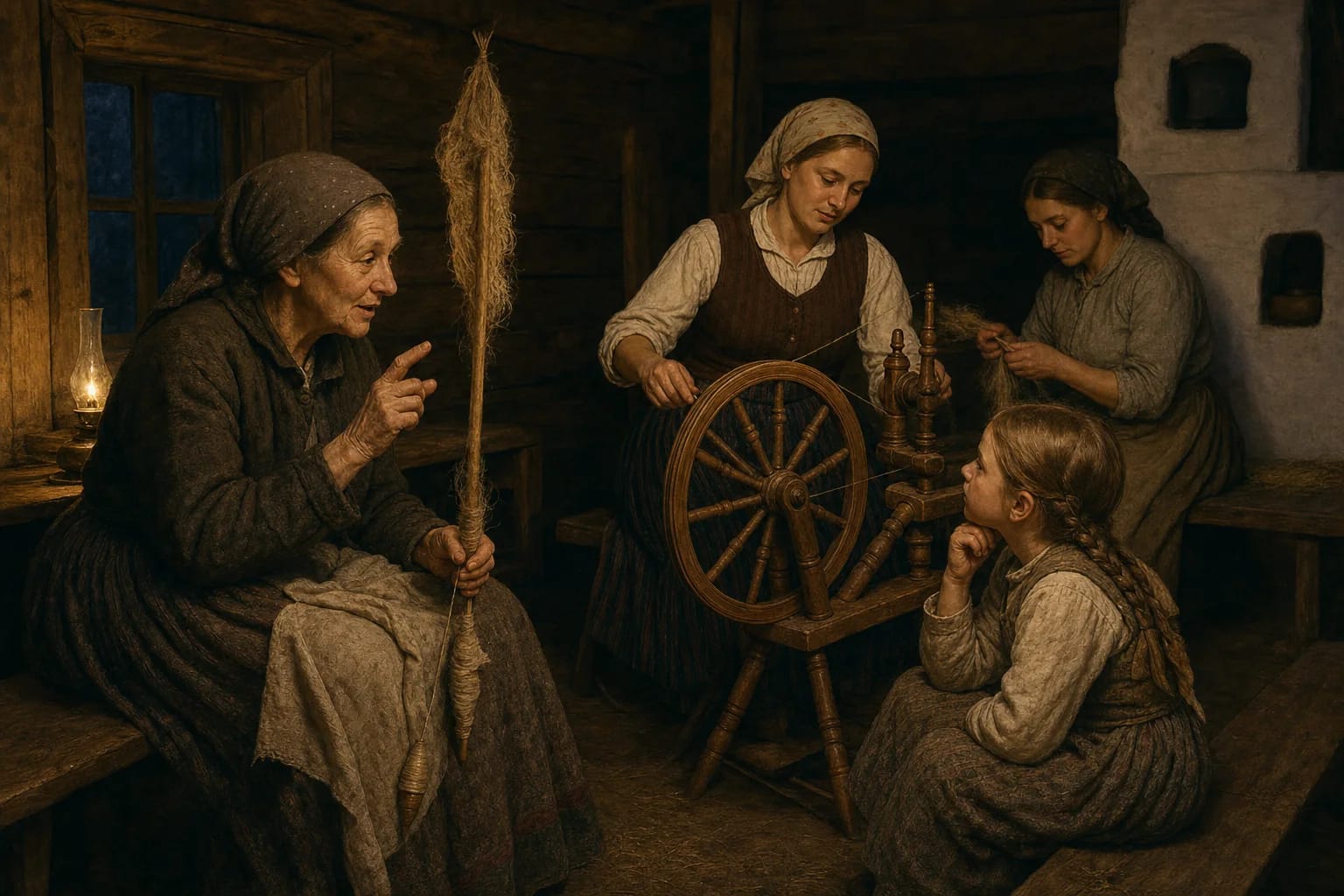
A work evening demanded discipline. Raw material could not be spoiled, and the pace of spinning or stripping exposed a participant's skill. Younger people learned by watching elders, repeating movements, listening to corrections, and joining the conversation rather than sitting through a formal lesson. The gathering transmitted more than technique: it taught how to share duties, when to help a neighbor, how to behave as a guest, and what kind of diligence the community expected from a maturing member.
Songs, Tales, and Riddles as a Living Evening Archive
Storytelling was not background audio. A teller controlled voice, pauses, and anticipation, while listeners responded, corrected details, or requested a known plot. Fairy tales, belief legends, local memories, and news circulated this way. One evening might set a supernatural story beside very practical information about a neighbor's farm. Oral tradition therefore changed continually: performers did not recite one fixed text word for word but adjusted it to their company.
A riddle created competition without a stage. Solving one required knowledge of tools, plants, animals, and work, as well as verbal wit and an ear for metaphor. Kensminiene's research links riddle sessions to particular social settings, including vakarojimai. Songs could support the rhythm of work or open the livelier part of an evening. Yet not every gathering was a song festival: remembered evenings include quiet work and tales, and repertoires differed.
The Vakarone as a Place to Meet and Mature
For young people, a vakarone made being together socially legitimate without removing them from community view. They could dance, talk, and notice another person's diligence, humor, musical skill, and treatment of others. Acquaintance did not itself amount to matchmaking. It created a wider peer network from which friendship or a couple might emerge. Zilvytis Saknys's Merkyne-area research shows that youth gatherings were already modernizing between the wars and that older vakarones disappeared faster in the town than in some surrounding villages.
Participation also marked social age. In some places younger adolescents were not yet admitted to the older youth's dances, and the peer group or its senior members enforced the boundary. Such rules were not harmless folklore. They could support order but could also humiliate, exclude, and entrench unequal power. A girl's reputation was often policed more strictly and her conduct more readily discussed. A responsible account explains those inequalities instead of presenting social pressure as something to revive.
Music, Dance, Games, and the Rules of the Evening
When a gathering turned into entertainment, a local fiddler, accordionist, or several musicians might play; elsewhere singing and round games were enough. Dance repertoires changed through contact with towns, military service, schools, and print. There is consequently no single list of “authentic vakarone dances.” A late nineteenth-century village gathering, an interwar association's evening, and a Soviet culture-house dance had different sounds and rules.
Hosts, senior youth, or designated organizers kept order. Invitations, admission, payment for musicians, and refreshments could be arranged in several ways. Alcohol appears in some accounts, but it was not the custom's defining feature. Rivalry between villages, competition over partners, and humiliating initiation acts were also real. These cases reveal the vakarone as an arena of community relations, not a nostalgic picture of unbroken harmony.
Naktigone: First of All, Responsible Night Work
Naktigone was the communal grazing of village horses at night in summer and autumn and, during plowing, of draft oxen. Younger family members—especially boys and young men—and servants usually took the horses, while the encyclopedia notes that girls most often guarded oxen separately. Herders worked in shifts, some keeping watch while others slept. Fire, songs, stories, and pranks filled intervals between duties, so naktigone should not be recast as a carefree party under the stars.
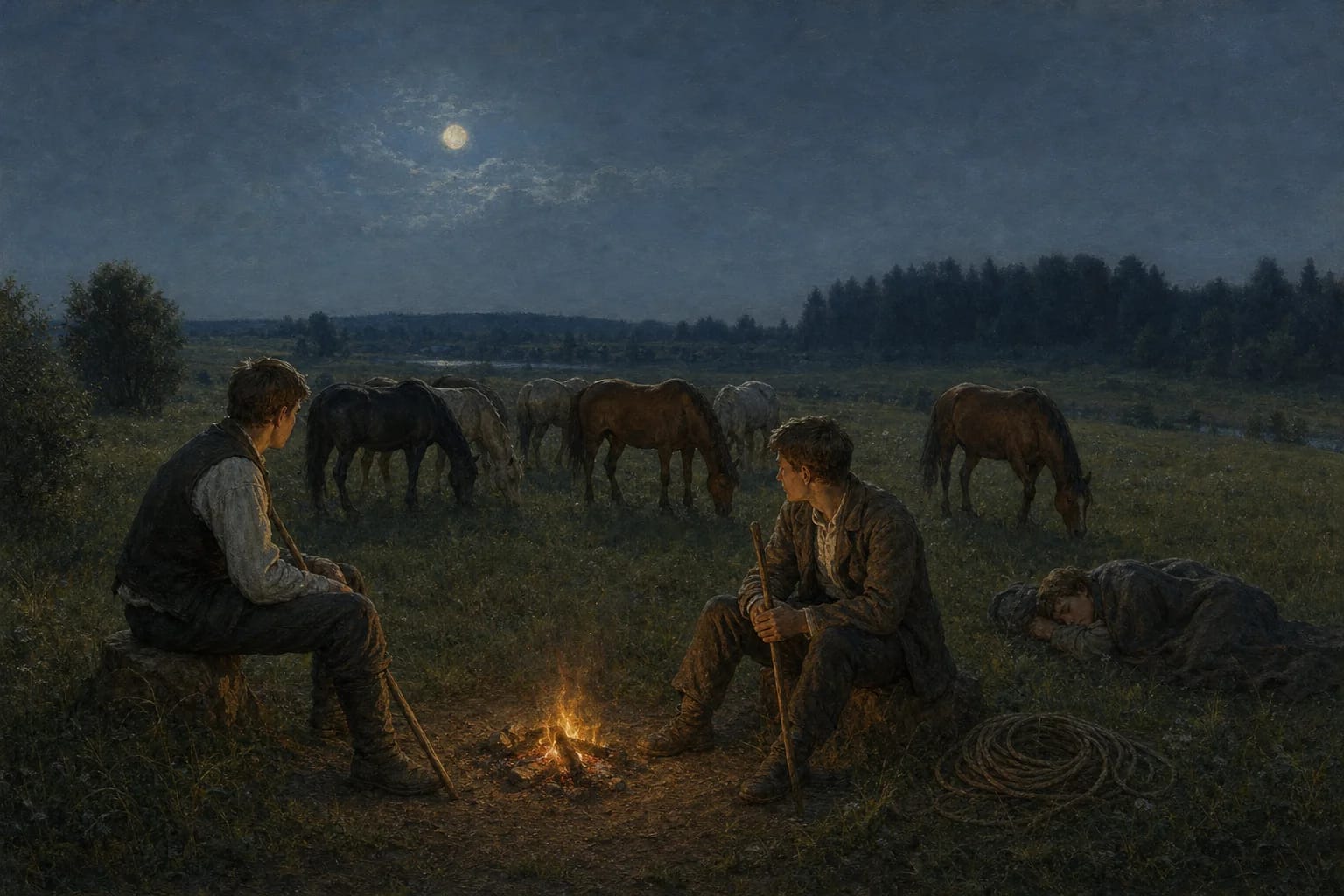
The night environment gave stories and songs a distinctive force: participants heard animals, woods, and water and had to stay awake and cooperate. The experience could build responsibility and peer solidarity, but it also meant fatigue, cold, and danger. Ages, grazing arrangements, and fire use differed with farm systems and locality. An ethical modern interpretation explains herding and safety instead of asking children to imitate hazardous overnight work.
Region, Confession, and Social Position Changed the Custom
Research from a Dzukian village cannot automatically explain Zemaitija, Aukstaitija, Suvalkija, or Lithuania Minor. House plans, farm tasks, settlement density, musical repertoires, and young people's mobility differed. In Lithuania Minor, Lutheran pietist currents could view secular dancing severely in some communities; in Catholic parishes Advent and Lent shaped the rhythm of entertainment. Even neighboring villages might give gatherings different reputations.
Social position mattered as well. A hired servant did not control an evening in the same way as a farmer's child, and service, work, and residence constrained relationships. Girls and boys did not have equal freedom. During the twentieth century, school, organizations, migration to towns, radio, culture houses, and later television changed not only entertainment but also who could organize it. Vakarojimai are best understood as negotiated social practice rather than a static national ritual.
How Vakarojimai Changed and What Can Continue Today
From the late nineteenth century through the twentieth, public dances, associations, geguzines, culture houses, and private media gradually displaced household vakarojimai. Change did not happen everywhere at once. In Saknys's research, Merkyne town modernized faster than some nearby villages; elsewhere a specific need, such as processing feathers or flax, kept a working gathering useful for longer. Today vakarone most often names a deliberately organized folk, dance, or community evening.
A meaningful continuation is more than decorative historical theater. A group can undertake real shared work, invite a skilled storyteller, learn the context of riddles, sing a documented local repertoire, and identify where it was collected. It should distinguish naktigone from vakarone, Advent hymn singing from loud dance, and one locality's evidence from a claim about all Lithuania. The valuable principle is work, attentive listening, and equitable participation—not the return of humiliating social control.