
Winter
New Year in Lithuanian Customs
January 1 and New Year's Eve
In Lithuanian village customs, New Year was not only a noisy midnight celebration. It was a quiet but sensitive boundary: what you said, how you behaved, what you dreamed, and what weather you saw were all read as signs for the coming year.
Tradition context
- When
- January 1 and New Year's Eve
- Season
- Winter
- Themes
- Christmas in-between season, rich Kucios, wishes, divinations, weather signs, straw sheaf, turning of the year
In Lithuanian custom, New Year belongs to the in-between festive time from Christmas to Three Kings: families ate a richer evening meal, wished one another luck, predicted weather and harvest, and in some Samogitian places burned a straw sheaf to send off the old year.
New Year in the Lithuanian Calendar
In Lithuanian ethnographic tradition, New Year belongs to tarpusvente, the time from Christmas to Three Kings. VLE stresses that village New Year customs did not stand apart from the wider winter cycle and should be read together with Kucios, Christmas, and the January 6 boundary. January 1 as the year's start did not settle immediately: according to VLE, in Europe the new year began at various times on March 1 (ancient Rome, the Frankish state until the 8th century), March 25 (Florence and Pisa until 1749), September 1 (Byzantium), or even December 25 at Christmas (in some medieval Western European lands).
The feast was not empty. Imbrasiene's material shows New Year's night and day as a sensitive time when wishes, dreams, weather, behavior, and even first return from church could predict the order of the coming year.
Rich Kucios and How It Differed
On New Year's Eve, even in the early twentieth century, many places held a family meal called rich Kucios or kuceles. It resembled Kucios because the table invited talk about future and family luck, but the food was no longer fasting food and could include animal products.
Around Kupiskis, a custom was recorded of keeping a remnant of some food from Kucios until New Year. This small action was read as a sign of luck, but it also carries a practical lesson: a safe household is one that can save and keep stores.
Why Anger and Bad Words Were Avoided
On New Year's Day people tried to behave as they wished to live all year. Around Tverecius it was said that cursing or quarrelling could make work fail, while a cheerful, orderly day promised a happier year.
The logic is simple: the first day becomes an example for the time ahead. The feast encouraged self-control, good words, giving, and kindness more than public noise. Even gifts to the poor near Tverecius church were understood as a sign for future harvest.
Weather, Harvest, and First Signs
New Year weather was used to judge spring, summer, and harvest. A starry night or sunny day was favorable, frost on trees could promise good barley, and someone falling into snow on the way could in some places be linked with good flax.
These predictions show how the peasant calendar taught people to observe. A person watched snow, trees, birds, animals, and everyday actions because work, food, and family security depended on them.
Divinations and Young People's Anxiety
As at Kucios, many New Year's Eve divinations concerned marriage. Imbrasiene mentions practices from Kalesninkai, Tverecius, Alanta, and other places: dreams, coals in water, wax or tin castings, a comb under the pillow, and signs sought in mirrors.
These customs should not be romanticized as a light game only. They grew from real anxiety: after marriage a young woman left for another household and kin group, while remaining unmarried meant depending on other family members. The desire to know the future was social as well as personal.
Sending Off the Old Year
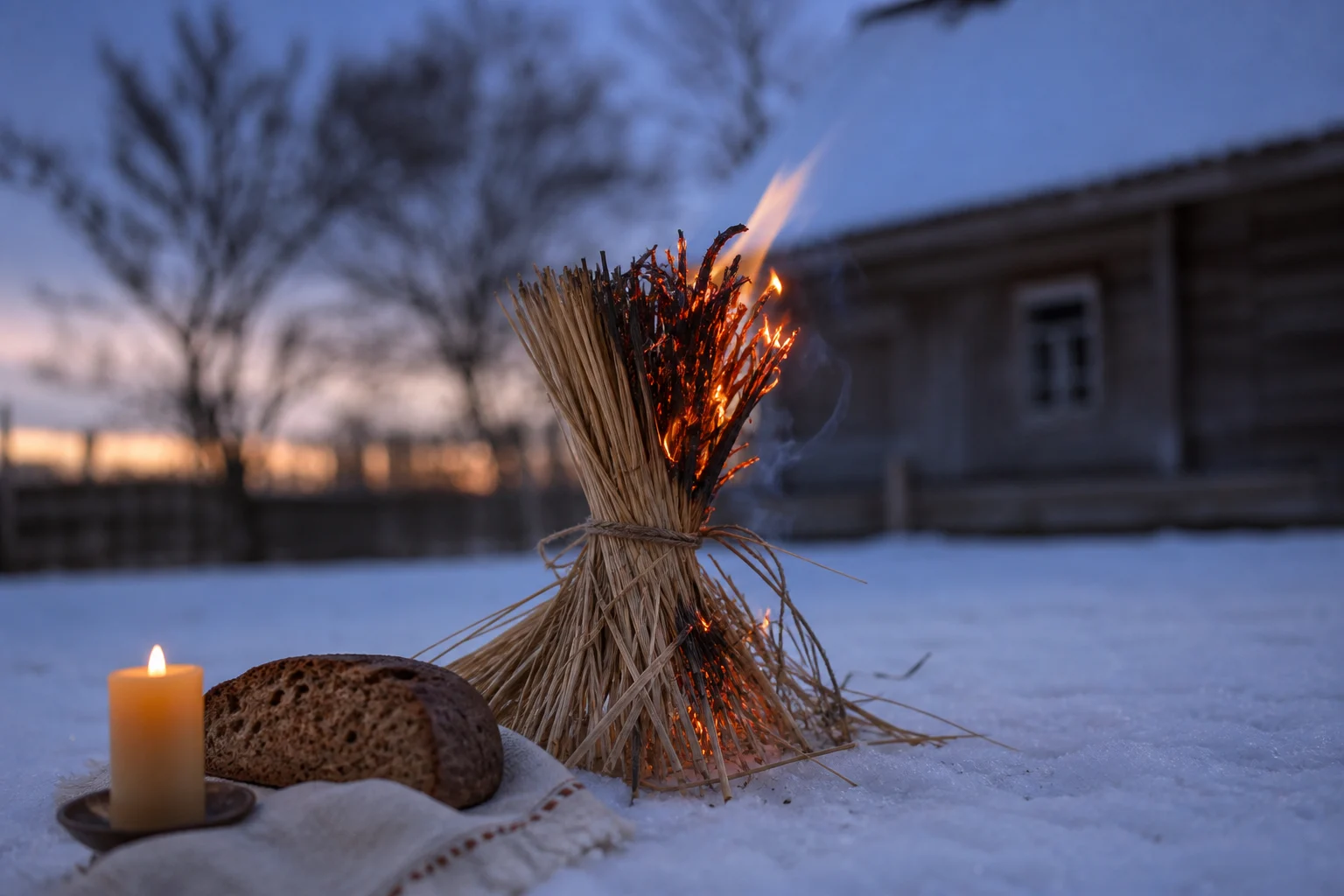
In some Samogitian places, a straw sheaf was burned while greeting the New Year. The fire was read as a way to send off the evil, misfortune, and failure of the old year. It is close to wider winter images of fire and returning light, but not an all-Lithuanian custom.
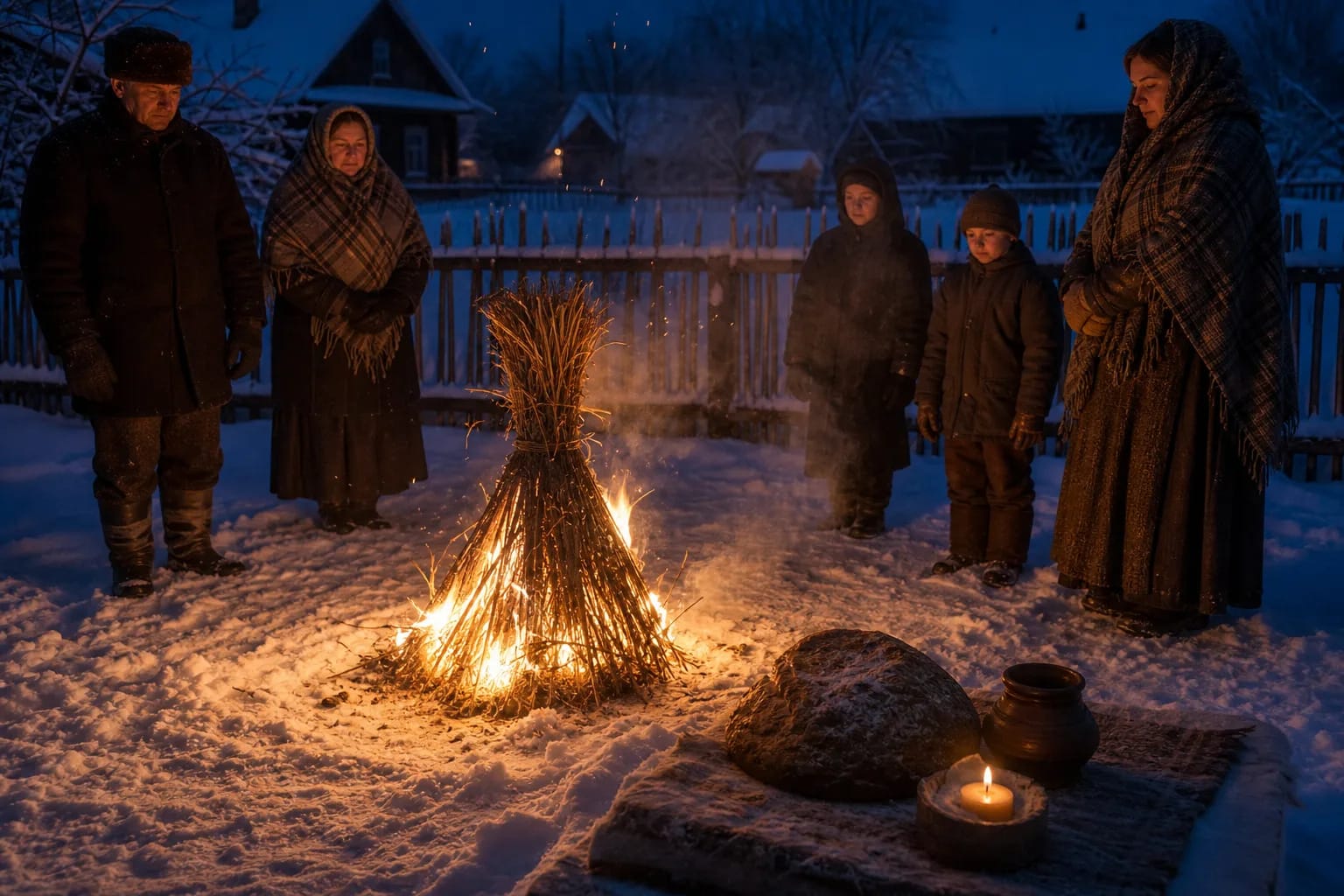
In twentieth-century Aukstaitija, the change of years was also dramatized: Old Year appeared as a tired old man, New Year as a quick young man with a bag of gifts. Today the tradition can be marked calmly: give thanks for the past year, light a candle, wish one another well, and choose the first words of the year carefully.
Main New Year customs and meanings
New Year customs stand close to Kucios and Christmas but have their own direction: wishes, prediction, sending off the old year, and starting a new work cycle. Some practices are documented only in particular areas and should be read regionally.
Rich Kucios. In the early twentieth century, many parts of Lithuania held a family New Year's Eve meal similar to Kucios but no longer fasting.
Wishes and careful behavior. L. Jucevicius described New Year's Day as a time of sincere greetings; people avoided anger, curses, and bad words.
Signs of stores and luck. Around Kupiskis, a food remnant kept from Kucios to New Year promised stores and happiness for the family.
Animals speaking at midnight. Around Tverecius, people said that, as on Kucios, animals in the byre could speak at New Year midnight.
Weather and harvest signs. A starry night, sunny day, frost on trees, or snow were read for signs of spring weather, rye, barley, and summer luck.
Marriage divinations. Young people, especially girls, divined on New Year's Eve through dreams, wax or tin castings, coals in water, and other signs of a future spouse.
Burning a straw sheaf. In some Samogitian places, a straw sheaf was burned at New Year, connected with sending off old-year misfortunes and hoping for returning light.
Old and New Year figures. In twentieth-century Aukstaitija, Old Year and New Year were performed: a tired old man wrestled with a quick young man who took over the course of the year.
New Year: songs, sutartines, and related pages
New Year sends away old-year concerns but remains within Christmas time. It connects with Kucios, Christmas, the Three Kings boundary, and winter songs.
Kucios
The quiet Christmas Eve meal with which New Year kuceles share table and divination motifs.
Christmas
The beginning of the winter feast period that continues until Three Kings.
Let Us Go Kaledoti, Boys, Kaleda
A kaledojimas song that helps explain winter-cycle visiting and house-to-house greetings.
New Year sources and useful pages
New Year: frequently asked questions
When is New Year observed in Lithuanian custom?
Today New Year is observed on January 1, while ethnographic customs mostly concern New Year's Eve and the first day. They belong to the in-between season from Christmas to Three Kings.
Is New Year an old Lithuanian feast?
As a separate January 1 feast it is later than Kucios and Christmas, but the village New Year night carried many winter-cycle customs: meal, wishes, divinations, weather and harvest signs.
What were rich Kucios?
Rich Kucios, or kuceles, was the New Year's Eve family meal. It resembled Kucios but was not fasting, so richer animal foods could appear.
Why was quarrelling avoided at New Year?
People believed the first day shaped the whole year. They avoided curses, anger, and disorder and tried to be cheerful, generous, and peaceful.
What did the burning straw sheaf mean in Samogitia?
In some Samogitian places a straw sheaf was burned as a sign of sending off the old year. Fire symbolically destroyed old misfortunes and helped greet the new yearly cycle.
Did people divine on New Year's Eve like at Kucios?
Yes, especially young people. Dreams, wax or tin, coals in water, combs under pillows, mirrors, and other signs were used, mostly for marriage and future happiness.
Which weather signs mattered at New Year?
A starry night, sunny day, frost on trees, snow, and other signs were read for future harvest, spring weather, flax, or barley.
How does New Year differ from Christmas?
Christmas celebrates Christ's birth and opens the winter feast period. New Year is the year-boundary moment inside that period, with wishes, prediction, and sending off the old year.
How can New Year be marked in this tradition today?
Sit at a simple family table, light a candle, remember the past year, wish one another well, and deliberately begin the year without anger.