
Spring
Kaziukas Fair
Around March 4, St Casimir's Day
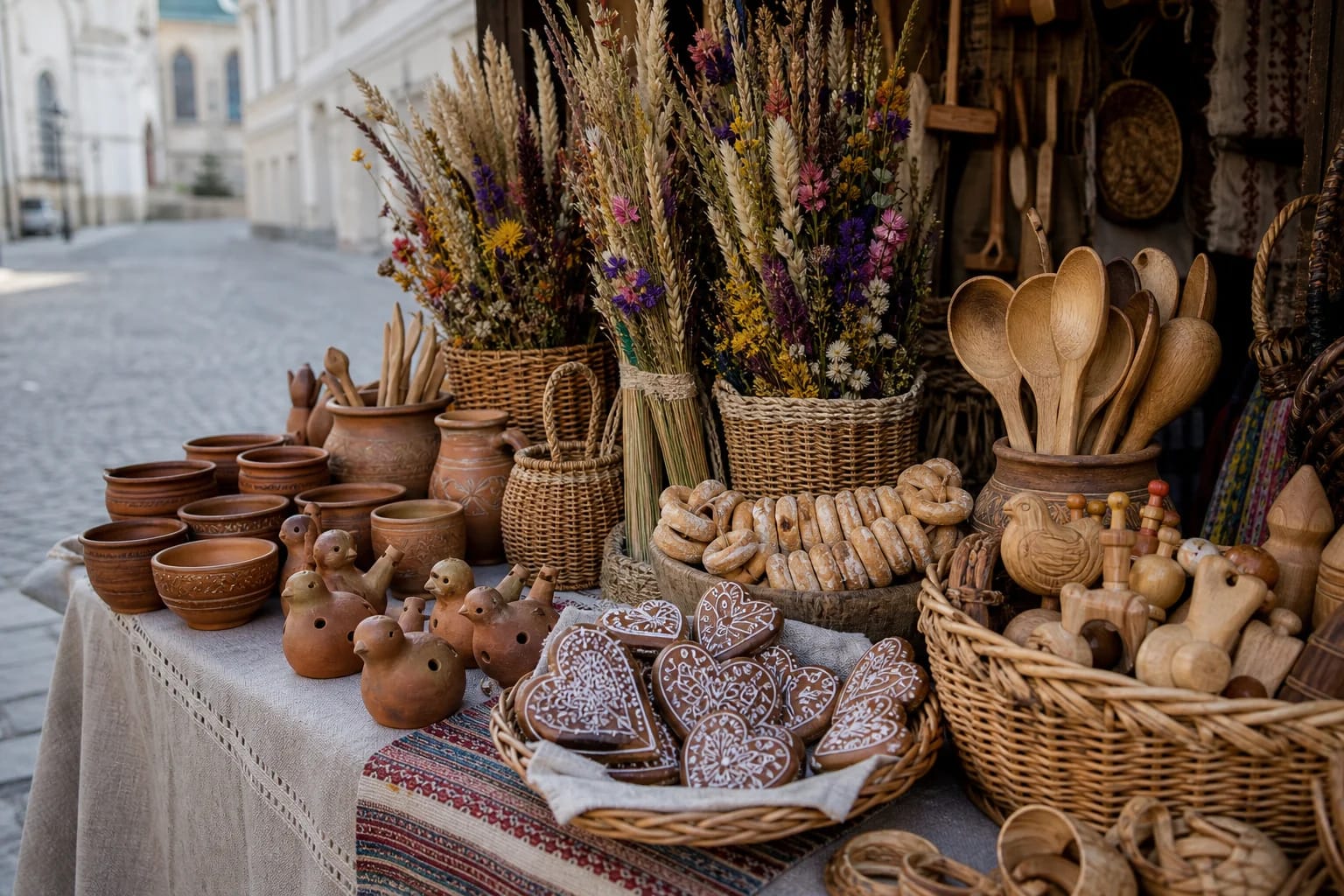
Kaziukas Fair is the bustle of early spring in the city, where tradition is touched through handwork: verbos, pots, baskets, wooden spoons, bagels, and gingerbread. It is not a state holiday but a living meeting of St Casimir's Day, Vilnius trade, and crafts.
Tradition context
- When
- Around March 4, St Casimir's Day
- Season
- Spring
- Themes
- St Casimir, Vilnius, crafts, verbos, pottery, wickerwork, bagels, gingerbread, city fair
Kaziukas Fair is the early-March craft festival of Vilnius and Lithuania, growing from St Casimir's Day. It joins the memory of Lithuania's patron saint, the history of city trade, and living crafts: verbos, pottery, wicker and wooden goods, textiles, bagels, and gingerbread.
What Is Kaziukas Fair?
Kaziukas Fair is a traditional early-March market and festival connected above all with Vilnius and St Casimir's Day. VLE describes it as a traditional market held in Vilnius and elsewhere in early March, growing out of a religious feast.
St Casimir matters to Lithuania as its patron: he was canonized in 1604 and declared patron of Lithuania in 1636. In popular memory the feast became more than church observance; it turned into a spring city gathering where crafts are especially visible.
How the Fair Grew in Vilnius
VLE notes that in 1827 merchants received the privilege to hold a several-day fair in Cathedral Square. In 1901 the market moved to Lukiskes Square, after the Second World War it was held at Kalvarijos market, and in 1991 it returned to Pilies Street before expanding through other Old Town spaces.
Imbrasiene stresses that artisans and peasants from eastern Lithuania and western Belarus brought their goods to Kaziukas. The Vilnius fair was therefore a wider regional event, not only a city-center market. According to VLE, in the late nineteenth and early twentieth centuries as many as 1,500-2,400 wagons of goods came to the fair from nearby and more distant artisans - weavers, carvers, smiths, basket-makers, potters - and peasants.
What Was Bought at Kaziukas?
The historical fair sold what households and farms needed: wooden and wicker implements, horse-transport items, field tools, ceramics, textiles, knitwear, toys, and medicinal herbs.
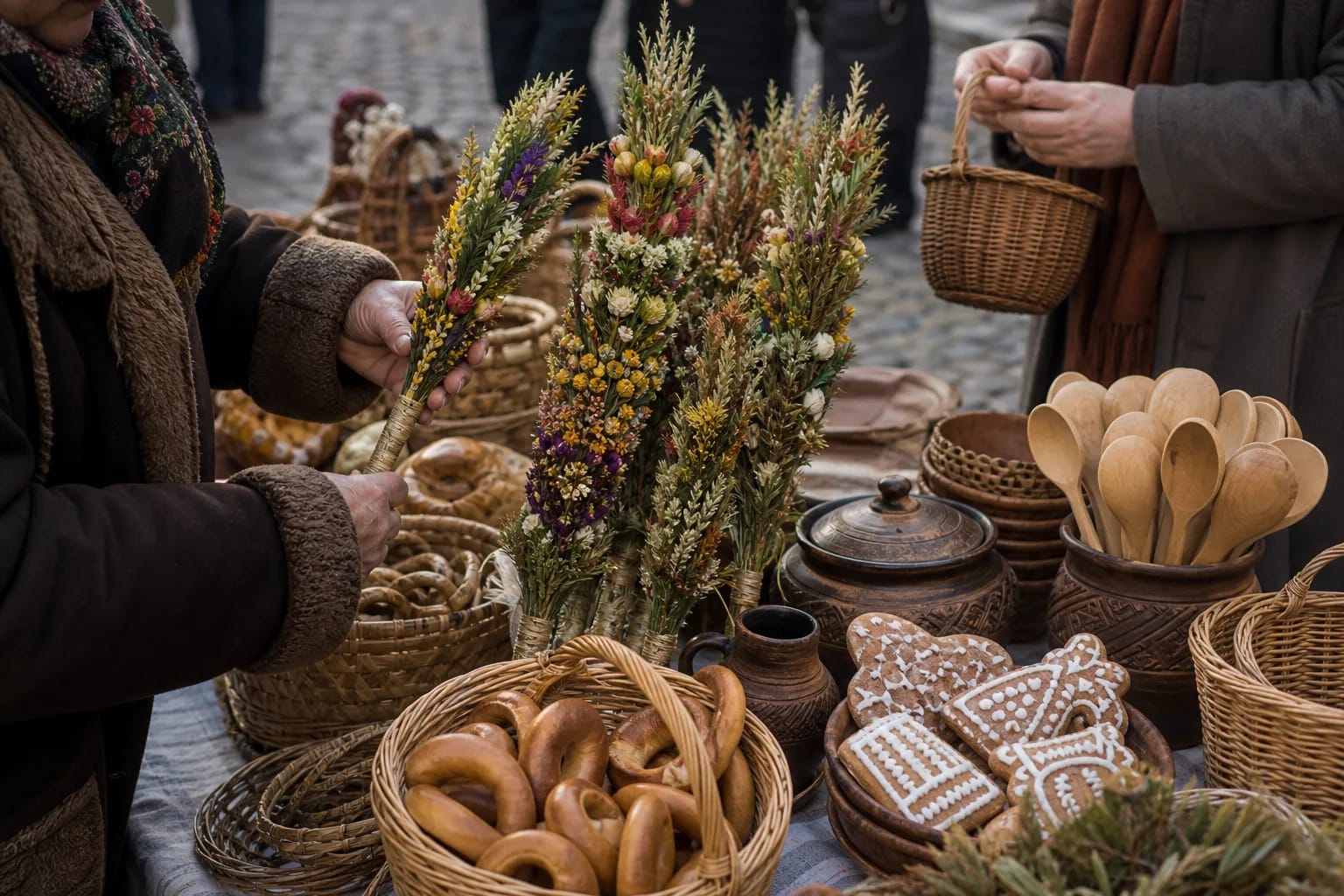
Beside practical goods were festive signs: verbos, bagels, gingerbread, later more souvenirs, jewelry, and city-festival objects. Kaziukas is strongest when handwork is not overwhelmed by industrial trinkets.
Why Verbos Matter at Kaziukas
Vilnius verbos became one of the clearest images of Kaziukas Fair. They are sold in early March, before Palm Sunday, so the fair brings the first promise of spring plants and color into the city.
A verba should not be reduced to decoration. It is a specific Vilnius-region craft with its own materials, binding technique, and patterns. At Kaziukas it bridges the city market and the coming church spring season.
Bagels, Gingerbread, and Fair Gifts
Food matters at Kaziukas as much as objects. LNKC and VLE mention bagels and gingerbread, while contemporary descriptions still include Kaziukas hearts, homemade bread, honey, cheese, and other spring fair tastes.
Such gifts have a simple meaning: anyone who went to the fair often brought something home for children, family, or neighbors. The fair does not only sell goods; it carries the mood of the city festival to the home table.
Experiencing Kaziukas Today
Today it is worth looking beyond the biggest crowd. Start with the artisans: ask who shaped, wove, bound, carved, or baked the object, from what materials, and by what technique.
Then the fair remains a tradition rather than only a shopping line. Even one good object - a verba, clay cup, basket, wooden spoon, or gingerbread - can say more about Kaziukas than a bag full of random souvenirs.
Main Kaziukas Fair customs and meanings
Kaziukas customs are not village rites around one table. The key actions are going to the fair, seeing the artisan's work, bargaining, bringing gifts from the city, sensing early spring, and carrying home objects that long recall the beginning of March.
St Casimir's Day. The fair is held around March 4, the day of Lithuania's patron St Casimir, so its beginning had a strong religious layer.
Going to the fair. The visit itself matters: seeing people, bargaining, and bringing home an object, sweet, or gift from springtime Vilnius.
Artisans' stalls. Historically the fair sold woodwork, wickerwork, ironwork, ceramics, textiles, knitwear, and other handmade goods.
Vilnius verbos. Verbos are among the most recognizable Kaziukas signs, though their religious day comes later on Palm Sunday.
Bagels and gingerbread. Smurgainys bagels, gingerbread, and heart-shaped sweets became edible fair gifts.
Farmer and townsman goods. Earlier fairs also supplied practical objects: field tools, harness and transport equipment, and household implements.
Theatrical opening. Modern Kaziukas often includes a symbolic opening, music, performances, and the rhythm of a city festival.
Spread of the fair. Vilnius remains the center, but Kaziukas fairs are also held in other Lithuanian cities, schools, and communities.
Where to experience it
Where to experience Kaziukas Fair in Lithuania?
Kaziukas Fair is first of all linked with Vilnius, but its forms spread to other cities, schools, and communities. The scale differs, while the core remains crafts, verbos, food, and proximity to St Casimir's Day.
Vilnius Old Town
The main Kaziukas Fair space today is Vilnius Old Town, especially streets around Pilies Street, the Cathedral area, and the city center.
Other Lithuanian Cities
Kaziukas fairs are held in Kaunas, Klaipeda, Alytus, and other cities, so the tradition extends beyond Vilnius.
School and Community Kaziukas Fairs
School fairs teach children to make, bake, exchange, sell, and understand the value of crafts through experience.
Kaziukas Fair: songs, sutartines, and related pages
Kaziukas Fair is best complemented by verbos, Vilnius verbos, pottery, and gingerbread: real fair objects rather than artificial connections.

Vilnius Verbos
One of the clearest signs of Kaziukas Fair and a craft of the Vilnius region.

Verba Binding
How verbos are bound and why they matter before Palm Sunday.
Pottery and Ceramics
The clay vessels and whistles long visible at fairs.

Gingerbread
Sweet fair gifts close to the Kaziukas heart tradition.
Kaziukas Fair sources and useful pages
Kaziukas Fair: frequently asked questions
When does Kaziukas Fair take place?
Kaziukas Fair takes place in early March, around March 4, St Casimir's Day. Larger fairs are usually held on the nearest weekend.
Why is it called Kaziukas?
The name comes from St Casimir, Lithuania's patron saint. The fair began as part of a religious feast and later became a large city market.
Where did Kaziukas Fair begin?
It is most strongly connected with Vilnius. In the nineteenth century it was held in Cathedral Square, later Lukiskes Square and Kalvarijos market, and from 1991 Pilies Street and the Old Town.
What did people traditionally buy at Kaziukas?
They bought wooden and wicker goods, field tools, ceramics, textiles, knitwear, medicinal herbs, verbos, bagels, gingerbread, and other handmade objects.
Why are verbos sold at Kaziukas?
The fair takes place before spring church feasts, so verbos for Palm Sunday were sold there. Vilnius verbos became one of the fair's symbols.
Is Kaziukas Fair only in Vilnius?
Vilnius is the main and historically most important center, but Kaziukas fairs are also held in other Lithuanian cities, schools, and communities.
How is Kaziukas different from an ordinary market?
It is tied to a specific calendar day, St Casimir, Vilnius history, and craft tradition. At its best it is cultural celebration as much as trade.
What are Kaziukas hearts?
They are heart-shaped gingerbreads, one of the fair's recognizable sweets and gifts, within the broader tradition of bagels, gingerbread, and fair treats.
How should visitors choose responsibly at Kaziukas?
Look for real handwork, ask makers about materials and technique, and choose fewer but better objects: a verba, clay vessel, basket, wooden spoon, or gingerbread.