
Autumn
Martynines: St Martin's Day and Goat Day
November 11; Goat Day on November 12
Martynines closes late autumn. Livestock are already being brought into byres, hired workers await settlement, shepherds make their last outdoor fun, and the Goat Day rite calls snow and winter.
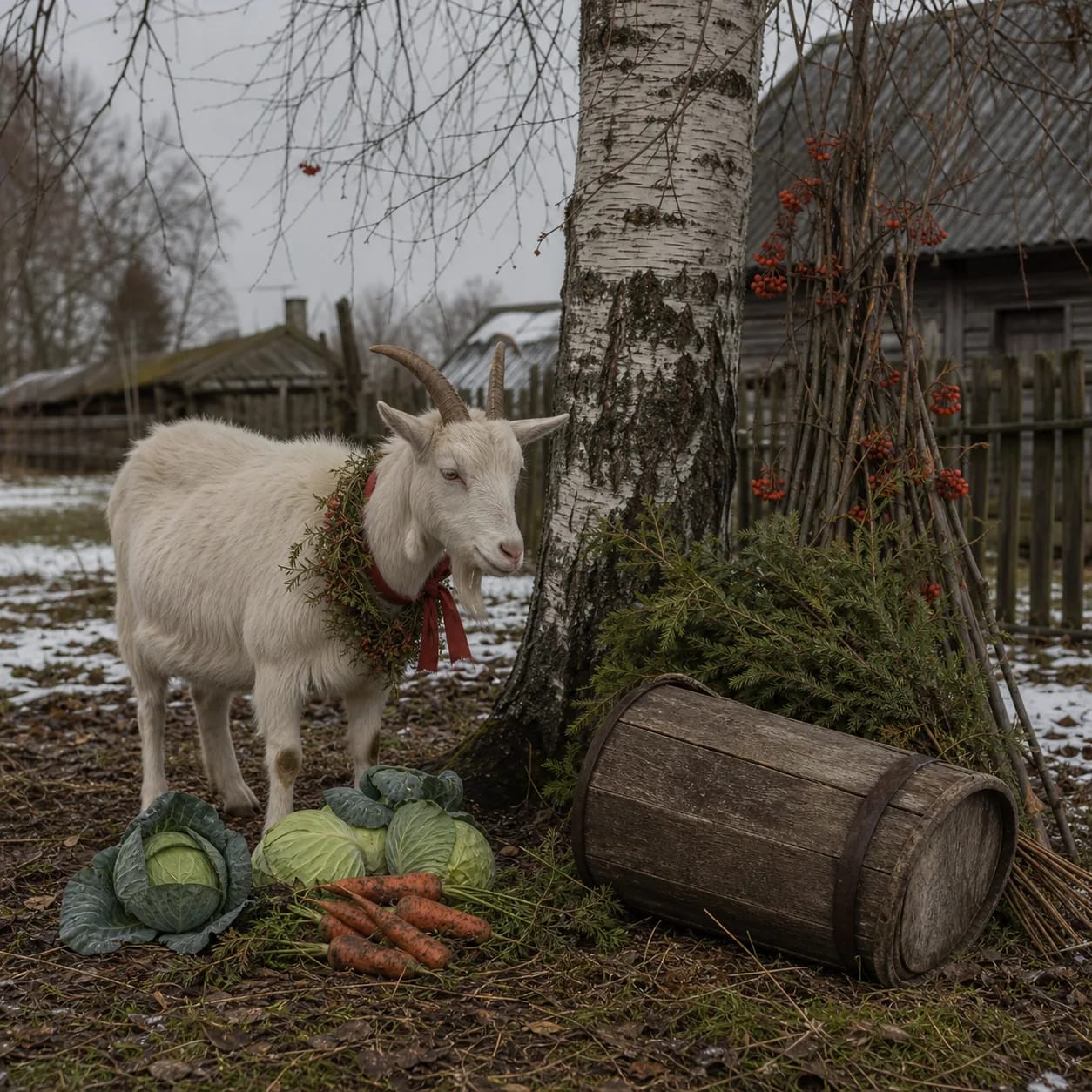
Tradition context
- When
- November 11; Goat Day on November 12
- Season
- Autumn
- Themes
- St Martin, Goat Day, end of grazing, hired workers' accounts, animals in byres, shepherds, white goat, twelve-egg omelet, goose, winter divinations
Martynines on November 11 marks the end of autumn, the settling of hired workers' accounts, and the close of the grazing season. Beside it, Goat Day on November 12 had shepherds decorate a white goat, lead it around a birch, call for snow, fry a last twelve-egg omelet outdoors, while in Samogitia St Martin's goose and its breastbone were used to predict winter weather.
When Are Martynines Celebrated?
Martynines are connected with November 11, St Martin's Day. EKGT describes the day as a time for the end of autumn and waiting for winter. According to VLE, St Martin of Tours (c. 316-397) was a bishop and monk, the first non-martyr saint of the Western Church; according to legend, while still a soldier he cut his cloak in half with his sword and gave it to a freezing beggar at the city gates.
November 12, Goat Day, stands beside it. The two dates meet through the end of grazing, shepherds' merriment, and the calling of winter, so they belong together while remaining distinct dates.
Hired Workers, Taxes, and Yearly Accounts
In the sixteenth and seventeenth centuries in Lithuania, as in other European lands, St Martin's Day was the final term for paying various dues. Hired workers were settled with on that day.
EKGT also mentions workers hired by the whole village, such as the blacksmith and slaughterer. They were paid communally with grain and other products, showing Martynines as an accounting point in the farm year.
The End of Grazing
For shepherds, Martynines meant the end of grazing. From St Martin's Day animals were brought into the byres, the field season closed, and the shepherd's work changed rhythm.
This connects Martynines with spring Jurgines. At Jurgines the herd goes out; at Martynines it returns indoors. It is one of the clearest closures of the livestock year.
Goat Day and Calling Winter
November 12 was called Goat Day and understood as calling winter. Shepherds wanted snow to come sooner because snow ended the muddy season of grazing and walking through fields.
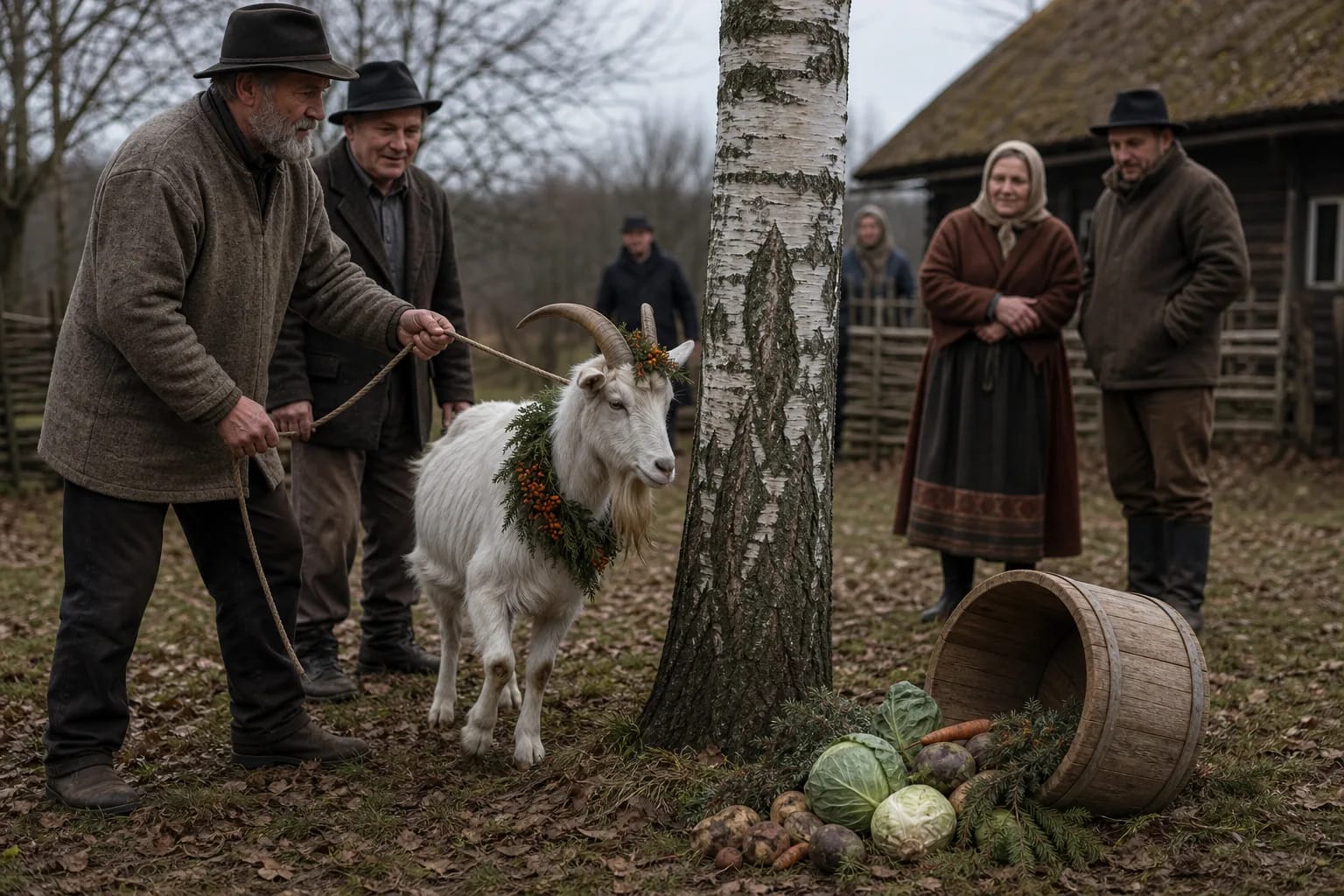
The custom was playful. A white goat or nanny goat was chosen, decorated, sometimes even crowned, and treated with cabbages and carrots. It was led three times around a birch while shepherds struck rowan or juniper sticks, sang, danced, and made speeches standing on a tub or stump.
The Shepherds' Omelet
On Goat Day, shepherd children fried their delicacy outdoors by a fire: a twelve-egg omelet. The number twelve clearly marked it as a festive food rather than an everyday snack.
It is a simple but strong closing scene: children, fire, eggs, and the late-autumn field. Afterward the animals are in byres and the shepherd's summer is over.
Goose, Winter Weather, and Girls' Divinations
In Samogitia, roast goose was eaten on St Martin's Day and winter weather was divined from its breastbone. This custom should be assigned to that region, not to all Lithuania.
EKGT also mentions girls' divinations: in some places they fasted all day on the eve so they would dream of their future groom. Together with Imbrasiene's weather saying about Martin on water, this shows mid-November as a time of prediction and waiting.
Main Martynines customs and meanings
Martynines customs have a clear farm rhythm: grazing ends, yearly accounts are settled, and shepherds say goodbye to the outdoor season. Goat Day gives this a playful but meaningful form of calling winter.
St Martin's Day. November 11 marks the end of autumn and the waiting for approaching winter.
Settling with hired workers. In the sixteenth and seventeenth centuries St Martin's Day was a final date for taxes and payment to hired laborers.
Village workers. EKGT notes that village blacksmiths and slaughterers were paid collectively with grain and other produce.
End of grazing. From St Martin's Day livestock were brought into byres, ending the outdoor season for shepherds.
Goat Day. November 12 was a winter-calling day, when shepherds made merry and called for snow.
The white goat. Shepherds chose the finest white goat or nanny goat, decorated and fed it cabbages and carrots, and led it around a birch.
Shepherds' omelet. Outdoors by a fire, shepherd children fried a final twelve-egg omelet.
Samogitian goose. In Samogitia roast goose was eaten on St Martin's Day, and the winter weather was predicted from its breastbone.
Martynines: songs, sutartines, and related pages
Martynines closes the livestock and shepherding part of the year that opens at Jurgines and unfolds through Sekmines. It also connects with Christmas and Jurgines weather predictions.
Jurgines
The spring opening of grazing, which Martynines closes by bringing animals into byres.
Sekmines
A shepherds' and livestock feast that helps explain the grazing-ending layer of Martynines.

Christmas
Martin's weather signs were linked in folk sayings with Christmas and Jurgines weather.
Aik, Ozeli, Vandenia
A sutartine with goat imagery close to Goat Day symbolism.
Martynines: frequently asked questions
When are Martynines celebrated?
Martynines are connected with November 11, St Martin's Day. Beside them stands Goat Day on November 12.
What is Goat Day?
Goat Day is the November 12 winter-calling custom when shepherds decorated a white goat or nanny goat, led it around a birch, sang, danced, and called for snow.
Why are Martynines linked with the end of grazing?
From St Martin's Day livestock were brought into byres, so the outdoor grazing season ended for shepherds.
How were hired workers paid at Martynines?
In the sixteenth and seventeenth centuries St Martin's Day was a term for taxes and payment. Village blacksmiths and slaughterers were paid communally with grain and produce.
Why did Goat Day use a white goat?
In the EKGT account, shepherds chose the finest white goat or nanny goat because the rite called for snow and winter.
What was the shepherds' omelet?
It was a twelve-egg omelet fried outdoors by shepherds on Goat Day, like a final treat of the field season.
Was roast goose eaten throughout Lithuania?
The account clearly mentions Samogitia, so the goose and breastbone divination should be treated as regional, not all-Lithuanian.
What does the saying about Martin on water mean?
In Imbrasiene's weather prediction, Martin on water was linked with later Christmas and Jurgines weather. It belongs to long-range autumn, winter, and spring forecasting.
How are Martynines connected with Jurgines?
Jurgines opens grazing in spring, while Martynines closes it in autumn. The livestock-grazing year lies between the two feasts.