- When / context
- In autumn or early winter, after retted flax had dried; often at night until the early twentieth century
- Tradition area
- Community life
- Themes
- Linamynis, flax breaking, talka, flax brake, drying house, bathhouse, shives, night meal, work songs, games, masks, kuršis, patalkys
Linamynis was a flax-breaking talka in which workers used wooden brakes to crush the woody parts of dried stalks in a drying house or bathhouse. Until the early twentieth century it often lasted through the night, bringing together food, songs, games, regional masking customs, and an after-work gathering.
What Was Linamynis?
Linamynis was both the work and the talka in which woody fragments, or shives, were removed from fully dried flax stalks. A handful of stalks was placed across a wooden brake and repeatedly struck by its moving blade. Lighter tools and scutching blades removed more debris. The result was not yet a bundle ready for spinning: the fiber still required further scutching and hackling. Linamynis was one vivid stage in a much longer chain.
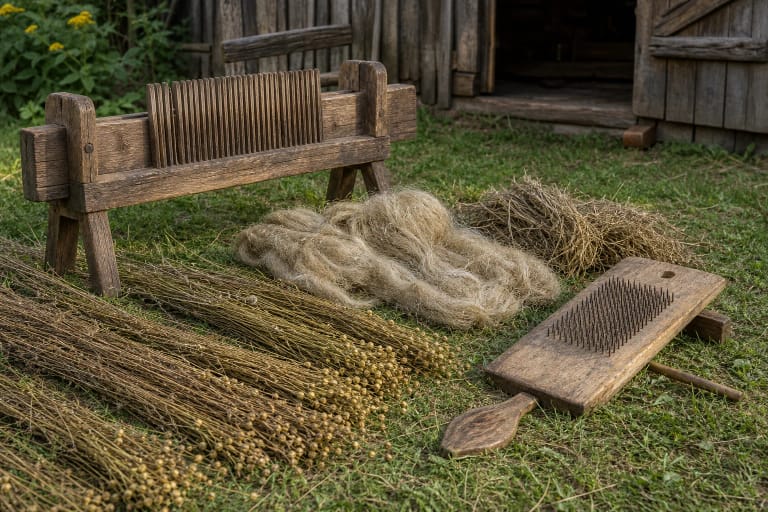
Two similar Lithuanian words need to be distinguished. Linamynis names the work, the gathering, and the customs around it. Linamynė may name a flax-breaking implement or machine. Handwork relied on wooden flax brakes; in the first half of the twentieth century horse-driven box and table machines spread in some regions. This page is about the communal work event rather than only the machine's construction.
Where Linamynis Fell in the Flax-Processing Cycle
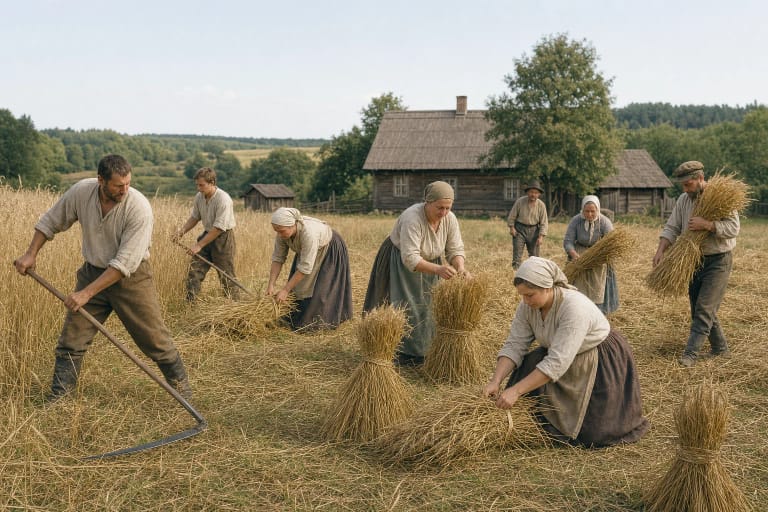
Flax could not be broken straight after pulling. Its seed capsules were first removed. The stalks were then spread over grass for dew retting or submerged in a retting pond so that the bonds around the fiber loosened. Afterward they were gathered and dried thoroughly. A dry woody stalk breaks while the fiber remains flexible; under-retted or damp flax is harder to work and yields poorer fiber.
This sequence explains why linamynis had no fixed feast day. Its timing depended on pulling, the duration of water or dew retting, autumn weather, access to a heated drying space, and the size of the crop. It usually took place in autumn or early winter, but one household might begin earlier than another. The separate flax-processing article follows the complete technical chain; here the concern is how one stage became communal night work.
Why Did Linamynis Often Take Place in a Drying House or Bathhouse at Night?
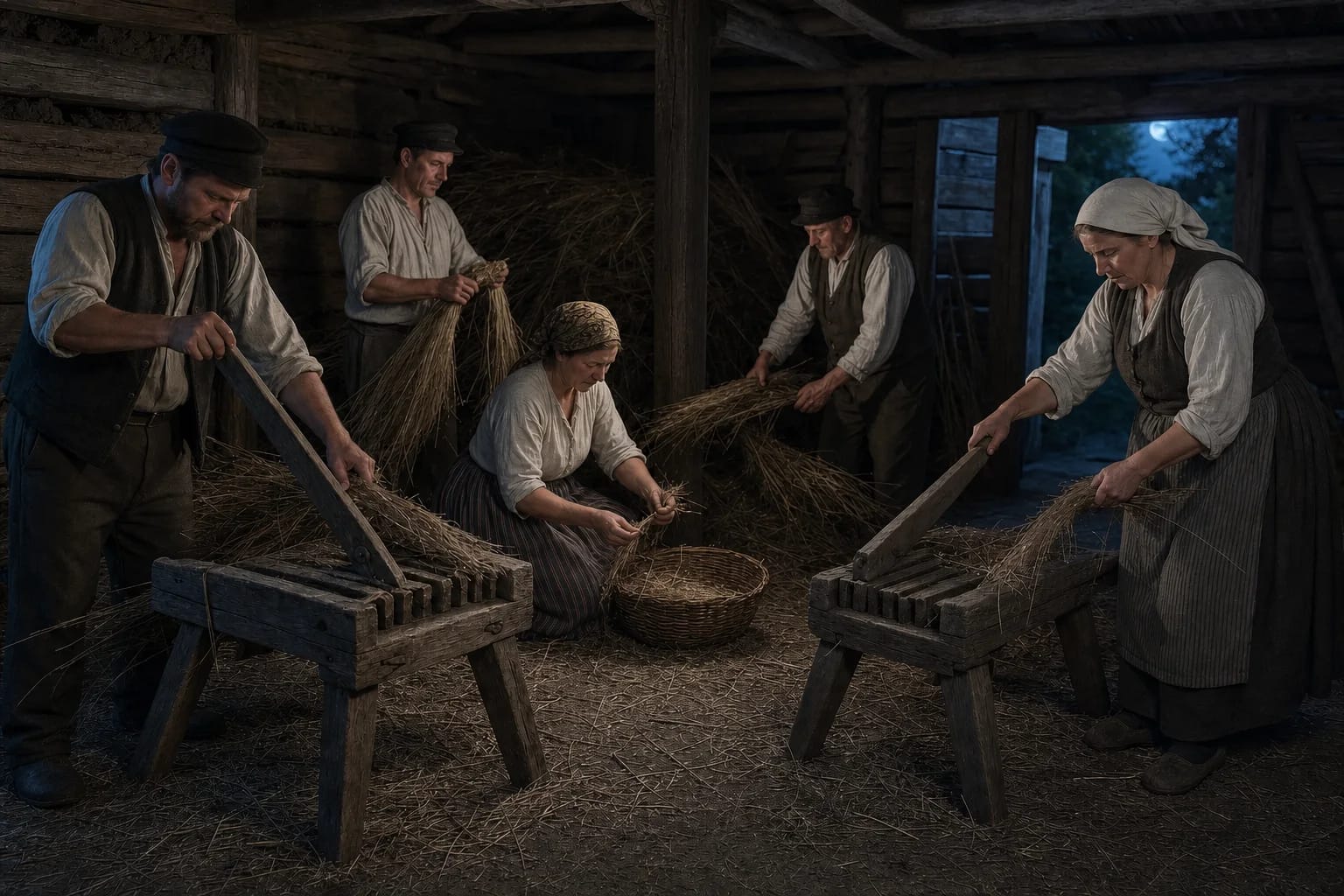
The Universal Lithuanian Encyclopedia states that until the early twentieth century linamynis usually took place at night in a jauja drying house or bathhouse. These spaces could dry the flax and keep exceptionally dusty work out of the dwelling. Dry stalks were carried inside in bundles, workers rotated at the brakes, and shives accumulated on the floor. The buildings were first of all parts of farm technology, even though the long night developed a distinctive social atmosphere.
Night work was not a romantic entertainment. It demanded endurance, light, breaks, and constant wakefulness. Songs, calls, jokes, and masked visits could help workers stay alert, but they were not the sole reason for working after dark. Organization reflected the farm's drying cycle and wider schedule. Because dry flax and shives ignite readily, present-day demonstrations need museum-grade fire safety; historical lighting conditions should not be copied as practical instructions.
Flax Brakes, Shives, and a Chain of Tasks
A hand brake has a base with channels and a hinged blade that drops into them. The worker lays a small handful of stalks across the base, lowers the blade repeatedly, and keeps turning the bundle until the woody core is crushed. One person might carry and feed dry stalks, another operate the brake, and another take the partly cleaned fiber for scutching. Speed mattered, but rough handling could tangle or damage the valuable long fiber.
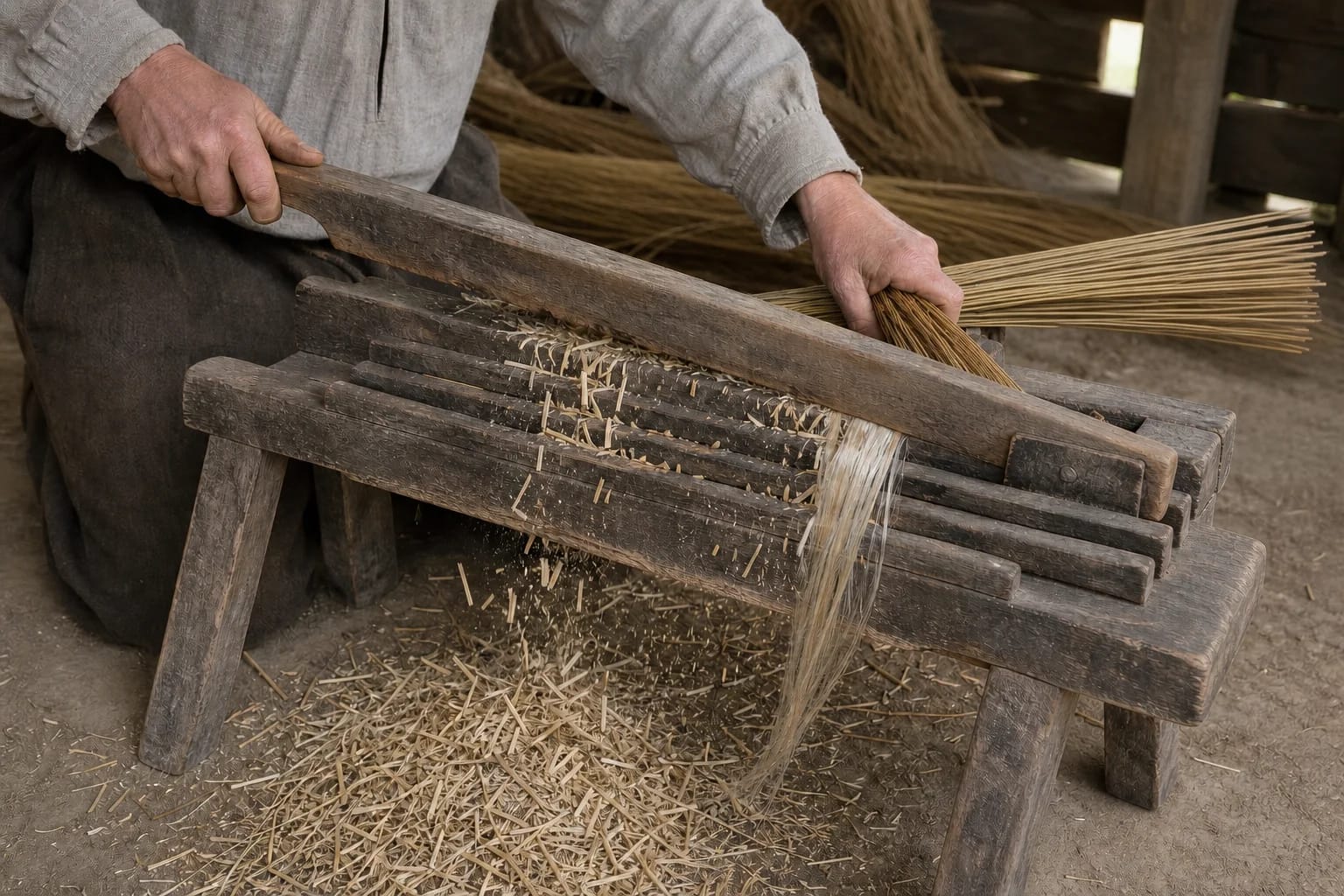
The encyclopedia gives a common gendered pattern: men used larger brakes to crush stalks, while women used lighter brakes or scutching blades to clear shives. This is documented historical practice, not an eternal biological rule. Actual roles depended on strength, skill, crew size, and available tools. Other evidence, particularly for daytime work, describes breaking primarily as women's labor. Region and period therefore need to be stated rather than hidden.
Invitation, Reciprocal Labor, and the Linamynis Crew
A substantial flax crop required many hands, so hosts invited neighbors and relatives. Workers could bring tools of their own, and experienced breakers helped keep the pace and teach younger participants. As with other talkos, help often operated through atodirbis: one household arrived today and the hosts later helped at its flax work or another demanding task. It would still be inaccurate to say everyone always worked without compensation. Hired hands, payment in kind, and different local agreements also existed.
The group was a social gathering, but work remained its axis. A person who mishandled fiber, slowed the chain, or avoided a fair share could become the target of jokes. For younger people, participation taught a skill and offered entry into a peer group. Žilvytis Šaknys's research shows that once machinery reduced the number of breakers required, people who had not worked might join the later party. In that way an after-work gathering could gradually become a more independent youth event.
Naktipiečiai: The Hosts' Duty to a Night Crew
Naktipiečiai were food and drink served to people working at night. The Universal Lithuanian Encyclopedia associates them with flax beating, breaking and scutching, as well as threshing; these talkos could begin around 6 or 7 p.m. and finish at midnight or considerably later. The pause allowed people to leave the dust and noise for a time. It also showed the hosts' responsibility: a household that invited neighbors to difficult work had to sustain them with food and drink.
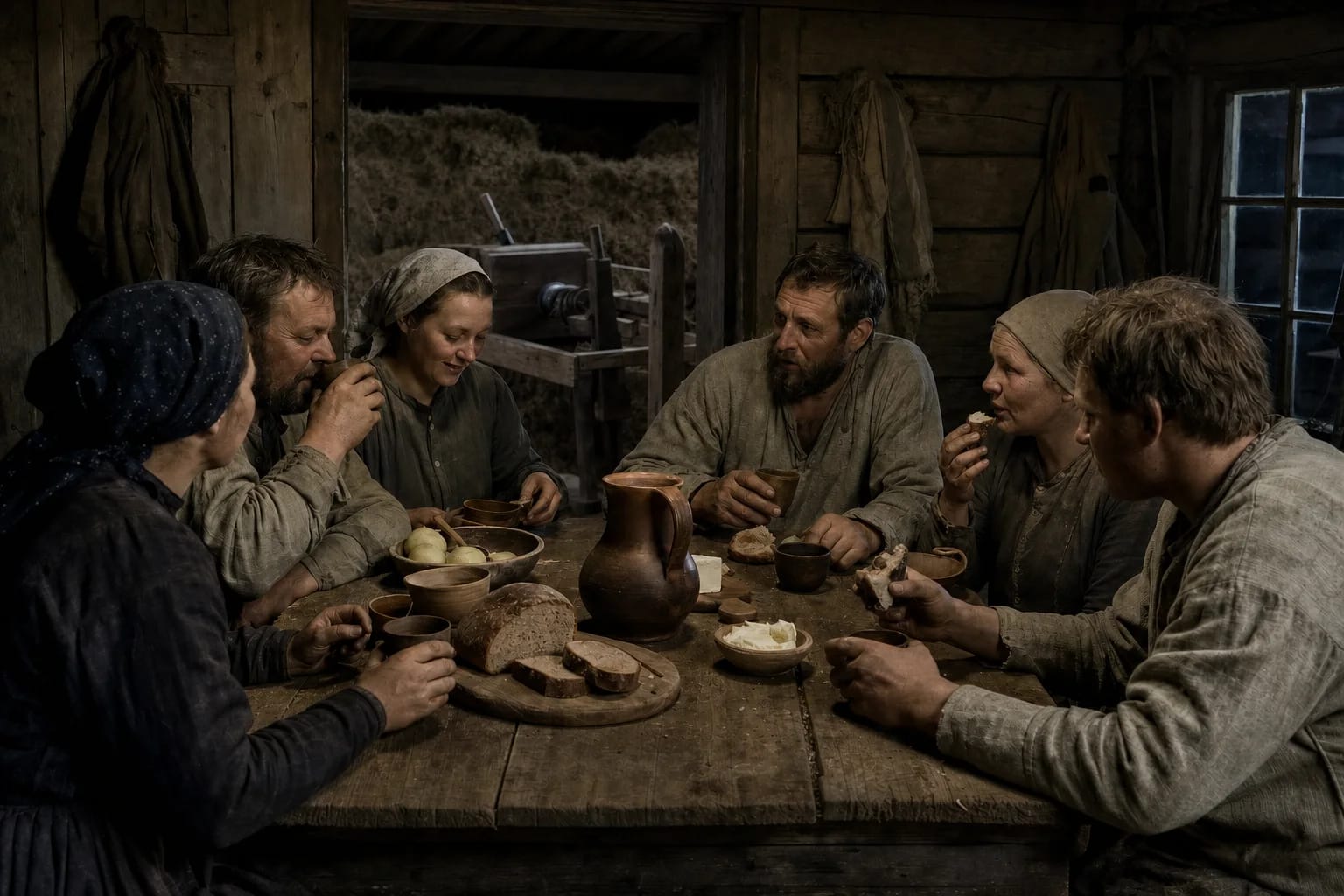
There was no single national linamynis menu. Local accounts mention potatoes, meat, porridge, bread, cheese, butter, beer, or kvass, but the table depended on region, household means, a fasting day, and the length of the night. The function of a substantial break matters more than a fixed recipe. When machinery moved the work into daylight in the early twentieth century, night talkos declined and so did the practical need for naktipiečiai.
Songs, Calls, and Games of Strength
Linamynis songs could keep people awake, maintain the group's mood, tell neighbors where a talka was taking place, and let young singers make themselves heard. The Lithuanian Academy of Music and Theatre's Metų ratas project quotes a recollection from Dzūkija about climbing a hill to sing so that young men would hear the gathering. The same source notes that religious songs known as karunkos could accompany secular singing. A night of work might therefore contain humor, devotion, and ordinary noise rather than a single mood.
Mixed games and tests of male strength or agility were played during pauses or at completion. They tested participants, brought laughter, and gave young people a chance to interact, but names and rules varied. Some older horseplay relied on physical pressure or public humiliation that would be unacceptable today. Responsible heritage interpretation explains the historical social setting instead of treating coercive play as a requirement for an 'authentic' revival.
Samogitian Masks and Carrying the Kuršis
The strongest accounts of masks come from night-time linamynis in Žemaitija. Performers dressed as a goat, devil, horse, bear, crane, and caricatured social figures entered the closed drying-house or bathhouse space and staged noisy scenes. Some older records use ethnic labels now recognized as derogatory. When they are discussed, the historical source language requires critical explanation; the caricature should not be reproduced as harmless modern entertainment. Nor should this western Lithuanian material be projected onto the whole country.
Carrying the kuršis was another distinctive western custom. A crew that had finished made a human-shaped straw figure and tried to leave it secretly with neighbors still at work. It mocked their slower progress and challenged the carriers to evade discovery. Metų ratas also records other completion figures, končius or valančius and a goat, interpreted as images of the flax's suffering or fertility. These meanings are scholarly interpretations rather than a directly known belief shared by every historical participant.
Patalkys and the Regional Geography of Youth Sociability
After the last flax was broken, hosts provided a completion meal and young people might remain for a patalkys with music, dancing, and games. Šaknys's dataset, collected from 331 informants in 1990–1994, found that threshing and flax-breaking were the talkos most often followed by parties. Yet this does not mean every linamynis had one: 175 respondents could specify the gatherings in detail, and most described interwar rather than all historical realities.
Regional differences are crucial. In western Lithuania, especially Žemaitija, flax-work patalkiai formed an important seasonal setting for young people. In eastern Lithuania they spread less consistently or later, while the division of villages into separate farmsteads weakened dense local gatherings. In Catholic areas Advent and Lent limited the periods when youth dancing was considered appropriate. Patalkys should therefore be shown as a well-documented but conditional ending, not a compulsory national finale.
How Machinery Transformed Linamynis
In the early twentieth century machinery began to change the pace of hand breaking. Horse-driven box and table flax breakers were used especially in Žemaitija, Suvalkija, and northern Lithuania. They shifted more work into daylight and reduced the number of people needed at hand brakes. The Universal Lithuanian Encyclopedia links the decline of most night-time linamynis customs to this change. Social life did not vanish immediately: faster work could even leave more time for a patalkys and attract young people who had not been required at the machine.
After the forced collectivization of 1948–1952, horse-driven breakers disappeared as growing and processing moved into collective-farm and industrial systems. Hand brakes, songs, and demonstrations now belong mainly to museums and craft centers. The strongest interpretation distinguishes genuine technical action from a staged scene, identifies a specific region and period, handles dusty combustible flax safely, and resists inventing one timeless Lithuanian festival.