
Winter
Pusiauzemis: Lithuanian Midwinter
January 25; in some places also linked with February 2
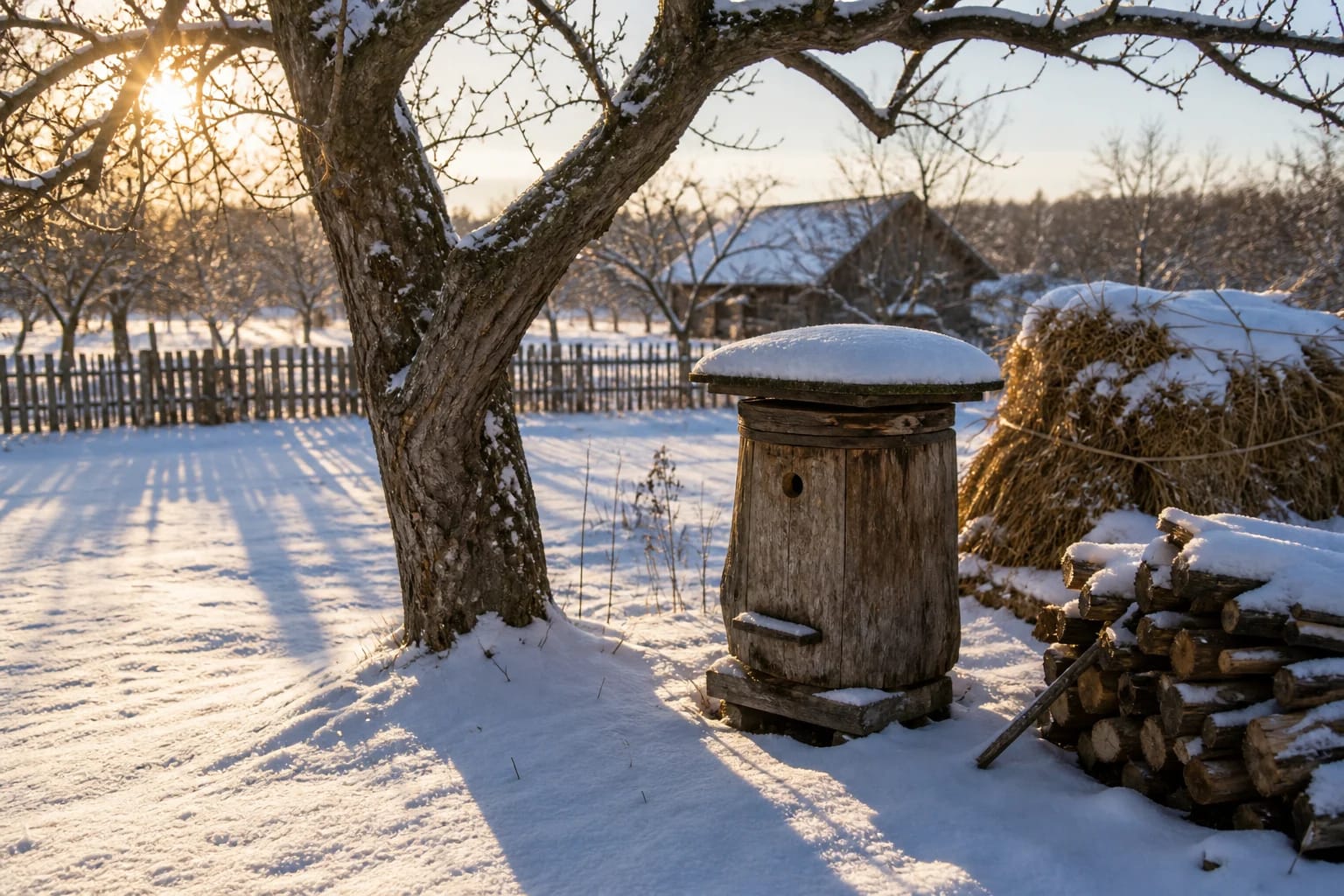
Pusiauzemis is a quiet winter boundary: the sun is returning, but the coldest time may still be ahead. Lithuanian tradition taught people not to celebrate noisily but to look around: how much firewood, fodder, patience, and light remain until spring.
Tradition context
- When
- January 25; in some places also linked with February 2
- Season
- Winter
- Themes
- Midwinter, Krikstai, badger shadow, bear turning over, Kirmeline, farm stores, apple trees and beehives
Pusiauzemis, usually marked on January 25, is the middle of winter and a turn toward spring. People watched the badger or bear, checked stores of fodder, food, and firewood, shook apple trees, tapped beehives, and avoided work thought to bring worms or snakes.
What Is Pusiauzemis and When Is It Marked?
Pusiauzemis in the Lithuanian folk calendar is usually linked with January 25, St Paul's Day, also called Krikstai. It is not spring, but a clear middle-of-winter boundary: about a month has passed since the return of light at Christmas, and people begin counting what remains until real warming.
In some parts of eastern Lithuania and elsewhere, midwinter images are also tied to February 2, Grabnycios. It is important not to force everything into one date: January 25 is the main axis, but midwinter signs can move to nearby winter thresholds.
Why Were Stores Checked?
The most practical Pusiauzemis custom was to look around the farm. The household head checked how much food, fodder, firewood, and other winter stores remained. If more than half had been used by late January, the second half of winter had to be lived more sparingly.
This shows that calendar tradition was not removed from daily life. Pusiauzemis reminded people that the holidays had passed and Uzgavenes lay ahead, but animals still had to be fed, homes warmed, and the family kept alive.
Badger, Bear, and Winter Shadow
The best-known sign is the badger. It was said to come out of its burrow to see whether a shadow appeared. If the day was sunny and the shadow long, the animal was frightened, returned inside, and winter would last. If cloudy, spring would come sooner.
Imbrasiene's material also mentions hedgehog, bear, and worms. Some said the bear turns to the other side on this day. These images are not zoological exactness but a human wish to see whether nature itself has begun turning toward spring.
Kirmeline: What Was Avoided?
Pusiauzemis was also called the day of worms, little worms, or Kirmeline. Greimas connected this name with an older layer of snakes and earth life, where waking creeping creatures marked a new natural time.
For that reason, in some places people avoided bringing firewood or branches from the forest, lest worms or snakes come into the home with the wood. Work taboos also mention not spinning, lest moths eat wool, and not eating potatoes so they would not become wormy that year.
Apple Trees, Beehives, and Waking the Farm
In texts by J. Vaiskunas published on Alkas.lt, a Pusiauzemis custom is to shake orchard apple trees so they would be fruitful. The gesture is small but clear: even while the orchard is frozen, the mind turns toward future harvest.
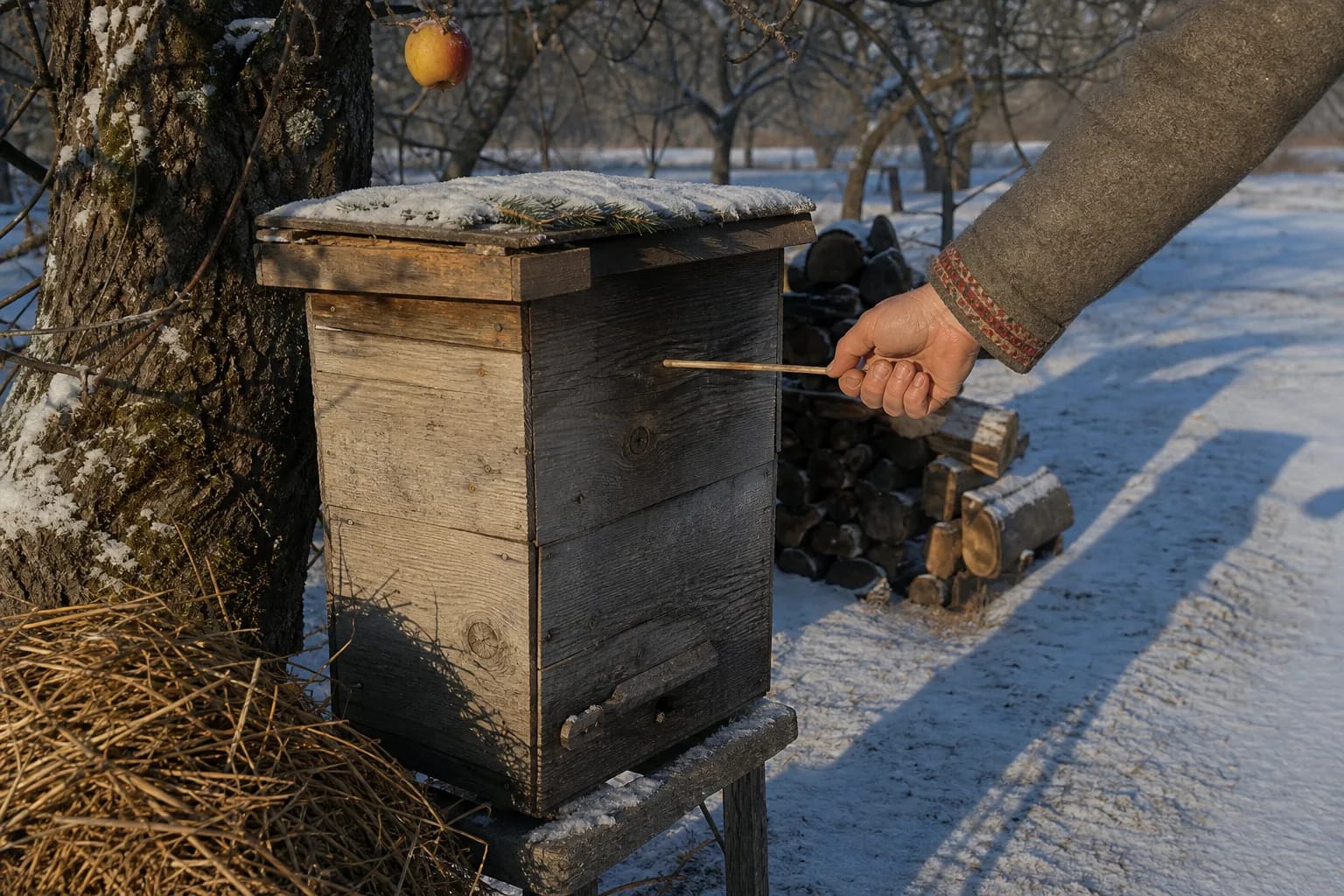
Tapping beehives is also mentioned, as if waking the bees. A beekeeper today would be cautious about this, but as a calendar image it is precise: in winter silence the household already remembers summer honey and work.
Understanding Pusiauzemis Today
Pusiauzemis can be marked without a large event. Go into the yard or garden, watch sun and shadow, count winter stores, care for firewood, animals, birds, bees, or simply the warmth of the home.
The force of the day is sobriety. It reminds us that tradition knows not only how to celebrate but also when to stop, check whether strength will last, and wait calmly for spring. Half the road is passed, but the other half still asks caution.
Main Pusiauzemis customs and meanings
Pusiauzemis customs mostly involve observation and caution. People watched weather, shadow, animal images, farm stores, and work that was better avoided that day. Some customs are local beliefs and should not be merged into one uniform rule.
Midwinter boundary. January 25, St Paul's Day or Krikstai, was treated in the folk calendar as the middle of winter and a turn toward the other half of the year.
Checking stores. Household heads checked how much food, fodder, firewood, and other winter stores remained; if too much had been used, they had to save more.
Badger shadow. People believed the badger came out to check the weather: if it saw its shadow in sun, it returned to sleep; cloudy weather promised earlier spring.
Bear turning over. In some places people said the bear turned to the other side and began sucking the other paw, showing winter rolling into its second half.
Kirmeline. The day was called Worm, Little Worm, or Kirmeline day; people avoided bringing wood or branches from the forest so snakes and worms would not enter the home.
Work taboos. At Krikstai some did not spin or haul firewood, and later beliefs also warned against eating potatoes so they would not get wormy in summer.
Shaking apple trees. Pusiauzemis includes a custom of shaking orchard apple trees so they would bear more fruit.
Waking beehives. In some places hives were tapped as if waking bees from winter quiet and wishing them work and honey.
Pusiauzemis: songs, sutartines, and related pages
Pusiauzemis stands between the Christmas return of light and later spring thresholds. Its themes of farm stores, bees, and nature observation connect with Jurgines, beekeeping traditions, and the winter feast cycle.


Pusiauzemis sources and useful pages
Pusiauzemis: frequently asked questions
When is Pusiauzemis marked?
Pusiauzemis is most often marked on January 25, St Paul's Day or Krikstai. In some places midwinter customs also attach to February 2, Grabnycios.
What does the badger shadow mean?
It was believed that on a sunny day the badger sees its shadow, is frightened, and returns to its burrow, so winter will last. A cloudy day meant earlier spring.
Why does the bear turn over at Pusiauzemis?
It is an image of winter rolling into its second half. The bear is not a literal ritual actor, but its sleep helps imagine the turn of the year.
What is Kirmeline?
Kirmeline is one name for Pusiauzemis, connected with worms, snakes, and waking earth life. People avoided bringing branches or wood from the forest that day.
Why were farm stores checked?
Winter was not over, so households counted food, fodder, and firewood. If too much had been used, they had to save for the second half.
Were apple trees really shaken?
Yes, records mention shaking orchard apple trees so they would bear more fruit. It is a symbolic harvest-waking act rather than practical pruning.
Why are hives and bees mentioned?
In some places people tapped hives as if waking bees. Today this would be treated cautiously, but the custom shows that people thought about summer honey already in midwinter.
Is Pusiauzemis the same as Grabnycios?
Not exactly. Pusiauzemis is usually January 25, while Grabnycios is February 2. Some midwinter signs overlap, but the dates have different accents.
How can Pusiauzemis be marked at home?
Walk in the garden, observe weather and shadows, check winter supplies, care for firewood or birds, and consciously note that winter has turned into its second half.