
Winter
Three Kings in Lithuania
January 6
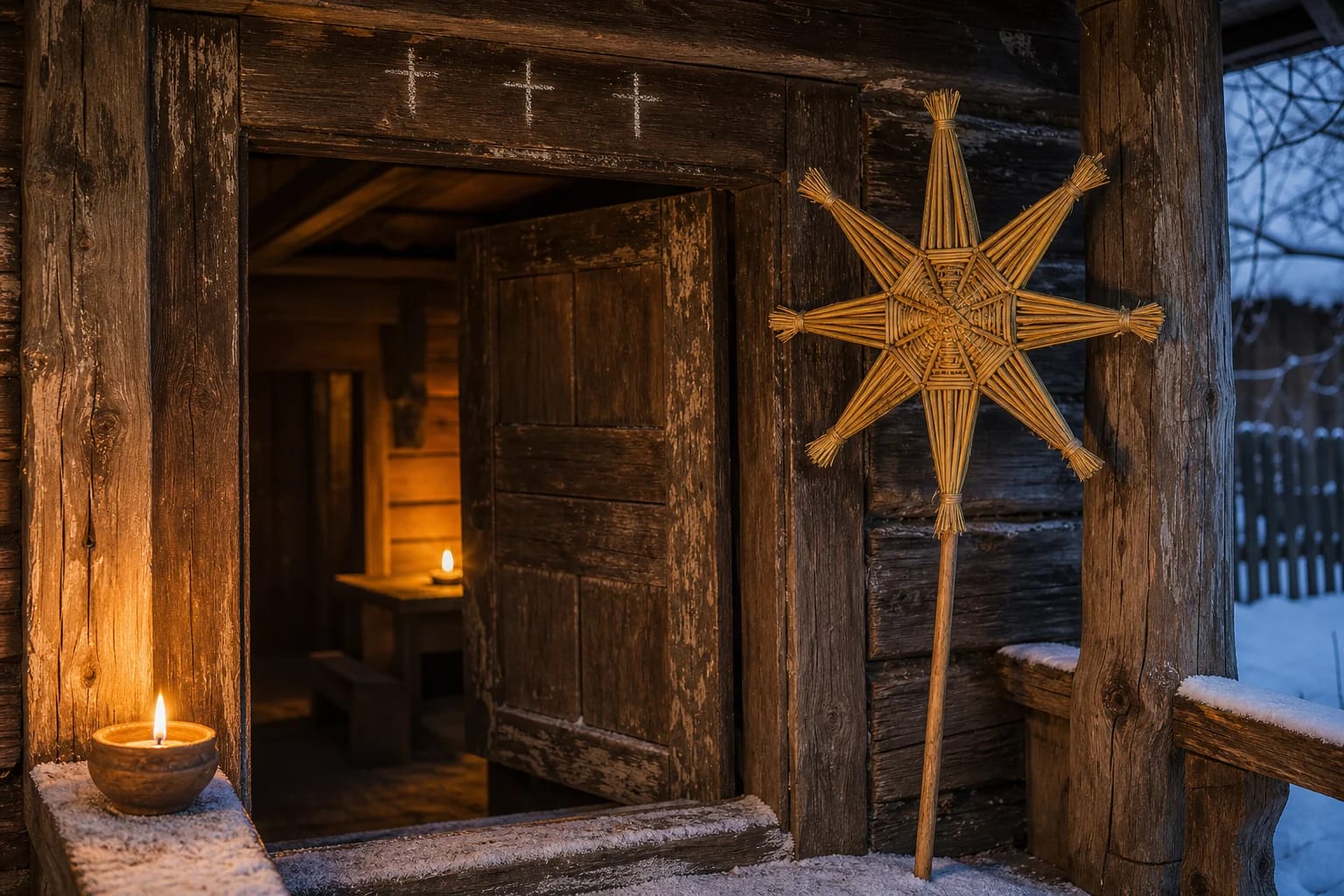
Three Kings is the final boundary of the great Christmas season. On January 6 home doors are marked with blessed chalk, and in older village tradition costumed kings and other figures visited farmsteads carrying a star, song, and good-year wishes.
Tradition context
- When
- January 6
- Season
- Winter
- Themes
- End of Christmas season, blessed chalk, marking doors, kings' visits, star, Christmas wishes
Three Kings on January 6 closes the Christmas in-between season. In Lithuania the day is linked with blessed chalk on doors, the names Caspar, Melchior, and Balthazar, visiting kings, carrying a star, and house-to-house greetings for health and fertile years.
What Are Three Kings and When Are They Celebrated?
Three Kings, or Epiphany, are celebrated on January 6. In church tradition the day remembers the wise men who came to honor the newborn Jesus; in Lithuania it also marks the end of the Christmas in-between season. According to VLE, this Epiphany feast has been universally celebrated in the Eastern Church since the 3rd century and in the Western Church since the late 4th century; during it gold, incense, and chalk are blessed in church.
VLE notes that in contemporary Lithuanian liturgical practice the solemnity may be moved to a Sunday between January 2 and 8. In the ethnographic calendar, January 6 remains the key boundary: Christmas time ends and quieter winter routine begins.
Why Are Doors Marked?
The clearest Three Kings sign is blessed chalk. Above doors people write the initials of Caspar, Melchior, and Balthazar with crosses, or simply draw three crosses. It is a Christian sign of house blessing and protection.
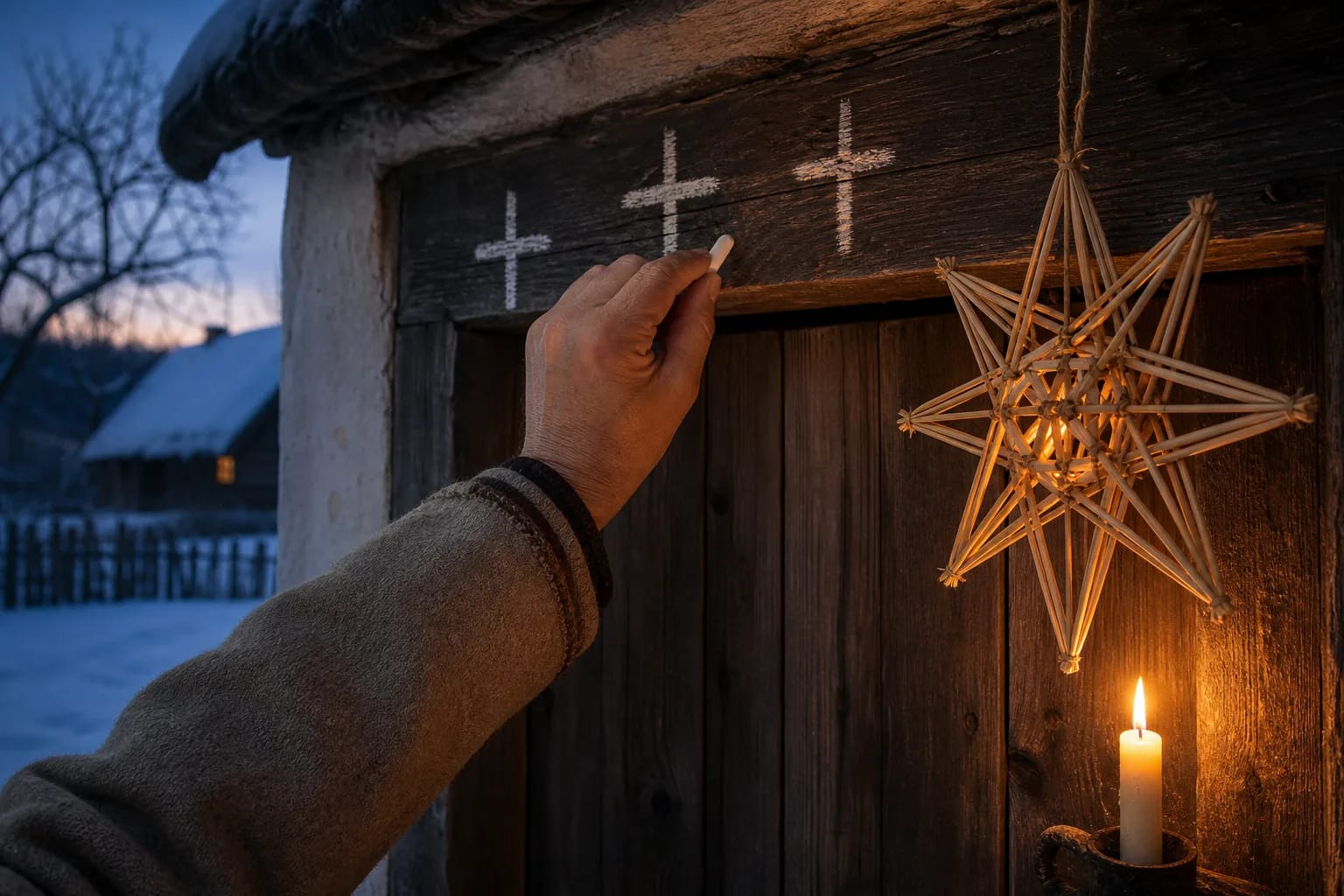
The custom is old in Lithuania. The Wolfenbuettel Postil of the sixteenth century mentions crosses marked above doors; Matthaeus Praetorius wrote of Lietuvininkai in the Insterburg district in the late seventeenth century, and Jucevicius saw the sign in Samogitia in the early nineteenth century.
Kings, Star, and House Visiting
Another side of Three Kings was visiting. Men dressed as kings went through the village, accompanied by a star-bearer and a helper with a basket for gifts. In homes they sang, greeted hosts, and wished a good path through the year.
The star was important: it showed the way, recalled the wise men's journey, and drew attention. In some descriptions it was carried on a pole, with light from a candle inside. Such a star was both religious and theatrical.
Regional Forms of Three Kings
In stories recorded by K. Kapeleris in the Ragaine and Tilze areas in the mid-nineteenth century, Three Kings Day brought not only kings. Other Christmas figures appeared: bear, horse, crane, Jew, jokes, and house visiting.
In western Lithuania after the First World War, VLE mentions mounted Three Kings with cloaks covered in stars and wreaths. In Aukstaitija, according to EKGT, kings in some places wore sheepskins turned inside out like other calendar-time maskers.
Vilnius and Urban Scale
Three Kings visiting was not only a small-village practice. Imbrasiene gives a striking fact: in 1934, sixty-three groups of kings had permission in Vilnius to visit residents' apartments. The custom was visible in the city as well.
During war and the Soviet period, visiting by kings and other Christmas-season maskers declined. Its meaning is still easy to understand: the point is less the gifts than the visit, greeting, and inclusion of lonely or elderly people in the feast.
Marking Three Kings Today
The simplest way is to bring home blessed chalk and mark the door. Even a small sign helps make January 6 the closing of Christmas time, not merely the day the tree is taken down.
A community can revive the visiting custom with restraint: a star, a song, a greeting, and awareness of which form was known locally. The feast is strongest when it continues real Christmas visiting rather than staging vague antiquity.
Main Three Kings customs and meanings
Three Kings customs have church and folk layers. One is quiet: the chalk sign above the door. The other is lively: Christmas visiting, singing, performance, and collecting gifts, recorded differently in Lithuania Minor, Samogitia, Aukstaitija, and Vilnius.
Blessed chalk. Chalk is blessed in church and used at home to write the initials of the Three Kings or draw crosses above doors.
Marking doors. K, M, and B are tied to Caspar, Melchior, and Balthazar, while crosses mark Christian homes and a request for protection.
Closing the season. January 6 ends the Christmas period; holiday signs are put away and ordinary winter work resumes.
Kings' visits. In the nineteenth and twentieth centuries, men dressed as kings went through villages with a star, songs, and wishes for hosts.
Carrying the star. One participant carried a star raised on a pole, sometimes with a candle inside, recalling the Gospel star and Christmas journey.
Food and gifts. Visited homes treated or rewarded the kings with cheese, eggs, cake, bacon, or beer if the host had it.
Masked figures. In the Ragaine and Tilze areas in the mid-nineteenth century, accounts mention not only kings but bear, horse, crane, Jew, and other Christmas visiting figures.
Threshold of work. From Three Kings the festive time ended; in some places hiring and farm-year order began again, so the day mattered beyond church life.
Where to experience it
Where to experience Three Kings in Lithuania?
Three Kings is easiest to experience in church and at the home door, while its livelier form appears where communities, culture centers, or folklore ensembles organize processions and visits.
Home and Church
Chalk is blessed in church and doors are marked at home. This is the simplest living Three Kings custom.
Three Kings Processions
Some cities, culture centers, or communities hold theatrical Three Kings processions with a star, songs, and greetings.
Folklore Ensemble Visits
Local folklore groups best convey the older custom when they adapt visiting forms to the traditions recorded in their region.
Three Kings: songs, sutartines, and related pages
Three Kings closes the Christmas in-between season, so it naturally connects with Christmas, New Year, kaledojimas songs, and winter handwork, especially star imagery.
Christmas
The Christmas season that Three Kings closes on January 6.
New Year
Another in-between-season boundary where wishes and future signs matter.
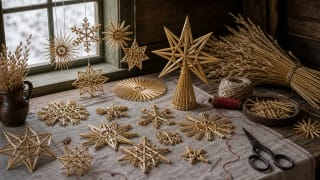
Straw Stars
A handcraft close to Three Kings star imagery and Christmas decoration.
Oh, Holy Christmas Is Arriving
A Christmas song that carries the mood of festive visiting and singing.
Three Kings sources and useful pages
Three Kings: frequently asked questions
When are Three Kings celebrated?
In the ethnographic calendar, Three Kings are marked on January 6. In Lithuanian church practice the solemnity may be moved to a Sunday between January 2 and 8.
What do K, M, and B on doors mean?
They are linked with the names of the three wise men, called kings in Lithuanian tradition: Caspar, Melchior, and Balthazar. With crosses, they mark blessed homes.
Why is blessed chalk used?
Chalk is blessed in church and brought home to mark the doors. It is a Christian sign of protection and blessing, attested in Lithuanian records from early written references.
Do Three Kings end Christmas?
Yes. In Lithuanian tradition January 6 closes the Christmas in-between season. After it, ordinary winter work resumes.
What were Three Kings visits?
Costumed kings with a star went from house to house, sang, wished health and fertile years, and were treated or given gifts by hosts.
How did Three Kings maskers differ from Uzgavenes maskers?
Three Kings maskers belonged to Christmas time and usually carried greeting, song, and star. Uzgavenes is more about driving out winter, noise, and mask revelry.
Why was a star carried?
The star recalls the Gospel story of the wise men led to Bethlehem by a star. In folk visiting it became the visible sign of the festive procession.
Was the custom known in cities?
Yes. In 1934 Vilnius, sixty-three groups of kings had permission to visit residents' apartments, so the custom was visible in urban as well as village settings.
How can Three Kings be marked at home?
Bring blessed chalk from church, mark the door, put away Christmas signs, and greet relatives or neighbors. The key meanings are blessing and visiting.