
Winter
Christmas in Lithuania
December 25, with the season continuing until January 6
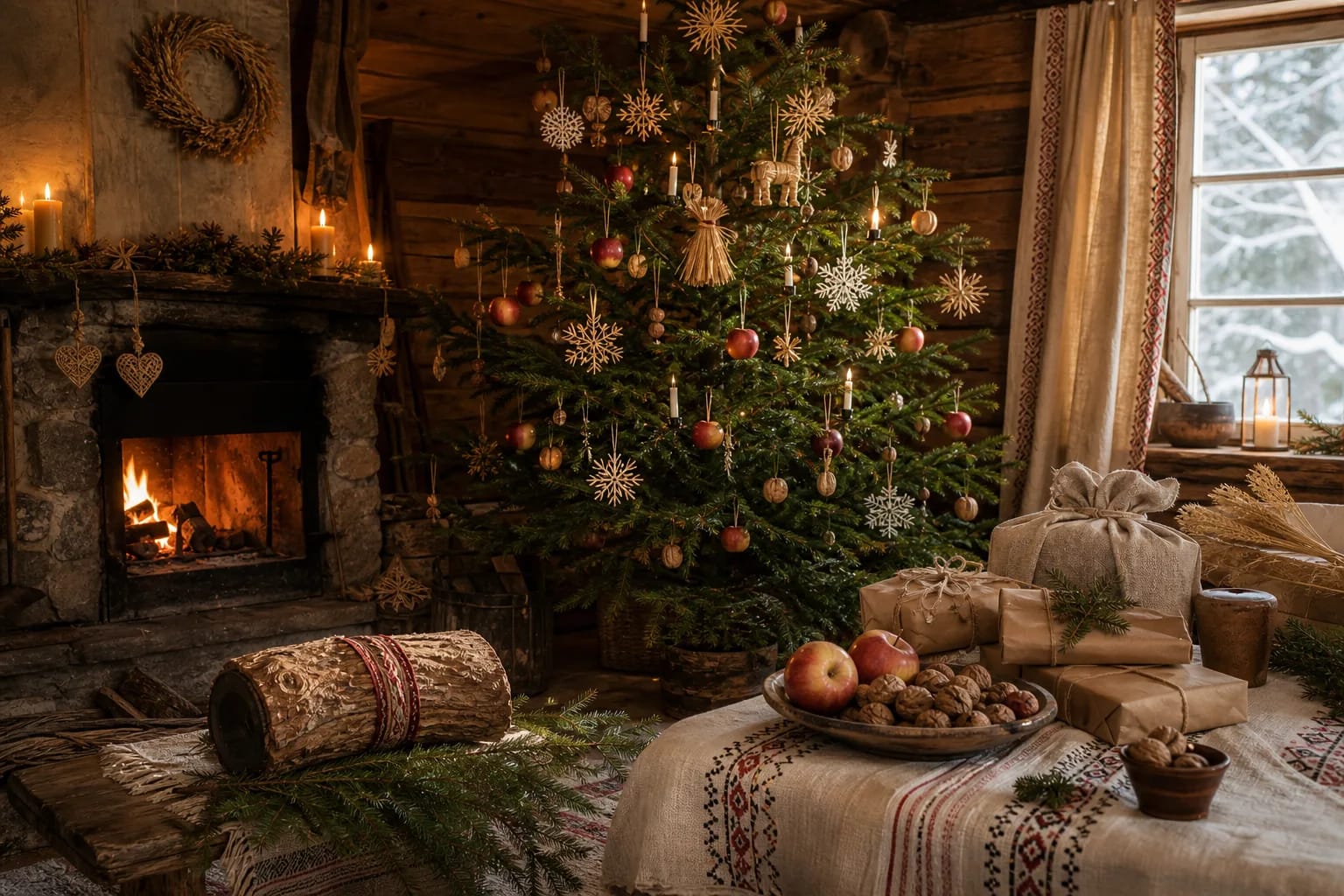
Christmas is the most important Lithuanian winter feast, celebrated on December 25. It combines the Christian commemoration of Christ's birth, family joy, the tree and gifts, and older Lithuanian customs such as kaledojimas, masked visitors, and dragging the blukis.
Tradition context
- When
- December 25, with the season continuing until January 6
- Season
- Winter
- Themes
- Birth of Christ, Christmas tree, Kaledu Senelis, kaledojimas, masked visitors, blukis log dragging, gifts
Christmas is the main Lithuanian winter feast on December 25, joining the birth of Christ, the Christmas tree, gifts from Kaledu Senelis, and older customs such as kaledojimas, masked visitors, and dragging the blukis log.
What Is Christmas and When Is It Celebrated in Lithuania?
Christmas is celebrated on December 25. In Christian tradition it is the birth of Jesus Christ, while in wider Lithuanian culture it is a time of family, light, and the turning of the year. VLE notes that most churches celebrate Christmas on December 25, while the Orthodox, following the Julian calendar, celebrate on January 7; the Catholic Church has three Masses for the feast: midnight (Bernelių/Piemenėlių, the Shepherds' Mass), dawn, and day.
The Christmas period begins with the Kucios meal on the evening of December 24 and continues until Three Kings on January 6. This twelve-day time in older tradition was full of customs, divination, visiting, and community ties.
How Kucios and Christmas Differ
Kucios and Christmas are adjacent but different feasts. Kucios is observed on the evening of December 24 as a quiet, fasting, recollective meal with twelve dishes, the kaledaitis wafer, and remembrance of ancestors.
Christmas begins on December 25. It is a joyful feast of fuller food and gifts. If Kucios is quiet waiting, Christmas is the celebration of light and birth. Together they form one winter-holiday whole.
Kaledojimas and Masked Visitors
One of the clearest older Christmas customs is kaledojimas. Community members went through the village, visited homes, wished prosperity, sang, and were treated with food. The custom bound the village together in the cold season.
Visitors often wore disguises. Among common figures were the bear, goat, crane, and Roma characters. Masks and play gave the feast humor while preserving the older visiting tradition, later seen even more vividly at Uzgavenes.
What Is Dragging the Blukis?
Dragging the blukis is an old winter rite. A large stump or log, called blukis, was pulled through the village, accompanied by songs, laughter, and masked figures.
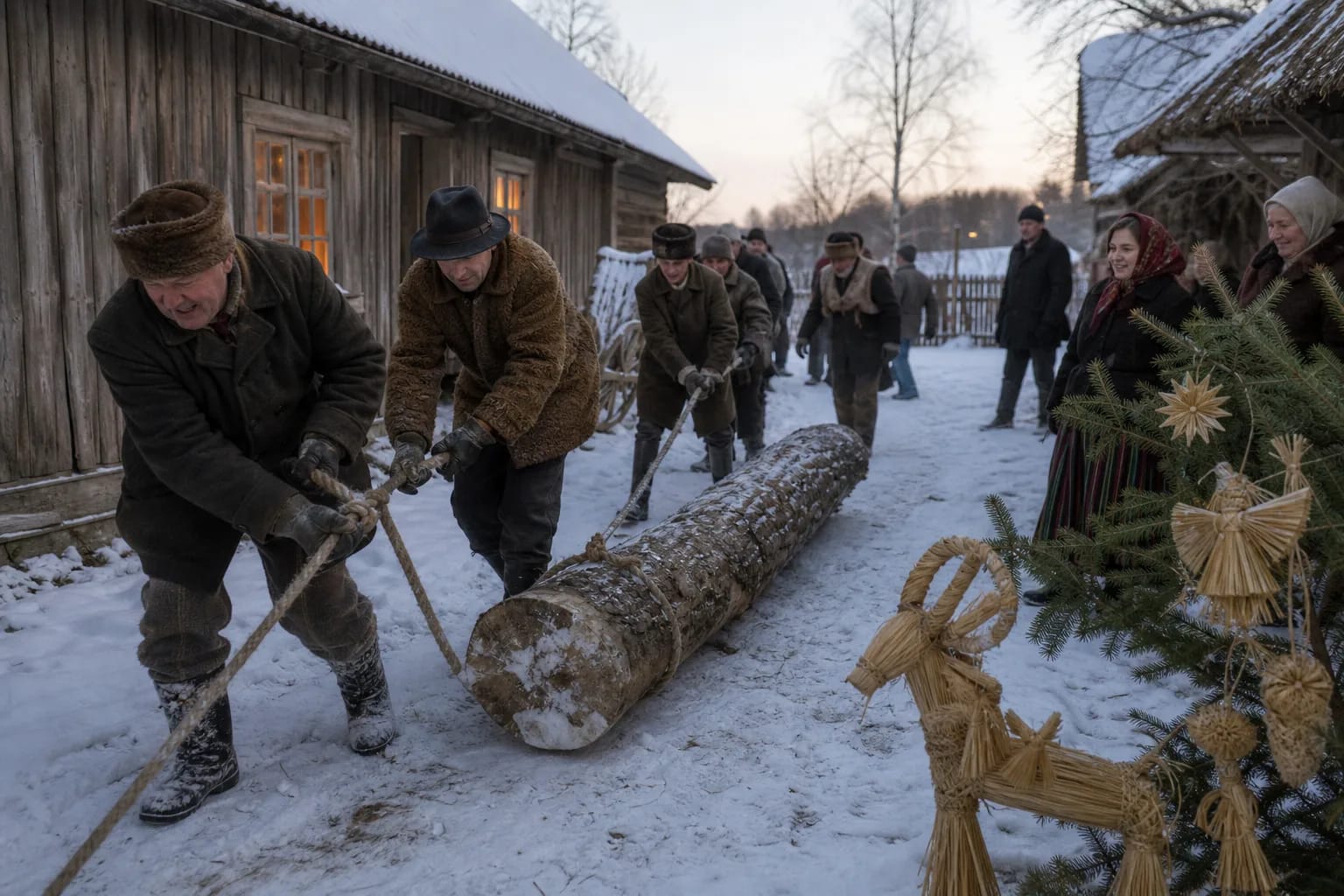
At the end the blukis was burned. This symbolized sending away the evil, misfortunes, and failures of the old year so the new year would be bright. The custom is connected with the winter solstice and the return of light and has been revived in recent decades.
The Tree and Kaledu Senelis
The custom of decorating a Christmas tree spread in Lithuania rather late, in the late nineteenth century. At first trees appeared in homes and manors; later they became a general family tradition. Straw ornaments and sodai are a distinctly Lithuanian accent.
Kaledu Senelis is newer still, formed around the turn of the nineteenth and twentieth centuries. Today he is inseparable from gift giving, especially for children, and is one of the most recognizable Christmas figures.
Keeping Lithuanian Christmas Traditions Today
Contemporary Christmas can combine family warmth with old signs. Decorate with straw ornaments, taste traditional foods, visit relatives, and make time for unhurried being together rather than only gifts.
For deeper tradition, look for ethnocultural events that revive kaledojimas, masked visitors, or blukis dragging. Such events show that Christmas is not only a family feast but also a community one.
Main Christmas customs and meanings
Christmas customs include both church and folk sides. Some relate to Christ's birth and family, others to the older winter-solstice tradition of returning light and the ending of the old year.
Celebrating Christ's birth. The main religious meaning of Christmas is Jesus' birth. Churches hold solemn Masses, set up Nativity scenes, and sing carols.
Decorating the Christmas tree. The tree is decorated with ornaments, lights, sweets, and traditional straw ornaments. In Lithuania the tree custom spread in the late nineteenth century.
Kaledu Senelis and gifts. Kaledu Senelis, the gift-bringer for children, is a newer figure that became inseparable from gift giving.
Kaledojimas. A traditional visiting custom in which people went from house to house, wished prosperity, sang, and received food or gifts.
Masked visitors. During kaledojimas, people dressed as bears, goats, cranes, Roma figures, and other characters, amusing hosts and bringing wishes.
Dragging the blukis. An old rite in which a large stump or log was dragged through the village and burned, symbolically sending away old-year troubles.
The family table. After the Kucios fast, Christmas Day is a joyful time of richer food and family gathering.
Twelve days of Christmas. The festive time lasts from Christmas to Three Kings on January 6, closing the winter-holiday cycle.
Where to experience it
Where to experience Christmas in Lithuania?
Christmas is most often celebrated at home and in church, but living Lithuanian custom can also be seen in museums, ethnocultural events, and city Christmas spaces where kaledojimas and masked visiting are revived.
Home and Church
The main Christmas spaces are family homes and churches, where solemn Masses are held and Nativity scenes prepared.
Lithuanian Ethnography Museum in Rumsiskes
Winter events show village Christmas customs, kaledojimas, and masked visiting.
Ethnoculture Centers
Vilnius, Kaunas, and other cities organize Christmas education, straw-ornament workshops, and Advent evenings.
City Christmas Spaces
Vilnius, Kaunas, and other city squares with trees and markets suit families looking for festive atmosphere and events.
Christmas: songs, sutartines, and related pages
Christmas begins with the Kucios evening meal and continues until Three Kings. It connects naturally with Kucios, the masked-visitor tradition seen more strongly at Uzgavenes, and winter songs.
Christmas sources and useful pages
Christmas: frequently asked questions
When is Christmas celebrated in Lithuania?
Christmas is celebrated on December 25. The festive time begins with Kucios on December 24 and continues until Three Kings on January 6.
How do Kucios and Christmas differ?
Kucios is a quiet fasting meal on December 24. Christmas begins on December 25 and is a joyful feast of fuller food and gifts.
Which custom is called kalėdojimas?
Kaledojimas is an old visiting custom in which people went through the village, visited homes, wished prosperity, sang, and were treated or given gifts.
What is blukis dragging?
Blukis dragging is a winter rite in which a log or stump is pulled through the village and burned, symbolically sending away old-year misfortune.
Which characters appeared in Lithuanian Christmas masking?
Traditional kaledojimas figures include the bear, goat, crane, and Roma characters. Masked guests amused hosts and brought wishes.
When did the Christmas tree appear in Lithuania?
The Christmas tree custom spread in Lithuania in the late nineteenth century. Straw ornaments and sodai are important Lithuanian accents.
How long does the Christmas season last?
The Christmas period lasts twelve days, from December 25 to Three Kings on January 6, when the winter-holiday cycle closes.
How can families celebrate Christmas in a Lithuanian way?
Children can help decorate with straw ornaments, sing carols, hear stories about kaledojimas and masked visitors, and join family work in the kitchen.