- When / context
- After the funeral: on locally observed days, around one month, and at the first anniversary
- Tradition area
- Life cycle
- Themes
- Atminai memorial gatherings, ninth-day remembrance, four-week memorial, first death anniversary, mourning, prayers for the dead, hymns, memorial meal, grave visit
Lithuanian post-funeral remembrance could take place after several days, around one month, and on the first anniversary of a death. Its timing, prayers, hymns, grave visits, meals, and mourning signs varied by region, denomination, period, social setting, and family.
What Are Atminai, or Post-Funeral Memorial Observances?
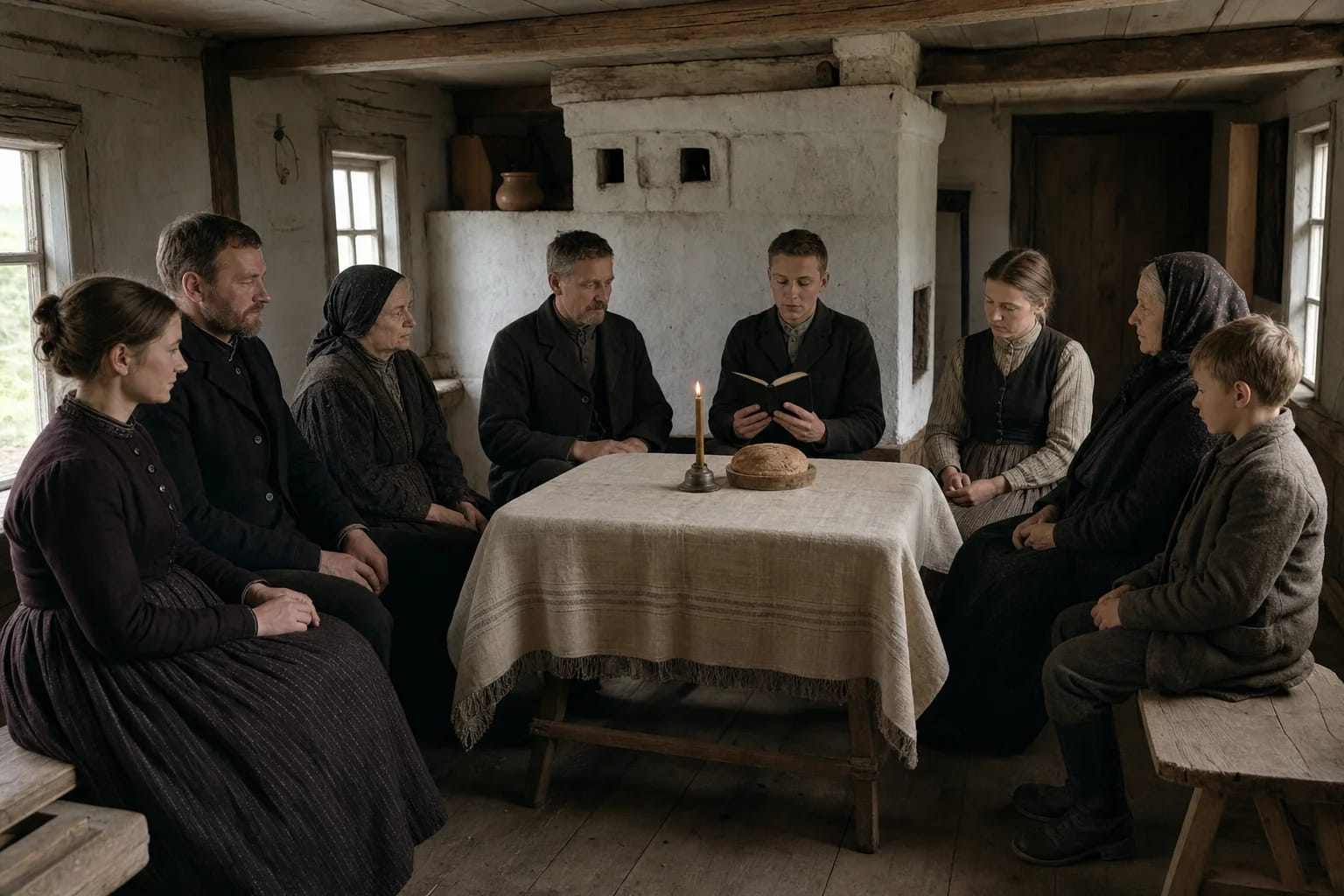
The Universal Lithuanian Encyclopedia defines atminai as remembrance of the dead through mourning prayers and a meal. Lithuanian usage includes forms such as atminai and atminimai, while metinės usually denotes an anniversary. The term concerns gatherings held after the funeral rather than the entire funeral sequence. The main act may be prayer in church, hymn singing at home, a grave visit, a shared meal, or a combination of these. Relatives come together not to stage the farewell again, but to establish the deceased person's continuing place in memory and to sustain one another.
The historical record is uneven. Sixteenth-century writers described memorial meals in Prussia and Lithuania Minor, often as clergy or outside observers. Nineteenth- and twentieth-century ethnography comes closer to household practice, while fieldwork from the turn of the twenty-first century documents rapid change. An early report proves that someone observed a practice in one place. It does not prove that every inhabitant of Lithuania followed the same rite for centuries.
Where Does the Funeral End and Atminai Begin?
The meal immediately after burial, known by such Lithuanian names as pakasynos, closes the public funeral procession. Atminai take place later—after days, weeks, a month, or a year. This distinction matters because older texts do not always use the terms for wake, memorial, and funeral feast consistently. A careful account therefore states the timing: had mourners just returned from the grave, or had they assembled separately on the ninth day, after a month, or on the death anniversary?
The ritual boundary was not always abrupt. In Donata Mitaitė's account from Panemunėlis, neighbours could return to sing on three or four evenings after burial. This local evidence shows a funeral community gradually dispersing; it does not establish a nationwide four-evening custom. Later memorials acquired a different rhythm. A family arranged worship, invited local singers or relatives, and returned to the grave as a planned observance.
The Ninth Day After Death: Attested but Far from Universal
A ninth-day memorial appears in some ethnographic and denominational sources, particularly in western Lithuanian accounts and Orthodox practice. It may be called mirties devintinės, literally the ninth day of a death. Other communities gave greater weight to the seventh day, four weeks, one month, or the fortieth day. A family statement such as “we gathered on the ninth day” is valuable local evidence, not a calendar rule for the whole country.
The Lithuanian word devintinės has an unrelated second meaning: it is also a traditional name for the Catholic feast of Corpus Christi. Search results and historical texts can therefore create confusion. When the deceased is meant, the precise phrase is mirties devintinės. A family planning a religious memorial today should establish its counting and liturgical practice with its own faith community rather than reconstruct an imaginary single ancient deadline.
Ketvirtinės, Ketvirtynos, and the Four-Week Memorial
Nineteenth- and twentieth-century sources call a memorial around one month ketvirtinės or ketvirtynos. The local term keturnedėlis refers to a span of four weeks. A calendar month and four weeks are not mathematically identical, so these words indicate the customary point in mourning rather than one nationally standardized date. Field studies around Kupiškis and Biržai connect the month memorial with Mass for the deceased, a grave visit, prayer, and a small gathering of close relatives.
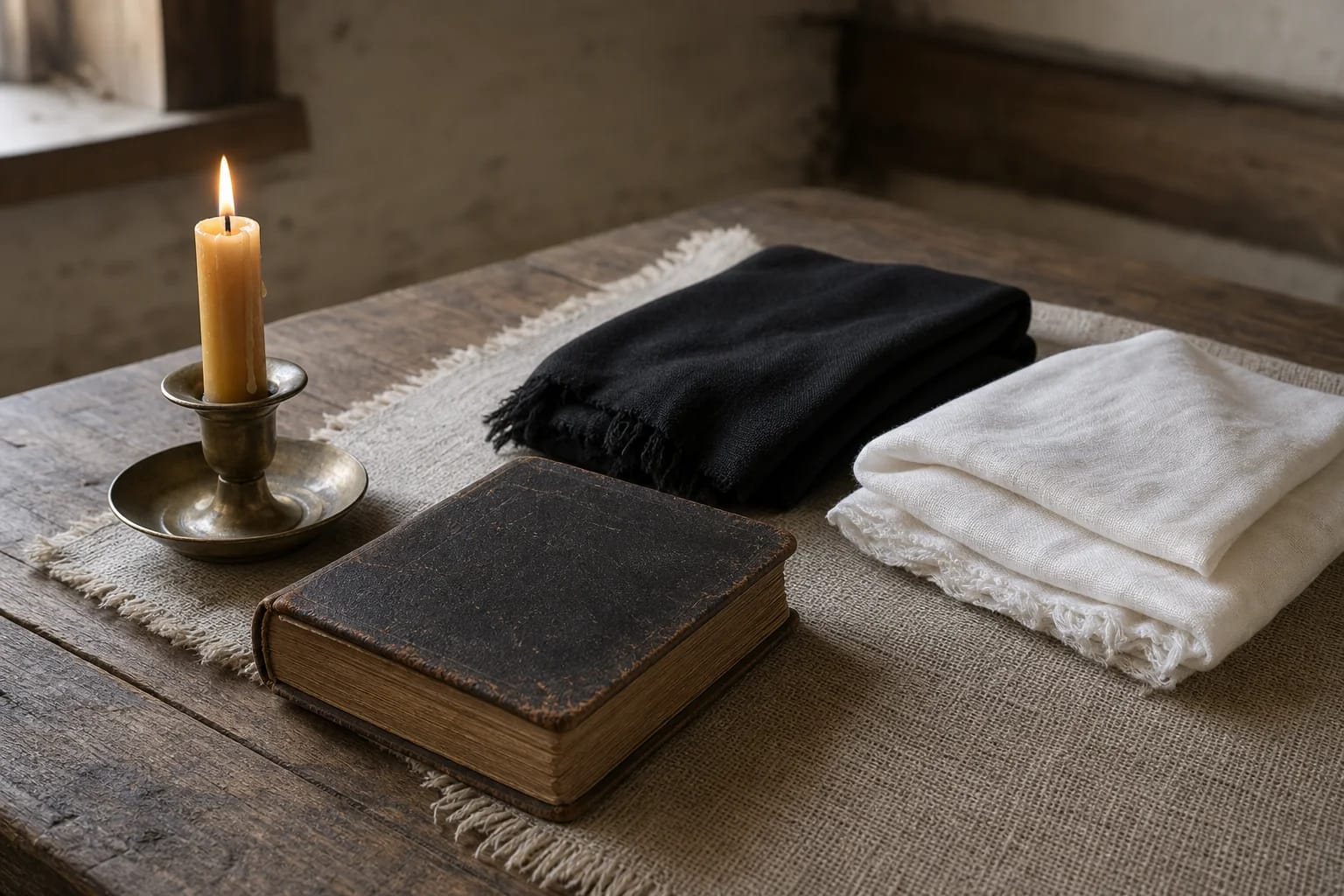
The observance brought family together again after the first weeks of loss. The same singers who had served at the funeral might be invited, although the company was usually smaller. One household sang at home; another went only to church and cemetery. Especially by the late twentieth century, urban families might meet in a restaurant or omit a meal altogether. Deliberately making time for the person, rather than a particular menu or number of guests, best expresses the continuing function.
The First Anniversary and the Boundary of a Mourning Year
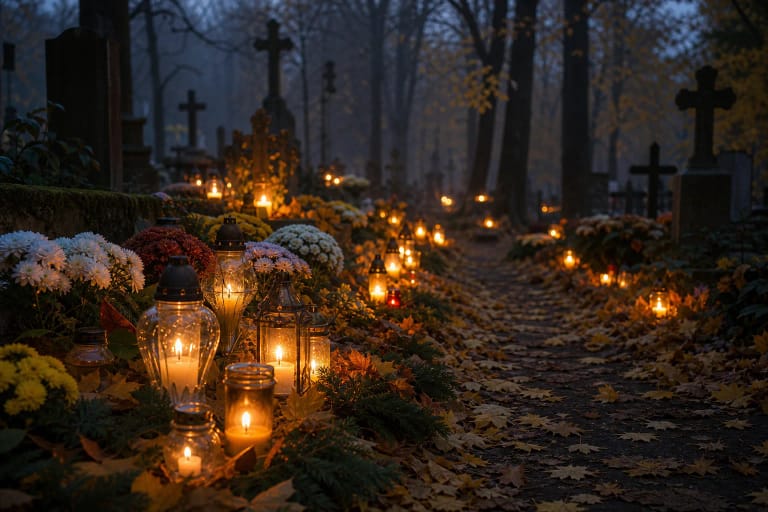
The first anniversary of a death is one of the most widely recognized memorial occasions. Relatives requested Mass or another service, visited the grave, invited singers, and shared a table. Catholic fieldwork around Biržai records worship, grave visiting, singing, and food on the anniversary. Older interviewees also remembered carrying food to the cemetery. That detail belongs to a particular historical and local setting; it is not a recommendation for conduct in cemeteries today.
The anniversary could close a period of public mourning. The same Biržai study records a mourning woman exchanging her black scarf for a white one at that time. The Universal Lithuanian Encyclopedia notes other clothing periods shaped by kinship, gender, place, and era, including an earlier role for white in parts of Dzūkija. These signs marked a social transition. They did not decide when someone had to stop grieving. A family today may observe the anniversary without special clothing, while sorrow continues in another form or for much longer.
Prayer, Hymns and Speaking the Deceased Person's Name
In Catholic atminai, the principal act of official religion is prayer for the dead, especially the Eucharist. The Catechism of the Catholic Church also names almsgiving, indulgences, and works of penance on behalf of the dead. This differs from a folk explanation that food left on the table literally feeds a soul. Both ideas may have been recorded in one community, but church teaching, a family symbol, and vernacular belief are not interchangeable.
Singing was highly regional. The Samogitian Calvary devotion could be heard in Samogitia and parts of Aukštaitija; elsewhere people used a rosary, funeral hymns, or psalms. Research around Kupiškis highlights the Rosary of the Holy Name of Jesus and an unusual local use of Psalm 129 (Psalm 130 in another numbering). Alfonsas Motuzas places the Office for the Dead, or mourning psalms, in Catholic and Protestant borderland settings between Lithuania and Latvia. No one work was the soundtrack of the entire country.
The name itself matters as much as the repertoire. It enters a Mass intention, a prayer list, a singer's address, or a family story. At a secular gathering, biographical memories, a letter, photographs, or a period of silence may serve the same work of remembrance. A respectful memorial should not imitate a religious rite if the deceased or family did not want one.
The Memorial Table: Food, a Symbolic Place and Alms
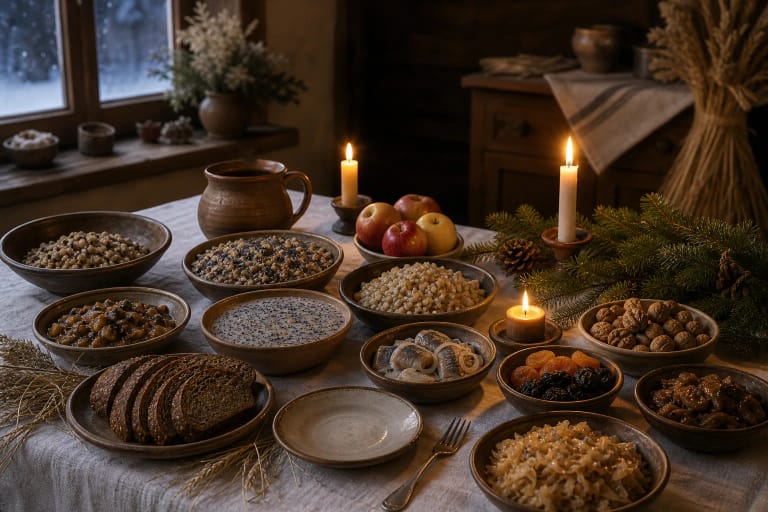
A shared table received travelling relatives, thanked singers, and extended conversation about the deceased. Evidence from Kupiškis mentions a symbolic dish or place for the dead; later practice could replace it with a portrait and candle. Older accounts also interpreted food as a portion for the soul. These are different readings of a symbol, not proof that every Lithuanian memorial table held an untouched plate.
There was no compulsory memorial menu. Its scale depended on the household, season, size of the family, and available means. By the late twentieth century, caterers and restaurants increasingly provided the meal. Abundant alcohol is not a measure of tradition, and a modest gathering is not lesser respect. Anyone reviving a historical dish should identify the region and period from which the recipe comes.
Almsgiving reveals another dimension of remembrance. Food or help could once be given to a poor person who was asked to pray for the deceased. Today, a donation to a cause important to that person, help for a neighbour, or volunteering can provide a meaningful counterpart. It is an option for turning memory into care, not a test of authenticity.
Catholic, Protestant, and Orthodox Memorial Practices
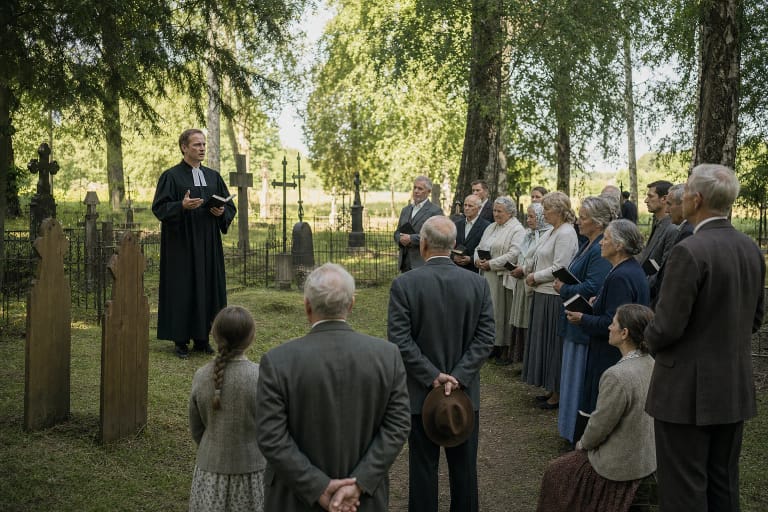
Catholic families most often connect remembrance with Mass for the dead, prayer at the grave, the rosary, or locally known hymns. Lutheran and Reformed communities place particular weight on scripture, congregational singing, remembrance, and the Christian hope of resurrection. In northern and western Lithuania, family remembrance intersects with summer cemetery festivals. A Catholic schedule of atminai should not be imposed on a Protestant family simply because both live in the same district.
Official Lithuanian Orthodox sources emphasize the third, ninth, and fortieth day, the anniversary, Radonitsa, and several Parents' Saturdays. Practices include submitting names for the liturgy, lighting candles, visiting graves, and giving alms. This distinct liturgical calendar helps explain why the fortieth day may be prominent in mixed regions, but it is not a generic folk custom of every Lithuanian.
Lithuanian Jewish, Karaite, and other communities have their own religious terms, times, and cemetery ethics. A broad label such as “ancestor customs” must not merge them into Christian atminai. The Lithuanian Jewish Community particularly stresses that Jewish cemeteries are not “former” cemeteries: they remain permanently sacred places. Specific observances should be learned from the community itself rather than invented by analogy.
From Farmhouses to Restaurants and Smaller Circles
In rural atminai, the home served as both prayer room and dining place. A household borrowed benches or dishes, singers had their place, and neighbours contributed work. Urbanization, smaller families, migration, and professional funeral services changed this arrangement. Worship remained in church, the grave visit in the cemetery, and lunch moved to a restaurant. A family may now meet online or shift the memorial to a day when relatives can return from abroad.
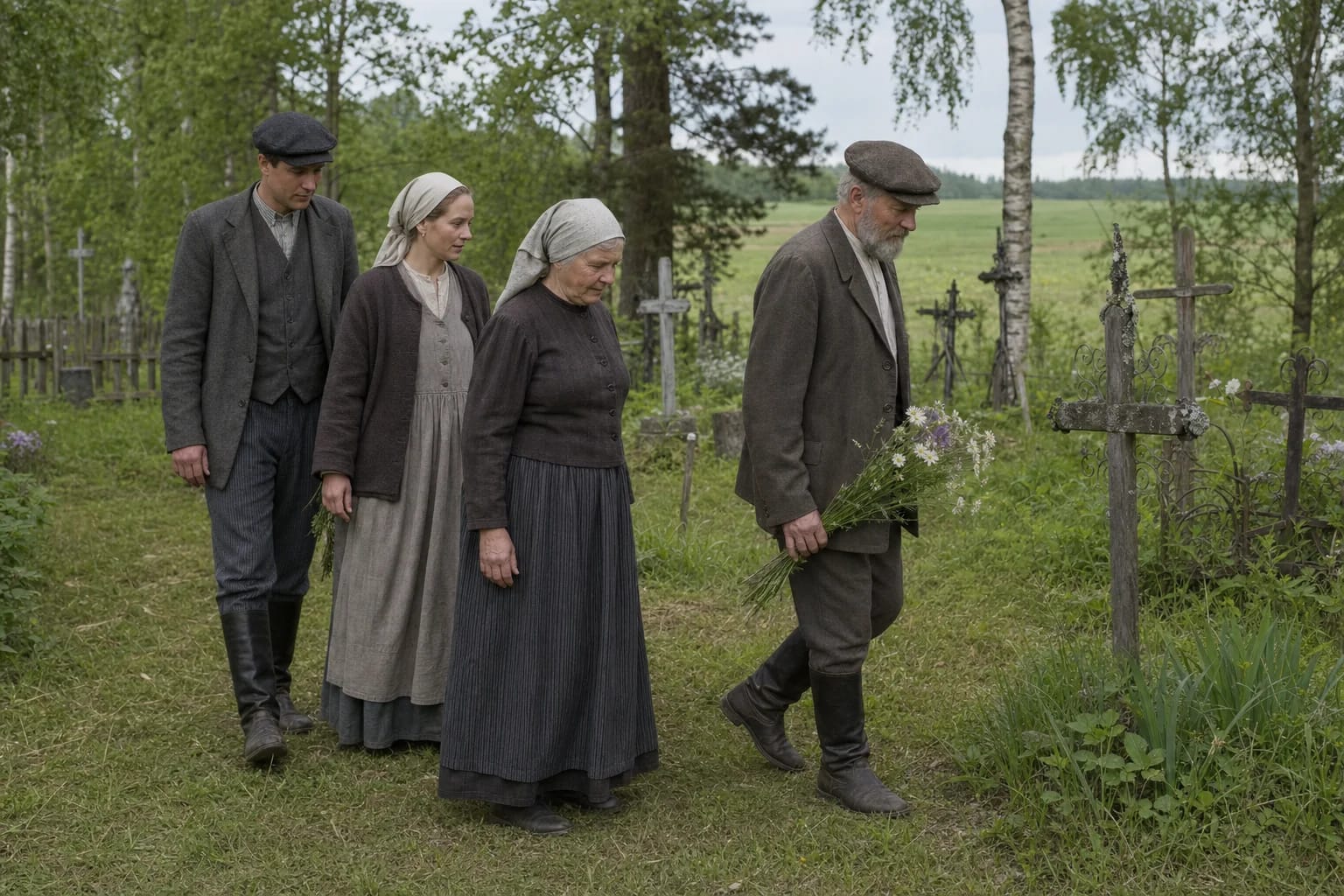
Change does not make memory inauthentic. Historical forms always depended on transport, working patterns, denominational discipline, and household means. A present-day memorial can be a prayer shared by three people, a walk to the grave, an evening looking through photographs, or a gift made in the person's name. Asking what a practice does for memory and mutual care is more useful than counting the antique details it reproduces.
Remembering Responsibly Today
Begin with the wishes of the deceased and the family. Is the memorial Catholic, Lutheran, Reformed, Orthodox, another faith, or secular? Who wants to attend, and are photographs or public storytelling welcome? No one should demand black clothing, an empty plate, a fixed number of days, or a lavish meal. Historical tradition offers language and choices for remembrance; it does not grant permission to judge another person's grief.
At a grave, follow the cemetery's and faith community's rules, do not move other people's memorial objects, do not photograph mourners without consent, and avoid disposable plastic decoration. An old grave or Jewish cemetery is an active place of memory, not an exotic backdrop. When a family does not know its local custom, useful evidence comes from older relatives, parish archives, regional studies, and ethnological research that states its place and date.
Atminai are not an examination. Their strength is the opportunity to pause, speak a person's name, care for the living, and allow memory to change with the family. A first anniversary may close a public stage of mourning; it does not close the story of a life.