- When / context
- From infancy to adolescence; chiefly rural history from the late nineteenth to the mid-twentieth century
- Tradition area
- Life cycle
- Themes
- Infancy, lullabies, play-songs, children's folklore, shepherding, work, school, growing up
Traditional childhood in rural Lithuania included close family life, lullabies, children's own folklore, and play, but also early work, unequal social standing, and strict community expectations.
Which Childhood Are We Describing?
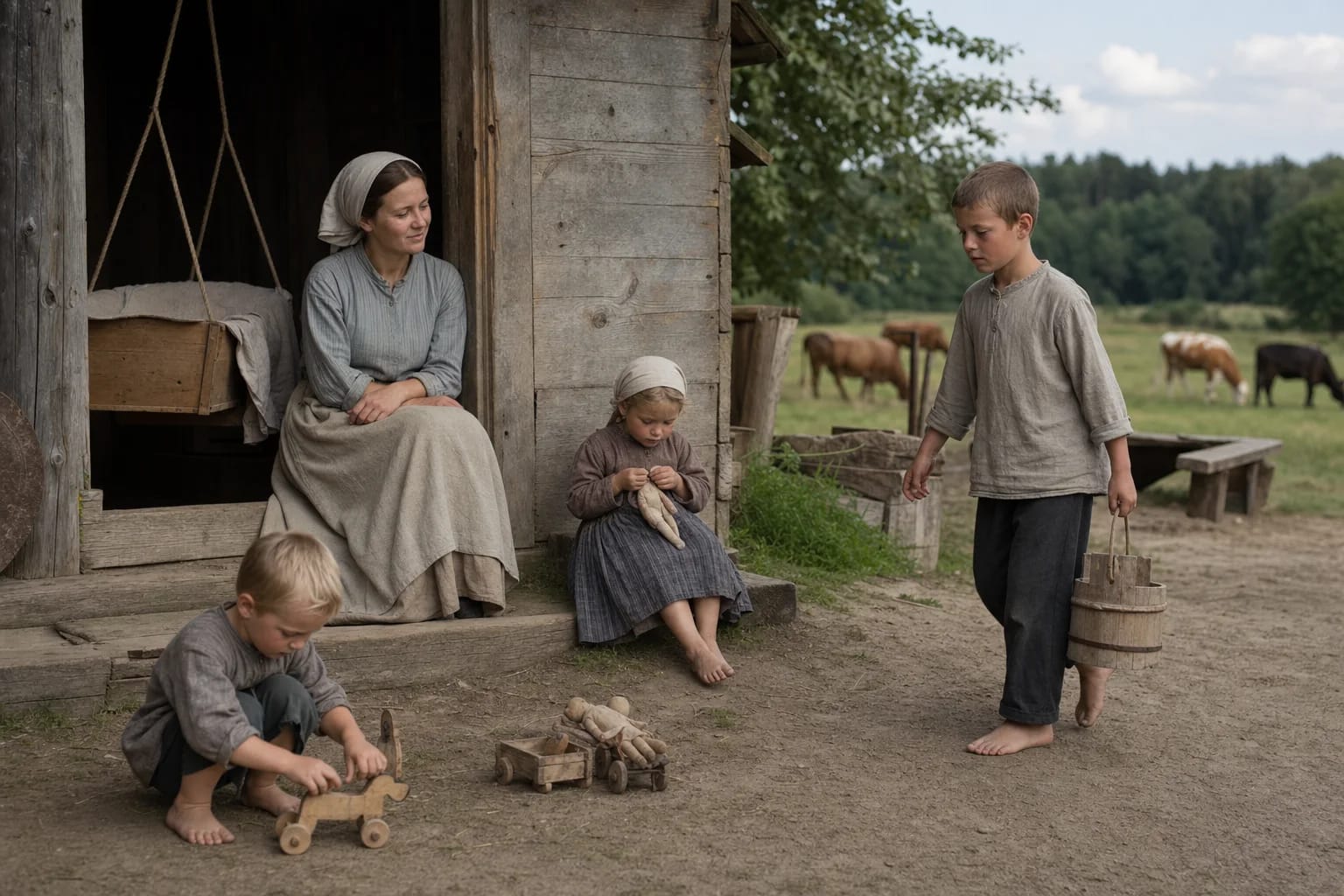
"Traditional childhood" was not one experience shared by every Lithuanian child. The richest ethnographic evidence mainly concerns farming families from the late nineteenth century through the first half of the twentieth, and it often relies on adults recalling their early lives. An urban child, a landless laborer's son, a prosperous farmer's daughter, and children in Catholic Dzūkija or Evangelical Lutheran Lithuania Minor grew up under different conditions.
Age was measured not only in years. A child's place was also shown by what adults trusted them to do: watch a younger sibling, tend geese, herd cattle, complete a task without supervision, or begin school. Such milestones could bring independence, but responsibility did not always mean choice. Rural childhood must therefore be understood as a period of intimacy, invention, and learning, but also of social inequality, physical work, and adult authority.
The Baby, the Cradle, and the Household
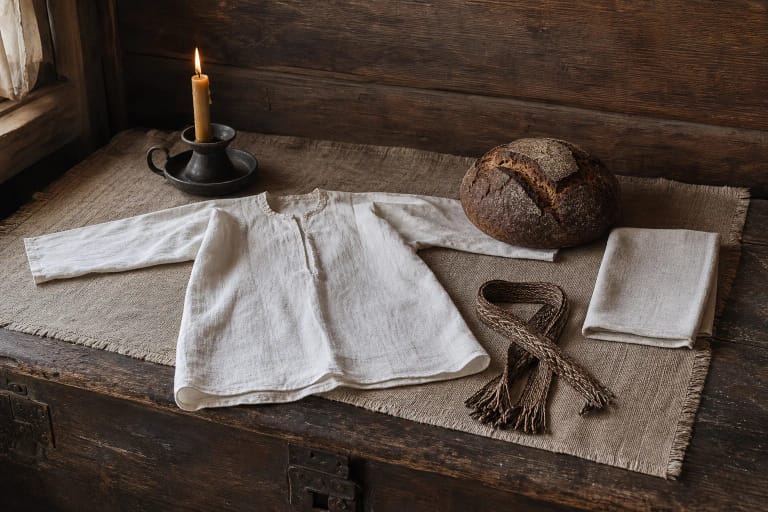
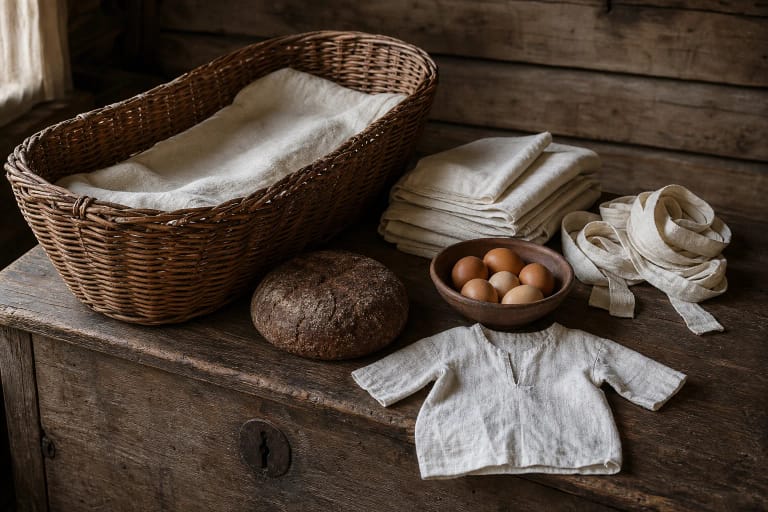
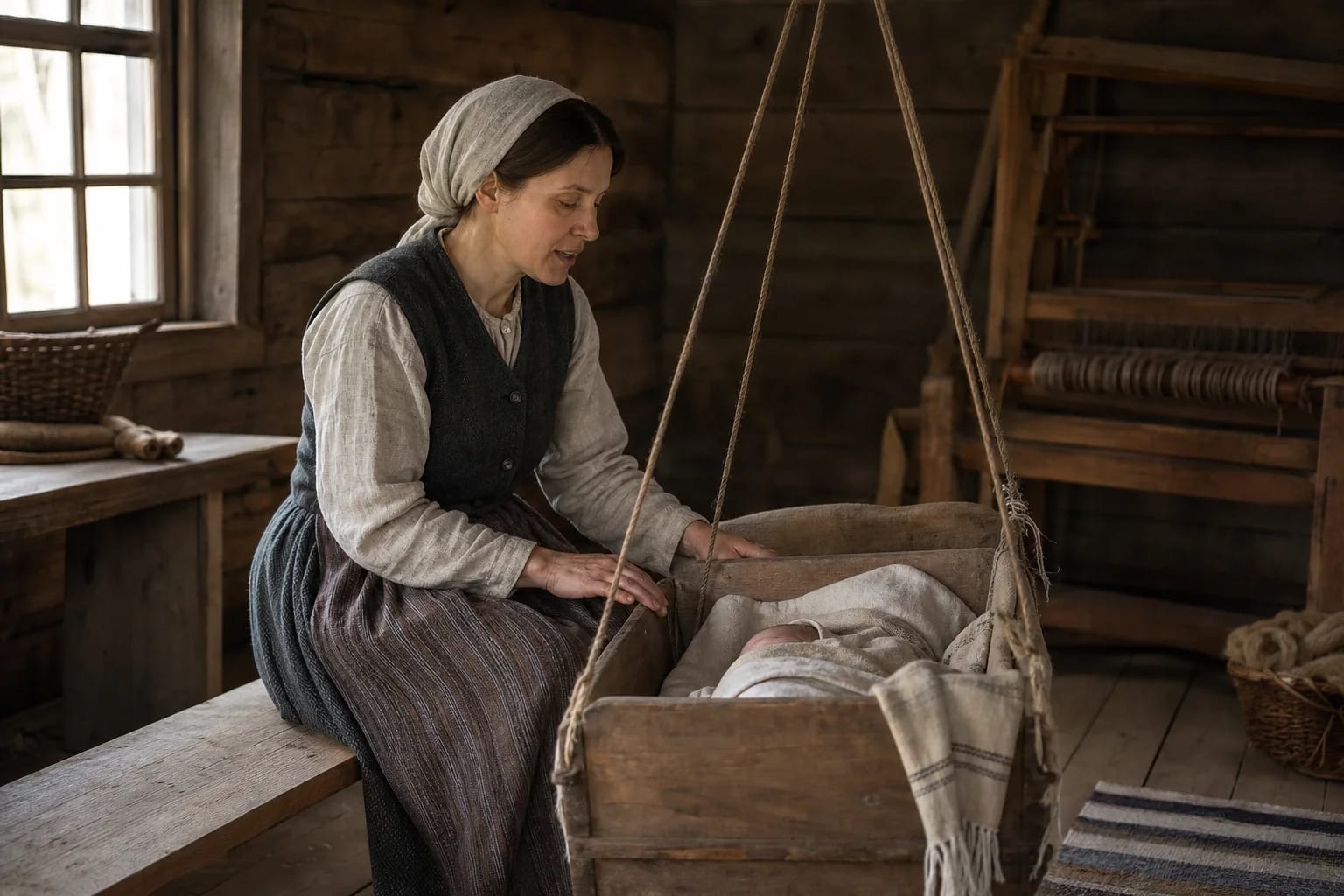
During the first year, a child's world centered on the household and the people providing care. The cradle represented sleep, soothing, and a protected place, while care had to fit the rhythm of adult work. Ethnographic sources mention large shawls, cloth carriers, and portable cradles, but constant carrying was not treated as the only ideal of care.
Beliefs also gathered around the cradle. Lithuania's intangible heritage register notes a prohibition against rocking an empty cradle, while older evidence describes the cradle as protection against the evil eye or mythic beings. These images show how vulnerability was explained before modern medicine and psychology. They are not contemporary guidance on infant sleep or safety.
Lullabies and Žaidinimai: Voice, Movement, and Bond
A lullaby was made for a particular child and evening. Its slow melody, repetition, and refrains such as a-a-a or čiūčia liūlia helped sustain the rhythm of rocking. A mouse or hare might bring sleep, while the caregiver voiced hopes for the child's health, diligence, and future. Some wishes reflect the gendered labor of their period—a son imagined as a ploughman and a daughter as a weaver—and should not be presented as modern expectations.
Žaidinimai were more active encounters: a child was bounced on an adult's knees, rocked, made to laugh, or guided through movements imitating riding, cooking, baking, and other actions. Folklorist Jurga Sadauskienė stresses that words are not the only source of meaning for a very young child; voice, touch, holding, and rhythm matter. A lullaby or play-song is therefore best understood as a relationship between performer and child, not simply as a museum text.
Children's Songs, Counting-Out Rhymes, and Group Play
Children's folklore was created both by adults for children and by children themselves. Alongside lullabies and play-songs were animal songs, short taunts, sound imitations, riddles, and verbal games. Children did not inherit these as a closed canon: they shortened and combined texts, adapted them to a local group, and reshaped them in dialect. Pasture, yard, road, and evening gathering could all serve as places of transmission.
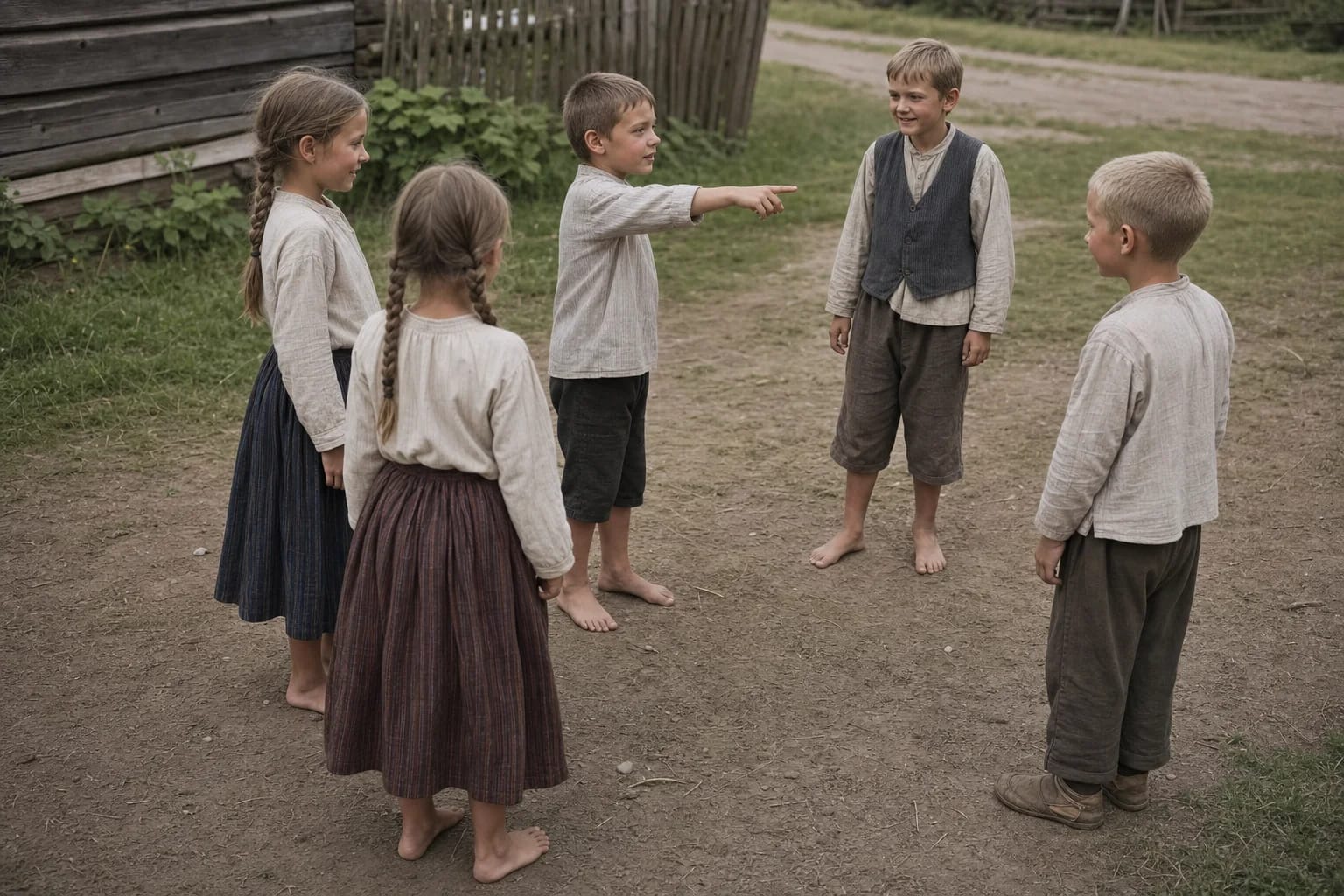
A counting-out rhyme selected the chaser or assigned another role as one player pointed to each participant in rhythm. The Universal Lithuanian Encyclopedia reports about 4,000 recorded variants and roughly 110 types; some contain deliberate nonsense or words borrowed from other languages. That abundance reveals a living laboratory of children's speech rather than an adult rulebook. Folk games must also be distinguished by age, since some singing games belonged to adolescent courtship and sociability rather than to small children.
Toys and a World Made from Available Materials
Nijolė Pliuraitė-Andrejevienė's research on Lithuanian children's toys shows that a toy mattered not only as an object but as a way to understand family and society. In the rural world of the late nineteenth and early twentieth centuries, an adult, an older child, or the player might make the plaything. Children carved while herding, and objects imitating household work, animals, or transport turned play into a small model of the social world.
Yet the claim that children were happier without purchased toys would conceal inequality. Prosperous farmers, smallholders, and laborers had different amounts of time, material, and money, while toys offered to girls and boys often reproduced the division of work. The creativity was real, but it frequently grew out of necessity. Industrial toys, school, print, and urban culture later changed the repertoire without replacing every older form on a single date.
Shepherding: A School of Responsibility and Child Labor
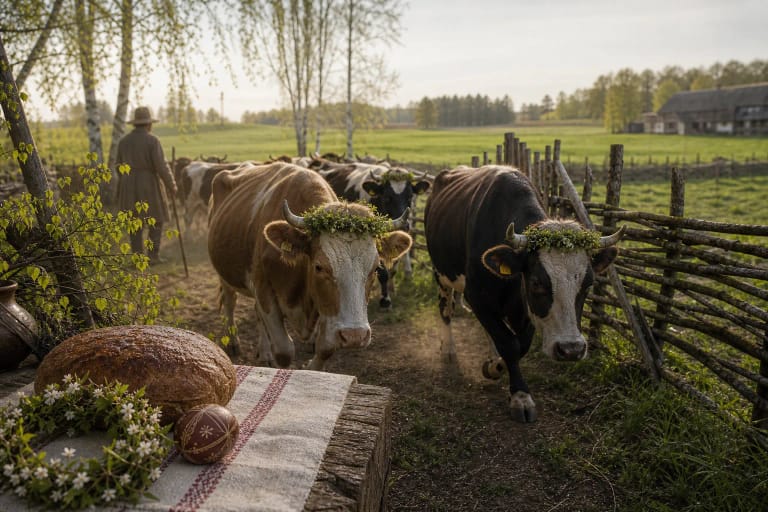
Shepherding was one of the clearest passages into greater responsibility. Studying northern Lithuanian material, Romanas Vasiliauskas found that children in the surveyed communities most often began at seven or eight and herded for about four years. In the broader encyclopedia account, rural shepherds around the turn of the twentieth century were usually farmers' children or adolescents aged 8–15. The exact starting point depended on the household, the child's strength, and the animals involved.
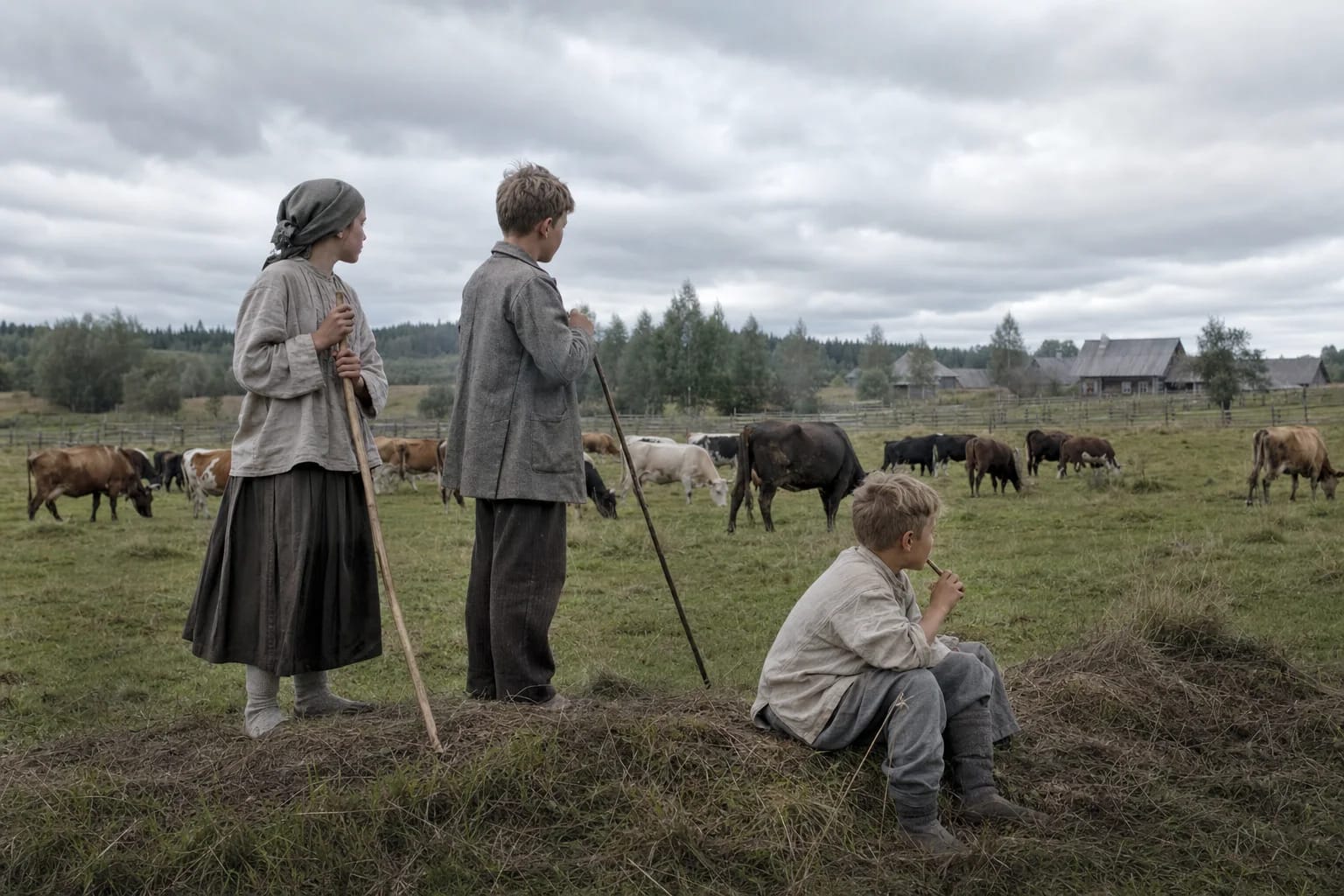
On the pasture a child learned to manage a herd, observe weather and plants, answer for damage to another household's crops, and work with the head herdsman and other children. It was also a place for games, carving, tale-telling, and raliavimai herding songs. The independence was genuine, but the work should not be romanticized: younger children aged six to nine might tend pigs or geese only for food and clothing, and shepherds held a lower position in the community than older age groups.
Who Did Which Work? Age, Gender, and Wealth
Children entered farm work gradually: first they watched, carried, guarded, or assisted; later they received tasks of their own. Work was learned less through a separate lesson than through demonstration, repetition, correction, and evaluation of the result. This passed on skills in tools, animal care, food preparation, textiles, and relations with neighbors. Tales, proverbs, and family stories added moral explanations to practical action.
Tasks were often divided by gender, although necessity crossed the line. The encyclopedia account of herding notes that girls also tended animals in households without boys and might weave small sashes on pasture. Household standing created even greater differences: one child worked on the family farm among relatives, another was sent to serve strangers. The same word "shepherd" could therefore describe a farmer's child taking a turn for the village or a poorly rewarded hired child.
Community Rules and Children's Own Voices
Family and village community taught children how to greet others, share work, watch livestock, address elders, and answer for damage. A child observed, participated, and received increasingly complex duties. Vasiliauskas distinguishes activities that young shepherds chose from those ordered by parents: children developed their abilities more actively through work they liked, while compulsory work socialized them in a different way.
Traditional order was not automatically gentle. Adult authority was strong; physical punishment, shame, and fear appear in the record, and a child's opinion was not always considered important. At the same time, children created a sphere of their own through secret agreements, taunts, game rules, tales, and pasture repertoires. Holding both perspectives avoids two errors: reducing the old village to repression alone and turning it into a lost paradise of perfect childhood.
Church, School, and Different Paths into Modernity
Baptism, Catholic First Communion, or Evangelical Lutheran confirmation could mark new religious and social responsibility. Confession matters particularly in Lithuania Minor: Lutheran parish schools were established there from the sixteenth century and eventually became numerous, but Prussian Germanization policies pushed Lithuanian out of schools during the second half of the nineteenth century. Educational opportunity, language, and parish institutions followed a different political path in Catholic regions.
Compulsory primary education in interwar Lithuania increased the importance of school, but legislation did not transform daily life immediately. A study of Linkuva district reports that after the 1922 law, schooling was compulsory for ages 7–14, yet shortages of schools and teachers persisted, attendance was irregular, and the school year could effectively begin in October after herding or field work ended. This local case makes the conflict between labor and schooling visible. After the Second World War, expanded mass schooling and the collective-farm system further altered the rhythm of rural childhood.
Baubas, Maumas, and Frightening Stories
Baubas, Babaužis, Maumas, and other threatening figures inhabited children's stories. Adults might use them to explain a dangerous place, keep a child away from water, or enforce obedience. Vita Džekčioriūtė-Medeišienė shows that such threats joined real hazards to a mythic worldview and varied with the child's age, storyteller, and situation. Their presence does not prove that every child literally or uniformly believed in every creature.
Tales and legends also affected listeners differently. A legend placing a being nearby might leave danger unresolved, while a fairy tale more often led its hero through danger toward an ending. Storytelling could teach, generate intense emotion, or help a listener work through fear, but it could also frighten painfully. Historical context is therefore essential: frightening folklore deserves study, but documenting it is not an endorsement of fear-based discipline.
Hair, Teeth, First Steps, and the Limits of Evidence
Folklore archives contain prohibitions against cutting a small child's hair too early because this was believed to cut away memory, intelligence, strength, or speech. A peer-reviewed 2023 study cites versions forbidding cutting before the age of one or three. This establishes the existence of beliefs, not one first-haircut ceremony performed throughout Lithuania.
Teething and the loss of the first milk tooth are better documented as bodily changes with social meaning. An LLTI conference abstract discusses associated beliefs, actions, and the formula "Mouse, mouse, take this bone tooth and give me one of iron," but an abstract alone cannot support a detailed national ritual script. No reliable institutional source was found for a standard Lithuanian first-steps ceremony. "Cutting the hobbles" or a similar act should not be borrowed from a neighboring tradition and labeled Lithuanian without new archival evidence.
What remains most alive today is not a supposedly unchanged rite but language, singing, family stories, fragments of games, and memories of grandparents' work. These can be explored through archival recordings, counting-out rhymes, or oral history while naming the period and place clearly. That approach preserves creativity without turning poverty, child labor, or fear into a nostalgic image of the good old days.