- When / context
- Nineteenth to early twentieth century, with continuities from older forms
- Tradition area
- Community life
- Themes
- Village assembly, kuopa, krivūlė, virbė, vyrija, skodas, village elder, common resources, communal duties, boundary disputes, social care, public opinion
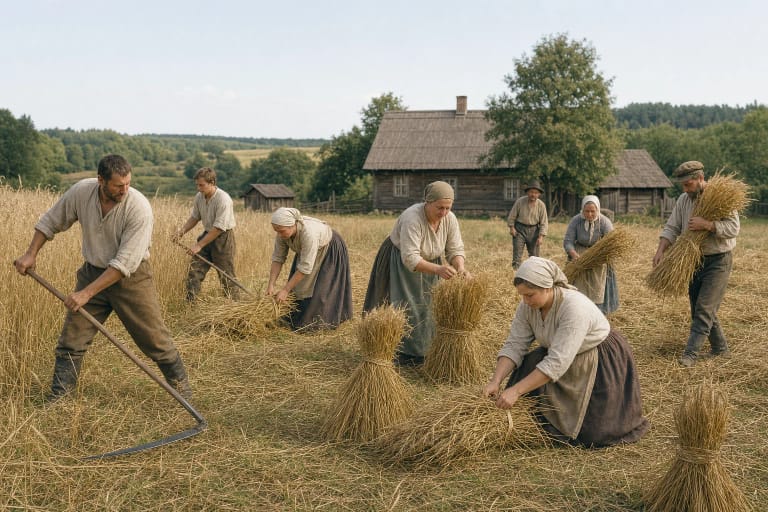
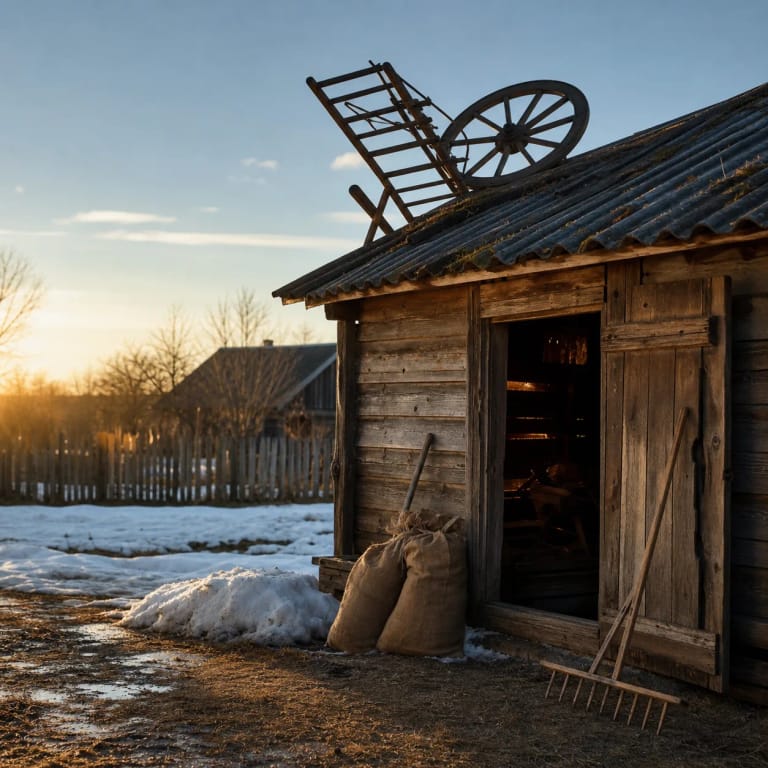
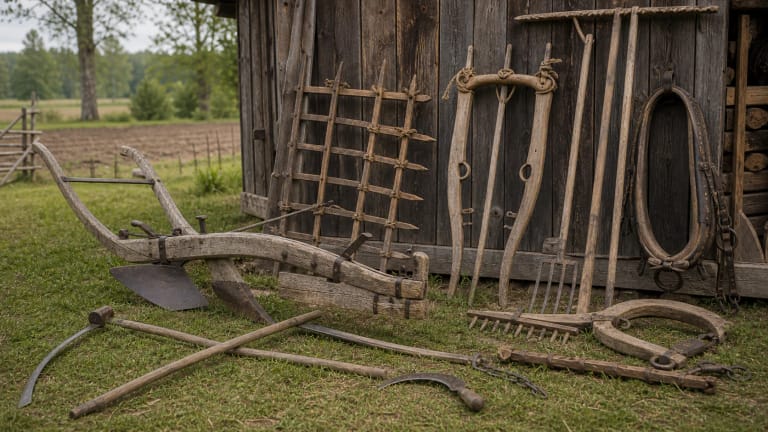
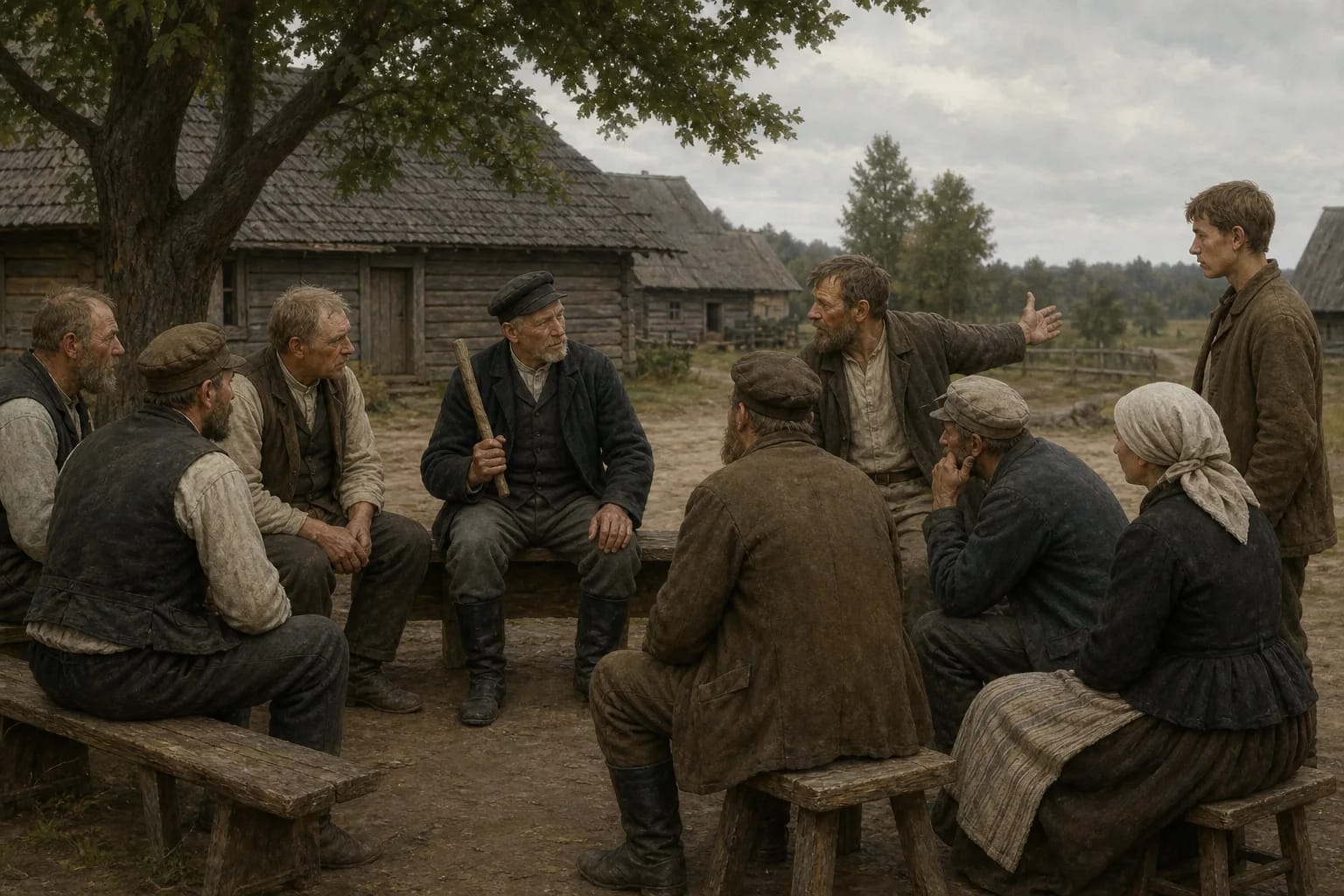
A Lithuanian village assembly, often called a kuopa, dealt with common pasture, roads, bridges, obligations, damage, and mutual assistance. It was a practical institution of local self-management, but not a system of universal equality: representatives of landholding farms held most power, and social pressure helped enforce decisions.
What Was a Village Assembly, or Kuopa?
The Universal Lithuanian Encyclopedia describes the kuopa as a traditional assembly of a village community that dealt with shared economic, administrative, social, and some legal matters. It was especially useful in a nineteenth- and early-twentieth-century street and strip-field village, where farms continually shared space. Livestock from separate households entered one common pasture, every cart used the same road, and narrow cultivated strips were divided by boundaries that could easily be damaged.
The kuopa was not a sovereign state within the village. Estate authority, parish institutions, township and county administrations, police, and courts operated beside it, and the balance changed over time. An assembly worked best where a question required local knowledge and collective execution: setting a grazing sequence, allocating a bridge repair, hiring a herdsman, examining damage, or deciding how to aid a household after disaster.
Kuopa, Krivūlė, Virbė, Vyrija, and Skodas
Names for a gathering varied. Kuopa could mean the assembly or the village community gathered there. In Užnemunė, krivūlė could refer both to the meeting and to a bent wooden staff sent from household to household as a summons. Virbė named the assembly in northern Lithuania; vyrija emphasized a circle of men, usually farm representatives; and skodas, a borrowing from Russian, spread in some areas under imperial rule.
These terms cannot be assembled into one unchanging model of an ancient Lithuanian parliament. In different communities, the same word might name the summons, the gathering, or its decision. Villages in Lithuania Minor existed under Prussian administration and within Lutheran parishes; most of Greater Lithuania was shaped by Russian imperial, estate, and Catholic parish institutions. A name is evidence of a local tradition, not proof that an identical procedure prevailed everywhere.
How Was an Assembly Called?
The village elder or another authorized person normally called the assembly. News might travel by a messenger walking between farmsteads, by an oral chain, or through a krivūlė passed from one household to the next. A farm receiving the staff, or later the written note attached to it, had to carry it onward in the established order. The visible route made a summons harder to deny: it was difficult to claim that nobody had announced an important meeting or communal job.
People met in the elder's or another farmer's yard, near a village cross, beside a road, in an inn or school, or at another familiar point. Procedure was not always formal. The elder presented the issue, interested parties spoke, earlier agreements were recalled, and a decision might emerge through consensus, majority approval, or the influence of the most authoritative farms. Written minutes became more common as administration expanded; many older decisions remained in collective memory.
Who Had a Voice, and Who Was Marginalized?
A village assembly was participatory, but that did not make it democratic in the modern sense of equal citizenship. Matters of land and obligations primarily concerned farms, so the person who controlled a holding represented it. This was usually a married man. A widow managing a farm herself could speak for it or authorize another person in some communities, but local examples of female participation did not make the institution equal by gender.
A landless resident, hired servant, herder, adult child still living in a parent's household, or recent arrival might present a request and be directly affected by a ruling without carrying the same decision-making weight as an established farm. A wealthy landholder, the elder's relatives, or an accomplished male speaker could dominate even where there was no formal voting rule. The assembly is therefore best understood as historical self-management by farms, with participation and influence distributed unequally.
Common Pasture, Woods, and Water
Common resources generated much of an assembly's work. A village had to decide when a pasture would open after spring, how many and what kinds of animals each farm could send, who would hire and feed the herdsman, where livestock would drink, and how crops would be protected. Animals released too early could damage wet ground; too large a herd could leave other households' cattle without sufficient forage.
Similar agreements governed hay meadows, forest material, fishing places, common wells, and access to a shore. A right to use a resource generally came with a duty to maintain it and compensate for damage. Shares were not invariably equal. A farm with more land might receive greater use while owing additional labor, a horse, or a cart. The method reflected local landholding and cannot be turned into one formula for all Lithuania.
Roads, Bridges, and Shared Obligations
A passable road and sound bridge served everybody but required timber, carts, horses, and labor. An assembly might assign one farm to deliver a log, another to dig a ditch or repair a road section, and excuse a household affected by illness, age, or poverty. This could be a local reciprocal obligation through which villagers themselves managed their infrastructure.
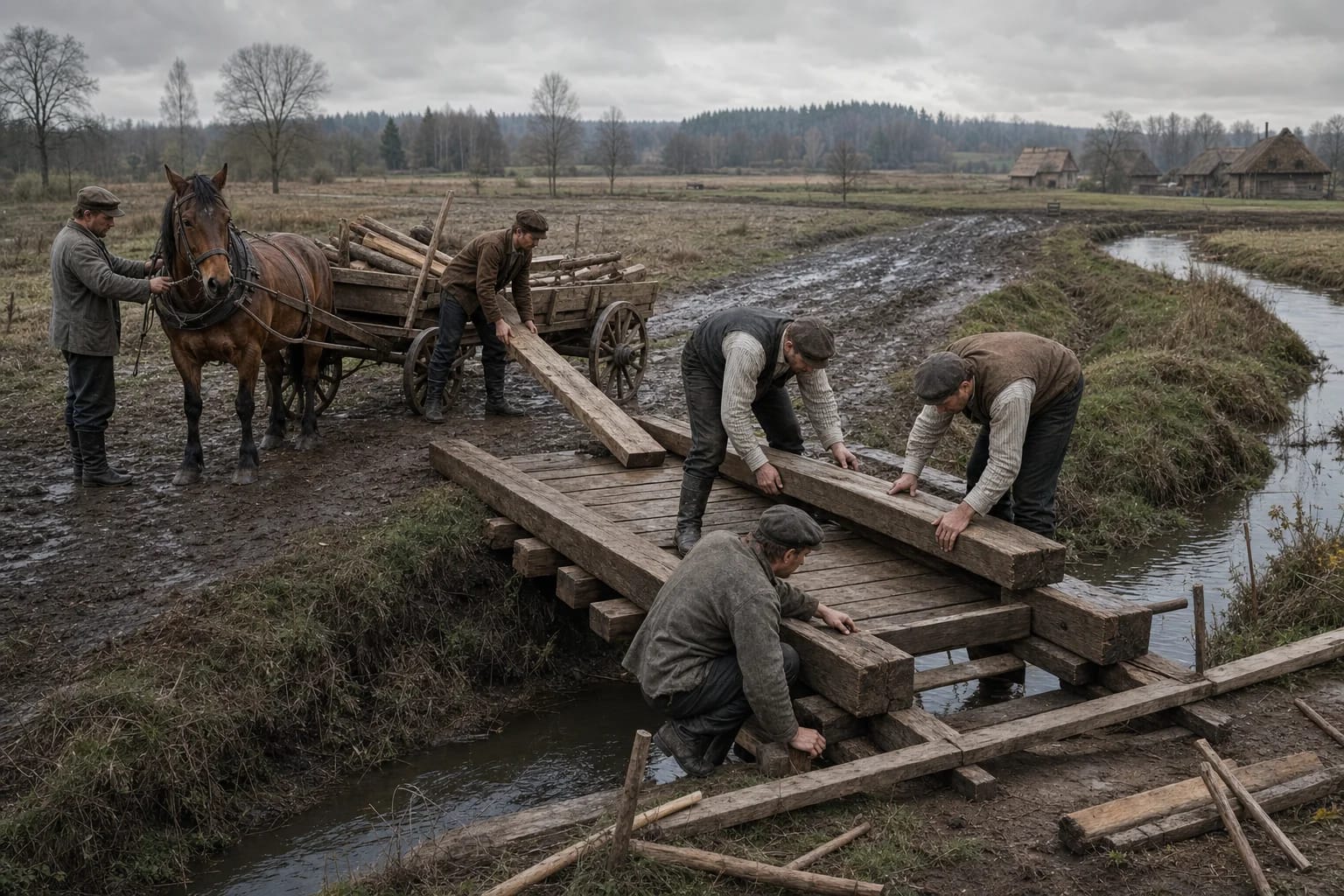
That arrangement must be distinguished from road, transport, post-horse, and other duties imposed by an estate, township, or state. The assembly sometimes only distributed an externally prescribed burden among farms. People then participated not because they had freely chosen a common purpose but because an authority demanded labor, animals, or money. One meeting could administer both a self-chosen communal task and an imposed levy, but their social meanings were different.
Field Boundaries, Livestock Damage, and Mediation
The ežia between cultivated strips was both a physical boundary and a test of neighborly relations. If a farmer ploughed across or moved it, the elder and trusted villagers could inspect furrow direction and older markers, hear neighbors' recollections, and measure the line. In the customary-law example presented by the Universal Lithuanian Encyclopedia, an elder and two respected village men performed this task. Their aim was to restore an accepted boundary and reconcile the parties, not create a new title to land.
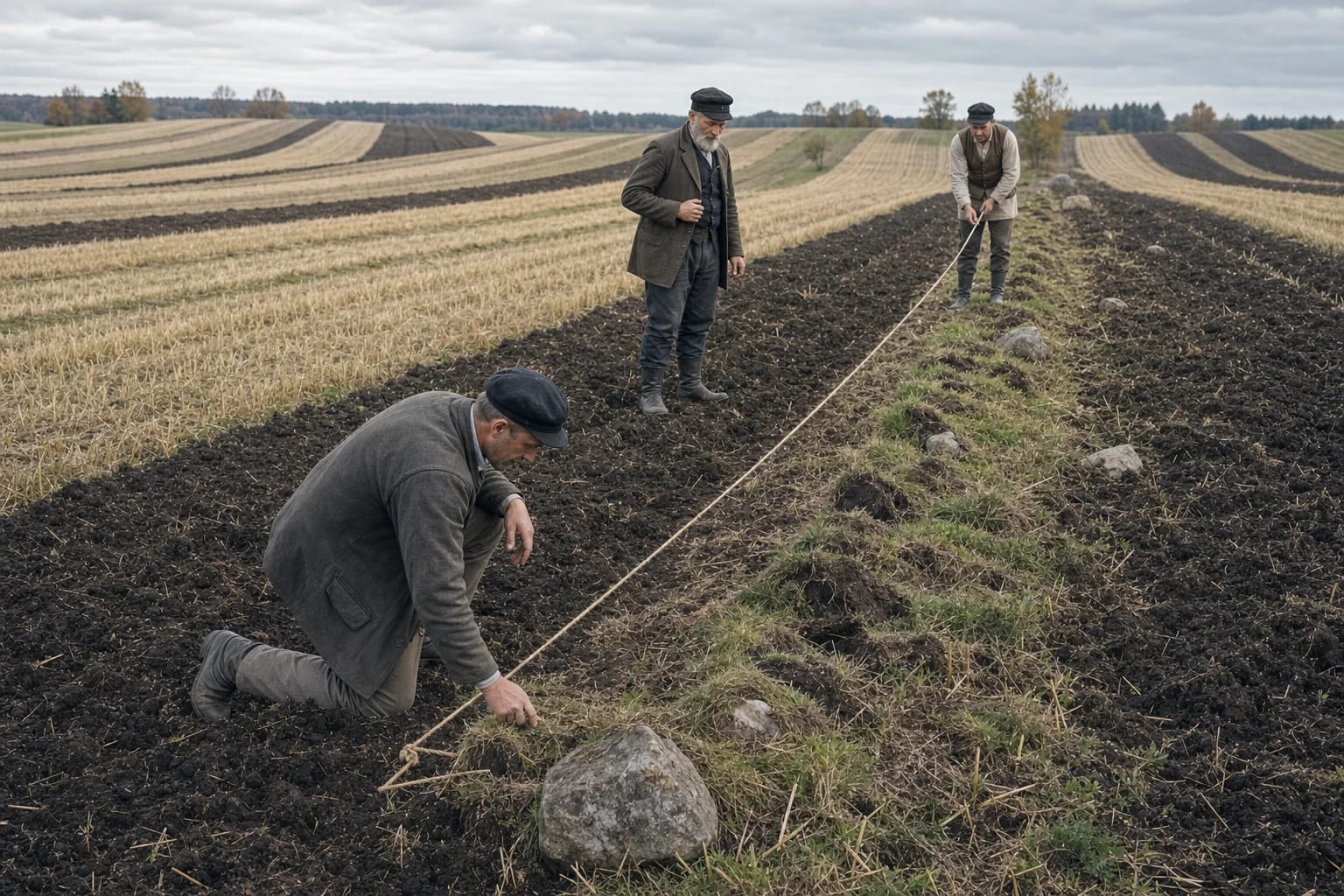
Livestock entering crops, a broken fence, redirected water, or an unfulfilled common duty could be handled similarly. Assembly mediation was effective when both parties accepted its authority and the remedy could be carried out within the village. A serious dispute involving title documents, an alleged crime, or unwilling parties required an administrative office or court. Local knowledge was useful evidence, but it did not remove the need for impartial legal process.
Poor Residents, Orphans, and Households after Disaster
Village self-management extended beyond land. An assembly might decide how to maintain a person without family who could no longer work, where an orphan would live, who would help an ill household, or what to provide after a fire. Aid could take the form of bread and seed, temporary shelter, fodder, timber, days of labor, or bandžiulystė—the temporary use of an animal by a neighbor struck by disaster, with its produce and offspring divided by agreement.
This care protected people where state welfare was minimal, but it was not a simple story of generosity. A poor person could depend upon a host's goodwill, be moved repeatedly between households, or be expected to work according to ability. An orphan's guardianship might involve property interests, and the community judged publicly who was 'deserving' of aid. Communal support could be essential to survival while remaining hierarchical and sometimes humiliating.
How Did Decisions Become Binding?
An assembly had no modern enforcement service. Its decisions rested on practical interdependence. A person who refused road work still used the road; a farm that ignored grazing rules risked its neighbors' complaints; and someone who continually avoided obligations might receive no talka or emergency help. Public naming, shame, and loss of reputation were powerful controls in a small community.
A decision might also require compensation for damage, a specified amount of material, payment of one's share, or a meal sealing an agreement. Social pressure could nevertheless be biased. An influential family defended its account more easily, while a newcomer, landless resident, or unpopular person might be condemned without a fair hearing. Public opinion helped maintain agreements but was never a reliable measure of innocence or justice.
Violent Vigilantism Was Not an Ideal of Justice
Ethnographic and customary-law sources record some village assemblies capturing and punishing suspected horse thieves themselves. Accounts mention whipping, maiming, and other violence in isolated places until around 1925, when police and courts of the Republic of Lithuania became more established. This evidence matters because it reveals fear of losing an economically indispensable horse and distrust of external law enforcement.
Documenting an act does not justify it. Suspicion is not proof, a crowd cannot provide an impartial trial, and collective punishment disperses personal responsibility. Such conduct is unlawful violence today, not a heritage practice to preserve. A responsible account must show both the assembly's capacity for practical coordination and the point at which communal power became vigilantism.
Why Did Kuopa Authority Decline, and What Survived?
The division of villages into isolated farmsteads reduced common strips and pastures, weakening the daily need for village-wide agreement. Interwar township administration, courts, police, and written contracts assumed some earlier functions. Soviet collectivization then removed the private-landholding foundation and turned meetings into instruments of a collective farm or state organization. It was not a direct continuation of the old kuopa.
Since the restoration of independence, rural and urban community groups have again held meetings, cared for public places, discussed roads, and organized aid. A modern association can learn responsibility for a shared place from the historical assembly, but its legitimacy depends on equal civic rights, transparent procedures, and state law. The most valuable lesson is not to recreate an old hierarchy. It is to recognize that common pasture, a road, or a vulnerable neighbor requires a collective as well as a private decision.