
Spring
Gandrines: Stork Day
March 25
Gandrines is the day when spring flies back with a bird. On March 25 Lithuanian tradition waits for the stork, said to carry the wagtail under its wing, kick out the remaining ice, and remind farmers that the agricultural year is waking.
Tradition context
- When
- March 25
- Season
- Spring
- Themes
- Return of the stork, Bloviesciai, seed, grain, stork nest, stork cakes, neighbors' visits, spring signs
Gandrines, or Bloviesciai, on March 25 marks a spring threshold and the return of the stork. In Lithuanian custom the stork brings good fortune, kicks out the ice, awakens seed and grain, while people bake stork cakes, share food with neighbors, avoid lending things, and read signs from the first stork they see.
What Are Gandrines and When Are They Celebrated?
Gandrines are celebrated on March 25. VLE notes that they coincide with the Catholic feast of the Annunciation to the Blessed Virgin Mary, while in the folk calendar the day marks the beginning of the phenological calendar and of a half-year.
The day is also called Bloviesciai. It is an early spring threshold: snow may still lie in yards, but the stork, wagtail, seed, and first drops of water show that winter's order is withdrawing. VLE also notes the name Bee Day, when beekeepers set swarm boxes so summer swarms would not wander far.
Why Was the Stork a Bird of Fortune?
B. Imbrasiene calls the stork a sacred bird that brings people happiness. A stork nest in the farmstead was believed to promise good harvest, travel, or livestock luck, depending on where and how it was raised.
The stork was also linked with health. Beliefs say it can take a person's illness and carry it to marshes or deep bogs. Such words show the spring bird imagined as one that removes misfortune.
Seed, Granary, and the First Stork
The first stork seen in spring was a sign for the whole year. VLE says that seeing a stork flying, especially from the right, promised quick, successful work. A standing or unfavorably seen bird could be interpreted more cautiously.
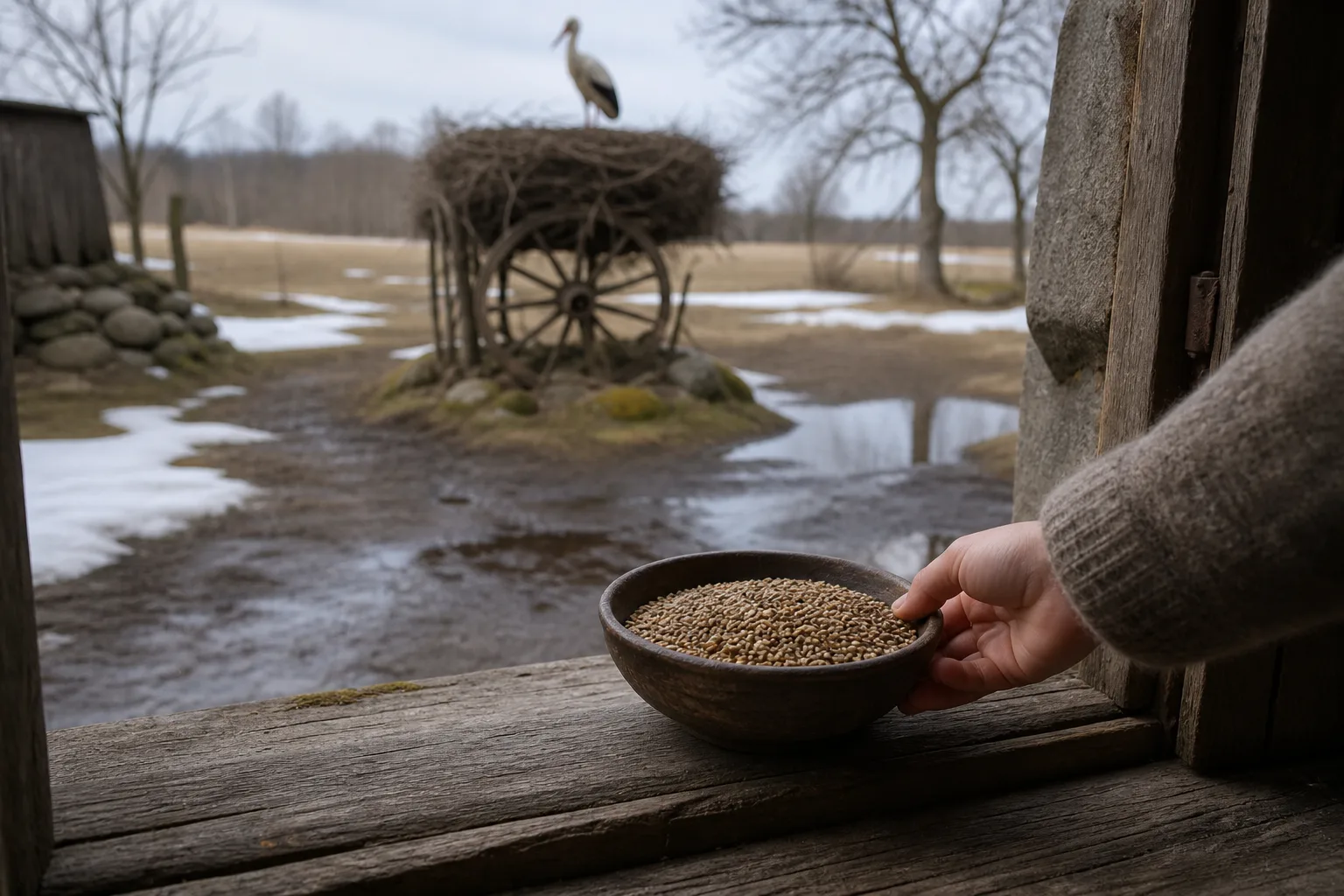
In Dzukija, when the first stork was seen, grain in bins was stirred or seed shaken. The action is plainly agrarian: the bird's return coincides with the coming sowing time, and the person symbolically wakes the grain from winter sleep.
What Was Avoided on Gandrines?
Lending and household goods mattered on Gandrines. Imbrasiene notes that from Bloviesciai to April 9 people tried not to lend anything and to recover items already lent. Around Svencionys a sieve was not lent so wolves would not slaughter sheep.
In some places eggs were not moved so young birds would hatch healthy, and field work was avoided. Around Tverecius, a snake-under-the-threshold motif was recorded as protecting livestock from bites. These customs show concern for the whole farm, not only the returning stork.
Stork Cakes and Neighborly Feasts
As early as the first half of the nineteenth century, peasants tried to prepare food on Bloviesciai and neighbors visited one another. Hemp cakes and buns made from mixed grain flours were baked and called stork cakes or kratinys.
VLE stresses sharing: coarse buns from various grains were shared with neighbors so grain would be viable. From Gandrines, ploughmen had to be given an afternoon meal; it was said the stork brought that meal and carried it away in August.
Mackantiskes and Contemporary Stork Welcomings
In Mackantiskes, near Aukstadvaris in the Trakai district, Gandrines have been revived as a community feast described by Alkas.lt. A local welcoming custom is mentioned: housewives placed small pastries or sweets in bags for children and tied them to apple branches or fences.
This is a specific local example, not a rule for all Lithuania. Still, it shows how Gandrines can live today through watching the stork nest, children's gifts, songs, kankles music, stork pastries, and a community gathering at the farmstead.
Main Gandrines customs and meanings
Gandrines customs combine waiting for a bird, awakening seed, farm-fortune beliefs, and neighbors' food. The details are concrete: how you first see the stork, whether you lend a sieve, whether eggs are moved, and whether you share stork cakes.
Waiting for the stork. March 25 is called the stork feast because people believed the stork returned that day.
The wagtail under the wing. It was said that the stork brings the wagtail, which finishes kicking out the remaining ice and lets spring settle in.
First-stork signs. How the first stork is seen matters: a flying stork, especially from the right, promised brisk work during the year.
Awakening seed. In Dzukija, after seeing the first stork, people stirred grain in bins or shook seed so crops would ripen better.
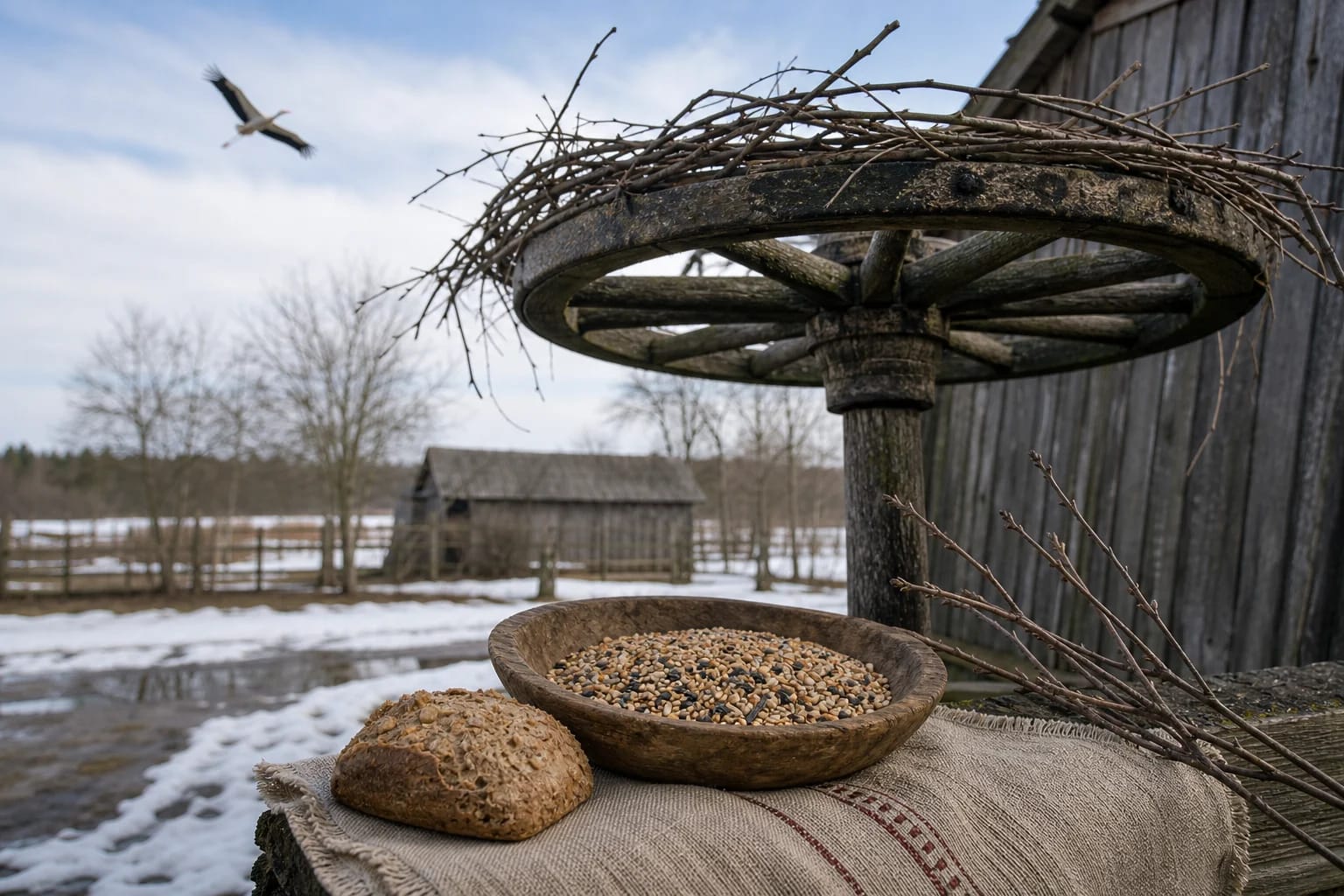
Raising a stork nest. An old wagon wheel was raised onto a tree, house, barn, or cowshed so a stork would nest and bring luck in harvest, travel, or livestock.
Not lending. From Bloviesciai until April 9 people tried not to lend anything; around Svencionys the sieve was especially guarded so wolves would not tear sheep.
Not touching eggs. In some places women did not move eggs that day so chicks, goslings, or ducklings would hatch healthy.
Stork cakes. Early nineteenth-century accounts mention feasts, neighbor visits, hemp cakes, and buns made from mixed grain flours, called stork cakes or kratinys.
Where to experience it
Where to experience Gandrines in Lithuania?
Gandrines can be experienced at farmsteads with stork nests and in communities that revive stork-welcoming customs. Mackantiskes near Aukstadvaris is one documented local example.
Farmsteads with Stork Nests
The meaning of Gandrines is clearest where a returning stork and an old nest can be watched in spring.
Mackantiskes near Aukstadvaris
Alkas.lt described the village Gandrines feast with children's stork gifts, memories from local elders, and stork pastries.
Regional Park and Community Events
Where local communities take part, Gandrines can be revived through nature observation, songs, food, and children's education.
Gandrines: songs, sutartines, and related pages
Gandrines connects with the spring themes of Jurgines, Jore, and grain. Here the seed is only being awakened; in later feasts the spring work is already moving into the fields.
Jurgines
A later spring feast when livestock and fields enter the active work year.
Jore
The spring greenery and renewal feast, close to Gandrines in its mood of natural awakening.
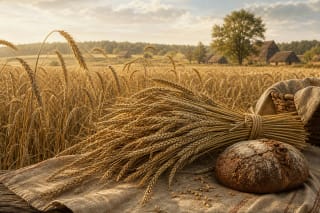
Grain, Rye, and Seeds
Grain and seed symbolism visible in Gandrines through granary and seed awakening.
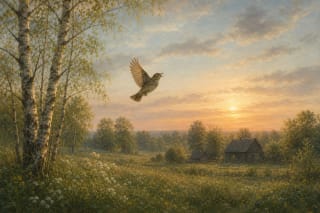
Bird in Lithuanian Symbolism
A broader reading of the bird as messenger, transition sign, and marker of the year cycle.
Gandrines sources and useful pages
Gandrines: frequently asked questions
When are Gandrines celebrated?
Gandrines are celebrated on March 25. They coincide with the Annunciation and are also called Bloviesciai in folk usage.
Why are Gandrines connected with the stork?
People believed the stork returned that day, carrying the wagtail under its wing to kick out the ice. The stork was a bird of happiness, spring, and farm fortune.
What did it mean to see the first stork?
The way the stork appeared mattered. A flying stork, especially from the right, was considered a good sign promising brisk work for the year.
Why was seed moved on Gandrines?
In Dzukija, after seeing the first stork, people stirred grain in bins or shook seed, believing this would help crops ripen well.
What are stork cakes?
Stork cakes, or kratinys, were buns baked from various grain flours and shared with neighbors to wish for viable grain.
Why did people avoid lending on Gandrines?
People believed lending could harm livestock or farm luck. Around Svencionys the sieve was especially guarded so wolves would not tear sheep.
Could eggs be moved on Gandrines?
In some places women avoided touching eggs because it was believed chicks, goslings, or ducklings might hatch unhealthy.
What are stork welcoming gifts?
Around Mackantiskes, children received small bags with pastries or sweets tied to apple branches or fences as gifts brought by the stork.
How do Gandrines differ from Jurgines?
Gandrines mark the early spring threshold of the returning bird and awakened seed. Jurgines come later and focus more on driving livestock out and beginning field work.