
Autumn
Mykolines: Michaelmas and Dagotuves
September 29
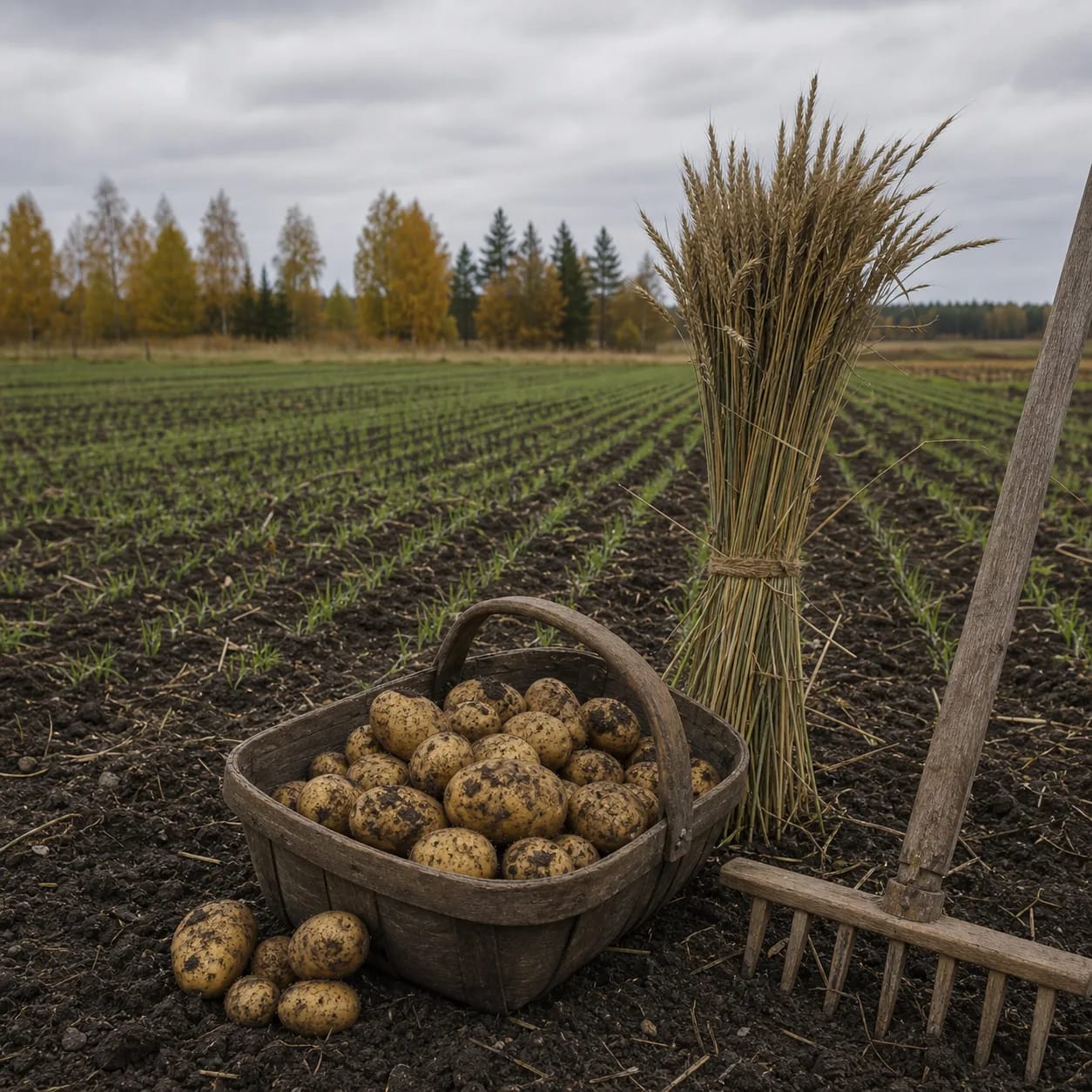
Mykolines arrives when summer fullness is already behind and the earth prepares for winter. On September 29 the older name Dagotuves recalls sprouted winter crops, harvest gratitude, and communal concern that the grain survive the cold half of the year.
Tradition context
- When
- September 29
- Season
- Autumn
- Themes
- St Michael, Dagotuves, Daga, Mikelis, autumn gatherings, winter crops, sprouted grain, potato digging, autumn weather, beginning of the Velines season
Mykolines on September 29, St Michael's Day, belongs in the Lithuanian autumn calendar with the older Dagotuves layer: sprouted winter crops, thanks at harvest's end, community meals, the beginning of potato digging, autumn and winter weather signs, and the turn toward the darker part of the year.
What Are Mykolines?
Mykolines are observed on September 29. In the Christian calendar this is St Michael's Day, but in Lithuanian ethnographic context it is also important because of the older Dagotuves, or Daga, layer. VLE identifies Michael as the most powerful archangel (Hebrew Mikhael, 'who is like God'), who in the Book of Daniel leads the heavenly hosts into battle against the forces of evil; in the Catholic Church his feast is celebrated on September 29.
EKGT connects the autumn equinox period with September 29 Dagotuves. In Lithuania Minor the feast was called Mikelis. The names differ, but the center remains the same: the boundary of autumn harvest and winter crops.
Why Dagotuves Are Linked with Winter Crops
By late September winter crops have already sprouted. EKGT explains that this may have shaped the name Dagotuves, or Daga. Here Daga means not summer abundance but the visible beginning of new grain in the earth.
It is a subtle autumn moment: one harvest has been taken in, while another is only greening and must overwinter. Mykolines is therefore not only an ending but trust that the earth will keep the sprout until spring.
Autumn Sambariai and Community Meals
Older accounts connect Dagotuves with community gathering. EKGT mentions Jan Dlugosz's testimony that the feast was like autumn sambariai, a time of thanks for harvest.
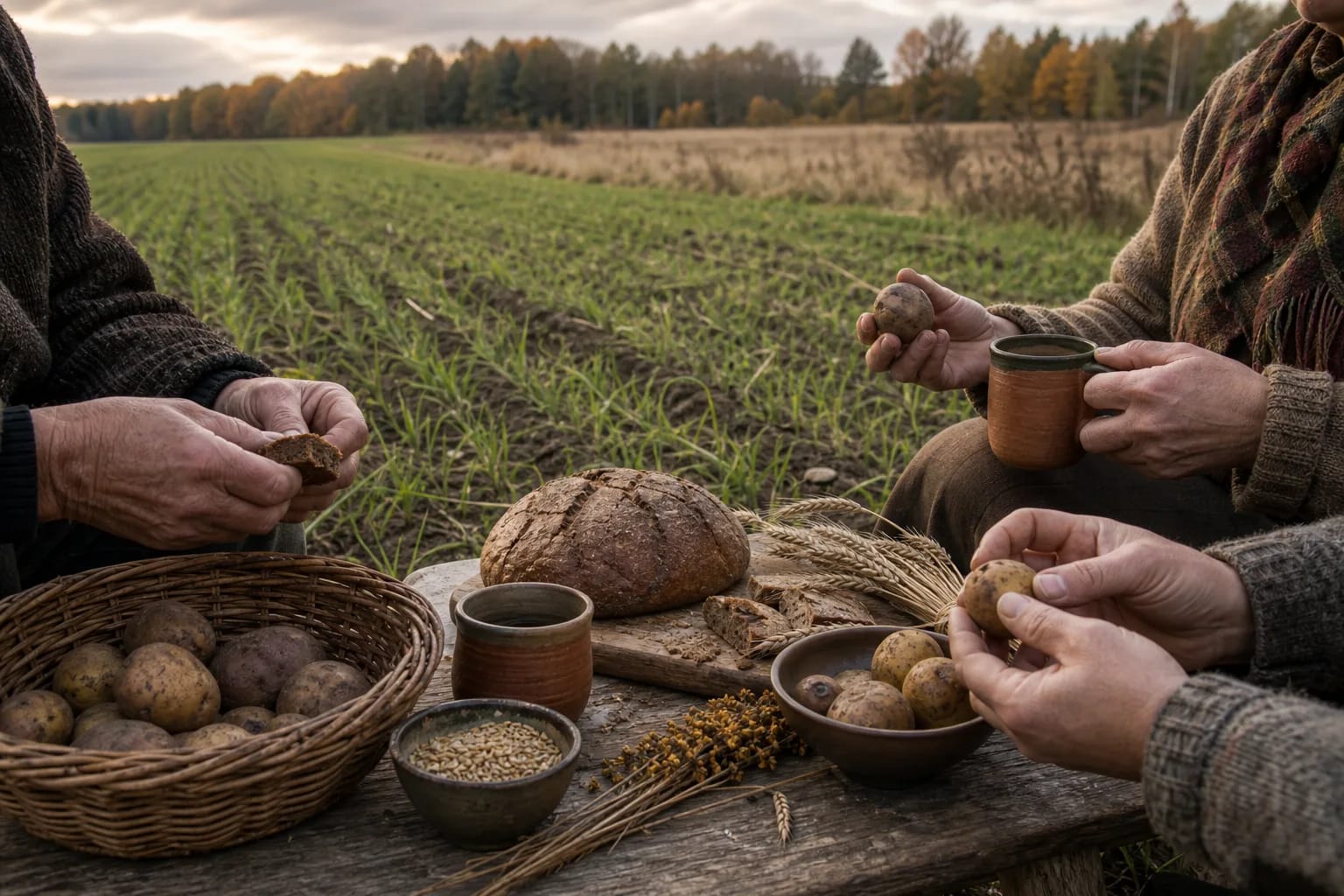
This layer should be read historically. It describes an older ritual order in which harvest, offering, and shared food belonged together. In contemporary culture the lasting meaning is gratitude for harvest and recognition of shared work.
Velinas and the Dark Half of the Year
In interpretations by A. J. Greimas summarized by EKGT, Dagotuves was an important calendar feast in which people hoped for Velinas' help. Velinas is understood here as a ruler of the underground, cold, and dark realm.
The interpretation fits late September: the earth approaches cold, and sprouted grain depends on what happens below the surface. Mykolines naturally leads toward the Velines season, when autumn turns toward themes of the dead and the underworld.
Potato Digging and Autumn Work
Imbrasiene states briefly and clearly that Mykolines were considered the beginning of potato digging in Lithuania. This is a later but very concrete sign of the farm calendar.
Potatoes add to the grain cycle. After summer rye and harvest comes the autumn work of roots: lifting from the ground what grew below the surface. Mykolines therefore means not only sheaves but baskets of earthy potatoes.
Weather Signs on Mykolines
Peasants read Mykolines weather for autumn and winter. Imbrasiene mentions wind direction: a north wind meant a cold winter, a south wind a warmer one.
Such predictions were not entertainment. In late September remaining work still had to be finished, potatoes dug, cold prepared for, and winter crops watched. Weather directly affected household safety.
Main Mykolines customs and meanings
Mykolines customs are not rich in many small domestic rites, but their center is clear: Daga, winter crops, autumn community gatherings, potato digging, and weather signs. It is not a noisy feast but a summing-up of work and season.
September 29. Mykolines are observed on September 29, linked in the Christian calendar with St Michael's Day.
Dagotuves. An older name for the feast is Dagotuves or Daga, tied to winter crops already sprouted by late September.
Mikelis in Lithuania Minor. EKGT notes that the name Mikelis took root in Lithuania Minor.
Autumn sambariai. Older written accounts interpret Dagotuves as autumn communal gatherings at harvest's end.
Historical offering layer. EKGT summarizes older references to offerings of thanks to gods and shared food; today this is read historically, not as a current practice.
Care for winter crops. In A. J. Greimas' interpretation, Dagotuves is connected with hope that Velinas would help sprouted grain endure winter.
Beginning of potato digging. Imbrasiene writes that Mykolines were considered the start of potato digging in Lithuania.
Weather prediction. Wind on September 29 was read for autumn and winter weather: north wind promised a cold winter, south wind a warmer one.
Mykolines: songs, sutartines, and related pages
Mykolines joins harvest ending, winter crops, and the darker part of the year. It therefore connects with grain symbolism, Velines, Zoline, and the chthonic layer of Velinas.
Grain, Rye, and Seeds
Winter-crop sprouts and Dagotuves meaning belong to the broader symbolism of grain and harvest.

Velines
After Mykolines, autumn moves toward the dark season and remembrance of the dead.
Zoline
An earlier harvest and ripening feast leading toward Mykolines' autumn accounting.

Velnias / Velinas
Velinas' underworld and dark-season images help explain the Dagotuves layer interpreted by Greimas.
Mykolines: frequently asked questions
When are Mykolines celebrated?
Mykolines are celebrated on September 29. In the older Lithuanian calendar layer they are connected with Dagotuves or Daga.
What are Dagotuves?
Dagotuves is the name of the September 29 autumn feast linked with sprouted winter crops, harvest thanks, and communal autumn gatherings.
Why are Mykolines connected with winter crops?
By late September winter crops have sprouted. The feast marks both the harvested crop and the beginning of new grain that must survive winter.
What does Mikelis mean?
Mikelis is the name that took root in Lithuania Minor for the September 29 feast connected with St Michael's Day.
Was a goat really sacrificed at Dagotuves?
EKGT, summarizing older accounts and researchers, mentions a historical offering layer. Today it is understood as testimony of older records, not a present custom.
Why are Mykolines linked with Velines?
September 29 stands at the darkening part of the year. Greimas's Velinas and winter-crop interpretation naturally leads toward autumn remembrance of the dead.
What work began at Mykolines?
Imbrasiene states that potato digging in Lithuania was considered to begin at Mykolines, making it a concrete autumn farm-calendar marker.
How was winter predicted on Mykolines?
People judged winter by the wind on September 29: north wind promised a cold winter, south wind a warmer one.
Do Mykolines duplicate the autumn equinox?
Not exactly. The equinox is an astronomical threshold, while Mykolines and Dagotuves on September 29 center on harvest, winter crops, and community meals.