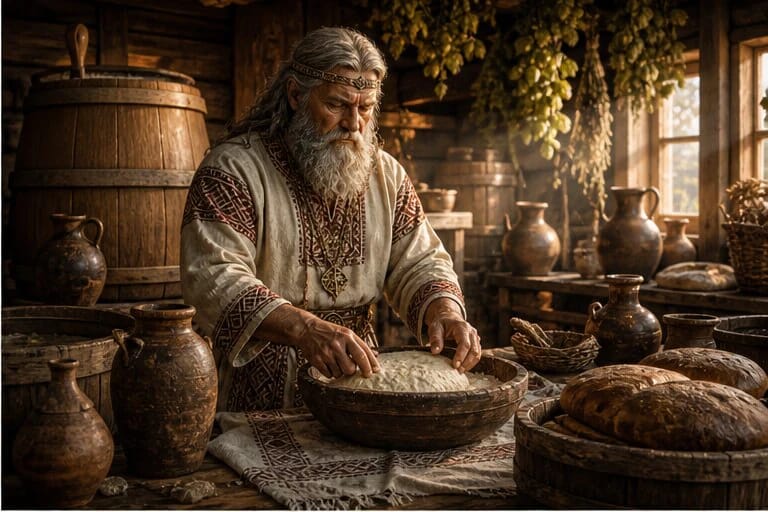
- Type
- God
- Domain
- Leaven, fermentation, beer, bread, ritual drink
- Source status
- in late sources
Raugų Žemėpatis, Raugupatis, Ruguczis
Who is Rūgutis?
Rūgutis, also called Raugų Žemėpatis or Raugupatis, is a Lithuanian deity known from sixteenth-century sources. Maciej Stryjkowski records him as Ruguczis and describes him as a god of fermented foods.
The name Rūgutis comes from the verb rūgti, 'to ferment' or 'to sour', so his field is clear: leaven, fermentation, and everything transformed by fermentation into a new product, including beer, sour milk, fermented vegetables, and bread starter.
Leaven and fermentation as wonder
For an ancient person, fermentation looked like a mysterious, almost supernatural transformation: beer arose from grain and water, and risen bread from dough. A process that could not be seen or fully controlled naturally acquired a divine guardian.
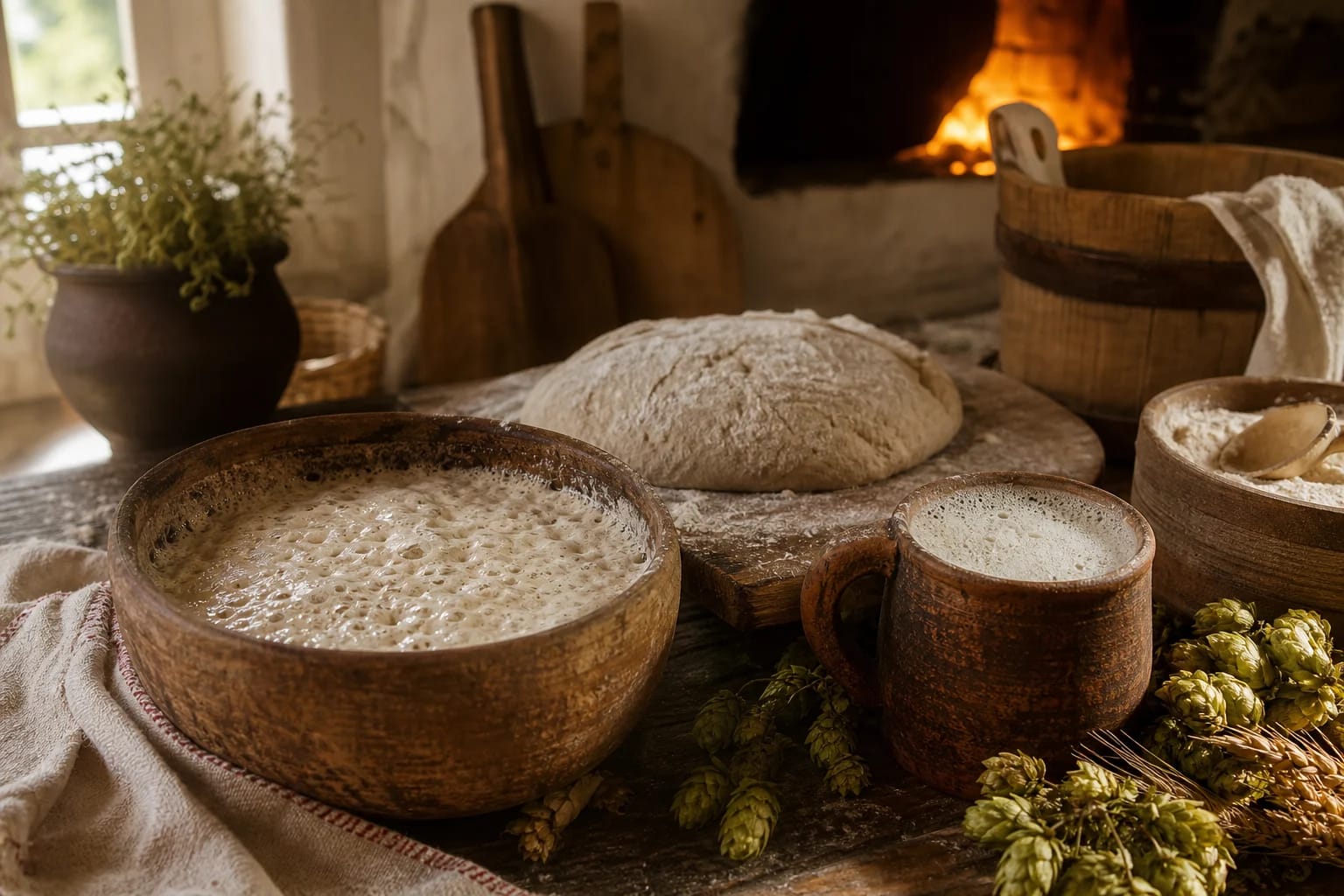
Rūgutis embodies that transformation. He is connected with leaven, the living substance that 'raises' dough and 'ripens' drink. His sphere is not plain food but the conversion of food into something new and valuable.
Beer and ritual drink
In Baltic culture, beer had not only everyday but also religious meaning: it was drunk at harvest festivals, offerings, and communal feasts. Sources often mention beer in rites dedicated to gods.
Rūgutis is therefore indirectly connected with the whole world of ritual drink. Through him, the making of leaven and beer receives a sacred dimension: it is not just household work, but an action accompanying festivals and offerings.
How should Rūgutis be read?
Rūgutis is among the more understandable names in Stryjkowski's list because the etymology, rūgti, directly supports the function. The link with Raugupatis also shows that the idea of a fermentation deity is known from more than one source.
Even so, like other late deities, Rūgutis should be presented cautiously. We know his field but not developed myths or detailed rites. He is a name with a clear function, showing how deeply daily food and drink were given meaning.
Rūgutis today
Rūgutis helps explain the importance of leaven, beer, and bread in Lithuanian culture, not only as food but as a remarkable transformation worthy of divine protection. He is a strong example of everyday sacredness.
Rūgutis is best read with Žemininkas, whose harvest offerings involve beer, and Bubilas, whose honey leads toward mead. Together they show how food, drink, and harvest were woven into a religious worldview.