- Type
- Goddess
- Domain
- Hazel trees, nuts, trees
- Source status
- attested in late sources
Who is Lazdona?
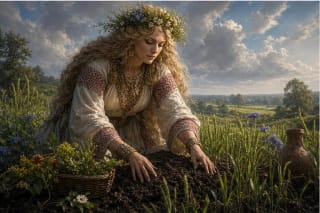
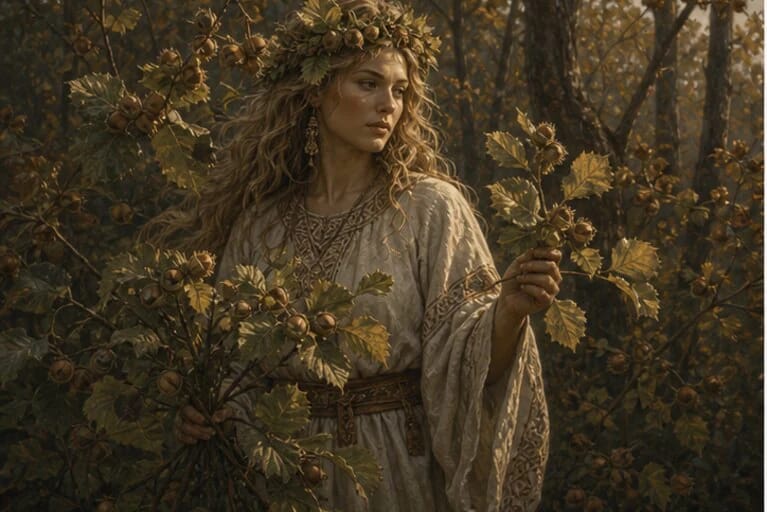
Lazdona is a goddess of hazel trees and hazelnuts known from Jan Łasicki's list of Samogitian gods, around 1582. Her name comes from lazdynas, hazel, so her domain is clear: the hazel tree and its fruit, the hazelnut.
Lazdona belongs to the layer of plant and tree guardians. This is one of the cases where a specific plant useful to humans gains its own deity in mythology, just as other trees or crops have their guardians.
Hazel and nuts in culture
The hazel was a meaningful plant in Lithuanian culture. Its nuts were food and part of hospitality, while hazel branches were used in divination, protection, and various rites. Gathering nuts in autumn was both work and recreation.
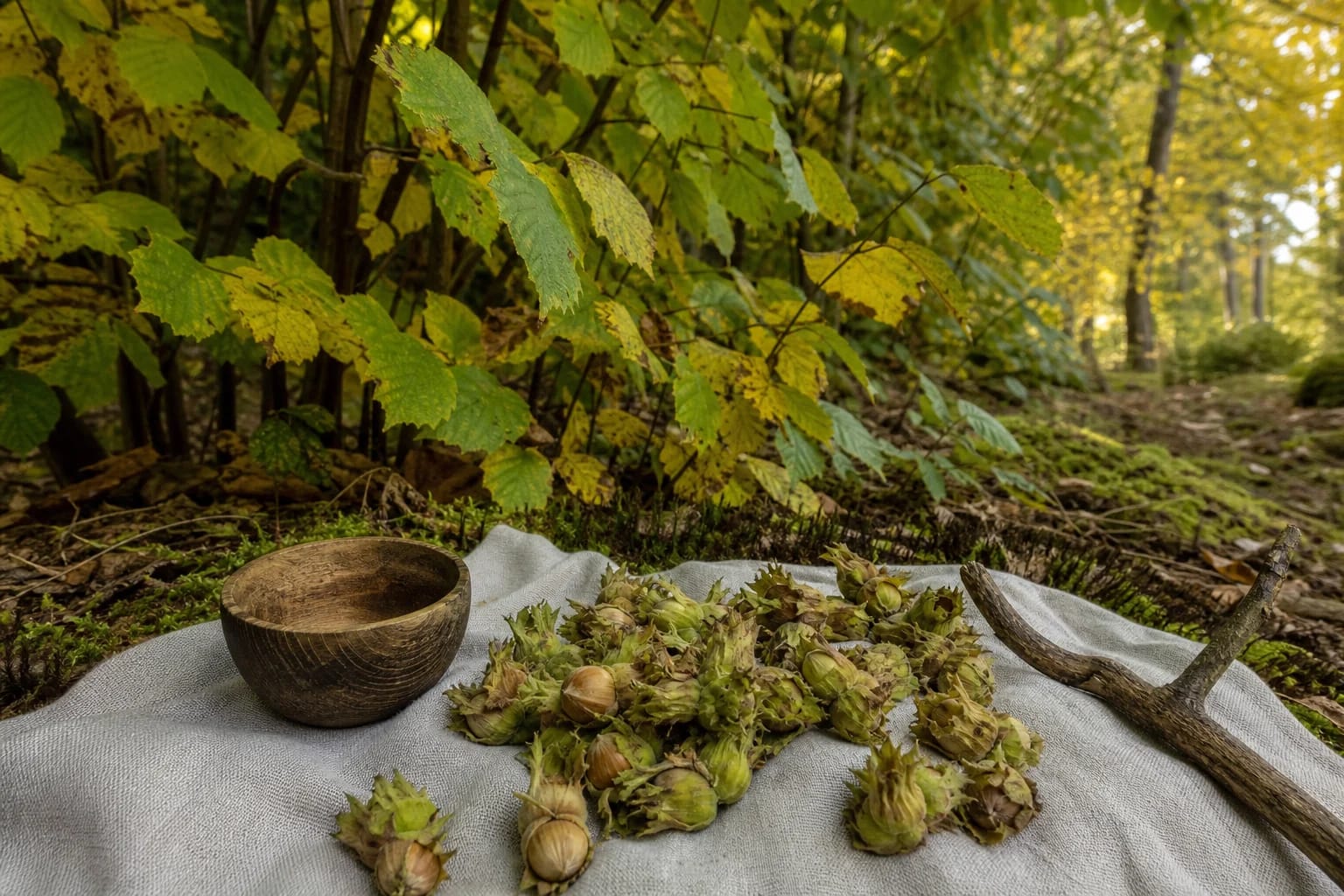
As a hazel goddess, Lazdona embodies this usefulness. Her protection may have been connected with a good nut harvest and with the tree itself, which had both practical and symbolic value.
Plant deities in Łasicki's list
Łasicki's list includes other beings connected with specific plants or natural objects alongside Lazdona. Many researchers think these were not major gods but mythical beings worshipped by peasants, or even objects considered sacred.
This view helps interpret Lazdona. She was probably not a high deity but the guardian of a sacralized plant, the hazel. That reflects a broader Baltic view in which individual trees and plants could have a spiritual dimension.
How should Lazdona be read?
Lazdona, like other goddesses in Łasicki's list, must be presented cautiously. Some researchers treat Łasicki's work as an important source for Samogitian mythology, while others see it as almost unreliable, so its names need qualification.
Lazdona should be presented as a name with a clear domain, the protection of hazels and nuts, but without an elaborated mythology. The honest approach is to show what the source says while remembering its limits.
Lazdona today
Lazdona helps show that in the Baltic worldview even a single useful plant could have its own guardian. She reveals a close human bond with nature, in which a tree is not only a resource but also a sacred object.
Lazdona is best read together with Medeina, the wild forest, and plant symbolism in Lithuanian folklore. In that context, her modest but concrete image gains wider meaning.