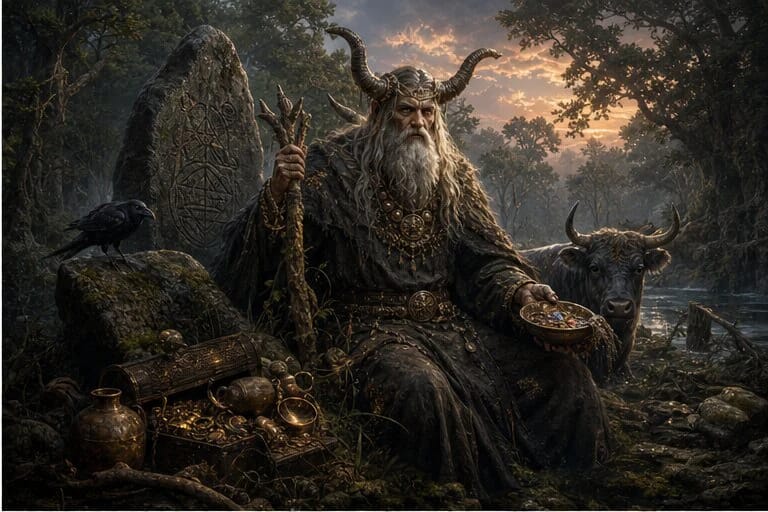
- Type
- God
- Domain
- Underworld, the dead, livestock, wealth, magic, smithcraft, transformations
- Source status
- folkloric
Vėlinas, kipšas, nelabasis
Who is Velnias in Lithuanian mythology?
In Lithuanian folklore and mythology, velnias is a chthonic being, also called kipšas or nelabasis. People believed he lived in forests, marshes, caves, piles of branches, under stones or turf, and in the underworld. He is the most frequently encountered character in Lithuanian legends.
Two layers must be distinguished: the old pre-Christian underworld god, whose prototype is linked with the name Vėlinas and with vėlės, the souls of the dead, and the later Christianized devil identified with Satan. The first is a powerful force of nature and the underworld; the second is a tempter and frightener of humans.
Vėlinas: a chthonic god beneath the devil's mask
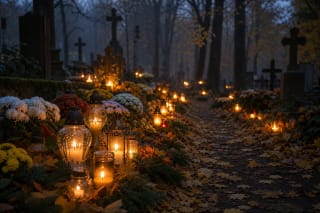
In old myths velnias is considered an underworld spirit, sometimes a marsh god, a smith, and, according to Algirdas Julius Greimas, even a war god. He is closely connected with the world of the dead, so his name is etymologically compared with vėlė, the soul of a dead person.
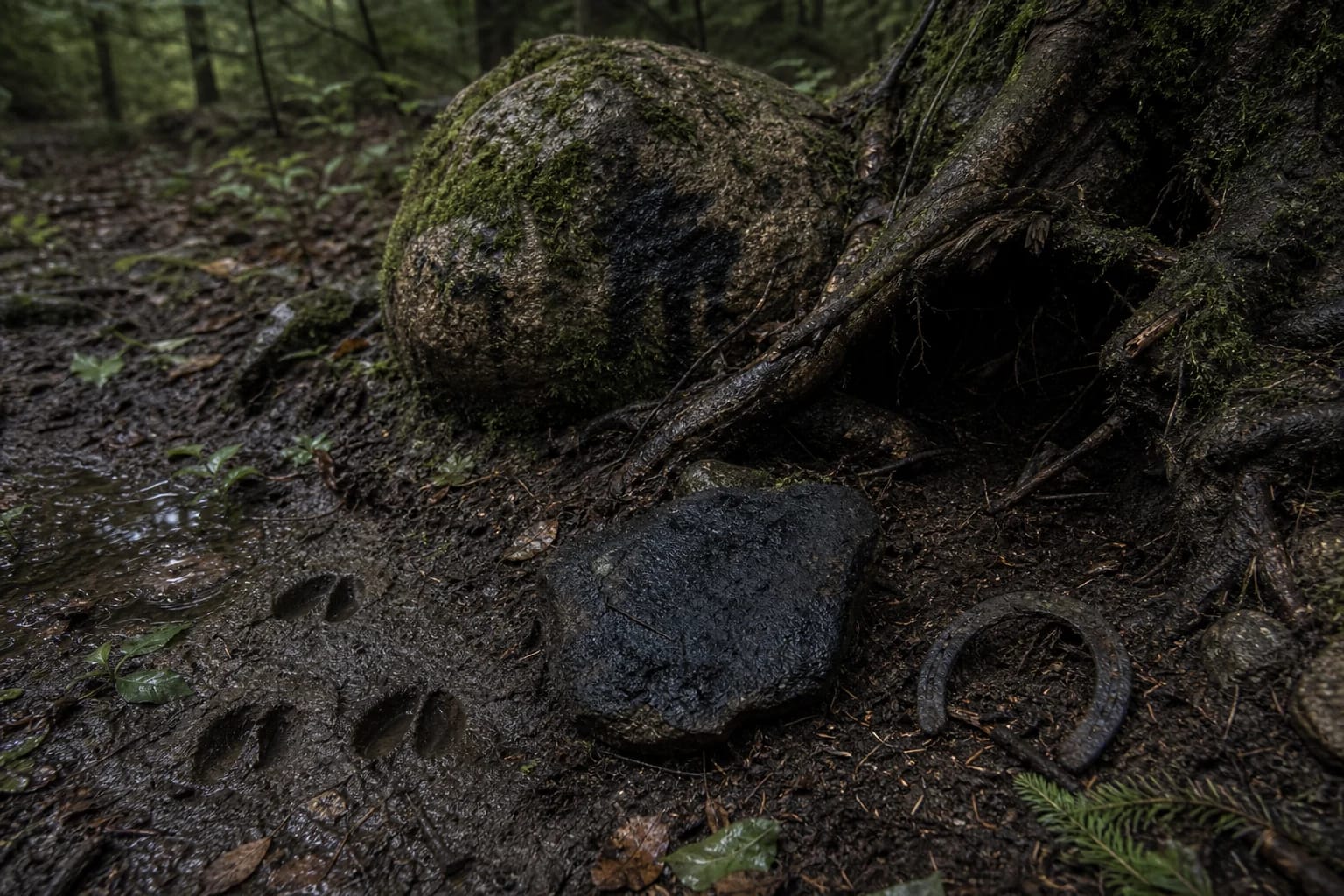
In older layers velnias also has features of a nature and earth deity: he guards water and enchanted treasures hidden in the ground, helps the unfortunate and wronged, punishes traitors, and protects livestock. Part of his image is close to Germanic Odin and Slavic Veles.
Velnias and Perkūnas: the battle of sky and underworld
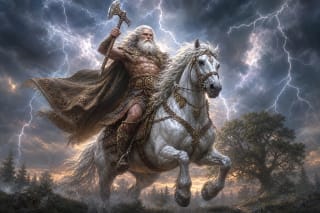
One of the strongest themes in Lithuanian legends is the struggle between Perkūnas and Velnias. Velnias hides under a stone, inside a tree, in water, in an animal, or in a human setting, while Perkūnas chases him and strikes with lightning. The motif explains why lightning hits trees, stones, or buildings.
Mythologically this is the opposition of sky and underworld, dry fire and the damp chthonic realm. According to Gintaras Beresnevičius, this opposition survived even in Christianized folklore, and the old underworld smith god Teliavelis also draws close to velnias in folklore.
Velnias' forms and abilities
Velnias can change shape: he appears as a bird, such as a crow, raven, or duck; as an animal, such as a cat, fox, hedgehog, bull, or horse; as a reptile, such as a snake or grass snake; or as a small man with a green cap, sometimes as a human with a tail, one nostril, or chicken feet.
As a powerful ritual specialist or craftsman he performs difficult tasks, building bridges and carrying stones through the air like wind. In some etiological legends velnias even takes part in creating the world: he both helps and hinders God, imitates him, and uses magic and unusual powers.
Velnias as troublemaker and tempter
In other legends, especially Christianized ones, velnias is shown as a harmful figure: he tempts people to drink, helps them hang themselves, and strangles humans. With the establishment of Christianity he was identified with Satan and became a persecutor and frightener of people.
It was believed that velnias acts mostly after sunset and retreats to the underworld when the rooster crows. At that point the familiar form became fixed: half animal and half human, black, with horns, horse hooves, and a tail.
Velnias today: how should this image be read?
The Velnias page helps show that the Christian devil and the old Baltic underworld god are not exactly the same. Beneath the late mask of the frightener lies a deeper image of chthonic power, the world of the dead, and the riches of nature.
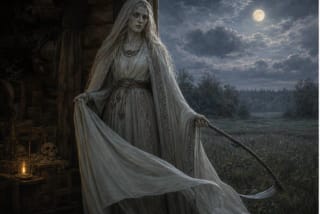
Velnias is best read together with Perkūnas, his opponent, with Giltinė and vėlės, the field of death, and with Teliavelis the smith. This reveals the whole chthonic layer of Lithuanian mythology, rather than only a Christianized monster.