- Type
- God
- Domain
- Lakes, standing water, water offerings
- Source status
- attested in late sources
Who is Ežerinis?
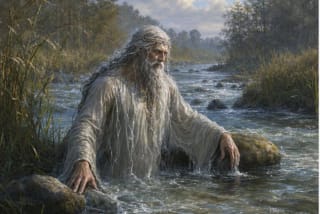
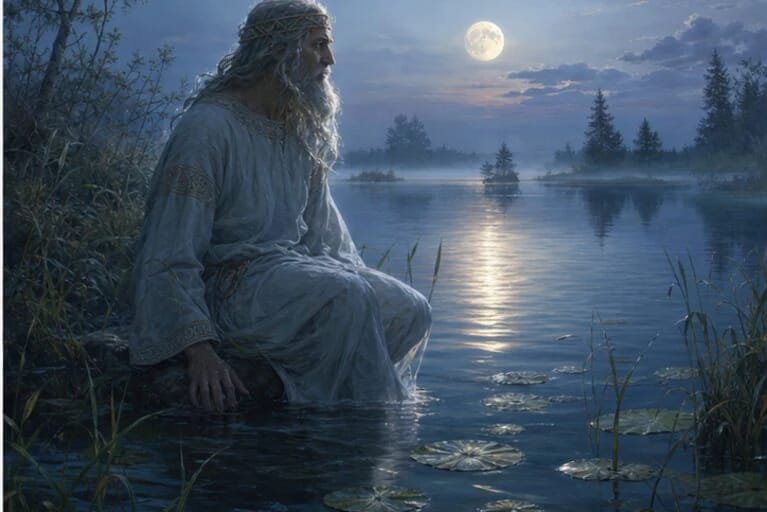
Ežerinis is the Lithuanian god of lakes: a guardian of standing water, lakes, and their depths. His name comes directly from ežeras, lake, placing him among local water deities.
Ežerinis was first mentioned in the sixteenth century by Jan Łasicki, and later, in the mid-nineteenth century, by J. Kreczyński. This suggests that the image of a lake deity persisted in Lithuanian culture and was recorded more than once.
Ežerinis in folklore
Legends recorded from the late nineteenth century onward preserve stories about Ežerinis as a mythical being living in a lake. This shows the name moving from old lists into living folk tradition.
In the Lithuanian worldview the lake was an ambiguous space: beautiful and calm, but also deep, mysterious, and able to drown. Ežerinis embodies that power. He is the master of the lake and must be respected.
Offerings to the lake
A custom of offering animals to the mythical being living in a lake survived into the twentieth century. This is one of the most important testimonies for Ežerinis because it shows that belief in a water deity was not only a story but had real ritual practice.
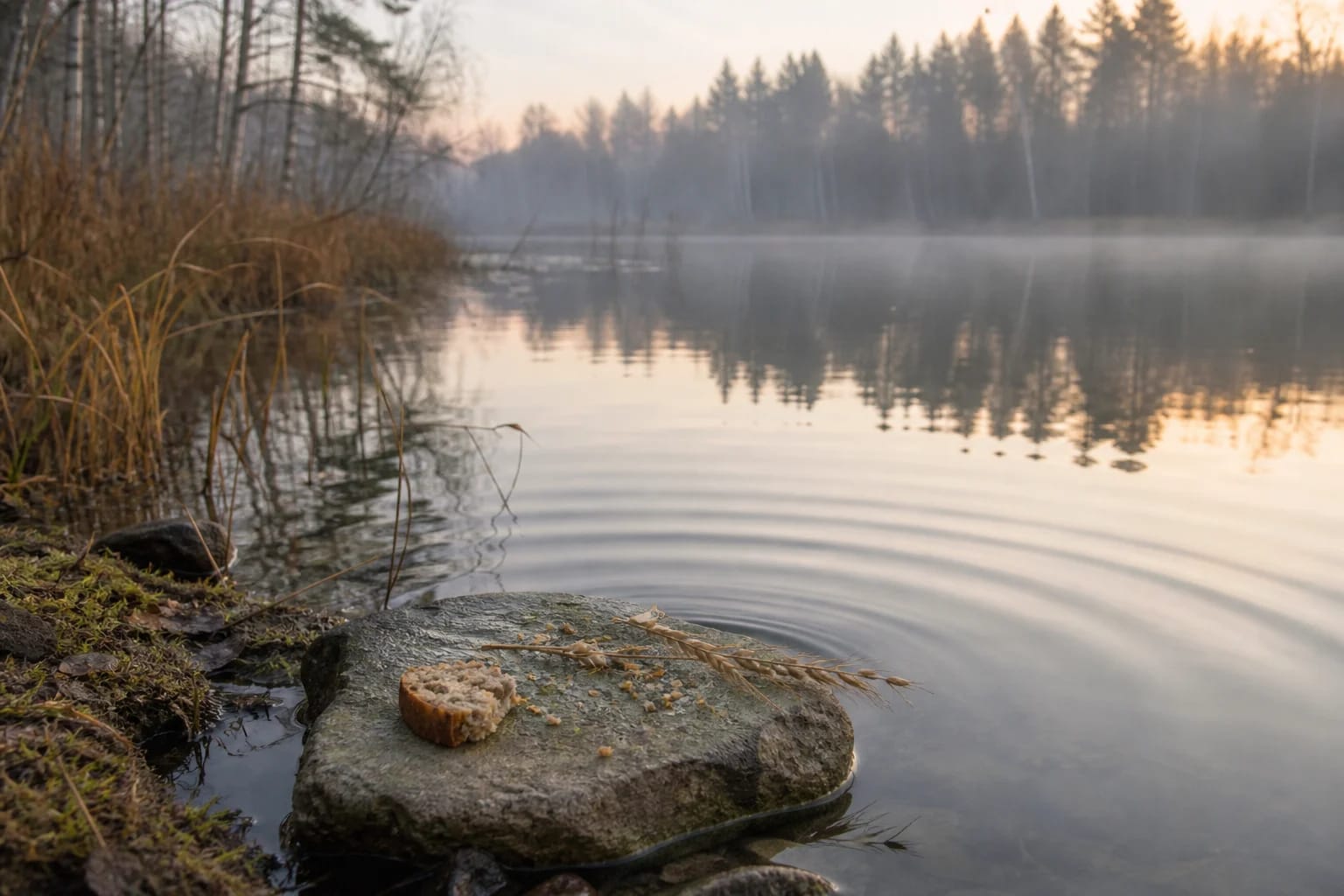
The logic of lake offerings is straightforward: for water to be favorable, not to drown people, to give fish, and not to flood, it had to be thanked. Ežerinis thus becomes a power with whom the community maintained a relationship of exchange.
Ežerinis among water deities
Ežerinis is best read together with Upinis Dievas. If Upinis rules the flowing water of rivers, Ežerinis rules the standing water of lakes. Together they cover the world of fresh water.
The distinction matters because water types had different characters in Lithuanian mythology. Flowing water is associated with movement and boundaries; standing water with depth, mystery, and resident beings.
Ežerinis today
Ežerinis helps explain the meaning of lakes in Lithuanian culture, in a country with thousands of them. He recalls the idea that every larger body of water could have its own master and its own rites.
Ežerinis should still be read cautiously: he is known from late lists and folklore, so his image is not fully reconstructed. Even so, the idea of a lake god and the custom of offerings to a lake are firmly attested.