- Type
- God
- Domain
- Moon, night light, time cycles, heavenly marriage
- Source status
- folkloric
Mėnulis
Who is Mėnuo in Lithuanian mythology?
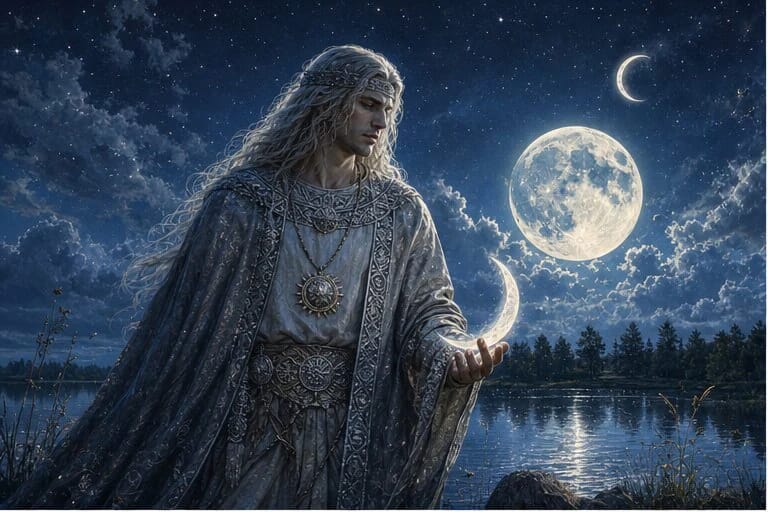
Mėnuo, or Mėnulis, is the Lithuanian deity of the moon, ruler of the night sky and counterpart to the daytime Sun. Unlike many cultures where the moon is feminine, Lithuanian folklore usually treats Mėnuo as male and pairs him with Saulė.
Mėnuo is closely tied to timekeeping: the changing phases of the moon, jaunatis, priešpilnis, pilnatis, and delčia, were a major measure in the folk calendar. Many works and charms were timed by the lunar phase.
The heavenly marriage: Mėnuo, Saulė, and Aušrinė
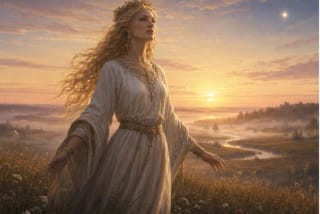
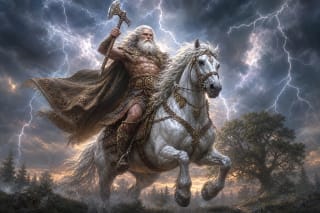
The best-known myth of Mėnuo is the story of a marriage among heavenly bodies. Mėnuo marries Saulė, but soon falls in love with the young Aušrinė and becomes unfaithful. Perkūnas punishes him for it.
This is an etiological tale: it explains why the Moon constantly changes shape. Perkūnas' blow or sword corresponds mythologically to the waning moon and crescent shape, so the heavenly punishment can be seen night after night.
Mėnulis and time cycles
The lunar phases were a practical clock and calendar in Lithuanian culture. The new moon was considered suitable for beginnings and growth, while the waning moon fit work connected with decrease or ending; sowing, hair-cutting, and even some healing acts were timed by the moon.
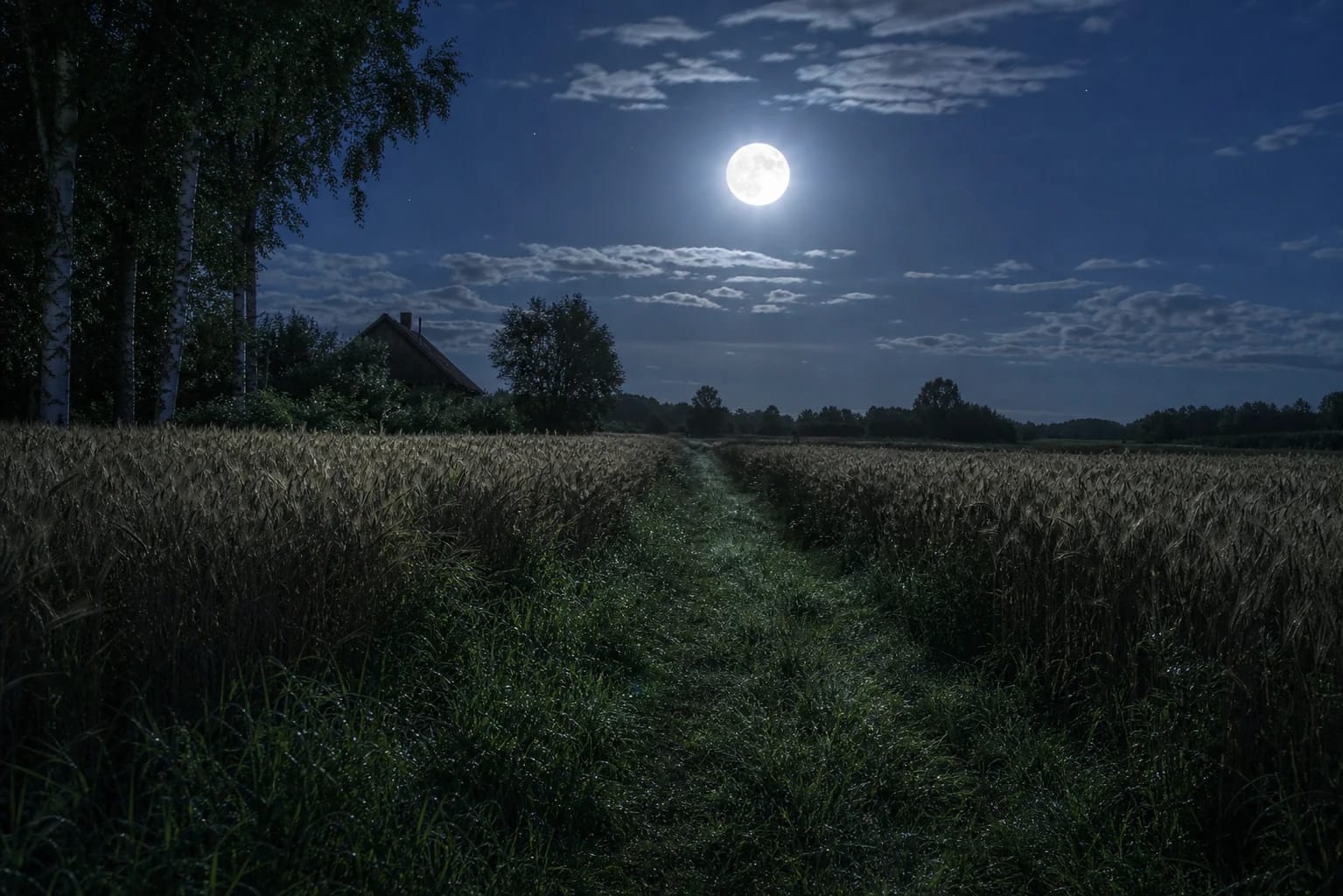
Prayers and small requests were spoken to the young moon for health, luck, and money. This custom shows that Mėnuo was not merely a celestial body, but a living power responsive to humans.
Mėnuo in the heavenly family
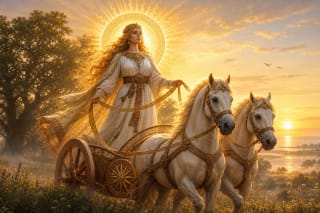
Mėnuo is best understood as a member of the heavenly family: Saulė is his wife, Aušrinė and Vakarinė are star goddesses connected with them, and Perkūnas is the force that maintains order. Together they form a dramatic sky narrative.
In this family Mėnuo is an ambiguous figure: a beautiful silver ruler of night, but also an unfaithful, punished husband. This image gives him human traits and explains his endless change.
Mėnuo today
The myth of Mėnuo is one of the most poetic Lithuanian sky stories and remains alive in songs, literature, and art. It easily shows how observation of nature, the changing phases of the moon, becomes a drama of love, infidelity, and punishment.
Mėnuo is best read together with Saulė, Aušrinė, and Perkūnas. Only the whole heavenly family reveals how Lithuanians interpreted night light, the wheel of time, and the order of the sky.