- Type
- Goddess
- Domain
- Bees, family, abundance, household economy
- Source status
- in late sources
Who is Austėja?
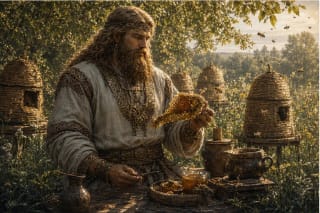
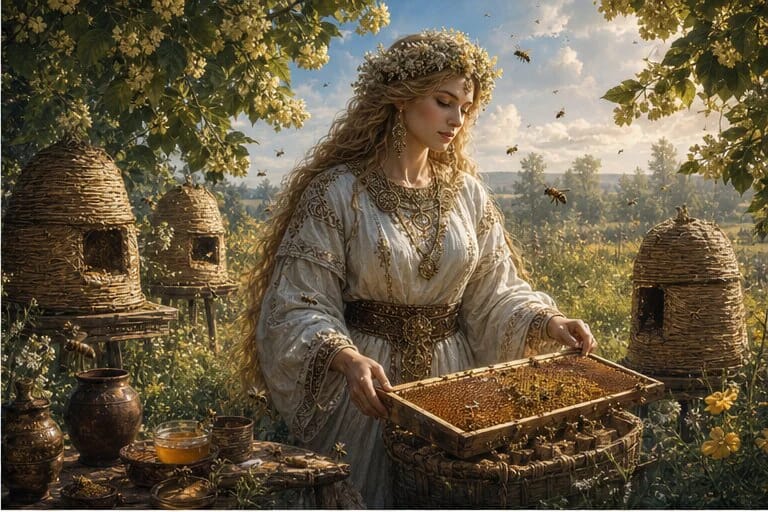
Austėja is a Lithuanian bee goddess mentioned in sixteenth-century sources, especially in works by Maciej Stryjkowski and Jan Łasicki that list gods and mythical beings worshipped by Samogitians. She belongs to the layer of household and nature guardians, not to the high sky gods.
Austėja's name is associated with the verb austi, 'to weave', and through it with the work of bees building honeycombs. Beekeeping held a special, almost sacred status in Baltic culture, so a goddess who guarded bees was an important figure of the everyday economy.
Austėja and the sacredness of bees
In the Lithuanian worldview, bees were not ordinary insects. They were treated as clean, sacred, almost human beings. The bond between beekeepers was called bičiulystė, a word of friendship rooted in shared beekeeping.
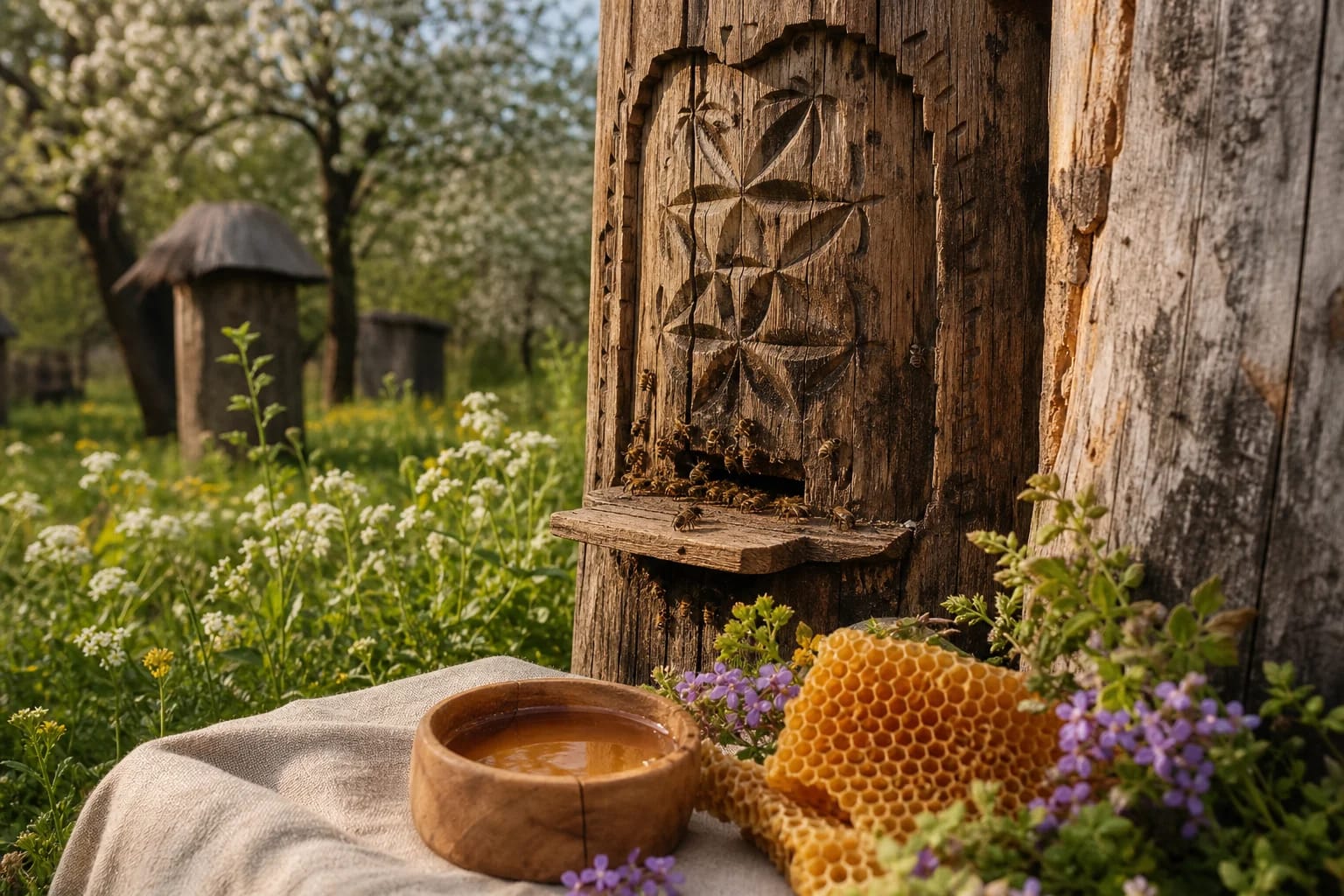
As guardian of bees, Austėja embodies this sacredness. Her field includes the hive, honey, wax, and the swarm: not only economic goods, but signs of order, work, and community.
Austėja and Bubilas: a bee pair
Algirdas Julius Greimas set Austėja beside the bee god Bubilas and argued that they form an oppositional pair. If Austėja is connected with the maternal, creative principle of bees, Bubilas was compared by Greimas with the drone.
Such a pair suggests that the bee world was imagined mythologically as a small cosmos with its own female and male principles. Swarming and combs become images of life and abundance, close to the growth of a family.
Bees and family abundance
Austėja is connected not only with bees but also with family abundance. A bee swarm, growing quickly and living in a harmonious community, became a sign of family prosperity and fertility.
Through this link Austėja gains a wider meaning: she does not only tend the hive, but symbolically guards household abundance. In traditional imagination, the success of bees and the happiness of the family often stand together.
Austėja today
Austėja is popular in modern Baltic-oriented spirituality and is also a common Lithuanian female given name. She helps explain the exceptional place of beekeeping and the sacredness of bees in Lithuanian culture.
Austėja should be read cautiously: she is known from late sixteenth-century lists, and some of her traits are later scholarly interpretations, especially Greimas' work. Still, her connection with bees, honey, and abundance is the clear core of her image.