- Type
- Goddess
- Domain
- Knowledge, magic, transformations, liminal states
- Source status
- folkloric
raganius, sorceress
Who is Ragana in Lithuanian folklore?
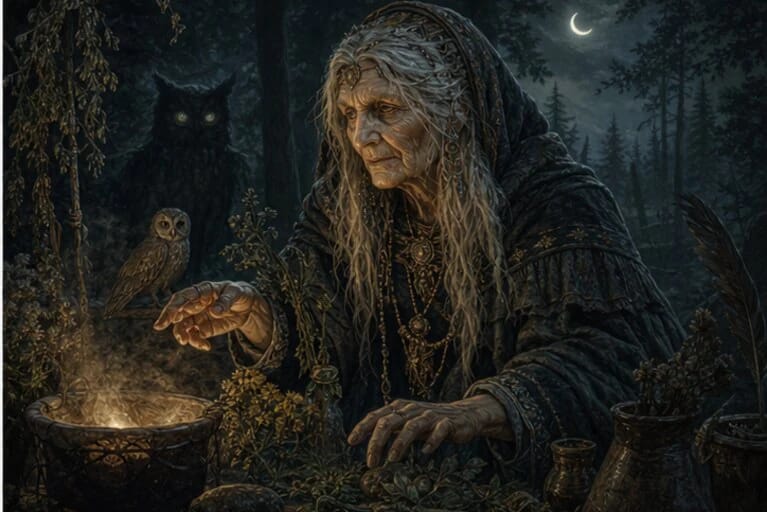
Ragana is a human being said to have made an alliance with evil forces, to serve them, and therefore to possess special powers: casting spells, flying, changing into an animal or object, and turning one thing into another. Women were more often considered raganos, men more rarely raganiai.
It is important not to confuse the folkloric ragana with the modern fairy-tale or film stereotype. In Lithuanian tradition, ragana is first of all a figure of knowledge, magic, transformation, and liminal states, not merely an evil old woman.
Ragana's name: is she a seer?
The name ragana is often linked with the verb regėti, to see or foresee. According to this etymological proposal, ragana may originally have meant a seer, someone who knows secrets, the future, and a person's fate.
This explains why ragana in folklore does not only harm, but also provides information: from certain signs she judges a person's fate or future events. Knowledge and power are inseparable here.
Ragana's powers and transformations
People believed that ragana could influence, usually harmfully, other people, nature, and livestock: she could take milk from cows, damage the harvest, or cause a storm. The motif of transformation is especially strong: ragana turns into an animal, object, or another human being.
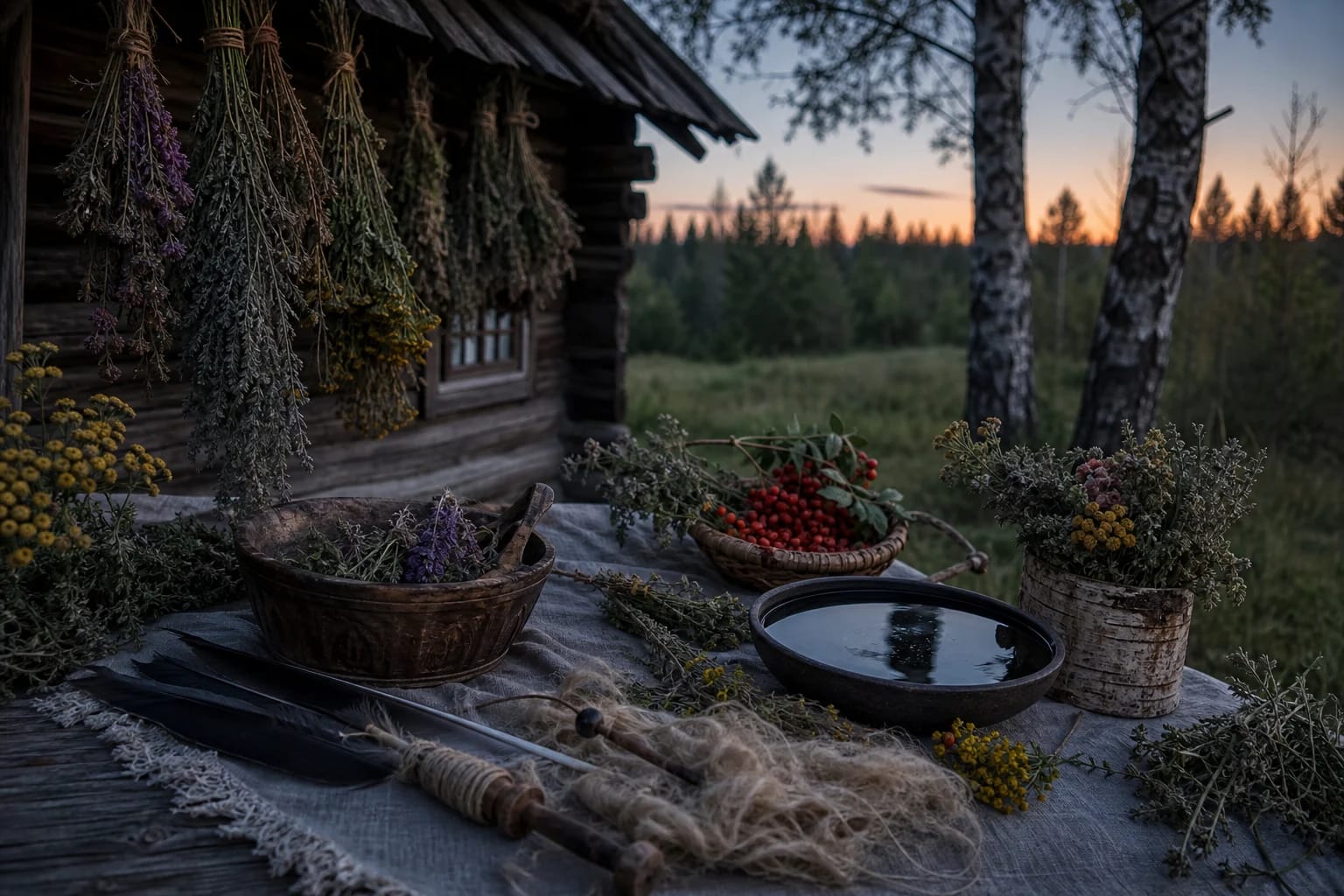
These images are based on superstition and belong to the lowest, non-ritual level of mythology. Even so, they reveal how rural communities explained misfortune, illness, and events that could not otherwise be understood.
Witch persecutions
Because of the mistaken belief in the existence of witches, secular and ecclesiastical persecutions of people accused of witchcraft were carried out from the Middle Ages to the second half of the eighteenth century. These witch trials also affected Lithuania, where courts heard cases involving accusations of magic.
This historical layer matters: the image of ragana is not only folklore, but also the history of real people, most often women, being persecuted. Ragana should therefore be read both as a mythological figure and as a social phenomenon.
Ragana among other female images
Ragana is meaningfully compared with laumė and other female beings. The difference is essential: laumė is a mythical being of non-human origin, while ragana in folklore is usually a human who has gained supernatural powers.
Belief in witch-like powers is characteristic of many periods and cultures, for example the ancient Greek Medea, and its relics are abundant in the folklore of many countries. This shows that Lithuanian ragana belongs to a broader human circle of images.
Ragana today
Ragana's image today helps explain how rural communities interpreted evil, misfortune, and mysterious knowledge. Many place names with the root ragan- show how widely this image spread.
Witchcraft has also been revived in modern culture, where ragana has become a popular figure in literature and art. The authentic Lithuanian image, however, is more complex: it joins knowledge, power, fear, and a real history of persecution.