- Type
- God
- Domain
- Bees, honey, beekeeping
- Source status
- in late sources
Babilas, Bubilos
Who is Bubilas?
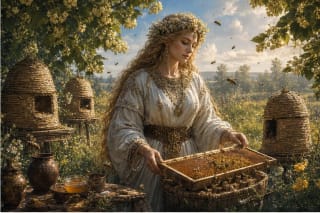
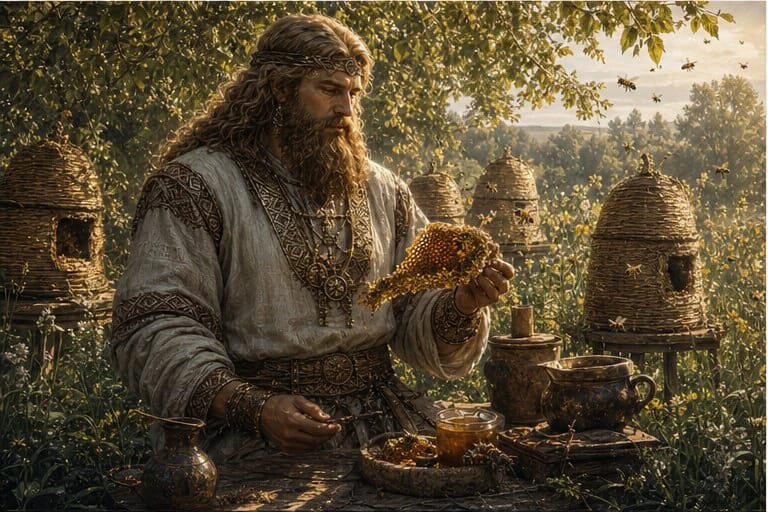
Bubilas, also recorded as Babilas, is a Lithuanian bee god mentioned in the sixteenth century by Maciej Stryjkowski and Jan Łasicki. He belongs to the layer of household and nature guardians connected with beekeeping, one of the most valued Baltic occupations.
In Stryjkowski's list of gods he appears as a god of bees and honey, Bubilos. This shows that the success of bees was understood not only as an economic matter, but as a field with its own divine guardian.
Honey offerings to Bubilas
Honey was offered to Bubilas so that bees would swarm better. The offering reveals a logic of exchange: part of the honey is returned to the god so that he may ensure a richer future yield and a healthy, abundant swarm.
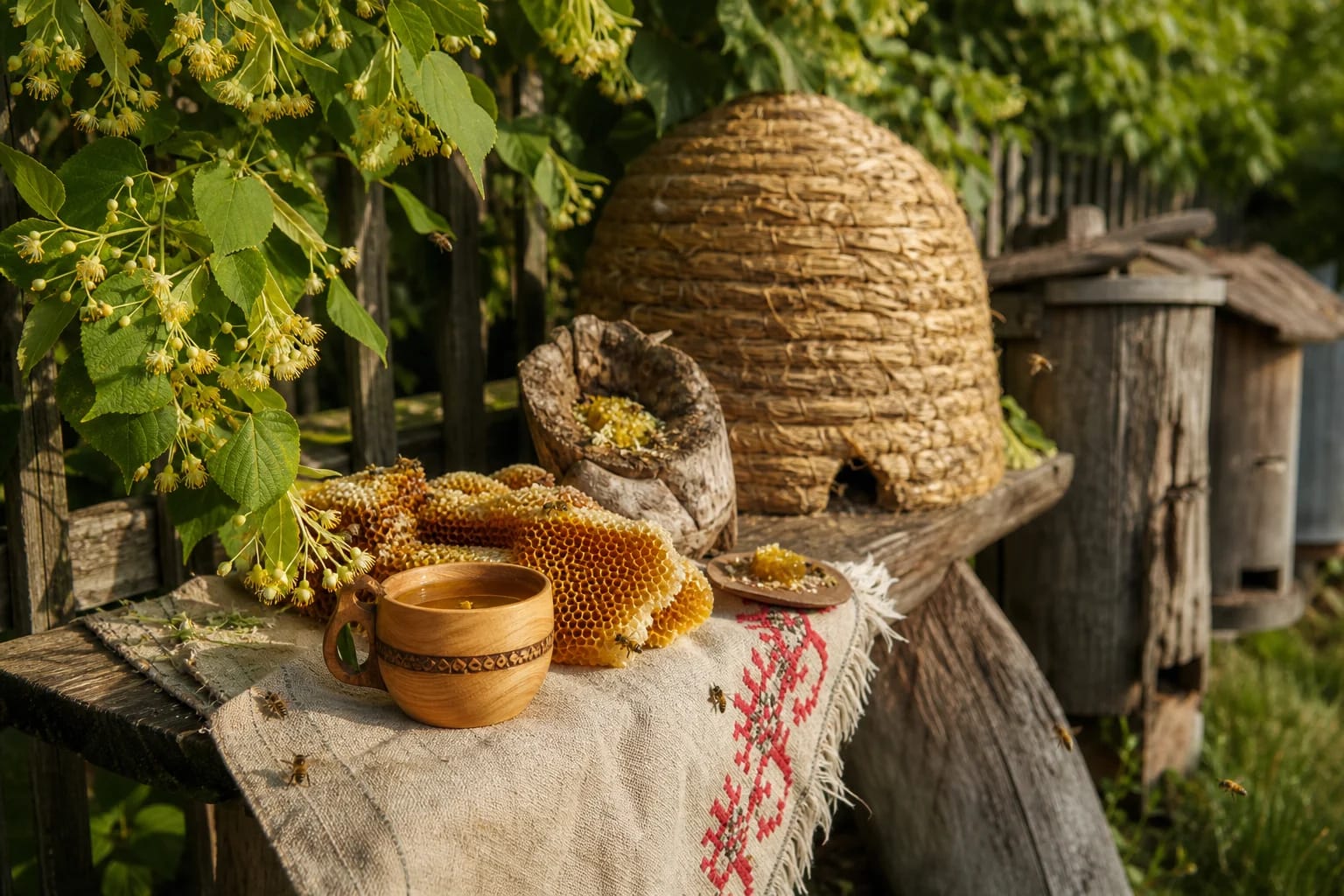
This custom belongs to the wider sacred tradition of beekeeping, in which bees were treated as holy and their care as special, almost ritual work. Bubilas was the figure on whose favor the hive's success depended.
Bubilas and Austėja
Algirdas Julius Greimas compared Bubilas with the drone and argued that he forms an oppositional pair with the bee goddess Austėja. If Austėja is connected with the female, creative principle of bees, Bubilas represents the male side.
Such a pair suggests that the bee world was imagined mythologically as a small cosmos with male and female principles. Together Austėja and Bubilas guard the whole cycle of bee life, from swarming to honey.
Honey, mead, and bičiulystė
Bubilas' field, honey and wax, included valuable multipurpose goods: honey was used for food and for ritual drink such as mead, while wax was used for candles. The bee god therefore indirectly touches festivals and rites.
Beekeeping also created social bonds: people who kept bees together were called bičiuliai. As guardian of bees, Bubilas stands at the center of this tradition of work, abundance, and community.
Bubilas today
Bubilas helps explain the exceptional place of beekeeping and the sacredness of bees in Lithuanian culture. Together with Austėja, he shows that even specific branches of the rural economy could have divine guardians.
Bubilas should be read cautiously: he is known from late sixteenth-century lists, and the pairing with Austėja is Greimas' later interpretation. Still, his connection with bees, honey, and swarming is the clear core of his image.