- Type
- Goddess
- Domain
- Domestic fire, hearth, family protection, care of sacred fire
- Source status
- folkloric
Gabieta, Gabjauja, Gabjaujis, Gabjaujė, Ponike Gabija
Who is Gabija in Lithuanian mythology?
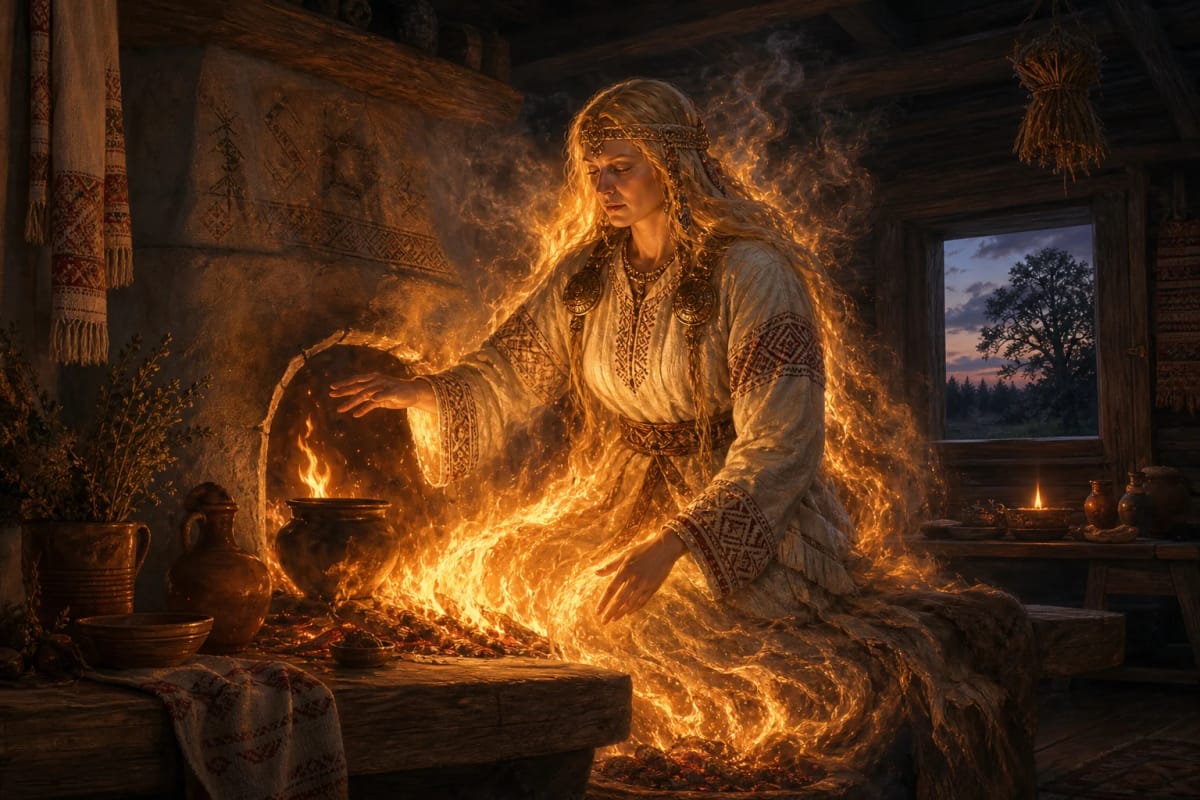
Gabija is the Lithuanian guardian of domestic fire, the hearth, and sacred flame. She is not the fire of storm or war: her world is the home, stove, embers, ashes, bread, everyday family safety, and respectful treatment of flame.
In folklore, fire is often understood as a living being. It must be fed, put to bed, covered, not insulted, and not dirtied. Gabija therefore helps explain an old household religion in which sacredness appears not only at sanctuaries, but also beside the daily hearth.
Gabija matters because she joins practical domestic life with sacred meaning. Fire warmed the house, cooked food, baked bread, and protected the home, but it could also destroy everything if treated carelessly.
Gabija's name and name variants
Gabija's name is usually explained through the Lithuanian tradition of a fire guardian. Sources and folklore recordings preserve several close names and forms of address: Gabija, Gabieta, Gabjauja, Gabjaujis, Gabjaujė, and sometimes the respectful address Ponike Gabija.
These variants do not necessarily mean separate deities. More often they reflect regional, linguistic, or recording differences. The core theme remains the same: household fire must be cared for as a dignified, living, and dangerous power.
Gabija and the household hearth
Gabija's most important place is the hearth. In the old village world, the hearth was not just a technical part of the kitchen. It was the center of the home, around which family, food, warmth, work, storytelling, and daily order gathered.
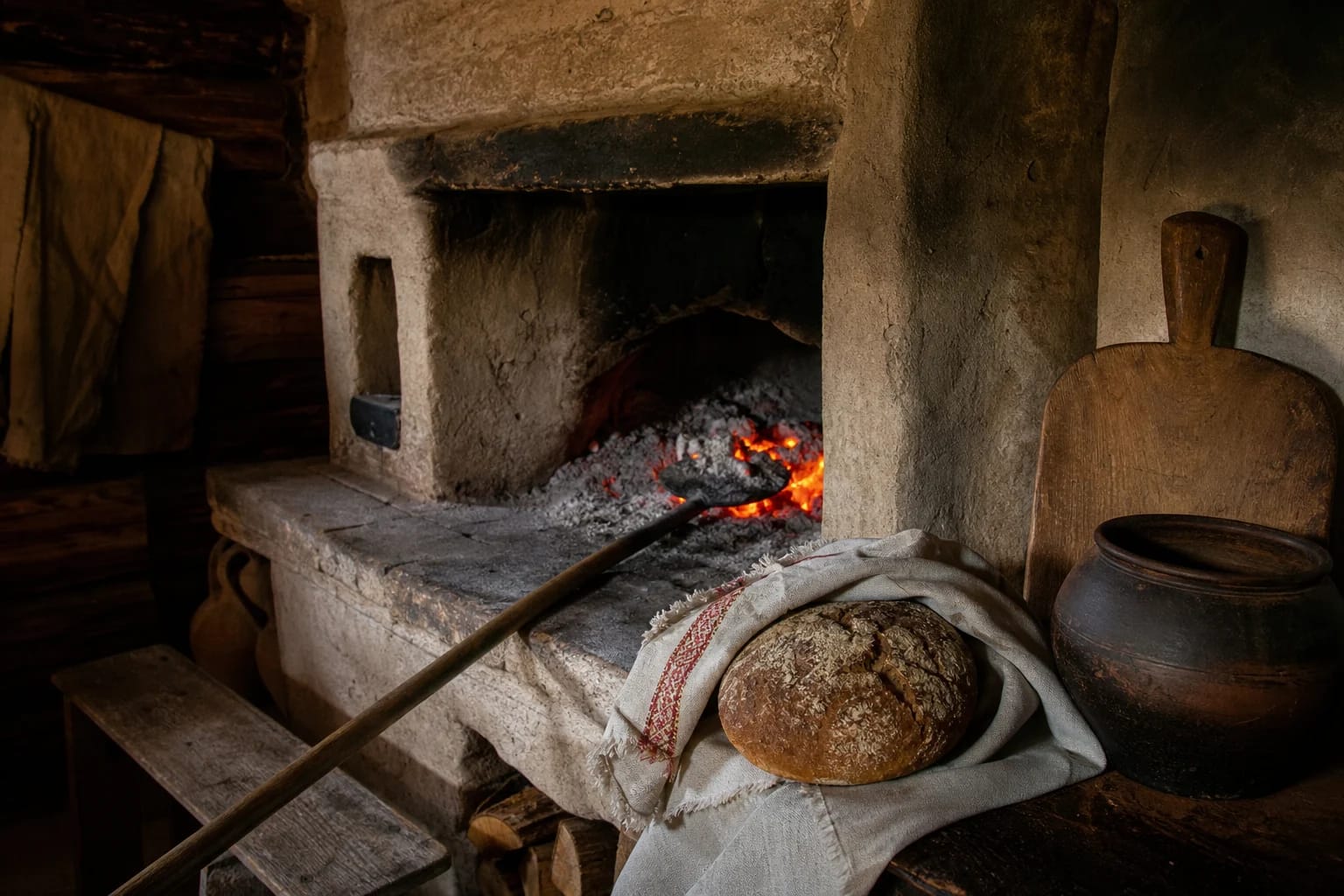
For that reason Gabija is not a distant sky goddess. She is close to the house and the body: her fire warms hands, bakes bread, protects against cold and darkness. Yet she also requires moderation, cleanliness, and respect.
Gabija is best read within the broader Lithuanian symbolism of fire. Perkūnas shows the heavenly fire of lightning, the Rasos bonfire shows communal ritual fire, and Gabija shows the fire of the household hearth.
How was Gabija honored?
Reverence for Gabija appears mostly through customs, prohibitions, and short prayers rather than through a clear description of a temple cult. Fire would be put out or left to smolder safely, ashes were handled carefully, and the hearth was treated with respect.
In folklore, people may address fire affectionately and ask it for calm, protection, and good sleep. Such texts show that fire was understood as a personal power: people spoke to it, apologized to it, and thanked it.
It is important not to reduce Gabija to a decorative fairy-tale figure. Her religious core is everyday conduct: how a person tends fire, protects the home, respects food, and understands danger.
Gabija's taboos: what must not be done to fire?
Taboos are especially important in Gabija's tradition. One must not spit into fire, step on it, soil it, pour water over it carelessly, or leave it burning dangerously. These rules are both practical fire-safety wisdom and signs of religious respect.
In folklore, insulting fire may bring misfortune: a house fire, illness, household insecurity, or Gabija's anger. These beliefs show how mythology protected domestic life. Respect for fire was a way of protecting the family.
Gabija's taboos are therefore not random superstitions. They express a clear logic: a life-giving power has limits. If people behave irresponsibly toward fire, that same fire becomes a threat.
Gabija's symbols: fire, ashes, bread, and home
Gabija's main symbols are fire, hearth, embers, ashes, stove, poker, bread, and home. They point not to abstract flame, but to domesticated fire, protected and tended every day.
Ashes also matter in Gabija's world. They hide embers, help fire 'sleep', and preserve its continuity. Covering fire with ashes can be understood not as an ending, but as a safe passage into night.
Bread connects Gabija with food and family survival. The fire that bakes bread becomes not only warmth but a force that sustains life. Gabija is deeply earthly and at the same time one of the most intimate goddesses in Lithuanian mythology.
Gabija and the world of women, family, and home
Gabija is often associated with women and the family sphere because care of the hearth, cooking, and household cleanliness were closely tied to daily domestic work in traditional culture. Her meaning, however, is broader than a household role.
The household fire protected the whole family. It was the center of shared life, so Gabija speaks about domestic harmony, responsibility, and the boundary between comfort and danger. She shows that in Lithuanian mythology sacredness can be very close to ordinary life.
Gabija today: why the image still matters
Today Gabija matters as a cultural key to Lithuanian ideas of home, fire, and responsibility. She helps explain why the hearth, stove, candle, bread, and household warmth carry meanings beyond convenience.
Gabija also has ecological and ethical resonance. She reminds us that a power that feeds and warms must be tended with respect. In modern terms, Gabija speaks about a responsible relationship with energy, home, and shared safety.