- Type
- God
- Domain
- Wind, weather, sea, fishing
- Source status
- attested in late sources
Vėjdievas, Wejopatis, Wejpons
Who is Vėjopatis?
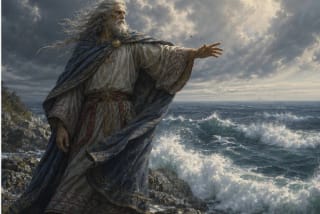
Vėjopatis, also recorded as Wejopatis and Wejpons, is the Lithuanian god of wind. His name combines vėjas, wind, and pats, lord or master, so it means the lord of the winds: the one who rules air currents and tempests.
Vėjopatis is known above all from the tradition of Lithuania Minor. According to Matthäus Prätorius, he was worshipped by fishers, people for whom wind direction and force could be a matter of life and death on the sea and lagoon.
The two-faced winged idol of Vėjopatis
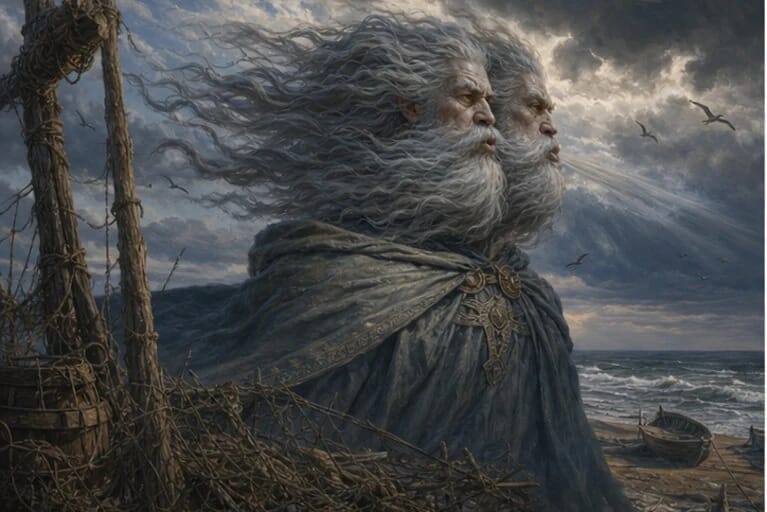
Prätorius described a striking idol of Vėjopatis: two-faced, looking forward and backward, with great wings and puffed-out lips. Its right hand, holding a small barrel, was raised upward; its left hand, holding a fish, was lowered; and a rooster stood on its head.
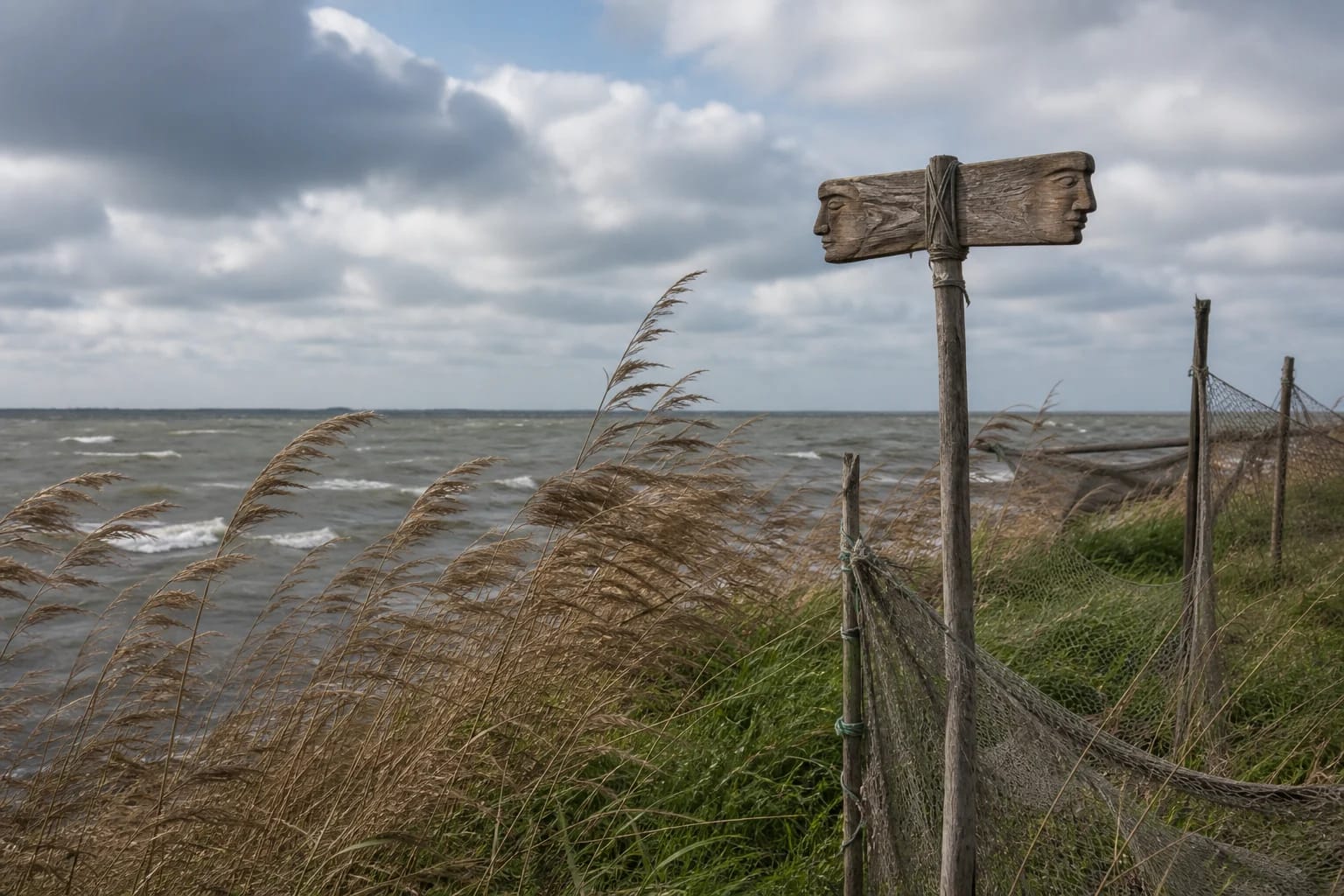
This description is detailed but also problematic. Two-faced gods are not characteristic of Lithuanian mythology. Gintaras Beresnevičius suggested that this image of Vėjopatis may have developed under the influence of Pomeranian Slavs, so it should be read cautiously.
Vėjopatis and Bangpūtys
Vėjopatis is thought to be functionally close, or perhaps identical, to the Prussian and western Lithuanian sea god Bangpūtys. Wind and sea waves are inseparable, so a power that rules wind and a power that blows up waves can easily merge into one.
This connection reveals a coastal worldview in which natural elements were not understood as separate phenomena but as one storm force. Vėjopatis and Bangpūtys are two sides of the same sea-and-wind element.
Wind in a fisher's life
It is no accident that Vėjopatis was worshipped specifically by fishers. In coastal and lagoon communities, wind decided whether one could sail out, return alive, and bring back a catch. A wind god was therefore one of the most important everyday powers.
In this setting Vėjopatis is not an abstract atmospheric deity but a practical patron of fishers. People appeased him for favorable wind and a safe return, matters on which their lives directly depended.
Vėjopatis today
Vėjopatis helps explain the Baltic world of atmospheric and sea deities and the coastal tradition of Lithuania Minor. His example also shows how outside influences could shape even the imagined forms of gods.
Vėjopatis should be read cautiously: the detailed idol description raises doubts, and the image may have been influenced by Slavic tradition. Still, the core is clear and meaningful: a wind god, patron of fishers, close to Bangpūtys.