- Type
- God
- Domain
- Rivers, flowing water, water clarity
- Source status
- attested in late sources
Upinis Dewos
Who is Upinis Dievas?
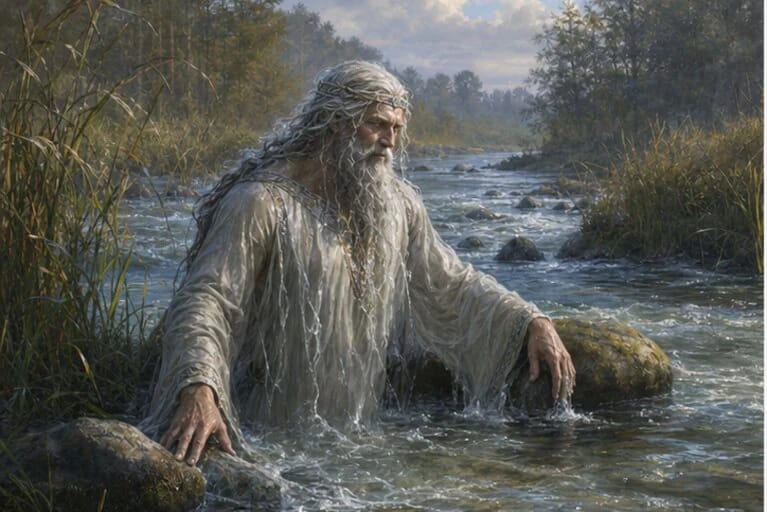
Upinis Dievas is a Lithuanian deity of rivers and flowing water. In his list of gods, Maciej Stryjkowski calls him Upinis Dewos and states that he ruled rivers: he was the master of flowing water.
Upinis Dievas belongs to the layer of local water deities, not to the high gods of the sky. His domain is the actual water of a river, its flow and clarity, on which everyday life depended.
Offerings for clear water
According to Stryjkowski, white piglets were offered to Upinis Dievas so that river water would be clear. This is a very concrete and vivid offering: the white color corresponds to the desired result, clean and transparent water.
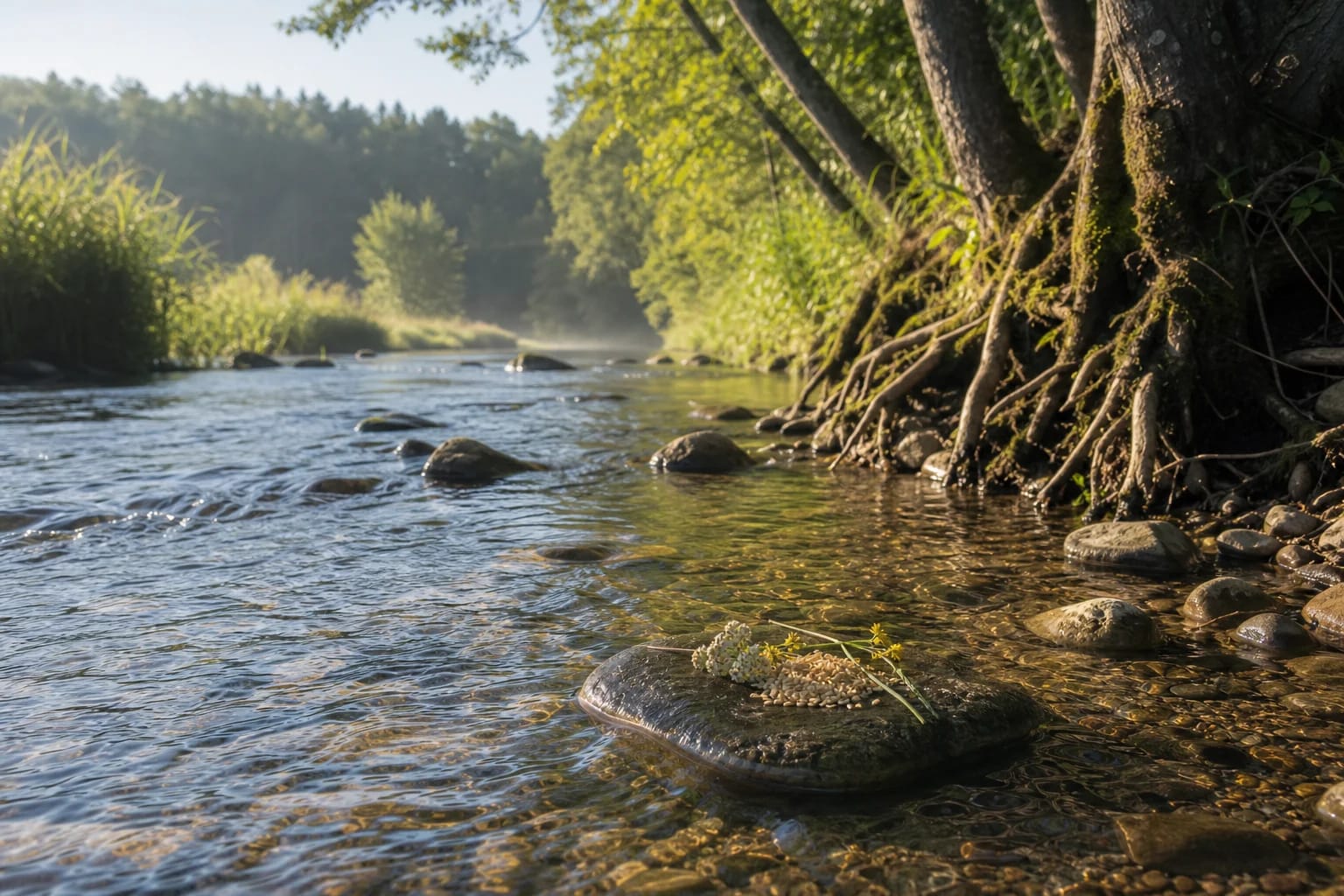
Such an offering shows a practical relationship with the river. People needed clean drinking water, fish, and safe fords. Upinis Dievas was the power on whom these depended, so he was thanked and appeased.
Flowing water in the Lithuanian worldview
In Lithuanian mythology the river is often understood as both boundary and road, between life and death, one's own space and the unfamiliar. Flowing water is associated with movement, cleansing, and passage, so a river deity had important symbolic meaning.
Upinis Dievas is best read together with Ežerinis. If Ežerinis rules the standing water of a lake, Upinis Dievas rules the flowing water of a river. Together they reveal how differently types of water were valued.
Upinis Dievas and doubtful goddesses
One caution is connected with river worship. Teodoras Narbutas mentions a goddess Upinė, later changed in Romantic-era writing to Upyna, but many researchers consider the hypothesis of her worship unfounded.
This case reminds us how cautiously old lists of gods must be read. Some names are credible, while others are Romantic inventions or reworkings. Upinis Dievas, attested by Stryjkowski, is more reliable than the later Upinė.
Upinis Dievas today
Upinis Dievas helps explain the meaning of rivers in Lithuanian culture, not only as water but also as boundary, road, and source of cleanliness. He recalls the idea that natural objects had their own divine masters.
Upinis Dievas should still be read cautiously: he is known from a late sixteenth-century list, so his image is not broadly developed. Even so, the offering for clear water is a concrete and memorable testimony.