- Type
- Goddess
- Domain
- Evening Star (Venus), twilight, heavenly family
- Source status
- folkloric
Who is Vakarinė in Lithuanian mythology?
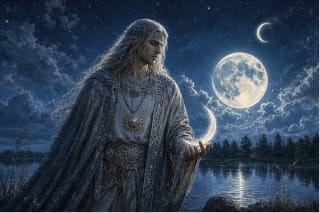
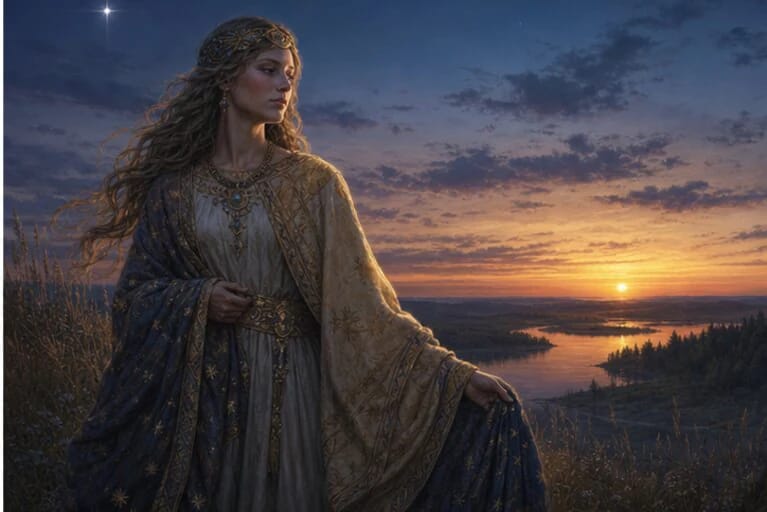
Vakarinė is the Lithuanian goddess of the Evening Star. Like Aušrinė, she is connected with the planet Venus, but seen at another time of day: in the evening, at twilight, when it first shines in the evening sky.
Vakarinė belongs to the heavenly family beside Saulė, Mėnulis, and Aušrinė. She marks the passage from day into night, so her image is linked with calm, rest, and the end of the day.
Vakarinė and Saulė: escort into rest
A frequent folklore motif says that Vakarinė escorts Saulė to sleep. If Aušrinė opens the day and prepares the way for Saulė, Vakarinė closes it by accompanying the Sun into evening rest.
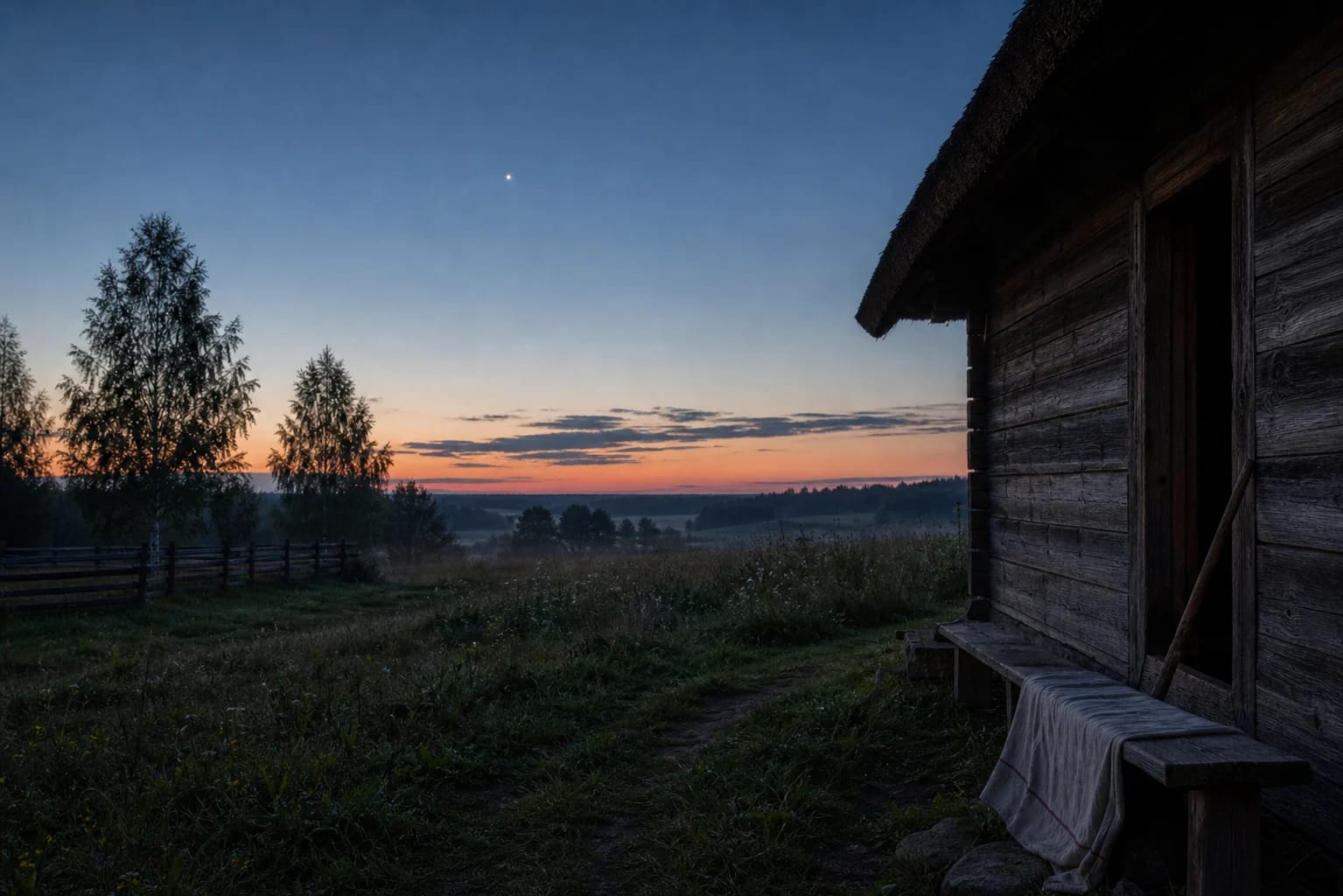
In this way Aušrinė and Vakarinė frame the light part of the day: one begins it, the other shuts it. The image shows heavenly order as a harmonious, mutually completing family.
Vakarinė and the star god
According to Matthäus Prätorius, Vakarinė and Aušrinė were considered not subject to the star god Žvaigždikis. This means they had an independent place in the structure of heavenly deities: not ordinary stars, but special goddesses with their own status.
This testimony matters because it shows that the morning and evening stars were distinguished from the others in the Lithuanian worldview. Their brightness and regular appearance made them separate, memorable figures.
Vakarinė and Aušrinė: one planet, two goddesses
Aušrinė and Vakarinė are in reality the same planet, Venus, visible at different times of day. Ancient observers did not always understand this as one body, so the Morning Star and Evening Star became two separate goddesses.
This duality is a good example of how sky observation becomes mythology. From two lights appearing at different times come two sisters who frame the day from dawn to twilight.
Vakarinė today
The image of Vakarinė helps explain how Lithuanians mythologically understood evening, twilight, and the end of the day. Together with Aušrinė, she shows remarkably careful folk observation of the sky.
Vakarinė is best read as part of the heavenly family. Only together with Saulė, Mėnulis, and Aušrinė does she reveal the full Lithuanian story of the heavenly lights and the symbolism of daily rhythm.