- Type
- God
- Domain
- Sea, waves, storm, wind
- Source status
- attested in late sources
Bangputtis
Who is Bangpūtys?
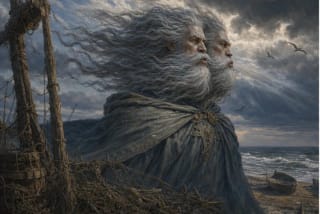
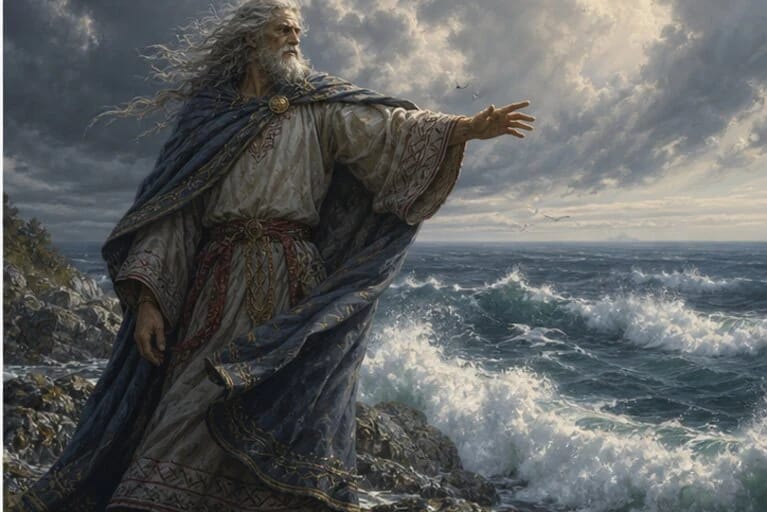
Bangpūtys, called Bangputtis in Prussian, is a sea god of the western Lithuanians and Old Prussians. His name is vivid: it is formed from banga, wave, and pūsti, to blow, so it means the one who blows up the waves and raises a sea storm.
Bangpūtys belongs to the world of the coast, fishing, and seafaring. The calm or danger of the sea depended on his favor or anger, which made him especially important in the culture of Lithuania Minor and the lagoon coast.
Storm god and dangerous water spirit
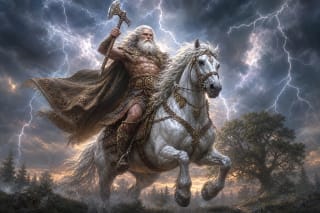
At the end of the seventeenth century Matthäus Prätorius described Bangpūtys as a storm god, while in the eighteenth century Jakob Brodowski and Philipp Ruhig compared him with the Roman sea god Neptune. At the same time Bangpūtys was also understood as a harmful water spirit able to drown people.
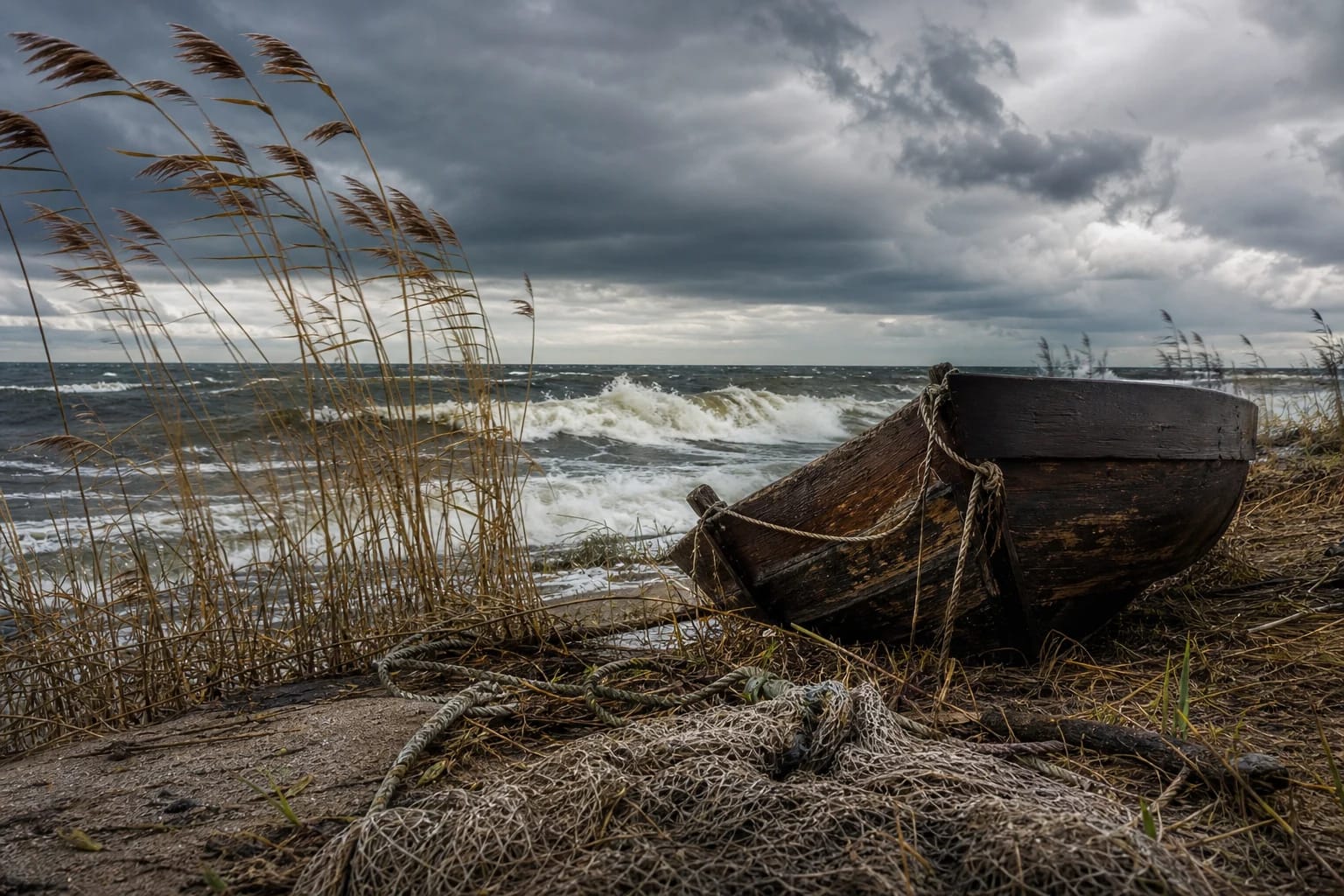
This double character, protector and threat, is typical of sea deities. For a fisher or sailor, Bangpūtys was the power that could allow a safe return or raise a deadly storm, so he had to be respected and appeased.
The image of Bangpūtys and the song
There are hints that a wooden image of Bangpūtys existed: an idol representing the sea god. That suggests he was not only an abstract spirit but may have had a visible, worshipped form.
Bangpūtys is also mentioned in the Lithuanian folk song "Išbėg išbėgo iš Rusnės kiemo," recorded by Liudvikas Rėza. This matters because it shows that the name of the sea god survived not only in scholarly writings but also in living folklore from the lagoon region.
Bangpūtys and Vėjopatis
Bangpūtys is closely connected with the wind god Vėjopatis. Their functions are thought to be close or even identical: sea storms and wind cannot be separated, so a power that blows up waves and a power that rules wind easily merge.
This connection shows how coastal people understood natural forces, not as isolated phenomena but as one storm power that raises wind and waves at the same time. Bangpūtys and Vėjopatis are two sides of the same elemental force.
Bangpūtys today
Bangpūtys is one of the clearest images of Lithuanian sea mythology and a popular symbol of the lagoon coast. He helps explain how Baltic coastal communities gave meaning to the sea, storms, and the danger of fishing.
Bangpūtys is best read together with Vėjopatis and Perkūnas: images of sea waves, wind, and heavenly storm form a Baltic world of elemental gods in which human life depended on the mercy of nature.