- Type
- Goddess
- Domain
- Fate, birth, life's allotted portion, protection of women in childbirth
- Source status
- folkloric
Laimė, Laimės Motė, Dalia
Who is Laima in Lithuanian mythology?
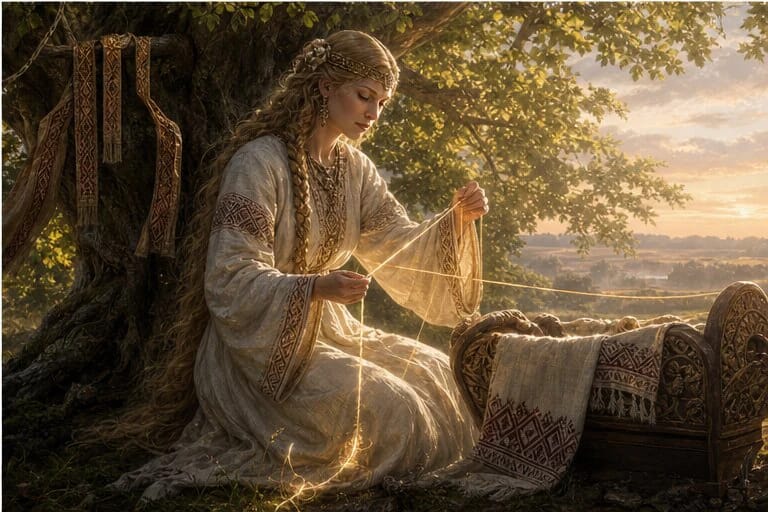
Laima, also called Laimė or Laimės Motė, is the Baltic goddess of birth and fate. People believed she cared for pregnant women, helped at childbirth, and determined the newborn's fate, so Laima stands at the very beginning of human life.
Laima's image is inseparable from the Lithuanian words laimė, happiness or fortune, and dalia, an allotted portion. It was thought that every person, and even every domestic animal, had its own laimė. Fate was therefore not an abstraction, but a concrete portion assigned to each being.
Laima's protection: birth, women in childbirth, and livestock
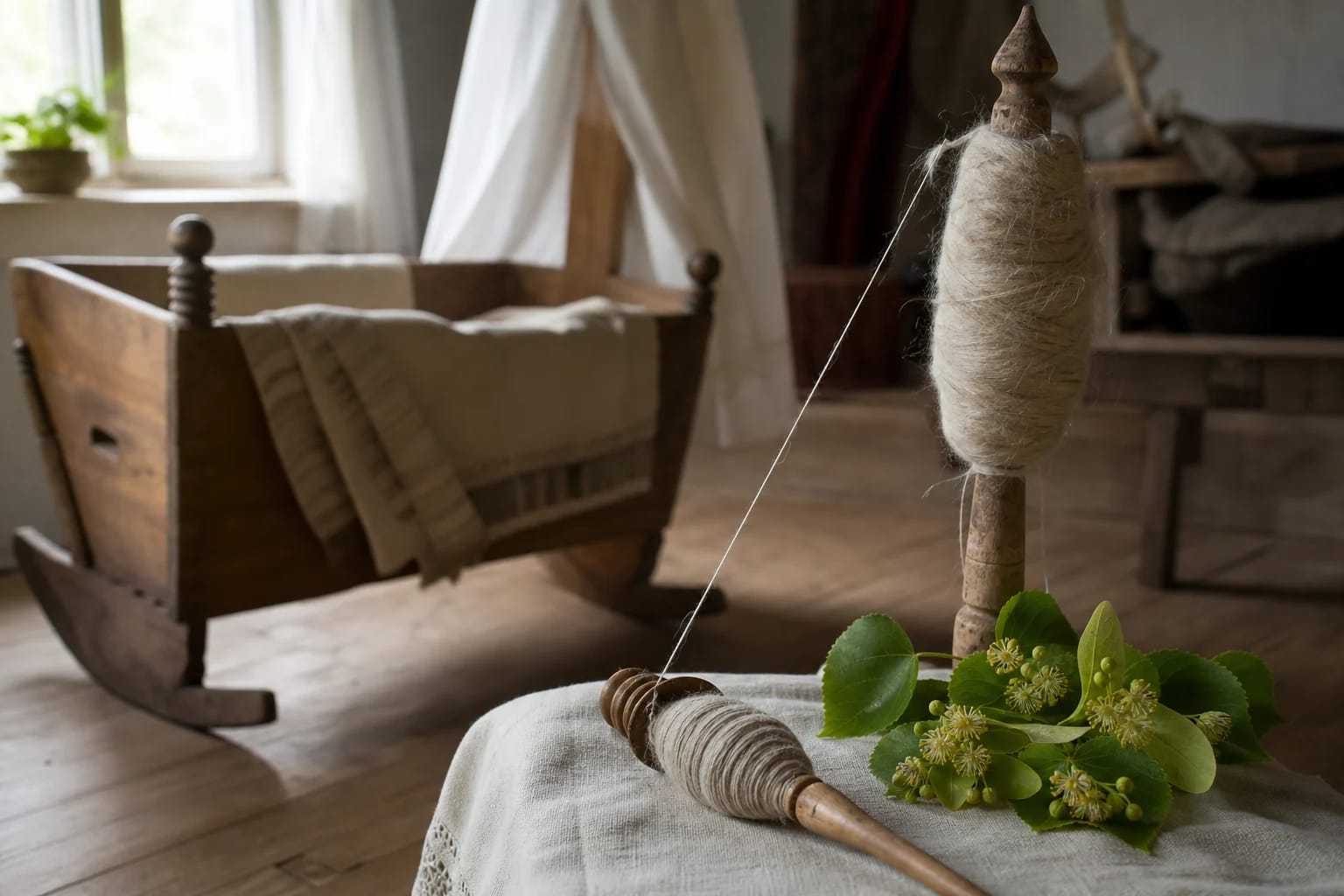
Laima is first of all the protector of women in childbirth and newborn children. She was believed to care for orphans, protect domestic animals from charms and witches, and look after pastures, so her care covers the beginning of life beyond humans alone.
In Latvian songs Laima is sung about especially richly, and her connection with women in childbirth is emphasized even more strongly than in Lithuanian material. This shows that Laima is a shared Baltic image, although different traditions bring out her features in slightly different ways.
Laima's forms and the motif of three Laimas
Laima is represented anthropomorphically as an old or young woman, but she may also appear as a plant, such as a linden tree or thistle bush, as a bird such as a hen, as an insect, or as a snake. This variability shows that she is not one fixed figure but a power that determines one's lot.
Latvian songs most often mention three Laimas, sometimes two; researchers identify them with Gimdos Motė, the Mother of the Womb. The triad motif is close to fate goddesses in other cultures, so Laima belongs to a wider circle of divinities who spin or determine fate.
Laima and Giltinė: the beginning and end of one's lot
Laima is best read together with Giltinė, the goddess of death. Laima determines a person's allotted fate at birth, while Giltinė comes to finish it, so together they cover the whole arc of life from cradle to grave.
This pair reveals an essential idea in the Lithuanian worldview: the length and fortune of life are an assigned portion. In tradition it mattered to be born with a good Laima and to die after reaching the end of one's allotted lot.
Laima today
Laima's image helps explain why fate, allotted portion, and birth are such important themes in Lithuanian culture, from Kūčios divinations to songs about a person's dalia. Through her it becomes easier to read customs connected with life's thresholds.
Laima should be read as a folkloric but deeply rooted goddess. Although the fullest evidence survives in Latvian songs, her Lithuanian functions, birth, protection, and fate, are clearly recognizable.