- Type
- Goddess
- Domain
- Grain, rye, harvest, agriculture
- Source status
- in late sources
Who is Krūminė?
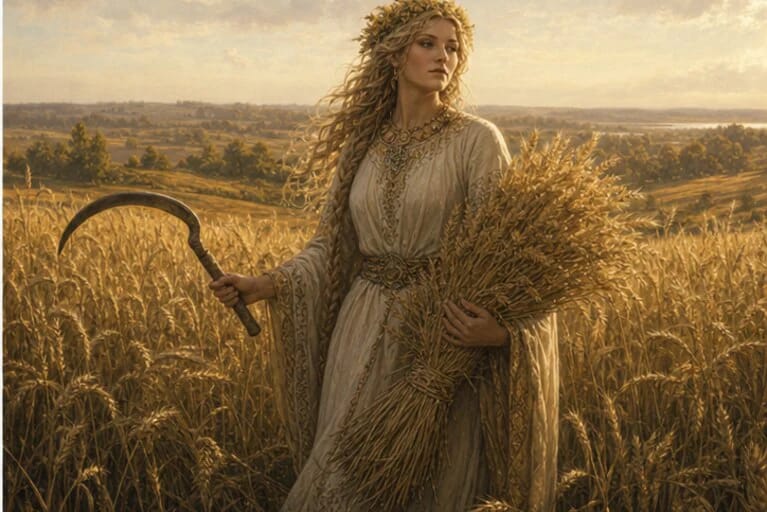
Krūminė is a Lithuanian grain deity known from sixteenth-century sources. In 1582, Maciej Stryjkowski mentions her as a deity who gives grain and calls her Kruminie pradziu warpu, a power that begins the ears of grain and ripens crops.
Krūminė belongs to the layer of agricultural guardians and is closely connected with harvest and rye. Her name is often explained through ideas of ripening, maturing, or bushy, dense growth.
Offerings to Krūminė for dense rye
According to Stryjkowski, hens with low, bushy combs were offered to Krūminė. The hen meat was chopped up so that rye would grow dense, with large ears, and not 'go into straw', that is, grow tall but yield poorly.
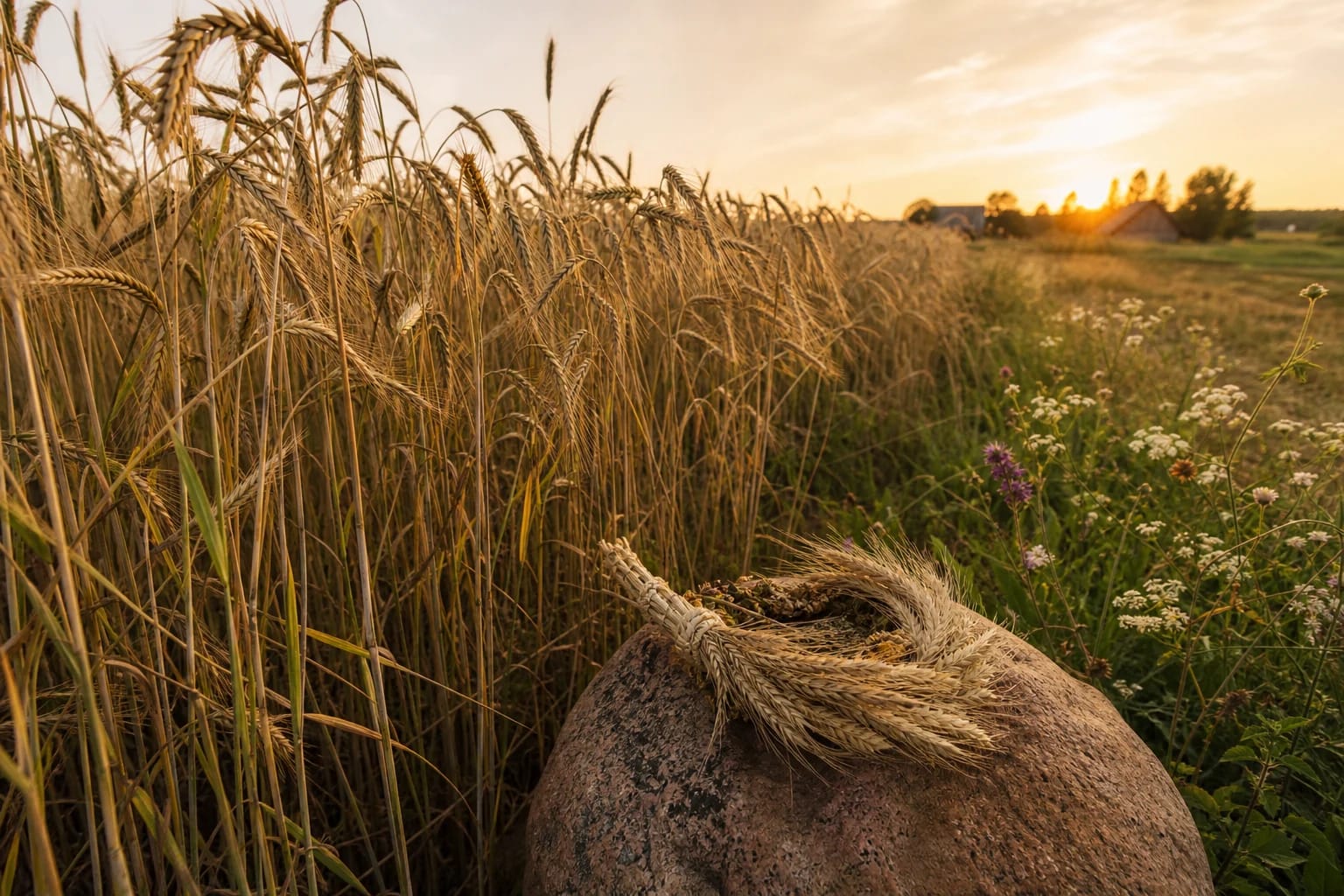
The rite reveals the farmer's concern: what matters is not high stalks, but full, abundant ears. The form of the offering, a low comb, magically mirrors the desired result: low, dense, productive grain.
Was Krūminė really a goddess?
Researchers disagree about Krūminė's status. Aleksander Brückner regarded her not as a goddess but as a field demon, while Simonas Stanevičius argued that no such deity existed at all.
Even so, many mythologists, including Hermann Usener, W. E. J. Mannhardt, Jonas Balys, Haralds Biezais, Vyacheslav Ivanov, and Vladimir Toporov, thought Krūminė may have been worshipped as a grain deity. She should therefore be read cautiously, but not dismissed.
Krūminė in culture
Krūminė's name also entered literature and music; she is mentioned in works by Józef Ignacy Kraszewski and Stanisław Moniuszko. This shows how nineteenth-century Romantic interest in old mythology revived lesser-known deities.
Krūminė is best read together with Žemyna and Javinė. All belong to the field of grain, harvest, and agriculture, but they are attested differently and reconstructed to different degrees.
Krūminė today
Krūminė helps explain how precisely Lithuanian farmers gave sacred meaning to the harvest process: even the density of rye and fullness of ears had a guardian and a rite. She is a clear example of an agrarian worldview.
Krūminė is also a good case for reading deities from late lists: one should acknowledge scholarly debate about their reality while still valuing the living agricultural relationship to harvest recorded in the source.