- Type
- God
- Domain
- Prussian god, light, growth of grain, grass, and livestock
- Source status
- well attested
Swayxtix, Suaixtix, Sweixtigx, Sweigsdukks
Who is Svaikstikas in Prussian mythology?
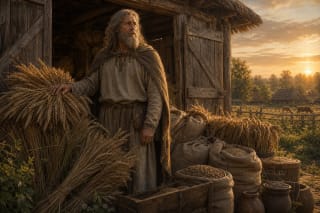
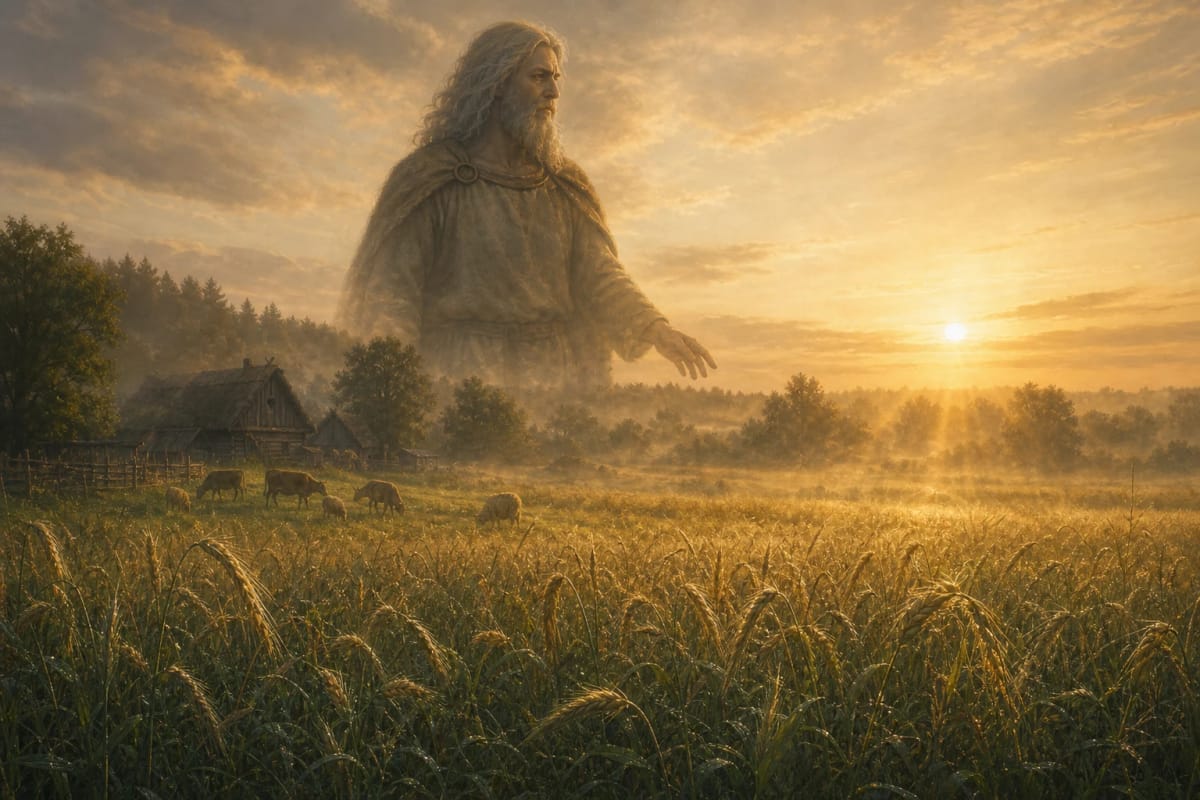
Svaikstikas is an old Prussian god of light. He was believed to encourage the growth of grain and grass and the increase of livestock through his light, so his power is not abstract illumination but the growth of life and harvest. He is one of the best-attested West Baltic, Prussian deities known from sixteenth- and seventeenth-century written sources.
Svaikstikas belongs to the Prussian, not Lithuanian, pantheon. Still, Prussians and Lithuanians are closely related Baltic peoples, so Prussian gods help illuminate a shared Baltic worldview. The image of a light god shows that in old Baltic religion, light was understood as a force that nourishes growth, not merely as something that makes things visible.
What does the name Svaikstikas mean?
Researchers connect Svaikstikas' name with Prussian swāikstan or swāigstan, light, and paswāikstina, illuminates. The name therefore directly states the god's domain: he is the one who shines and illuminates. The name is recorded in different forms, Swayxtix, Suaixtix, Sweixtigx, Sweigsdukks, as traces left by different languages and recorders.
The name's meaning also helps distinguish what Svaikstikas actually protected. Etymology points clearly to light, not to stars, so the popular name Žvaigždikis and the interpretation as a star god are later, unconfirmed assumptions.
The god of light: what did Svaikstikas protect?
Svaikstikas' main domain is light understood as a growth-awakening power. The Sudovian Book, from the sixteenth century, says Svaikstikas was asked to shine with his light at the proper and good time on grain, grass, and livestock. This is a very concrete agricultural belief: without the right light at the right time there would be neither harvest nor increase.
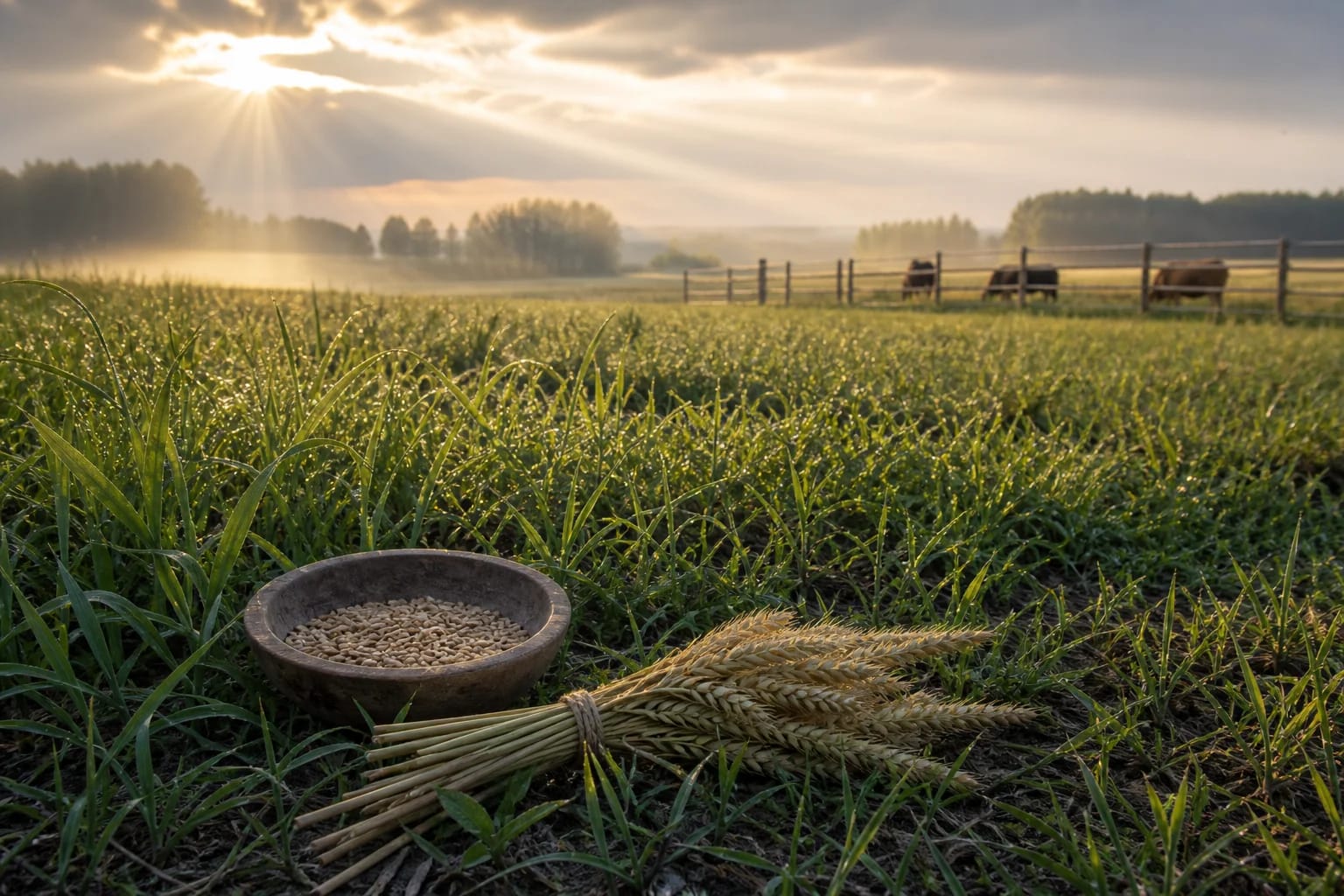
Because of this function, Svaikstikas fits naturally with other Prussian fertility deities. His light is one of the conditions under which the earth gives grain and grass and livestock multiply, so he was invoked at the same agricultural-year feasts concerned with the year's whole harvest.
Svaikstikas in Prussian god lists
In sixteenth- and seventeenth-century lists of Prussian gods, Svaikstikas is usually named second, immediately after the chief god Okopirmas, and sometimes fourth, after Perkūnas. This high position suggests that the god of light was considered one of the more important deities, not a minor figure.
These lists are not random collections of names but hints at a divine hierarchy. The fact that Svaikstikas repeatedly appears near the top helps show that growth-feeding light had great value in the Baltic worldview.
Svaikstikas and the feast of Pergrubrijus
Svaikstikas is especially linked with the beginning of spring field work. The Sudovian Book says that during the sacrificial feast of Pergrubrijus, held before plowing began, Svaikstikas was asked to shine his light in time on grain, grass, and livestock. In this way the light god was woven into the most important cycle of spring rites.
Svaikstikas was also worshipped at a feast after the harvest. This double worship, in spring and autumn, shows that his light mattered throughout the agricultural year, from sowing and growth to harvest thanksgiving.
Sources: from the 1530 synod to Prätorius
Svaikstikas is mentioned in the 1530 synod decisions of the Prussian bishops of Pomesania and Sambia, in the form Suaixtix, where Christian clergy listed pagan gods still being worshipped. He is also mentioned in the chronicles of Maciej Stryjkowski in 1582 and Jonas Bretkūnas in 1588.
The later researcher Matthäus Prätorius calls Svaikstikas, in the forms Sweixtigx and Sweigsdukks, a god of the fixed stars. This explanation is historically important, but should be read cautiously: it reflects a later, already speculative view, not the earlier image of the god of light.
Was Svaikstikas a star god?
A hypothesis was raised that Svaikstikas may have been worshipped as a star god; it is mentioned by Jakob Brodowski and Philipp Ruhig. This assumption did not hold. The essential argument is linguistic: stars in Prussian were called lauksnās, while Svaikstikas' name comes from swāikstan, light, not from star.
It is therefore most accurate to call Svaikstikas a god of light rather than of stars. The distinction is not minor: it shows how easily old gods can be misread through later interpretations of names, and why early and linguistically grounded testimony matters.
Svaikstikas in the context of Baltic mythology
Although Svaikstikas is a Prussian god, he matters for all Baltic mythology as a clear example of a light deity. His image shows that in old Baltic religion heavenly light was closely connected with earthly fertility, growth, and life, much like the cultic imagery of Saulė.
The page on Svaikstikas helps reveal the broader West Baltic pantheon of fertility, light, water, and underworld gods. Together with Pergrubrijus, Pilvytis, Patrimpas, and Perkūnas, he belongs to the same circle of Prussian gods recorded in sixteenth-century sources.