- Type
- God
- Domain
- War or horses (disputed), Stryjkowski's list
- Source status
- disputed
Karorius, Chaurirari
Who is Kovas (Karorius)?
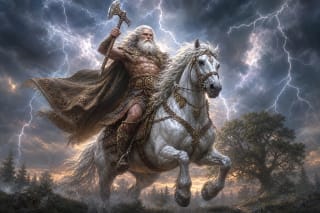
Kovas, also called Karorius, is not a clearly attested deity but a name reconstructed from a sixteenth-century list of gods. In his list of Lithuanian and Samogitian gods, Maciej Stryjkowski mentions a deity whose Lithuanian form and function remain disputed.
This is a good example of why old lists of gods must be read carefully. Some names in them are well attested, while others are distorted, hard to decipher, or interpreted in different ways. Kovas-Karorius belongs precisely to this disputed group.
Horse god or war god?
Stryjkowski's list includes the name Chaurirari, which some researchers interpret as a horse god. The horse was extremely important in Baltic culture, both as a farm animal and as an animal of war and prestige, so the idea of a horse deity is not unexpected.
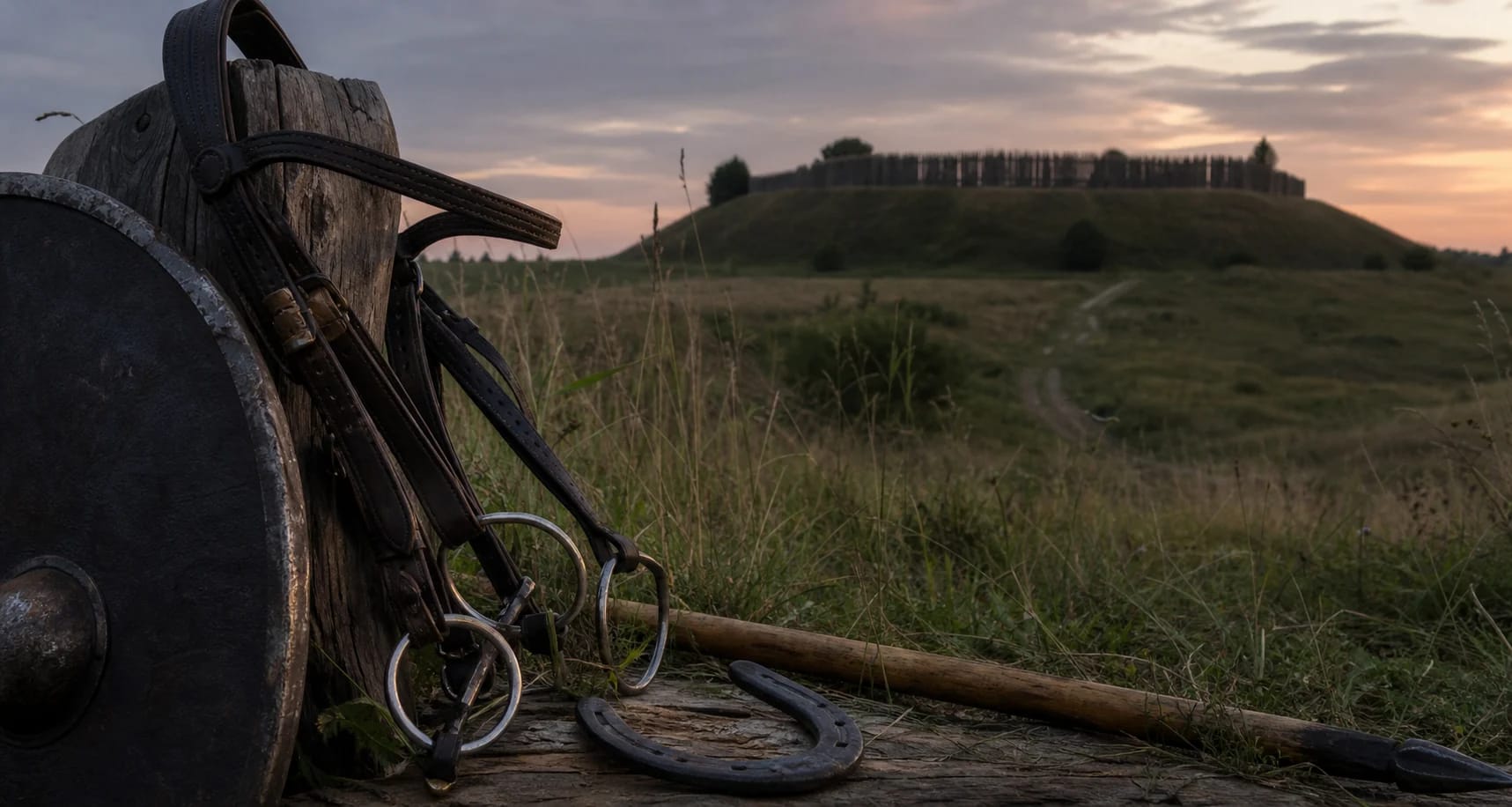
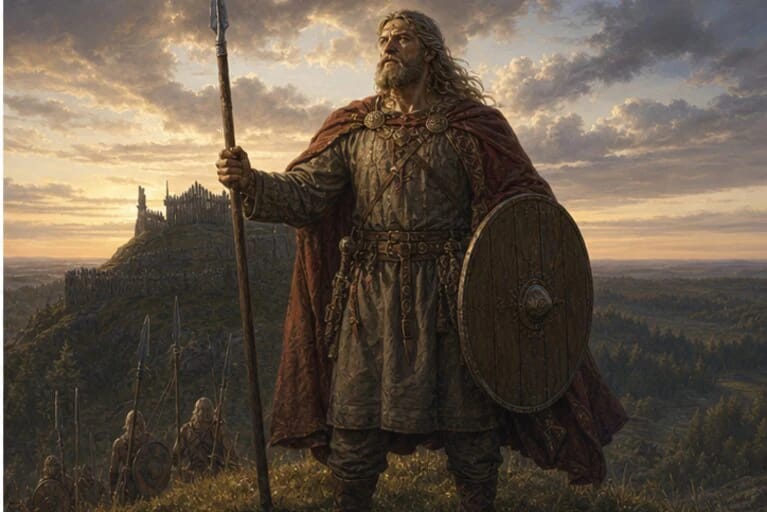
On the other hand, W. E. J. Mannhardt, reconstructing Lithuanian forms from Stryjkowski's names, proposed Karorius, from karas, war. By this etymology the deity is connected with war and battle. The same source entry is therefore read in two ways: as a horse god or as a war god.
Why is the name so unclear?
Stryjkowski wrote in Polish and transmitted Lithuanian divine names in distorted forms, so their Lithuanian forms can only be reconstructed conjecturally. Different researchers, including Mannhardt and Mažiulis, proposed different reconstructions, and there is no consensus.
For this reason the name "Kovas / Karorius" is more a scholarly reconstruction than a firmly attested deity. Any claim about his functions must therefore be marked clearly as disputed.
The sphere of war in Lithuanian mythology
Even if Kovas-Karorius remains unclear, the war theme in Lithuanian mythology is real. Sources show that warriors invoked Andajus, and Perkūnas was also considered a god of Lithuanian warriors, ruling the atmosphere during war with enemies.
The war sphere is therefore more reliably read through Perkūnas and Andajus than through the disputed Kovas-Karorius. The latter matters mainly as an example of how cautiously ambiguous sources must be handled.
Kovas (Karorius) today
Kovas-Karorius helps explain the method of Lithuanian mythology research: not every name in an old list is a secure deity, and some remain open questions. This is the most honest way to present such entries.
The name is best read as an invitation to distinguish attested material from reconstruction. Kovas-Karorius may be a horse god or a war god, but the most important point is to admit that we do not know his exact nature.