- Type
- God
- Domain
- Prussian god, spring, vegetation, fertility, driving out winter
- Source status
- well attested
Pergrubris, Pergrubrius, Pargrubrij
Who is Pergrubrijus in Prussian mythology?
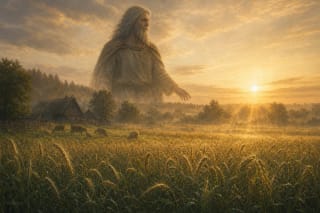
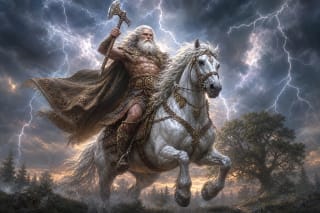
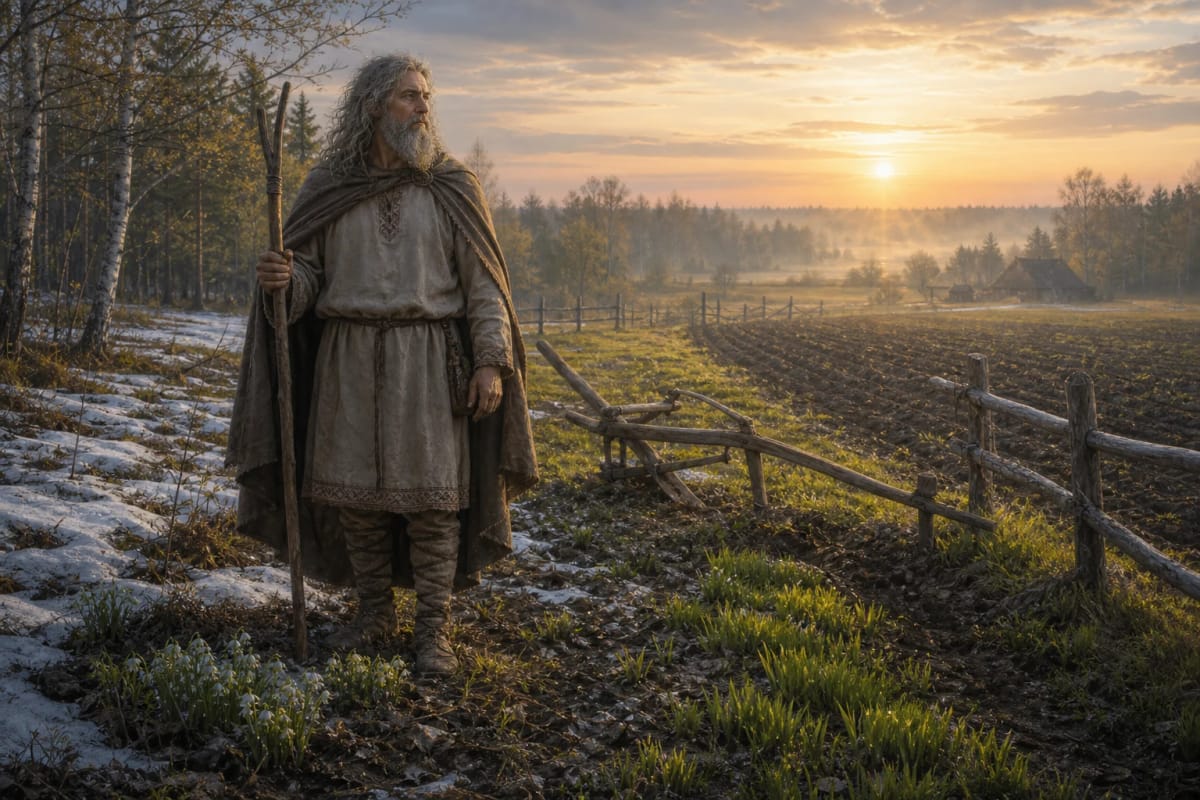
Pergrubrijus is an old Prussian god of spring, vegetation, and fertility. The Sudovian Book of the sixteenth century calls him a god who grows leaves and grass, so his sphere is the whole awakening of plant life after winter. He is one of the best-attested western Baltic gods, with a separate spring festival in his honor.
Pergrubrijus' image is closely tied to the farmer's yearly rhythm. Spring was decisive: the whole season's harvest depended on vegetation awakening at the right time and field work beginning properly. A god who awakens plants therefore held an important place in the Prussian worldview.
God of spring and vegetation
Pergrubrijus' main field is the beginning of growth. Jan Malecki-Sandecki and Jan Łasicki call him a god of flowers, plants, all fruits, grasses, and spring. This is a broad vegetation field, from leaves and grass to flowers and fruit.
Such a god embodies the miracle of awakening itself, the moment when apparently dead winter earth blooms again. His power was not imagined as a single act but as the yearly restoration of nature on which every farmer's hope depended.
Pergrubinės: the spring festival before plowing
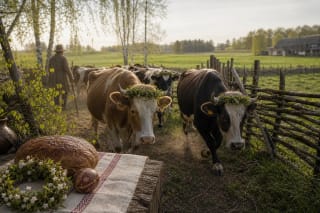
A separate spring offering festival was dedicated to Pergrubrijus, called the offering to Pergrubrijus or Pergrubinės, and celebrated before plowing began. Jonas Bretkūnas says this annual spring festival took place before field work, while Aleksander Guagnini locates Pergrubinės in Prussia, Sambia, and around Įsrūtis and Ragainė.
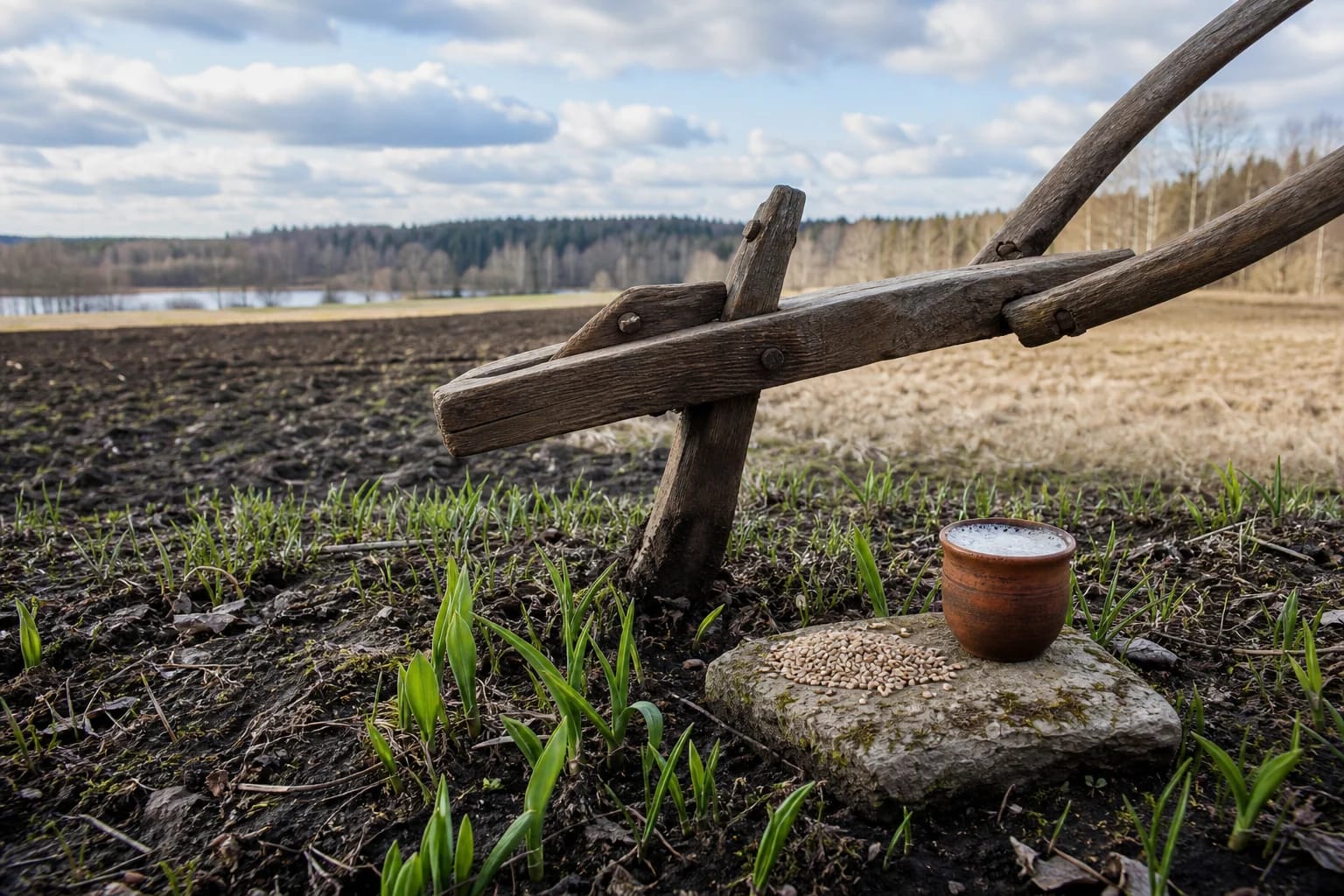
During the festival, people asked Pergrubrijus to drive out winter, grow grain, and destroy weeds. Malecki and Łasicki connect the festival with April 23, now St. George's Day; beer was offered and a hymn of praise sung. Pagan spring rites later overlapped with the Christian date of Jurginės.
Driving out winter and Pikulas
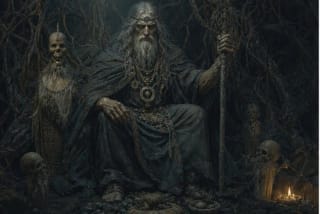
One of Pergrubrijus' clearest features is his struggle against winter. The Sudovian Book says people asked him to drive out not only winter but also the underworld god Pikulas, Peckollum, with his servants the Pokulai. Spring is thus imagined as a victory of light and life over death and darkness.
This image matters because spring is not just warmer weather here. It is a cosmic turning point in which the god of life defeats the ruler of winter and the underworld. Pergrubrijus' rites therefore carried a deeper meaning of world-renewal.
Thanks for harvest and the link with Aušautas
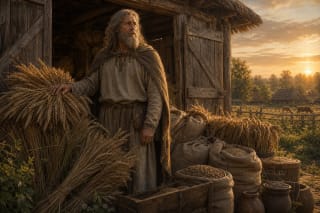
Pergrubrijus was not honored only in spring. The Sudovian Book also mentions another festival in which he was thanked for grain if the crop had succeeded. According to Malecki and Łasicki, after reaping, many gods were solemnly thanked, including Pergrubrijus, with a goat offered in his honor.
An interesting detail links Pergrubrijus with the healing god Aušautas: if the harvest failed, the festival was held for Aušautas, asking him to appease Pergrubrijus. This shows that Prussian gods were imagined relationally; one deity's favor could be sought through another.
Interpretations of Pergrubrijus' name
Pergrubrijus' name has been interpreted in several ways. Vladimir Toporov derived it from Lithuanian grubus or grublas, 'uneven'. Algirdas Julius Greimas connected it with grubas or gruodas and argued that Pergrubrijus is a god who clears the frozen, uneven winter ground in spring.
Matthäus Praetorius placed Pergrubrijus among work gods and derived the name from per-gu-be-ru, meaning to work or rework something, as in pergubyk žemę, 'work the land'. These explanations differ in detail but agree in substance: the name is tied to earth awakening, cultivation, and the beginning of spring work.
Pergrubrijus and Perkūnas
Algirdas Julius Greimas connected Pergrubrijus, who clears frost in spring, with Perkūnas, especially with Perkūnas' power to drive out winter. In tradition, spring thunder is understood as a sign that the earth is waking, so the fields of the storm god and the vegetation god naturally overlap.
This link helps present Pergrubrijus not as an isolated Prussian god but as part of a broader Baltic system of spring and fertility images in which sky, storm, light, and growth powers act together.
Pergrubrijus' sources and later Baltic attribution
Pergrubrijus is mentioned in the Sudovian Book, Jonas Bretkūnas' Chronicle of the Prussian Land, and writings by Malecki-Sandecki, Łasicki, Guagnini, and Praetorius. Such a broad source base allows him to be treated as a well-attested Prussian deity with a relatively detailed festival description.
In later sources Pergrubrijus is also assigned to Lithuanians or to all Balts. Many sources connect his functions with the cycle of sprouting, growing, and flourishing that ends in harvest, making him important for the wider Baltic mythology of fertility.