- Type
- Goddess
- Domain
- Grain, threshing barn, harvest, cereals
- Source status
- in late sources
Who is Javinė?
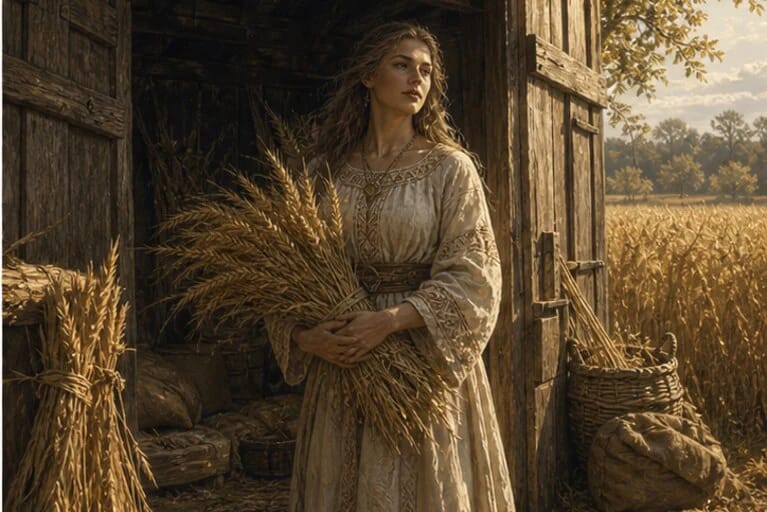
Javinė is a Lithuanian grain deity mentioned in late sources. Her name comes directly from javai, 'grain crops', and her sphere is linked with cereals, harvest, and the jauja, the building where grain was dried and threshed.
Javinė belongs to the layer of agricultural guardians. She matters not so much for grain growing in the field as for the stage after harvest, when the crop is dried, threshed, and stored.
The jauja and grain handling
The jauja was an important and dangerous farm building: grain was dried there near fire, so the risk of fire was real. This danger, combined with the importance of the harvest, may have encouraged the idea of a separate guardian of the threshing barn or grain.
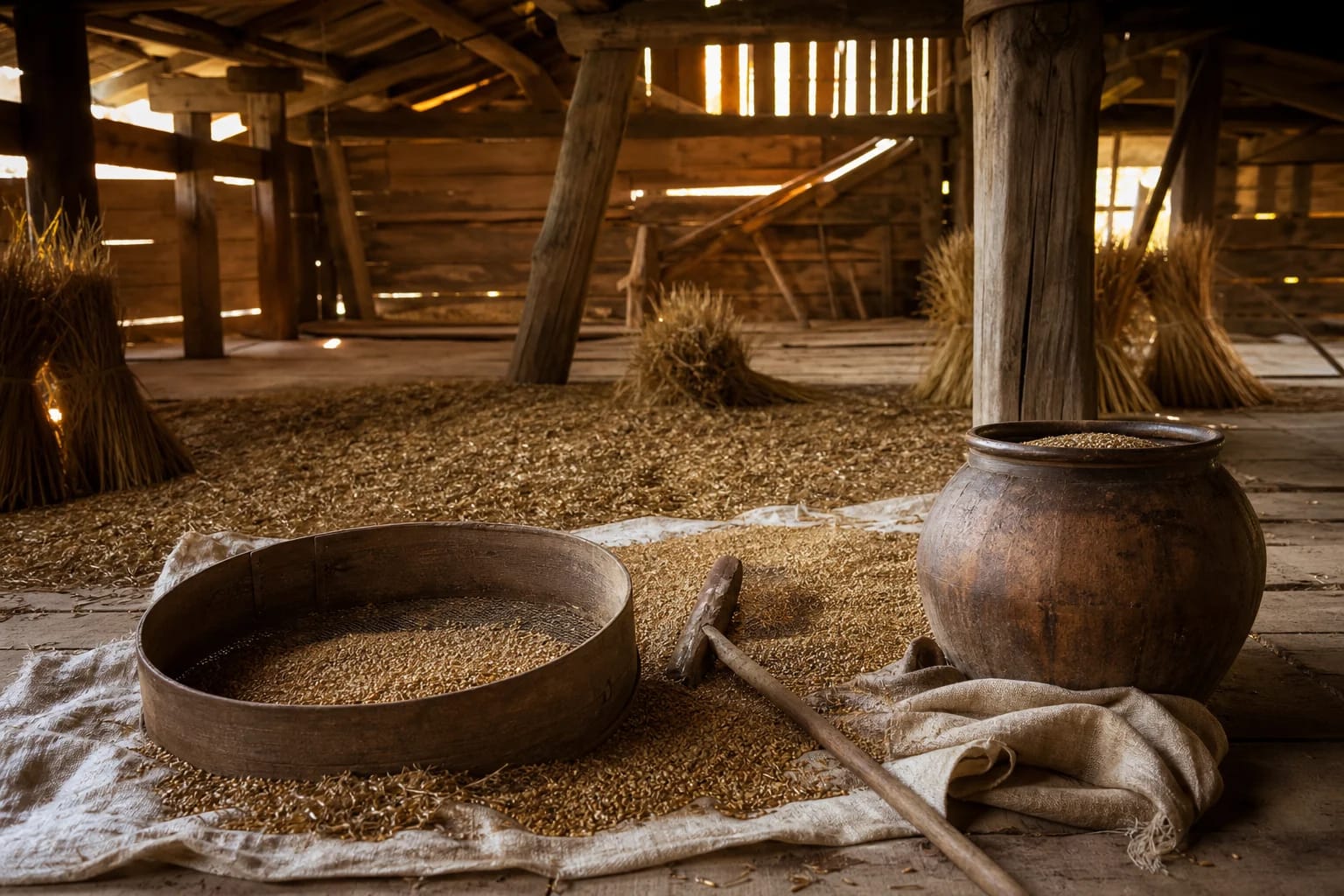
Javinė embodies this passage from field to granary. Her protection may have been sought so that grain would dry well, not burn, not spoil, and yield healthy, abundant kernels. She is a practical deity tied to everyday work.
Javinė and other grain goddesses
Javinė is best read with Krūminė, another grain and harvest deity from late lists. Both reflect the same agrarian concern with crops, but perhaps at different stages or in different sources.
This duplication, several similar grain goddesses, is typical of late lists of gods and raises questions about reliability. Javinė should therefore be treated as one possible harvest deity, not as a firmly attested figure.
How should Javinė be read?
Javinė belongs to a modestly attested group of deities whose testimony is late and requires careful source checking. There is no single clear and detailed description of her.
For that reason Javinė should be presented honestly: a name with a clear agricultural field, but with the caveat that her reality and the details of her functions are not firmly proven. That is better than assigning invented mythology to her.
Javinė today
Javinė helps explain how carefully Lithuanian farmers gave meaning to the path of the harvest, not only growth in the field but also drying and threshing in the jauja. Each link in the chain mattered.
Javinė is best read with Krūminė, Žemyna, and Žemininkas. All belong to the field of grain and harvest deities, but they are not equally attested and are reconstructed to different degrees.