- Type
- God
- Domain
- Earth, harvest, farm, autumn offerings, grass snakes
- Source status
- in late sources
Ziemiennik
Who is Žemininkas?
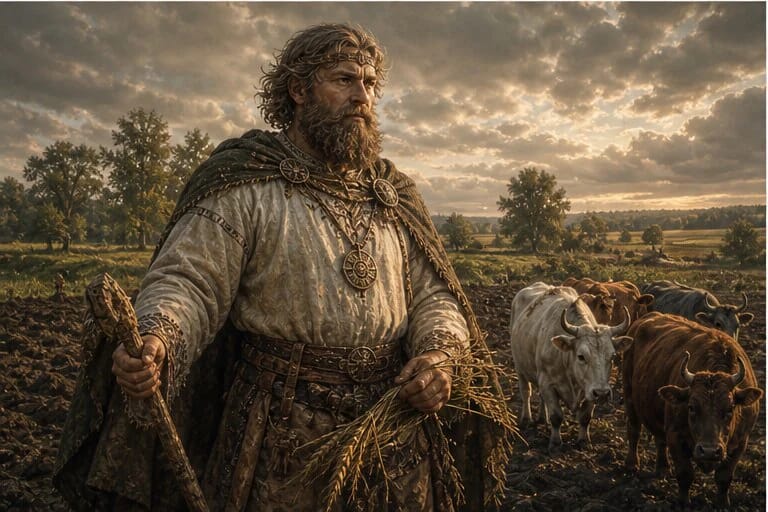
Žemininkas is an old Lithuanian earth god known from sixteenth-century sources. Maciej Stryjkowski records him as Ziemiennik and describes him as an earth god connected with harvest and farming.
The name Žemininkas comes from žemė, 'earth'. He belongs to a broad field of earth and agricultural deities alongside Žemyna and Žemėpatis, and the boundaries between them often overlap.
Grass snakes and milk offerings
One of Žemininkas' clearest features is that grass snakes were fed milk in his honor. In Lithuanian and Baltic culture, the žaltys, the nonvenomous grass snake, was treated as a sacred animal protecting the home and the prosperity of the land, so feeding it milk was a religious act.
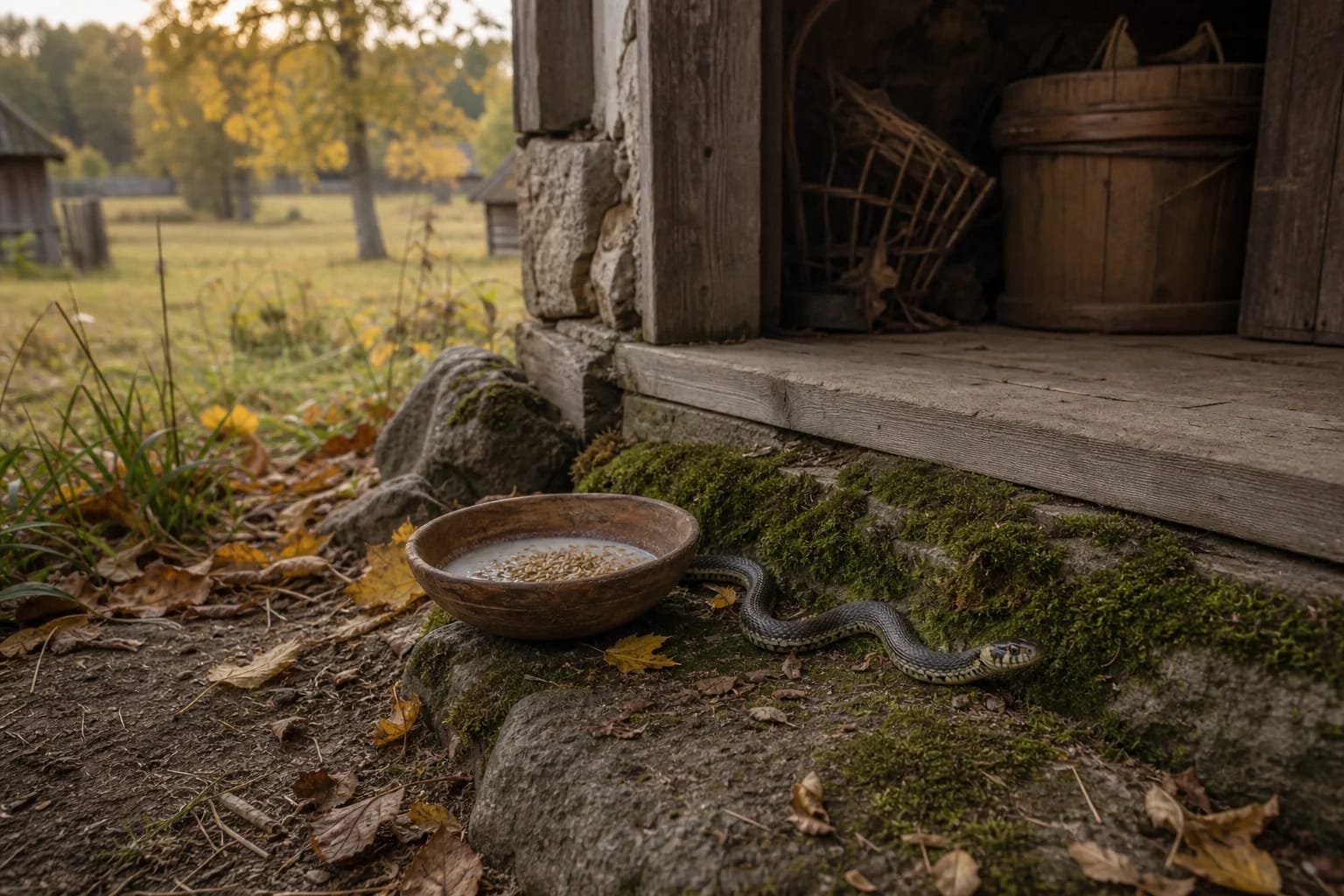
This custom joins Žemininkas with the spheres of earth, home, and fertility. The grass snake lives close to the earth, under the threshold or in the barn, and its protection meant household success. Through the grass snake, Žemininkas' cult touches household sacredness.
The great autumn festival
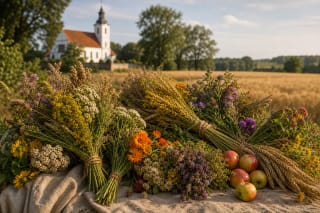
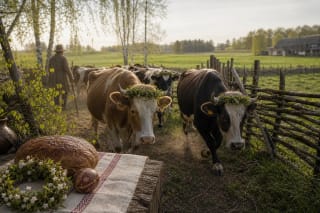
Stryjkowski recorded that the greatest Lithuanian autumn festival was dedicated to Žemininkas. At a communal feast, a pair of every domestic animal and bird was offered to him, showing his importance in the farmer's year.
Autumn is the logical season for this feast: it is the end of harvest, when the earth must be thanked for the year's fruits. Žemininkas, as earth god, was the natural recipient of that thanks, and the large offerings reflected the scale of the harvest.
Žemininkas among earth gods
Žemininkas is best read with Žemyna and Žemėpatis. Some sources even distinguish a group of gods called žemininkai, which Praetorius calls household gods, so Žemininkas may be both an individual deity and a whole group of earth deities.
This overlap is typical for earth and household deities: their functions, harvest, farm, homestead, and home, are closely connected. Žemininkas most strongly emphasizes the harvest and autumn offering side.
Žemininkas today
Žemininkas helps explain the Lithuanian farmer's yearly cycle and the importance of autumn harvest festivals. Through him we see that harvest was understood as a gift that required thanks through abundant offerings.
Žemininkas is best read together with Žemyna, Žemėpatis, and grass-snake symbolism. Together they show how Lithuanians sacralized the earth, both as fertile soil and as the basis of household and livestock well-being.