- Type
- God
- Domain
- Earth, underworld, kaukai or barstukai, sacred elder tree
- Source status
- in late sources
Puškaitis
Who is Pušaitis?
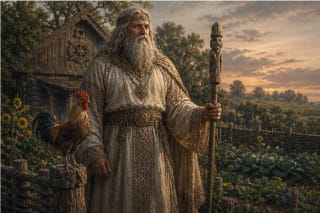
Pušaitis, also Puškaitis, is a Baltic deity connected with earth and the underworld, mentioned in sixteenth-century sources: Motiejus Strijkovskis' list of gods and the Sudovian Book describing Prussian religion. In Strijkovskis' list he is given as an earth god.
Pušaitis does not belong to the high gods of the sky, but to a lower layer connected with the homestead, earth, and underworld beings. His image is inseparable from the small underworld beings called barstukai or kaukai.
The sacred elder tree and underworld dwelling
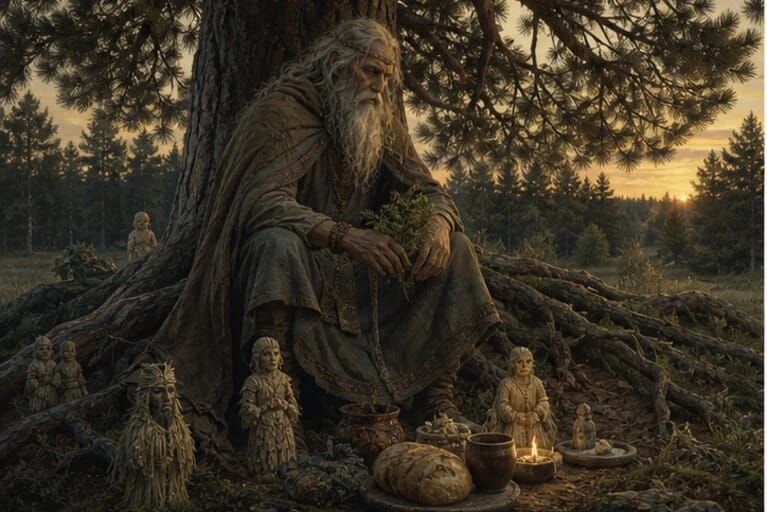
According to the sources, Pušaitis lives under a sacred elder tree, and also under other sacred trees or their roots, so he is associated with a subterranean space below the earth. The tree functions as a link between the earth's surface and the underworld.
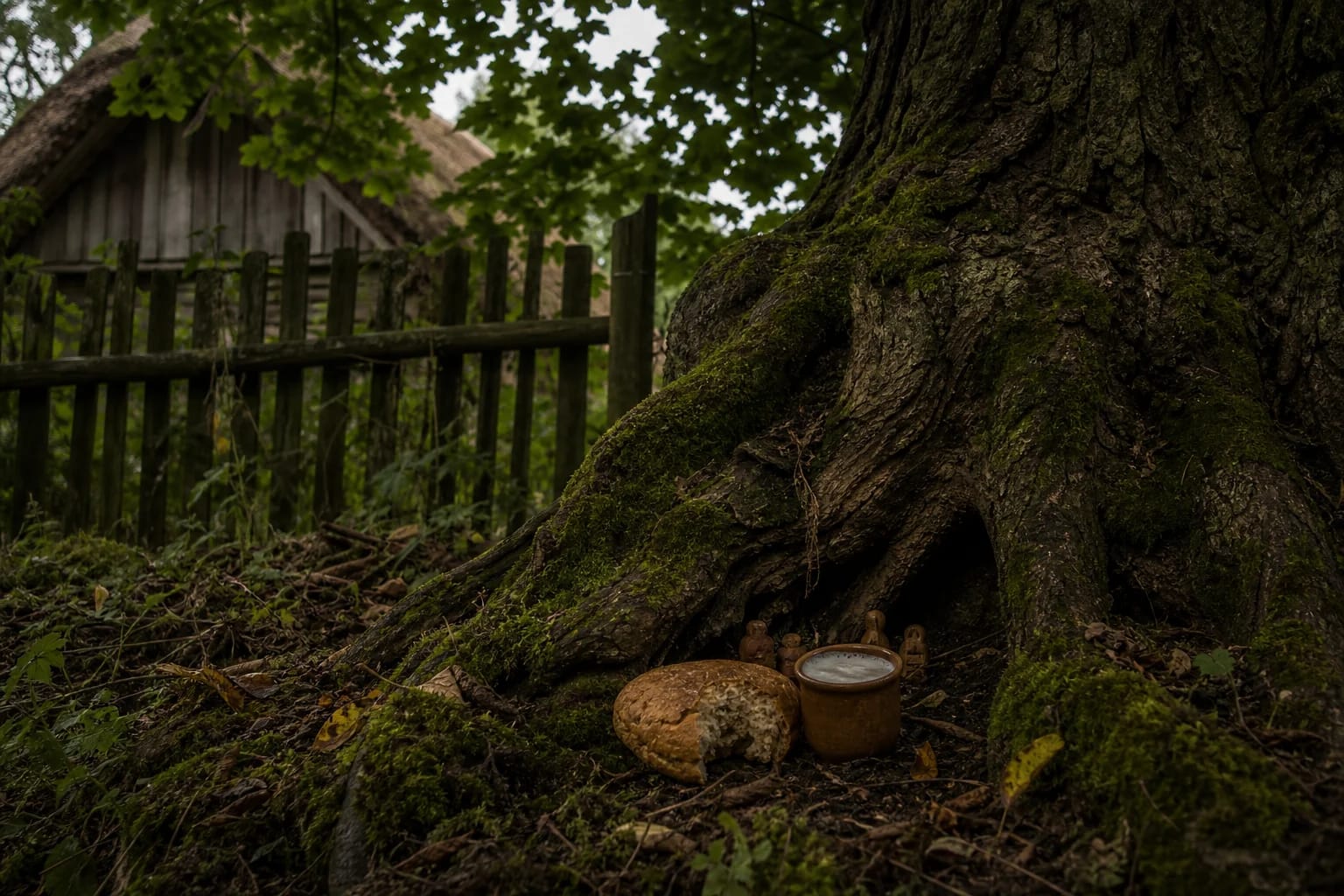
This dwelling explains Pušaitis' nature: he is a deity of the boundary zone, ruling the area where cultivated land ends and underworld forces begin. Offerings were therefore made to him by trees and the earth, not in the sky.
Pušaitis and the barstukai
The most important trait of Pušaitis is that he is considered the ruler of the barstukai, also called barzdukai or kaukai. These are small underworld beings who, when properly tended, brought success and abundance to the farm.
People believed that if bread and beer were left for the barstukai under an elder tree or in a granary, they would repay the household by multiplying grain and protecting the farm. Pušaitis and his barstukai therefore form one system: the god rules the beings, and the beings serve humans through offerings.
Pušaitis among earth gods
Pušaitis is best read together with Žemėpatis, Žemininkas, and the kaukai. All belong to the field of earth, homestead, and underworld protectors, where boundaries are indistinct and functions overlap.
What makes Pušaitis distinctive is his link with a specific sacred tree and with the barstukai. This makes him an intermediate link between gods and mythical beings: higher than a kaukas, but closer to the earth than the sky gods.
Pušaitis today
Pušaitis helps explain how the Balts imagined the underworld and boundary realm: a sacred tree, a deity living beneath it, and small beings under his authority who bring household abundance. This is a vivid example of the earthly, chthonic layer of religion.
Pušaitis should be read cautiously: he is known from late sixteenth-century sources, mostly connected with Prussian and Samogitian tradition. Still, the link with earth, elder tree, and barstukai is the clear core of his image.