- Type
- God
- Domain
- Herds, grazing, shepherds, livestock
- Source status
- in late sources
Who is Ganiklis?
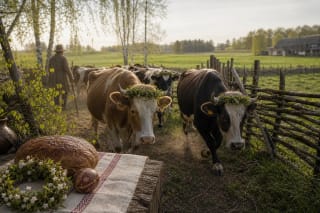
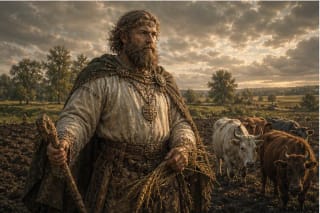
Ganiklis is a Lithuanian deity known from a sixteenth-century list of gods. Maciej Stryjkowski records him as Goniglis Dziewos and describes him as a god of shepherds, the guardian of grazing herds and livestock.
The name Ganiklis comes from the verb ganyti, 'to graze' or 'to herd', so his field is clear: pasture, herd, and shepherd's work. He belongs not to the high gods but to the layer of farm and livestock guardians.
Ganiklis and the world of shepherds
Livestock was vital in the peasant household, and grazing was responsible and dangerous work: the herd had to be protected from wolves, disease, and getting lost. It is therefore natural that shepherds had their own guardian god.
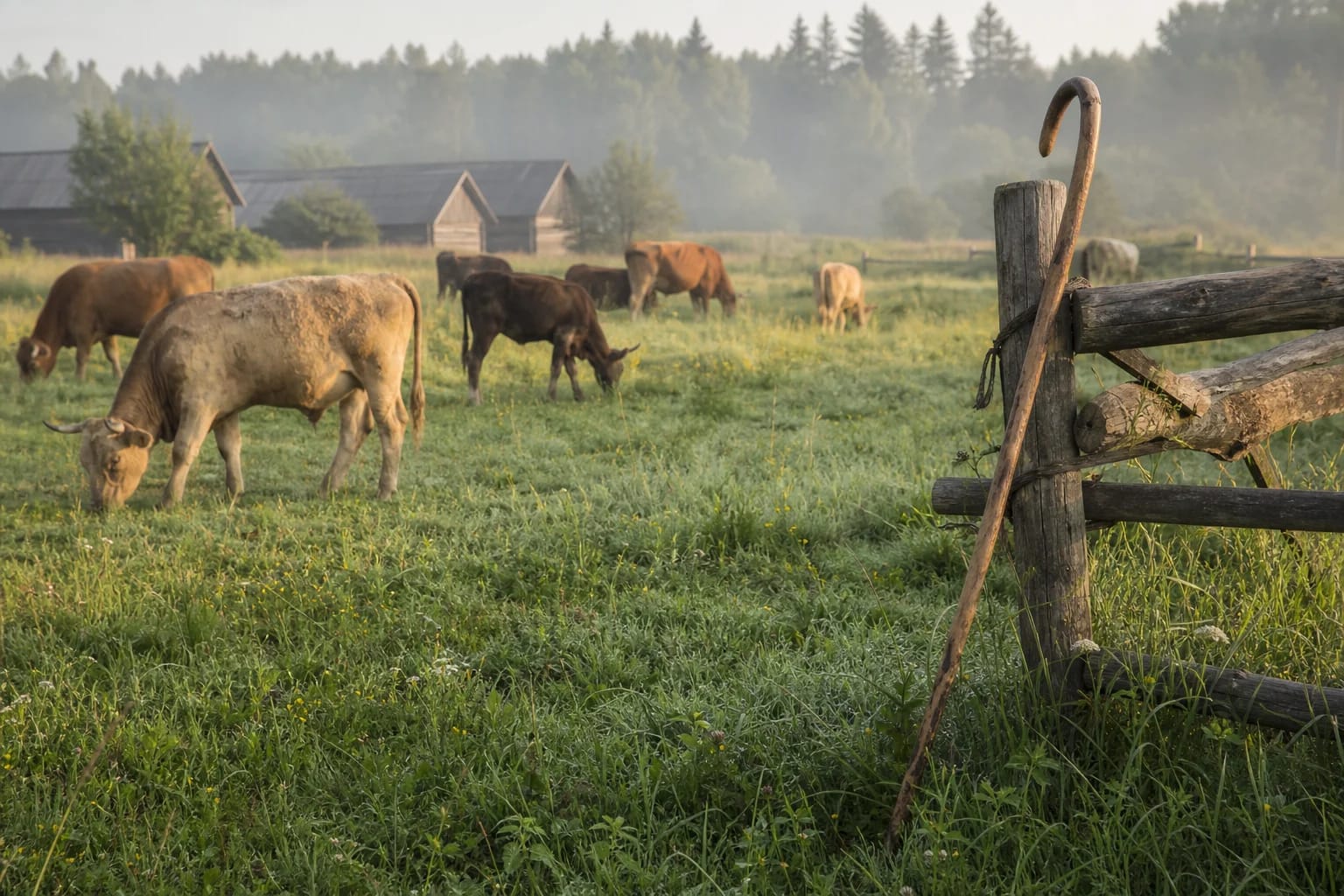
Ganiklis embodies this need. His protection would be sought so that animals returned healthy from pasture, did not stray, and avoided danger. At Jurginės and other spring-grazing rites, shepherds' work was surrounded by customs expressing the same idea of protection.
Ganiklis among livestock deities
Ganiklis is best read together with Sutvaras, whom Stryjkowski calls a god protecting cattle. Both belong to the field of livestock guardians, but Ganiklis is more specifically tied to the act of grazing and the shepherd.
Such fine specialization, separate gods for grazing, cattle, and the farm, is typical of late lists of gods. It shows how detailed agrarian religion could be in dividing everyday work and seeking divine support for each part.
How should Ganiklis be read?
Ganiklis belongs among the relatively reliable names in Stryjkowski's list: his function is clear, and the etymology from ganyti directly confirms it. This makes him less disputed than some other list entries.
Even so, only a brief source note survives, a god of shepherds. No broader myths or rite descriptions are known. Ganiklis should therefore be presented as a name with a clear field, but without an expanded mythology.
Ganiklis today
Ganiklis helps explain the importance of animals and grazing in Lithuanian culture: even the shepherd's work had a divine guardian. He is a clear example of an agrarian worldview.
Ganiklis is best read with Sutvaras, Žemininkas, and Jurginės customs. Together they show how Lithuanians sacralized the farm, from soil and harvest to herd and pasture.