- Type
- God
- Domain
- Prussian god, seafaring, sailors, fishers, ships
- Source status
- well attested
Bardoayts, Gardaitis, Perdoytus
Who is Bardaitis in Prussian mythology?
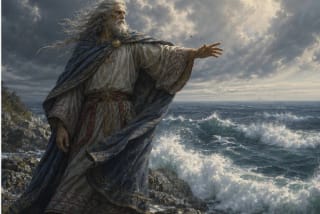
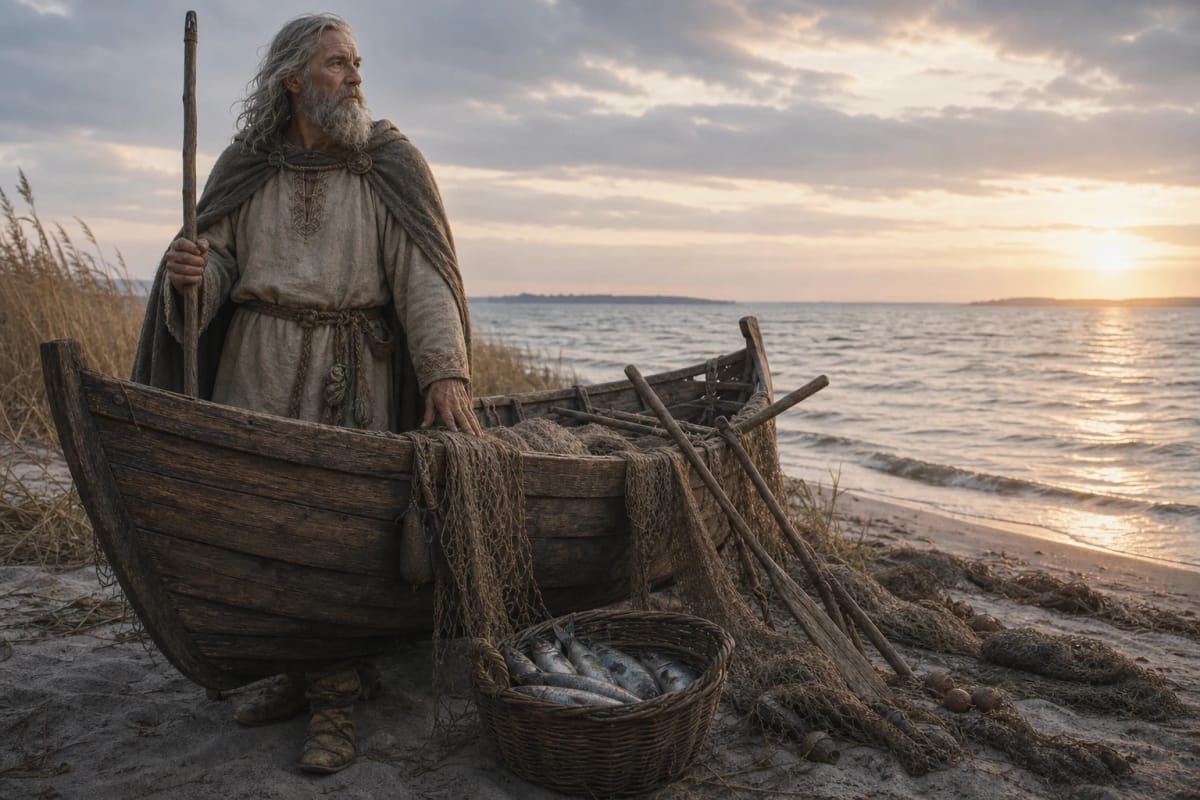
Bardaitis, in Prussian Bardoayts, is an Old Prussian god of seafaring. He was understood as patron of sailors, fishers, and ships, a deity whose favor affected success at sea and safe return to shore. He is clearly a god of coastal communities, born from life beside the Baltic Sea.
Bardaitis belongs to the West Baltic, Prussian, pantheon known from sixteenth-century written sources. He is important as one of the few Baltic gods clearly tied to the sea and fishing, helping explain how coastal people understood the sea's dangers and gifts religiously.
Patron of sailors, fishers, and ships
Bardaitis' main sphere is the sea and fishing. As guardian of ships, he mattered to everyone whose life depended on the sea: fishers, sailors, and ship owners. In antiquity and the early modern period, the sea was both provider and deadly danger, so its deity had a double power: to grant a catch or to destroy.
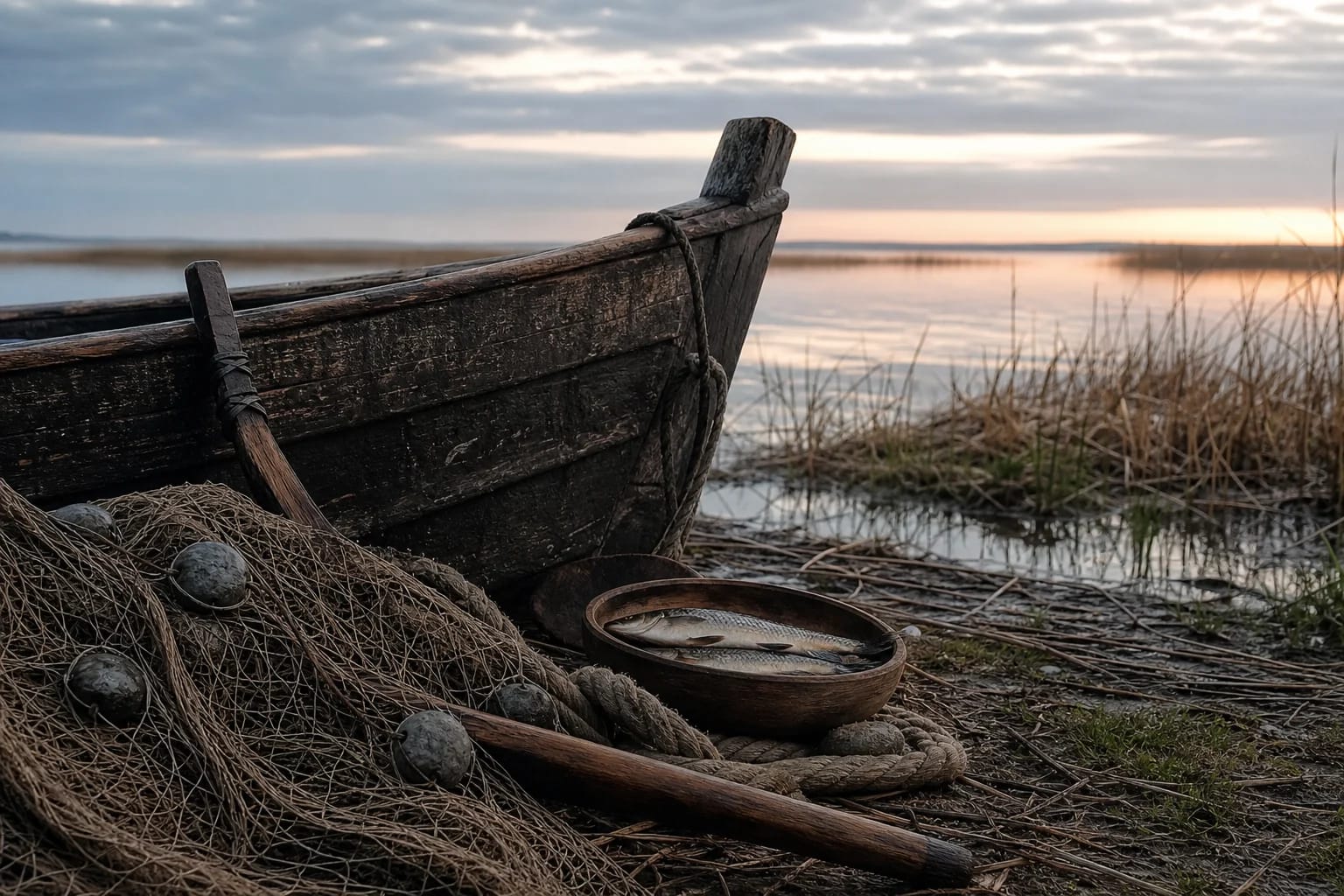
Bardaitis' sphere of protection reminds us that Baltic religion was closely tied to concrete environments. A coastal community needed a god responsible for success at sea, just as farmers needed gods of harvest and growth.
Fish offerings to Bardaitis
Fish were offered to Bardaitis. This kind of offering is very logical: fishers returned to the god part of what they hoped to receive from the sea. The offering works as exchange: part of the catch is given back in the hope that the sea will remain generous and safe.
Fish offerings also confirm that Bardaitis was a practical god of fishers and sailors, not an abstract sea power. His cult grew from everyday labor at sea and the dangers that came with it.
The name Bardaitis: could it be Gardaitis?
The name is recorded in sources as Bardoayts. Linguist Kazimieras Būga thought the original name may have been Gardaitis, from garda, meaning ship. By this explanation, the name would directly identify the god's field: he would be the god of the ship and, by extension, seafaring.
This etymology should be presented as a scholarly hypothesis, not as a final fact. Still, it fits well with the source testimony about Bardaitis as guardian of ships and helps explain why a seafaring god may have had just such a name.
Bardaitis and Patrimpas: a possible divine pair
In Vladimir Toporov's view, Bardaitis may have formed a pair with the Prussian god Patrimpas, associated with waters and grain. Such paired relationships are not rare in Baltic and other Indo-European mythologies: gods are often understood not in isolation but through related or complementary spheres.
If this hypothesis is correct, Bardaitis and Patrimpas would together cover a wider water field, from rivers and springs to the sea and seafaring. It is another way to see Prussian gods as an interconnected system rather than a list of isolated names.
Bardaitis and Lithuanian Bangpūtys
The closest Lithuanian counterpart to Bardaitis is Bangpūtys, the god of sea, waves, and storm wind. Both are connected with the sea and are important for coastal people, so they are best read together as examples of Baltic sea deities.
Their domains are not identical, however. Bangpūtys more strongly embodies sea wind, waves, and storm, the elemental power of the sea, while Bardaitis is first described in sources as a patron of ships, fishers, and sailors. This difference shows that Baltic sea imagery was complex and involved more than one deity.
Sources and reliability for Bardaitis
Bardaitis is mentioned in the god list contained in the 1530 synod decrees of the bishops of Prussia, Pomesania, and Sambia, where he is listed after Patrimpas. This is reliable but brief testimony: the god's name and sphere are recorded in an early source.
Less is known about Bardaitis than about some other Prussian gods, so his image is reconstructed cautiously. We have a firm seafaring core, guardianship of ships and fish offerings, while wider interpretations, such as the name origin and possible pairing with Patrimpas, are reasoned but remain scholarly hypotheses.