- Category
- Practical craft lessons
- Reading time
- 7 min.
- Sources
- Source-based lesson with original teaching diagrams
Choose one object, not a symbol list
Choose a textile, carving or other ornamented object published by a museum or researcher. You need a view of the whole object and a clear detail. Record institution, title, inventory number, date and locality where available. If no number is supplied, keep the exact page and title. Do not begin with an online chart of supposed meanings: it may have no connection to your object.
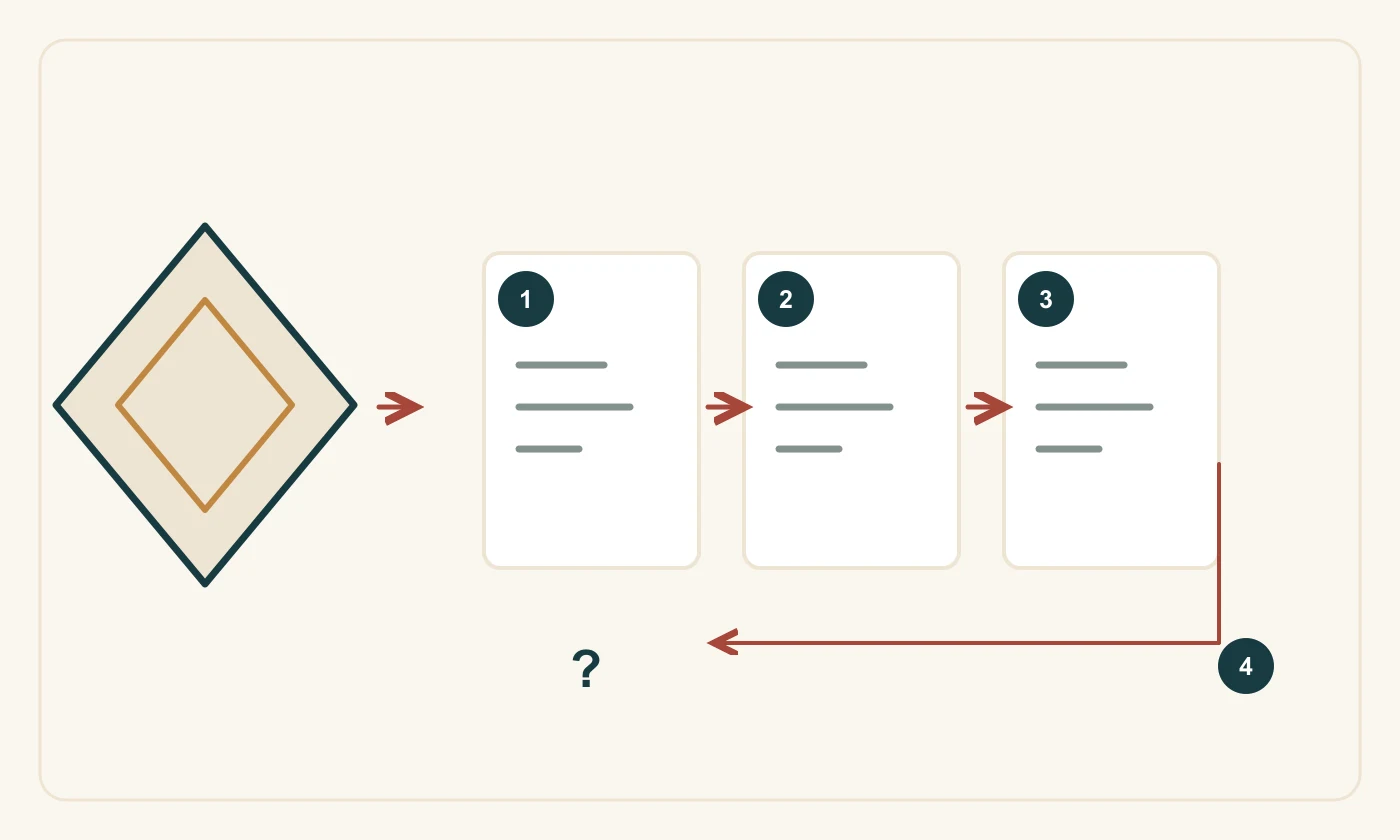
The diamond in our illustration is an original neutral geometric shape. It depicts no specific exhibit and carries no assigned inherited meaning. The diagram simply marks four stages: describe shape, find a recorded name, check context and evaluate interpretation. The same sequence works for a star, plant, bird or complex composition.
Diagram stage 1 describes form, 2 records a sourced name, 3 checks object context and 4 evaluates interpretation. The question mark allows the final question to remain open. The red arrow makes no claim about the historical origin of the motif.
Describe what you can actually see
Write the first sentence without symbolic vocabulary. You might note repeating diamonds in a row, a symmetrical figure or strokes arranged around a circle. Count elements only if the image is clear enough. Make a simple sketch and mark the repeat boundary. This description remains useful even when interpretations differ.
Record material and technique separately, following the source’s wording. A weaving grid, a cut in wood and an embroidery stitch offer different formal possibilities. Similar outlines in different materials do not establish a shared origin. The KTU dissertation’s pattern analysis reminds us to consider ornament together with the structure that produces it.
Check where the name comes from
Enter a motif name only when the object description or a clearly linked study supplies it. Note who recorded it: informant, curator or researcher. If you devised the label from resemblance, mark it as your own description. “Resembles a lily” is different from a documented name for that textile’s pattern.
Juozas Kudirka’s overview, published by the national culture centre, groups ornaments by type and notes that plant associations may sometimes be conveyed chiefly by names. It helps formulate questions but does not supply an individual history for every object. Keep a general statement about a motif family separate from the object’s own record.
Distinguish interpretation from evidence
For a meaning claim, record the author and material being discussed. Does it concern one locality, period or object type, or propose a broader hypothesis? Do not silently enlarge its scope. A source interpreting a geometric figure as a solar motif does not establish an identical ritual purpose for every similar ornament in every period.
Compare two sources and mark where object description ends and interpretation begins. The ARS tool overview places symbolic interpretations alongside construction details; separate them rather than repeating both with equal certainty. Disagreement is not a reason to select the most attractive story. Note what evidence would help compare the claims.
Write an honest caption
Write a short caption beginning with visible form and object data, followed by any recorded name and then an attributed interpretation. If the source supplies no name or meaning, leave that as an open question. This is not a less interesting caption: it lets the reader see what is actually known.
Keep links, access date and a note identifying your sketch as an educational interpretation. A museum photograph being online does not itself grant permission to republish it. Link to it in your study record and check the specific rights before public image reuse. Your result is an argued object record that another person can verify.