- Category
- Community cultures
- Sources
- Published museum, community and research sources
Surinkimai as domestic worship
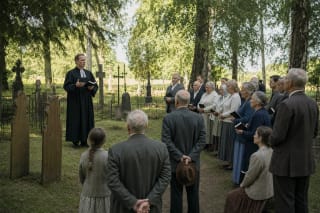
Lietuvininkai surinkimai were gatherings for prayer and hymn singing within an Evangelical Lutheran setting. The word does not simply mean any village meeting. The Encyclopedia of Lithuania Minor connects them with the Pietist movement of the later eighteenth century, emphasizing personal devotion and religious growth.
Lietuvininkai names a regional culture and identity; Lutheran identifies a confession; surinkimininkas describes participation in a particular religious movement. These terms are not synonyms. An individual's relationship to all three could differ.
A room becomes a meeting place
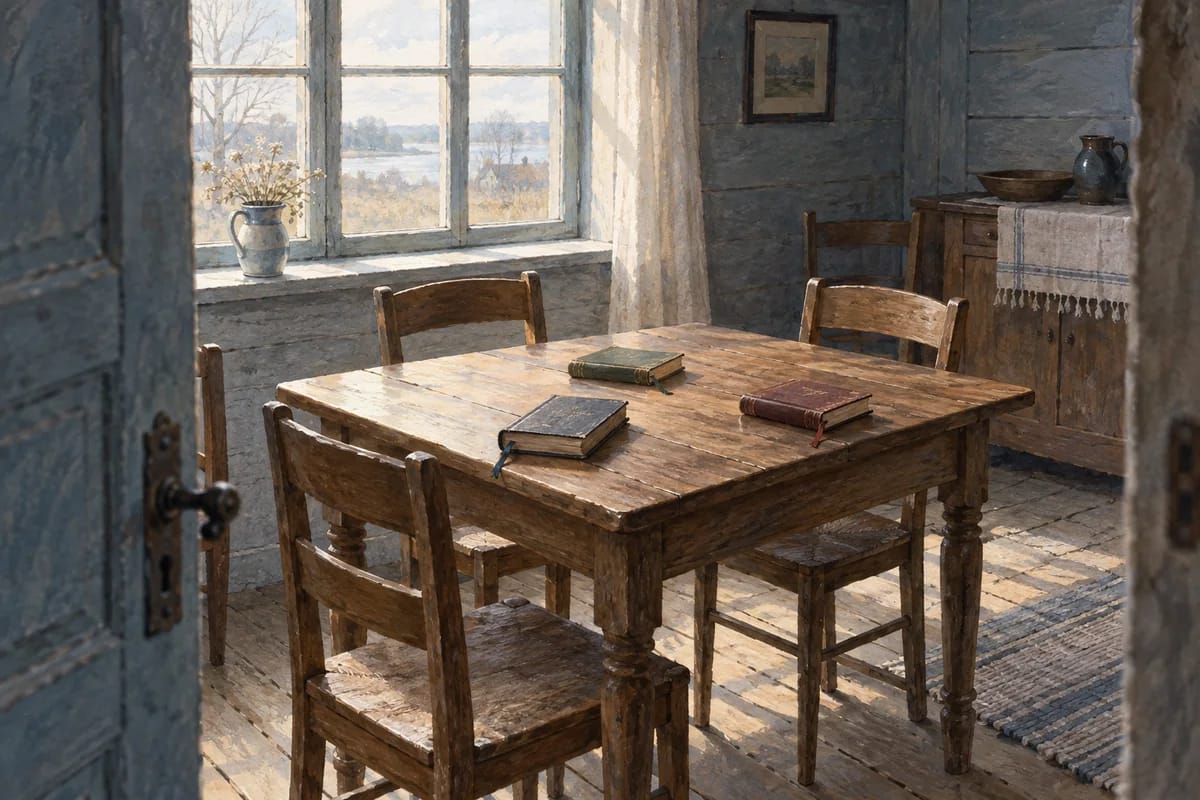
The Gargždai museum's account of the Priekulė area describes a table, hymnbooks brought by participants and an ordered seating arrangement within a home. An everyday room acquired another function when its hosts received people for prayer.
This example encourages reading an interior through actions. The table matters as more than furniture, and the book as more than print: how did people gather around them? A reconstructed room would remain an interpretation unless supported by evidence concerning a specific place.
Who were the sakytojai?
The encyclopedia calls the gathering leaders sakytojai and distinguishes branches known as klimkiškiai, jurkūniškiai and kukaitiškiai. The Gargždai museum identifies local figures including Jokūbas Ašmonas, Klimkus Grigelaitis and Mikelis Kybelka. These names place the movement among identifiable people and communities.
A sakytojas should not automatically be equated with a parish pastor. Responsibilities, authority and relationships with church structures depended on the period. Check a biography's parish, years of activity and sources as carefully as the name itself.
Hymnbooks between text and voice
The abstract of a study of gathering hymns emphasizes singing in the native language and the publication of dedicated hymnbooks in the nineteenth century. Written words form only part of a hymn's history: melody, performance and the occasion of singing also matter.
When comparing two books, record publication year, printer, hymn number and opening line. The same number in different editions need not identify the same hymn. Connect a printed version to a later recorded performance only when the evidence supports that connection.
Devotion and cultural tensions
The Priekulė historical account discusses some leaders' strict attitudes towards entertainment and ornament. This local evidence helps explain why religious tradition cannot always be presented simply as encouraging songs, dances and costume.
One branch's judgments should not be assigned to every Lutheran or every Lietuvininkai family. Language continuity, literacy, religious discipline and disputes about secular culture could coexist. Specific examples explain these relationships better than a single celebration or condemnation of the movement.
Studying the tradition today
A 2018 publication of Lithuania's Evangelical Lutheran Church describes an institute expedition, conference and book exhibition. These show how family objects and recollections can contribute to public research. Historical domestic worship and a contemporary educational concert nevertheless remain different situations.
For a family hymnbook, document provenance: who kept it, where it came from and which names or dates appear inside. Leave uncertain circumstances open. Even a modest, accurately described copy contributes to regional history without needing an invented biography.