- Category
- Understanding historical households
- Reading time
- 5 min
- Sources
- An introductory account based on museum records and ethnographic sources
A kitchen is more than a shelf of vessels
Nalšia Museum presents grain and dairy processing within household life. Read such a collection as a network of actions: some objects store raw materials, some transform them and others move a prepared product.
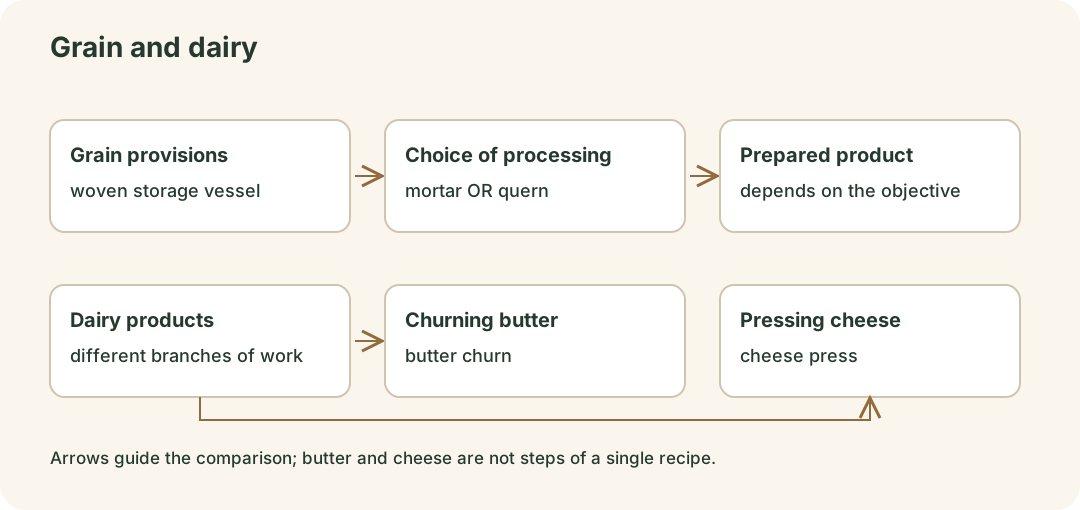
The two branches below form a learning framework. They are not one farmer’s recipe and do not imply that every home possessed every implement.
Grain: store, pound or grind
A karbija holds dry provisions. A mortar and quern process material through different movements: pounding and rotary grinding. These can be alternatives or serve different purposes; do not automatically send every grain through both tools.
Nalšia Museum connects the mortar to barley grucė and describes the hand quern through its stone gap. Ask a more precise question: is the purpose to remove a covering, break down a grain or grind it? The particular product’s account should provide the answer.
Dough and oven are separate workstations
A bread tub holds dough preparation. A peel performs another action by moving the shaped loaf. The intervening work cannot be recovered simply by looking at the tools, so fermentation times and quantities should not be invented.
The Pieveliai tub’s record supports discussion of staves and hoops, rather than a universal formula for bread made in that village. Object documentation and recipe evidence answer different questions.
Dairy work branches into butter and cheese
A churn mechanically works soured cream, using a dasher or rotating mechanism. A cheese press compresses curd already prepared for pressing. These are separate product branches, not consecutive steps for one dish.
Ask what goes into the object and what comes out. This simple question prevents every wooden dairy vessel from being called a butter churn.
Make an object card
Record raw material, movement, result, working part and source. Leave a question where the result is unknown. A family recollection can be added, provided it remains attributed to its narrator.
Historical explanation is not a modern cooking procedure. A usable recipe additionally needs verified quantities, temperatures, timings and hygiene requirements.