- Category
- Food heritage
- Reading time
- 5 min.
- Sources
- A food heritage learning guide based on the cited sources
Read the action before the product
Grain, groats and flour may appear in the same account, but they are not interchangeable names. Follow what happens to the material: it is separated from the ear, cleaned, pounded, ground or sifted. This sequence helps identify when a description begins to refer to a product prepared for food. Not every household or cereal followed an identical sequence. The guide offers questions for comparison, rather than a single processing diagram that claims to represent all Lithuanian farms and periods.
Threshing and cleaning are not milling
Nalšia Museum's ethnography description treats threshing tools, winnowing and sifting separately. This is a useful prompt to avoid jumping straight from harvested cereals to flour. In a museum, ask what material entered a tool and what came out of it. Check whether a label refers to chaff, grain, bran or something already ground. A general verb such as cleaning remains unclear without its object. Record the implement's function alongside its name: a familiar outline alone does not tell you which job it performed.
The mortar and the grucė question
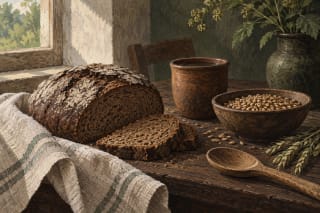
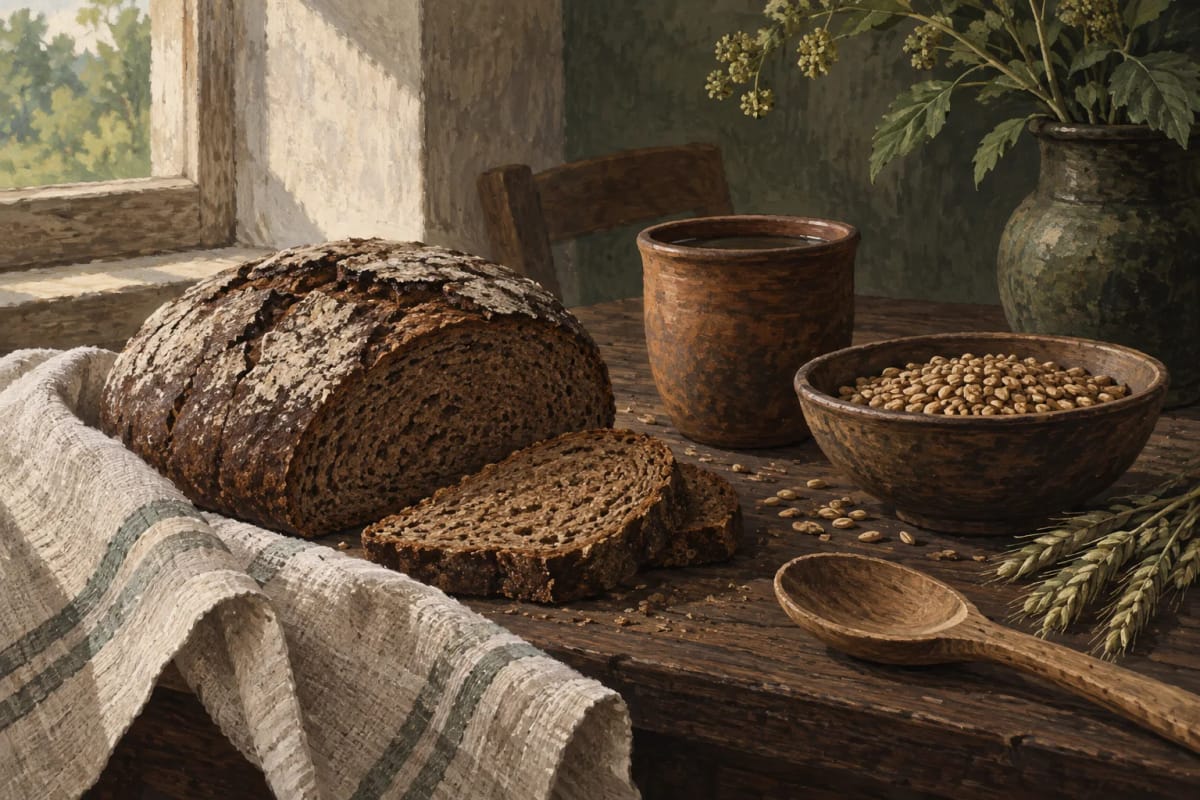
Nalšia Museum records barley being pounded in mortars to make grucė. That brief statement connects a cereal, an action and a product name. It does not establish that any present-day barley groat is an exact historical equivalent. In a family account, note whether grucė means prepared grain or the finished dish. Ask about its appearance before cooking and when served. This preserves the distinction between ingredient and meal, which a short recipe title can hide. The answer may be incomplete and still worth keeping.
Millstones and sieves answer different questions
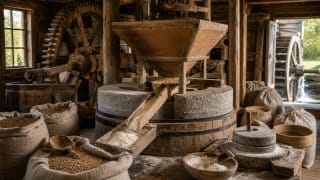
At the millstones, find out what was ground and what result was wanted; at the sieve, ask what was separated from what. Aušra Museum's Žaliūkiai exhibition helps visitors consider grinding and flour-sifting equipment as different parts of a system. Record the material's condition before and after each action. If an account only says ground, do not add the unsupported conclusion that it was also sifted. Conversely, a reference to sifting does not identify the millstones. These distinctions matter in both museum labels and brief family notes.
A simple learning exercise
Choose one cereal described in a source and draw its journey in three columns: material, action and result. Add the tool name, locality and date of the account underneath. Mark a missing link with a question mark instead of borrowing a step from another region. Compare two descriptions by looking for specific differences, rather than deciding which sounds more ancient. Take the sheet to a museum or community demonstration. It will help you ask precise questions and understand why a familiar cereal name does not guarantee the same finished food.